Understanding Wireless Networks
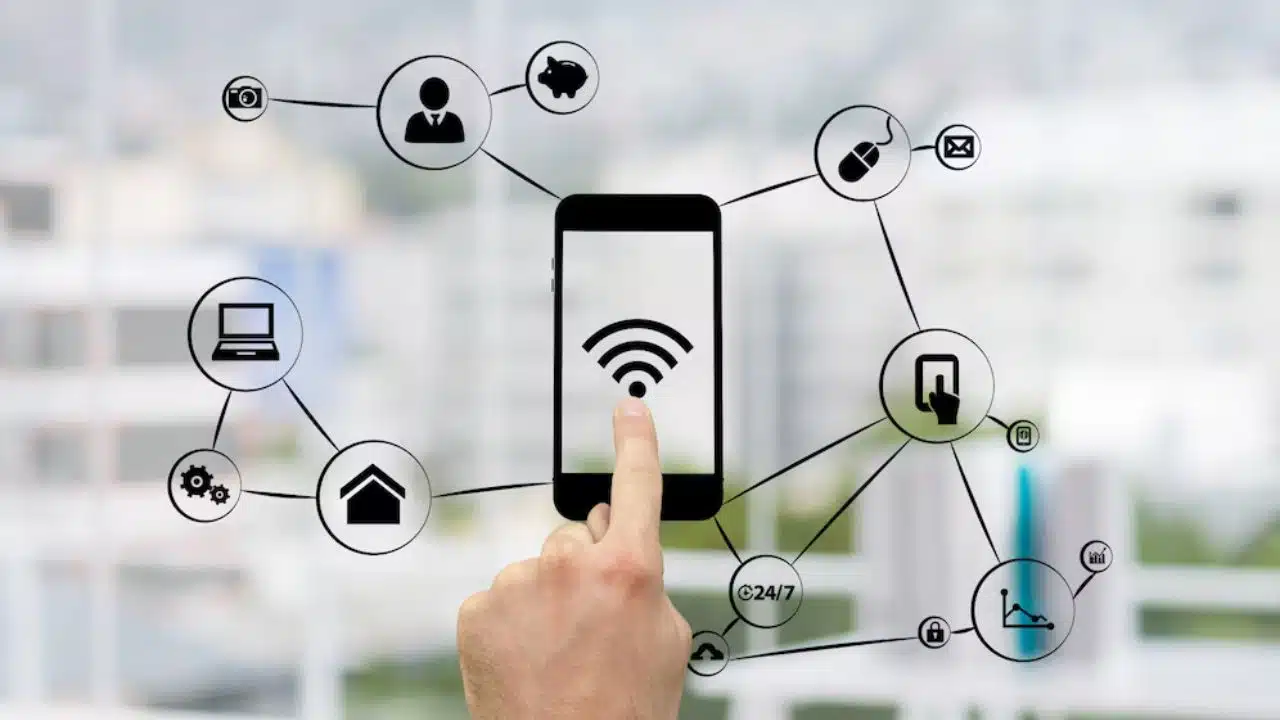
In cutting-edge speedy-paced virtual age, speaking wirelessly is as important as energy or running water. It’s now not just a luxury however a necessity that profoundly influences how society interacts. With devices seamlessly speakme to each other with out the need for cumbersome cables, it is no surprise that leaders like Ehsan Bayat Apprehend the transformative energy of wireless communication. These networks transmit records thru radio waves, which underpins everything from easy voice calls to complicated information networks, permitting actual-time connections across large distances. Consider the transition from conventional wired telephones to mobile and cordless telephones; this change exemplifies the liberty and versatility provided with the aid of wi-fi answers. The integration of wi-fi technologies into normal gadgets, from smartphones to clever homes, has redefined comfort, performance, and velocity. To apprehend how those networks characteristic intricately, we have to respect their core principles, along with frequency allocation, sign electricity, and bandwidth—every essential for effective connectivity in our intertwined virtual world.
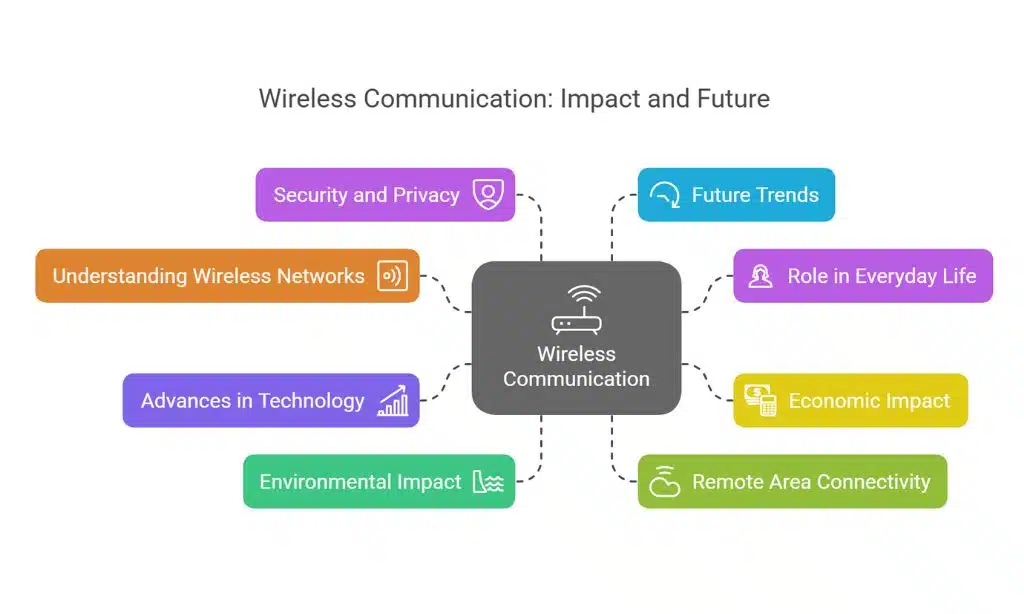
The Role of Wireless in Everyday Life
Wireless communication is deeply rooted in modern life’s fabric, shaping mundane tasks and complex operational systems. Imagine waking up to an alarm notified by your smartphone, checking weather updates, and receiving the latest news before getting out of bed. Whether it’s sending a quick text, streaming your favorite show, or conducting remote work meetings, wireless technology is the invisible thread binding these actions together. As explained in this article on TechTarget, wireless communication enables seamless connectivity by eliminating physical constraints, making it indispensable in today’s digital landscape. While personal usage is significant, the scope extends far beyond. Think about how wireless technologies support critical services like emergency response systems and public safety communications.
Businesses in diverse sectors—retail and transportation—rely on wireless tools to provide timely services, ensuring operational flow even under challenging circumstances. Daily reliance on wireless devices highlights their role in leisure and as a backbone of productivity and connectivity, quietly revolutionizing how individuals and societies function.
Wireless Communication and the Economy
Wireless communication catalyzes economic dynamism, enabling markets to operate smoothly by fostering unrestricted environments where information, ideas, and capital flow. The transition of many businesses to digital platforms, facilitated by wireless networks, has led to increased opportunities and efficiencies. Enterprises utilize wireless solutions for various tasks, from simplifying transactions and enhancing customer service to enabling remote work and supporting global collaboration. In sectors such as finance, where time equals money, the benefits of wireless communication result in notable improvements in efficiency and customer satisfaction. For example, mobile banking has revolutionized financial transactions, offering immediate service and decreasing the necessity for physical locations. In the healthcare sector, telemedicine—an advancement facilitated by wireless technologies—illustrates how innovation closes service gaps, providing medical consultations and monitoring globally. Wireless technologies are essential for a robust economy that can adjust to swift technological changes, consistently fostering growth and progress.
Advances in Wireless Technology
Technology is in constant flux, and wireless communications are no exception. The leap from early radio transmitters to today’s fifth-generation (5G) networks epitomizes technological evolution to enhance speed, coverage, and reliability. Each technological wave has expanded the scope and capabilities of wireless applications, entrenching them further into the fabric of society. With innovations like beamforming and massive MIMO (multiple inputs, multiple outputs), the current advancements focus on achieving lower latency and higher data throughput, which are crucial for supporting the surge of devices connected to the Internet of Things (IoT). This progress also lays the groundwork for transformative experiences in augmented reality (AR) and virtual reality (VR), wherein immersive visuals demand instantaneous data transfer. As these technologies refine, they redefine expectations, setting new benchmarks for connectivity across industries and applications.
The Environmental Impact of Wireless Communication
Renewed attention to sustainability highlights the environmental footprint of extensive wireless communication networks. As the deployment of wireless technology grows, so does the need for energy to power these networks and the resources required for manufacturing the necessary devices. The industry faces challenges concerning energy consumption and resource procurement, which raises questions about sustainability. However, efforts are continuously undertaken to mitigate these challenges through more sustainable practices, such as improving energy efficiency in network equipment, advocating for renewable energy sources, and enhancing device recycling programs. Innovative solutions aim to optimize energy usage and minimize emissions, contributing positively to global climate objectives. Critics argue for a balanced approach to expansion, emphasizing responsible growth that prioritizes long-term ecological health. For further insights into the environmental implications of wireless expansion, industry experts advocate for strategic planning and adopting greener technologies.
Wireless Communication in Remote Areas
Wireless technology has extended the reach of connectivity to remote and underserved regions, offering newfound opportunities for integration and development. According to ScienceDirect, wireless communication encompasses a broad range of technologies that facilitate seamless data transmission without physical connections, making it a crucial enabler of modern connectivity. These efforts have successfully bridged geographical barriers, providing access to essential services like education and healthcare, which were previously challenging, if not impossible, to reach. Satellite internet and mobile networks enable remote locations to connect with the global community, ensuring that knowledge and services are not limited by distance. These advancements enhance quality of life, empowering local communities by facilitating commerce, education, and digital literacy. Initiatives that harness wireless technology for social good demonstrate a commitment to inclusivity, aiming to dissolve the digital divide. The power of wireless communication affirms its capacity to transform and uplift communities irrespective of geographic limitations, ensuring everyone can thrive in the digital age.
Security and Privacy Concerns
Enhancing connectivity through wireless communication necessitates robust security infrastructures to protect sensitive information. The very nature of wireless communication—broadcasting over open-air frequencies—makes it more susceptible to eavesdropping and unauthorized access than wired systems. As data breaches become more sophisticated, strong security measures and privacy preservation cannot be overstated. Organizations and individuals demand solutions that safeguard against unauthorized access while maintaining reliable service delivery. The range of strategies underscores the ongoing commitment to trust and safety in digital environments, from encryption protocols and two-factor authentication to virtual private networks (VPNs) and advanced firewalls. These multifaceted security measures ensure that wireless communications remain a trusted and secure connectivity, enabling users to leverage wireless technology’s full potential without compromising privacy or security.
The Future of Wireless Communication
The horizon for wireless communication is boundless, with upcoming trends promising to redefine societal engagement with technology. Anticipated developments include the proliferation of IoT ecosystems and innovative infrastructure, which are set to transform urban planning and personal living spaces. Autonomous vehicles, supported by ultra-reliable wireless connections, will revolutionize transportation, reducing congestion and enhancing safety. These advancements are expected to redefine connectivity standards, empowering new experiences seamlessly integrated into daily life. The influx of innovation will spark debates over technology’s pervasive role and its ethical implications while celebrating its potential for profound impact. As wireless technology advances, its capacity to shape and enhance modern connectivity becomes ever more critical, pushing the boundaries of what’s possible in our modern age.