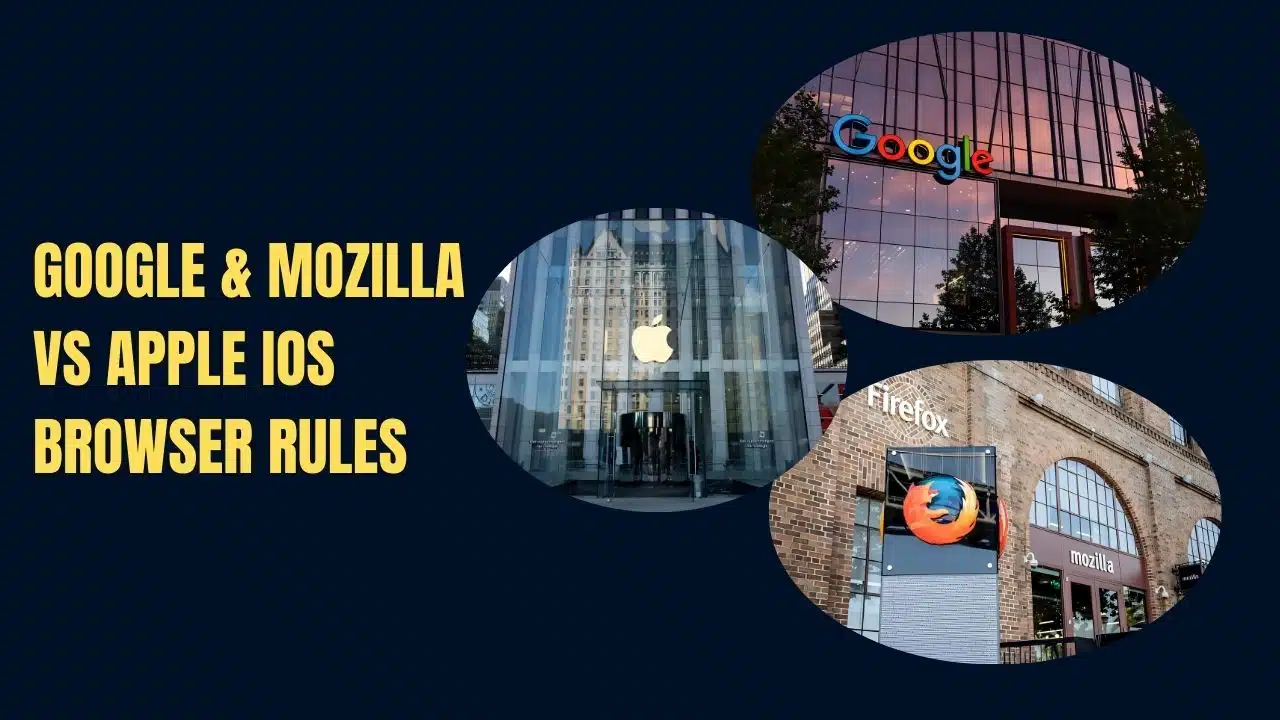
Apple is making significant alterations to iOS in Europe due to the implementation of the European Union’s “Digital Markets Act.” The legislation aims to address concerns regarding Big Tech “gatekeepers” by introducing measures related to interoperability, fairness, and privacy. As part of these changes, Apple is required to permit competing browser engines on iOS.
In the upcoming iOS 17.4 update, rival browsers such as Chrome and Firefox will have the opportunity to incorporate their own web rendering code on iPhones and iPads. Apple’s proposed changes to the iOS browser situation have not been well received by Google and Mozilla.
In a recent statement to The Verge, Damiano DeMonte, a spokesperson for Mozilla, expressed concern over Apple’s policy changes, specifically the decision to restrict browser changes to the EU only. “We are currently reviewing the technical details, but we feel a great sense of disappointment regarding Apple’s proposed plan to limit the usage of the newly-announced BrowserEngineKit to apps specific to the EU,” expressed DeMonte. “This would require an independent browser like Firefox to develop and maintain two different browser implementations, which Apple won’t have to do.” DeMonte expressed his dissatisfaction with Apple’s proposals, stating that they do not offer consumers sufficient options and make it difficult for competitors to provide alternatives to Safari. Apple’s actions once again demonstrate their efforts to limit competition in the browser market on iOS.
Apple has introduced a new framework called “BrowserEngineKit,” which provides support for alternative browser engines. This framework is already available for developers to explore in the iOS 17.4 beta, and Apple has provided public documentation to assist them. Browser vendors will have to gain Apple’s approval in order to utilize the framework in a production app. Just like any other iOS app, this approval will come with a set of requirements that need to be met. None of the requirements seem excessive. Apple emphasizes the importance of web standards support for browser vendors. They also prioritize promptly fixing security vulnerabilities and safeguarding user privacy by implementing standard consent prompts for accessing features like location. The restriction on syncing cookies and states between the browser and other apps, including those developed by the same company, appears to be specifically targeted at Google and its inclination to facilitate communication between its iOS apps. One drawback is that your BrowserEngineKit app is currently limited to the EU. This is due to the fact that the EU rules only apply within the EU.
Regarding Google, Parisa Tabriz, the VP of engineering for Chrome, shared her thoughts on DeMonte’s statement on X by expressing strong agreement with @mozilla. It seems that Apple may not be fully committed to providing users with the freedom to choose their preferred web browser or engine on iOS. Their approach is excessively limiting and will not effectively promote genuine options for browser developers.
Today, you have the option to download browsers on iOS such as Chrome and Firefox, which may appear to be “alternative” choices. However, it’s important to note that these browsers primarily utilize Apple’s Safari engine underneath their interface. iOS app developers are not permitted to incorporate their own browser engines. Instead, they utilize Safari’s WebKit engine as the foundation, while adding a fresh user interface, settings, and synchronization features on top. Therefore, all of WebKit’s bugs and feature support decisions are applicable to every browser.
Using Safari as the default browser can be quite inconvenient for users. Over the years, Safari has gained a reputation among certain web developers for lagging behind the competition in its support for advanced web features, leading some to compare it to “the new IE.” Safari has improved significantly in recent times. In 2023, push notifications were finally introduced, enabling web apps to better compete with native apps from Apple’s App Store. Apple introduced support for push notifications seven years after Google and Mozilla had already implemented the feature.
Having more competition in the iOS browser space would be highly beneficial. However, it is important to acknowledge that the primary source of competition will likely come from Google, another major player in the industry. Chrome is a project that has the necessary resources and wide reach to effectively compete with Safari. By integrating into iOS, it will bring the web closer to the dominant presence of Chrome. While Google’s browser may offer enhanced support for specific web features, it also includes a built-in tracking system that collects user data and shares it with advertisers. Safari offers a stronger commitment to privacy.
While it is true that only EU users have the privilege of selecting from a variety of distinct browsers, it is important to note that competition within the EU market is open to all, including Safari. It would be beneficial for everyone if the iOS browser improved, considering the lack of browser options available to users outside of the EU. According to the regulations set by the EU, it is important for iOS 17.4 to be released before the compliance deadline in March 2024. Google and Mozilla have been diligently developing complete versions of their browsers for iOS for over a year. Perhaps they will be prepared for the launch?