World Computer Literacy Day, observed every year on 2 December, has become one of the most important global observances dedicated to digital education and inclusive technology access. In an era where every industry, career, and form of communication is shaped by digital tools, computer literacy is no longer optional — it is a basic life skill and a foundation for future opportunities.
As the world moves further into automation, AI, cloud platforms, and digital-first systems, this day highlights why everyone — from young learners to senior citizens — must be equipped with the knowledge to use technology confidently and responsibly.
The theme for World Computer Literacy Day 2025, “Digital Skills for an Inclusive Future,” places strong emphasis on bridging digital inequality and empowering all people with skills required to thrive in the digital era. Whether it’s online learning, digital payments, smart governance, remote work, or cybersecurity practices, computer literacy empowers individuals, strengthens communities, and supports national development.
Below is a comprehensive breakdown, expanded in detail, covering its history, significance, objectives, theme insights, benefits, and ways we can work together to promote digital literacy for the future.
What is World Computer Literacy Day?
World Computer Literacy Day is an international observance held annually on 2 December to promote digital education and raise awareness about the importance of computer knowledge in a fast-evolving technological world. The day was introduced in 2001 by NIIT, an Indian tech-education company, with the goal of reducing the growing gap in access to computer education, especially among underserved groups.
At the time of its launch, global computer penetration was still extremely low. Many developing nations lacked computer labs, rural communities had limited access to technology, and widespread internet literacy was still far from reality. Women and children in particular faced multiple barriers to computer education due to socio-economic conditions.
World Computer Literacy Day was created to confront these challenges head-on.
Over the years, it has grown into a worldwide movement promoting:
- Equal access to digital education
- Affordable and accessible technology
- Opportunities for students, teachers, women, and marginalized communities
- Training in basic and advanced computer skills
- Responsible, safe, and ethical use of digital platforms
Today, the day serves not only as a reminder of the importance of computer literacy but also as a global call for action — encouraging governments, schools, NGOs, institutions, and individuals to work together for a more digitally empowered world.
Key Facts and Highlights of World Computer Literacy Day
Here are some of the most important facts associated with this global observance:
- Celebrated every year on 2 December.
- Started in 2001 by NIIT (National Institute of Information Technology).
- Aims to spread computer education to all age groups and communities.
- Focuses on eliminating gender-based and socio-economic digital gaps.
- Encourages digital confidence among beginners, young learners, and adults.
- Promotes safe and responsible use of technology.
- Highlights the importance of computer skills for jobs, learning, communication, and innovation.
- Motivates institutions to organize workshops, campaigns, and digital-skill awareness programs.
- Supports the global goal of making digital resources accessible and affordable.
- Reinforces that digital literacy is a basic requirement for future-ready citizens.
Theme of World Computer Literacy Day 2025: “Digital Skills for an Inclusive Future”
The official theme for World Computer Literacy Day 2025 — “Digital Skills for an Inclusive Future” — reflects the global demand for inclusive digital empowerment. The theme stresses that no one should be left behind in a world increasingly shaped by technology-driven systems.
What the theme emphasizes:
1. Equal Access to Digital Education
The theme focuses on expanding digital education to all — regardless of socio-economic status, age, gender, or location. It calls for accessible computer labs, affordable devices, and free or low-cost digital training.
2. Reducing Urban–Rural Digital Gaps
Rural and remote areas often have limited access to technology. The theme highlights efforts to expand internet connectivity, build ICT infrastructure, and bring digital learning to villages and underserved regions.
3. Women’s Digital Empowerment
Women continue to face multiple digital barriers in many societies. The 2025 theme encourages programs that help women develop digital skills, pursue tech-related education, and join the digital workforce.
4. Future-Ready Skills
Digital literacy now includes much more than typing or browsing. It covers coding basics, digital communication, online research, critical thinking, cloud tools, and collaboration technologies essential for modern careers.
5. Cyber Safety and Digital Responsibility
With rising cyber threats, the theme aims to strengthen awareness of cybersecurity, online privacy, digital ethics, and responsible internet behavior, especially among young users.
6. Affordable and Inclusive Digital Infrastructure
Ensuring access to internet services, devices, and digital learning tools is key to building an inclusive future. The theme encourages governments and organizations to invest in sustainable digital ecosystems.
By embracing “Digital Skills for an Inclusive Future,” societies can uplift millions and create equal opportunities in education, employment, and innovation.
History of World Computer Literacy Day
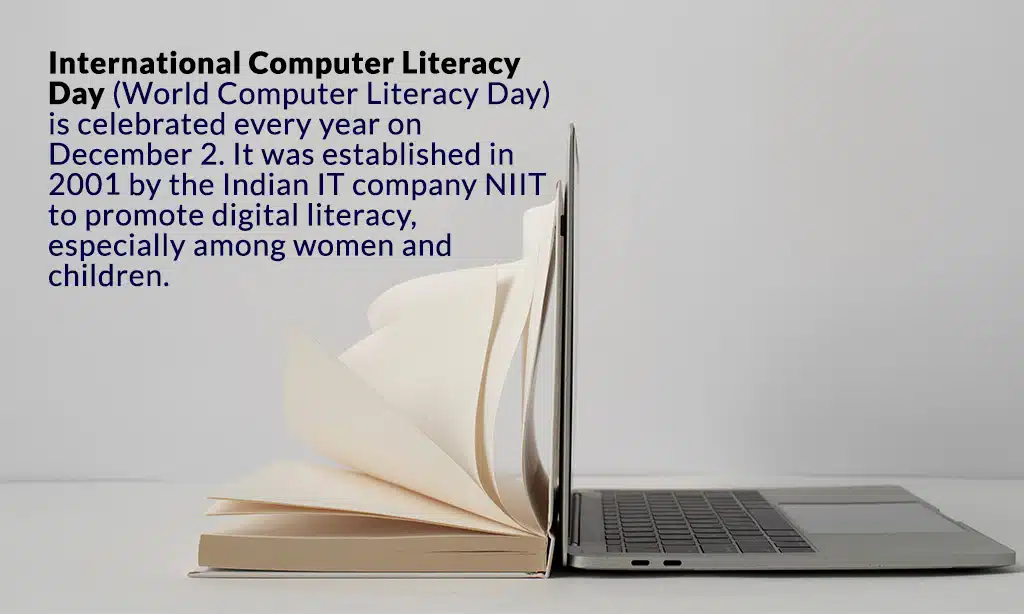
World Computer Literacy Day began in 2001, created by NIIT to mark its 20th anniversary. It arose during a time when global technology access was expanding unevenly. Many communities lacked basic familiarity with computers, and only a small segment of the population — mostly in urban or wealthier regions — had access to digital tools.
Why It Was Introduced:
- To address the global digital divide
- To empower women and underprivileged groups through computer education
- To promote computer literacy as a fundamental skill
- To support countries transitioning into digital economies
- To encourage educational institutions to introduce computer training at the foundational level
Initial programs under this observance focused heavily on introducing basic computer skills, particularly among women and children — groups often excluded from early technological adoption.
Over the years, its impact expanded globally, inspiring:
- Schools to set up ICT and computer labs
- Governments to implement digital literacy missions
- NGOs to introduce community-level digital training programs
- Public and private sectors to collaborate on digital access initiatives
Today, World Computer Literacy Day is recognized internationally as a reminder that digital access and computer knowledge are essential rights in a modern society.
Importance of World Computer Literacy Day
World Computer Literacy Day holds immense importance in today’s digital-first era. Its objectives go far beyond raising awareness — the day is now tied directly to human development, economic growth, and social empowerment.
1. Reducing the Digital Divide
Digital inequality remains a global challenge. Many people still lack access to devices, the internet, or formal digital training. This day brings attention to these gaps and encourages concrete steps to close them.
2. Promoting Education and Learning Opportunities
Computer literacy helps students access online resources, participate in digital classrooms, enhance research skills, and develop future-oriented knowledge.
3. Empowering Marginalized Groups
Women, senior citizens, differently abled individuals, and low-income communities often lack digital skills. Computer literacy paves the way for greater inclusion, independence, and economic opportunities.
4. Supporting Job Readiness
Most modern careers require some level of computer competency — from spreadsheets and email to productivity tools, data entry, and even AI-assisted workflows. Digital literacy increases employability and prepares individuals for emerging job markets.
5. Encouraging Safe Use of Technology
As online threats grow, digital literacy promotes awareness of cybersecurity, passwords, responsible social media use, and avoiding scams or misinformation.
6. Advancing National Growth
Countries investing in digital education and infrastructure see stronger innovation, entrepreneurship, and workforce development. Digital literacy boosts economic growth and global competitiveness.
7. Fostering Lifelong Learning
Technology evolves rapidly. Computer literacy encourages people to continually update their skills and stay relevant in changing environments.
Objectives of World Computer Literacy Day 2025
Here are the major objectives for the 2025 observance:
- Promote digital literacy for all individuals, regardless of age or background
- Support the theme “Digital Skills for an Inclusive Future” with practical action
- Reduce inequality between rural and urban digital access
- Empower women and girls through computer education
- Encourage schools to strengthen ICT programs, coding classes, and digital training
- Promote safe, ethical, and responsible technology use
- Increase availability of devices, internet access, and educational software
- Prepare children and youth for future careers in digital and tech sectors
- Encourage adults and seniors to continue learning digital skills
- Inspire collaboration between governments, communities, and NGOs
- Build a digitally skilled and confident society equipped for future challenges
How to Improve Computer Literacy
Improving computer literacy requires both access and consistent practice. Here are highly effective ways for individuals, educators, and communities to strengthen digital skills:
For Individuals:
- Begin with basic computer courses covering typing, file management, and operating systems
- Practice regularly by creating documents, browsing safely, managing emails, and using productivity apps
- Learn digital safety techniques such as strong passwords, privacy controls, and cyber-hygiene
- Use online learning platforms to study digital tools, software applications, and coding basics
- Explore software essentials like spreadsheets, presentations, databases, and design tools
For Students:
- Practice through school ICT labs, guided lessons, and digital projects
- Learn skills required in modern education: online research, presentations, collaborative tools
- Introduce foundational coding to develop logical thinking
For Communities:
- Conduct digital literacy workshops in rural areas, elderly homes, and underprivileged regions
- Provide shared computer access through community centers and libraries
- Train volunteers to teach local digital literacy programs
For Educators and Institutions:
- Update ICT curriculum regularly
- Train teachers in digital pedagogy
- Use smart classrooms, e-learning tools, and educational software
- Integrate real-world digital tasks like online forms, e-payments, and digital communication
Role of Technology in Modern Education
Technology plays a transformative role in today’s education system, and computer literacy is at its core. Digital tools are reshaping how students learn and how teachers deliver lessons.
Key educational benefits include:
- Interactive learning through digital lessons, animations, and multimedia
- Access to unlimited information through online libraries and educational databases
- Personalized learning paths that adapt to each student’s pace
- Improved teaching efficiency using digital planning tools and smart boards
- Better collaboration through shared documents, online group projects, and communication platforms
- E-learning opportunities including virtual classrooms and global courses
- Fast assessment and feedback via online quizzes, digital exams, and tracking tools
- Inclusive learning with assistive technologies for students with disabilities
- Creative learning through coding tools, online design platforms, and digital art software
Benefits of Computer Literacy
Computer literacy provides countless benefits across education, employment, daily life, and personal development. Its major advantages include:
- Increased job opportunities and employability
- Improved quality of work and faster task completion
- Enhanced learning experiences through online platforms
- Effective communication through email, messaging, and virtual meetings
- Stronger problem-solving and research abilities
- Confidence in using digital services, such as online banking and e-governance
- Ability to participate in remote learning and remote work environments
- Access to creative tools for design, video editing, writing, coding, or entrepreneurship
- Strengthened awareness of digital safety, privacy, and cyber risks
- Greater connectivity with people and opportunities worldwide
As the world moves deeper into digital transformation, computer literacy ensures individuals are prepared for advancements such as artificial intelligence, automation, cloud systems, and future digital workplaces.
Frequently Asked Questions (FAQs)
What is the theme for World Computer Literacy Day 2025?
The theme for 2025 is “Digital Skills for an Inclusive Future.” It focuses on providing equal access to digital education and empowering people of all ages — especially women, underserved communities, and rural populations — with essential computer skills.
What is the computer vision trend in 2025?
In 2025, computer vision is being shaped by advanced technologies such as Vision Transformers, multimodal AI systems, generative AI, synthetic data, and edge-optimized vision processing. These innovations enable machines to interpret images more accurately, perform real-time visual analysis on devices, and combine visual input with text, audio, and sensor data for deeper contextual understanding.
What is computer literacy in 2025?
Computer literacy in 2025 includes the ability to use computers, smartphones, and digital tools efficiently and responsibly. This includes basic operations, productivity software, safe browsing, online learning, using cloud platforms, understanding digital privacy, and adapting to new technologies such as AI tools and virtual-learning systems.