It used to be that we only had to worry about GDPR in Europe or HIPAA here at home. But lately, keeping up with data laws feels like a full-time job. With 20 different U.S. states enacting their own comprehensive privacy statutes by 2025, the “patchwork” problem is real.
This shift makes where you host your data a critical business decision, not just an IT detail.
In my role as Acting CTO at Editorialge Media LLC, I’ve seen how a single wrong architectural choice can spiral into a compliance nightmare. It is not just about avoiding fines; it is about building a system that doesn’t break every time a new state passes a bill.
We are going to look at the real costs of this complexity, the specific tools that help you manage it, and how to decide if local hosting is worth the investment for your team.
The Importance of Data Sovereignty in SaaS Hosting
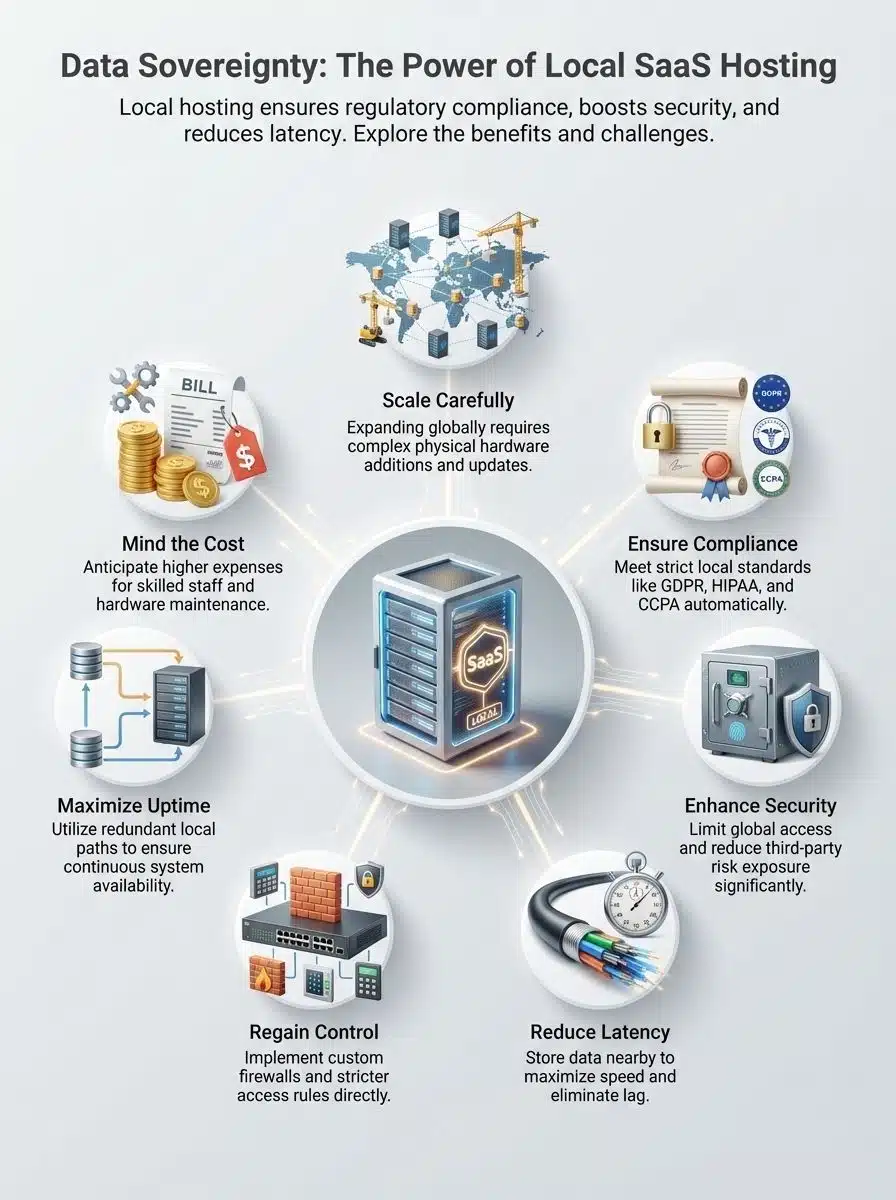
Data sovereignty is the concept that data is subject to the laws of the nation—or state—where it is physically stored. Strict local rules are pushing cloud providers to keep client data within specific borders. This protects privacy on everything from office workstations to personal smartphones.
The stakes are financial, not just legal. According to the 2024 IBM Cost of a Data Breach Report, the global average cost of a data breach has reached $4.88 million. This 10% increase from the previous year shows why sovereignty is a bottom-line issue.
What local regulations affect SaaS data hosting compliance?
Local laws dictate exactly how SaaS providers must store and control data. While we all know HIPAA for healthcare and CCPA for California, the list of regulations is growing fast.
By the end of 2025, new comprehensive privacy laws will be active in states like Delaware, Iowa, Maryland, Minnesota, Nebraska, New Hampshire, New Jersey, and Tennessee.
Keeping track of these manually is impossible.
- Use Automated Compliance Tools: Platforms like Vanta or Drata are essential here. They integrate with your cloud provider to automatically flag if your data storage settings violate specific new state laws.
- Watch for “Copycat” Legislation: Many of these new state laws model themselves after the Virginia Consumer Data Protection Act (VCDPA). If you comply with Virginia’s standards, you are often 80% of the way there for others.
- Sector-Specific Rules: Finance and government sectors often have stricter requirements that go beyond state laws, demanding that data never leave U.S. soil.
How does local hosting improve data privacy and security?
Storing SaaS data within your specific region keeps that information under a single, known legal framework. It limits exposure to global vulnerabilities.
A common misconception is that “local hosting” just means picking “us-east-1” in your AWS console. Real sovereignty goes deeper.
Insider Tip: The most overlooked risk is admin access. You might store your data in a Chicago data center, but if your support team in a different country has full admin rights, you may still be violating data export laws. Use tools like Okta to enforce “geo-fencing” on administrative logins.
Many teams now use private cloud infrastructure to ensure isolation. Top providers like Formbird use advanced security tools for edge caching and load balancing within specific regions.
Matching local settings with national guidelines stops breaches before they start. Our teams manage regular software updates and strict compliance checks using open standards. This ensures no one outside our region can reach into key systems like ViewCord or SequelGame.com through a web browser or cookies.
Benefits of Local SaaS Hosting
Teams see better control and use of their data with local cloud hosting. Beyond compliance, the biggest tangible benefit is raw performance.
How does local hosting reduce latency and boost performance?
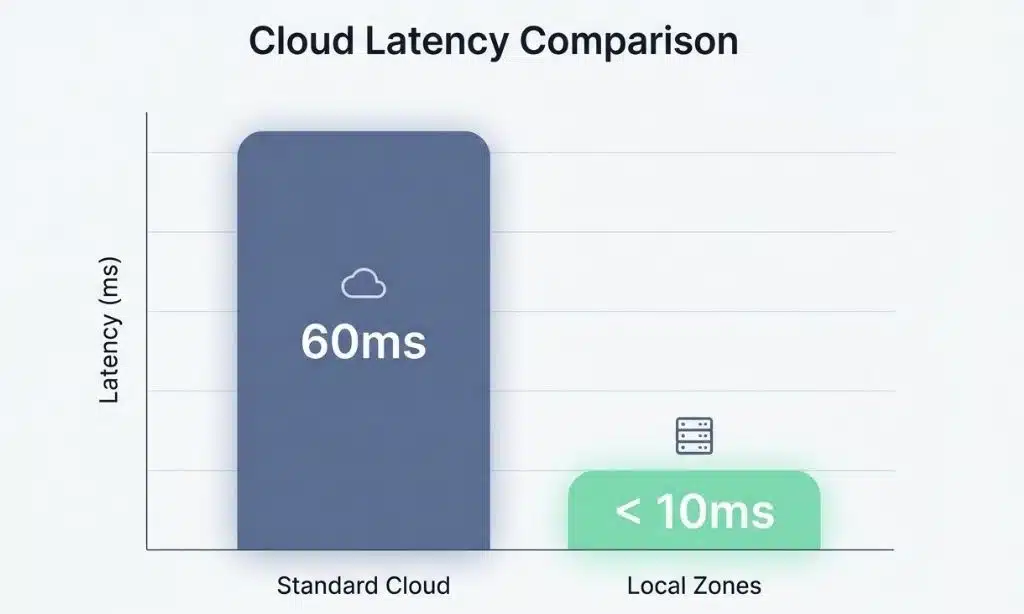
Local SaaS hosting stores your data close to where your users actually are. This drastically lowers latency because information does not have to travel across the country or ocean.
For real-time applications, every millisecond counts.
| Hosting Strategy | Typical Latency (US) | Best For |
|---|---|---|
| Standard Cloud Region | 20ms – 60ms | General web apps, dashboards, and email. |
| Local Zones / Edge | < 10ms | Real-time gaming, financial trading, and video streaming. |
Services like AWS Local Zones or Cloudflare Workers allow you to run code at the “edge,” placing compute power in metro areas like Los Angeles or Miami rather than just in remote data center hubs.
Reliable cloud computing means smooth logins, fast reports, and quick software updates right on the front end. With smart resource pooling from modern virtualization tools like VMware or Hyper-V, systems avoid single points of failure.
Why does local hosting provide greater control over data?
Hosting software as a service on local cloud infrastructure allows organizations to manage their own security controls. Custom firewalls and strict access rules help lower risk.
For the ultimate level of control, some enterprises use AWS Outposts or Google Distributed Cloud. These services literally ship a server rack to your on-premise location that acts like a piece of the public cloud. You get the software tools of the cloud, but the physical data never leaves your building.
This setup gives teams direct oversight for software updates and better control over who sees what information. With managed hosting or hybrid SaaS platforms, businesses like Editorialge Media LLC keep important files on hand for quicker evaluation and safer replication.
Challenges of Local SaaS Hosting

Running Software as a Service with local cloud hosting can bring higher upkeep bills and more work for teams. Expanding beyond borders gets hard, since each new region may need fresh data centers and different rules for data management.
What causes higher operational costs in local hosting?
Local hosting means handling more of your own infrastructure. This setup needs skilled people, which raises staff costs fast.
The Hidden Cost of Talent: You cannot just buy servers; you need people to run them. The average salary for a DevOps Engineer in the U.S. is now approximately $135,000 to $145,000 per year. If you need a team of three to manage a local 24/7 rotation, your labor costs alone can exceed half a million dollars annually.
Building an in-house SaaS hosting system is much pricier than using a third-party provider. Firms face high total cost of ownership (TCO) because they must manage data security, regular maintenance, and buying new equipment as old gear ages out.
How does local hosting limit global scalability?
Local hosting needs more physical servers as your business grows. This can mean buying new hardware and moving data often, which is slow and may stop work for some time.
The technical challenge here is “Data Sharding.”
When you keep German data in Germany and U.S. data in the U.S., you cannot just run one big database. You have to split your application into shards. This complicates your engineering significantly.
- Code Complexity: Your developers must write code that routes users to the right database based on their location.
- Analytics Hurdles: You cannot easily run a “global report” if your data is legally locked in separate silos. You often need a separate “data warehouse” strategy just to see your total revenue.
Regional SaaS hosting setups do not handle peak traffic like big centralized cloud providers. Connecting legacy platforms in these locations makes things even trickier; it takes extra money and technical skills just to stay online in new places.
Final Words
Local SaaS hosting is more important than ever. With rising rules about data security, leaders need to think hard before picking a server location.
Meet Dr. Sarah Lin, a leading voice in cloud technology. She has over twenty years in software as a service and cloud infrastructure planning. After earning her PhD in computer science from MIT, she led research at top tech firms and helped write many industry standards on data sovereignty and data portability.
Dr. Lin points out that local SaaS hosting uses strong encryption tools for safety and keeps up with the newest software updates through quick subscription models. Strong access controls cut the risk of theft or leaks by limiting who can view sensitive business information.
She explains that safety goes hand-in-hand with honesty. Following laws like GDPR or the new U.S. state statutes shows care for user rights.
Dr. Lin suggests organizations weigh ease of use against total cost of ownership when rolling out construction management apps or mobile tools. Always know where your core systems store records so you stay within legal borders during smartphone rollouts.
On balance, she sees many pluses: reduced latency for users nearby, sharper performance, and lower exposure to vendor lock-in. But there are trade-offs too. Costs go up without shared global resources, and scaling worldwide needs careful planning.
Dr. Lin states her final thoughts simply: Data sovereignty will keep shaping software choices long-term because people value privacy alongside speed. It is about respecting every rule—no matter where your office sits—to make digital progress possible for all users everywhere.