Cryptocurrency has revolutionized the financial world, offering decentralization, security, and potential high returns. However, as the industry grows, so do the risks of fraud. Scammers are becoming more sophisticated, leading to billions lost annually.
Understanding the most effective ways to avoid crypto scams is crucial for every investor and trader. This guide provides a comprehensive approach to identifying, preventing, and protecting yourself from cryptocurrency fraud in 2025.
According to recent reports, crypto fraud accounted for over $14 billion in losses in 2021, with phishing attacks and Ponzi schemes being the most common threats. With increasing adoption, the risk continues to rise, making it crucial for investors to stay informed and proactive in safeguarding their digital assets.
This guide covers actionable steps and best practices to help you recognize and avoid scams effectively.
1. Understand Common Types of Crypto Scams
Scammers use various tactics to exploit crypto users. Recognizing these threats is the first step toward safeguarding your assets.
| Scam Type | Description | Prevention Methods |
| Phishing Scams | Fake websites, emails, and social media messages trick users into revealing sensitive information. | Verify URLs, enable 2FA, and never share credentials. |
| Ponzi & Pyramid Schemes | Fraudulent investment plans that use new investors’ money to pay earlier participants. | Avoid “guaranteed” returns, research companies. |
| Fake ICOs & Rug Pulls | Projects that raise money through ICOs and disappear without delivering products. | Verify team credentials, check liquidity locks. |
| Fake Crypto Exchanges | Scam exchanges that steal deposits or manipulate trades. | Use only reputable and licensed exchanges. |
Phishing Scams
Phishing scams are among the most common and deceptive types of cyber threats in the cryptocurrency space. These scams trick users into revealing sensitive information, such as private keys or wallet passwords, by impersonating legitimate crypto services. Attackers often use fake websites, emails, or social media messages to lure victims.
How to avoid:
-
- Always verify the URL before entering credentials.
- Enable two-factor authentication (2FA).
- Never click on unknown links in emails or messages.
- Use anti-phishing browser extensions for additional security.
- Regularly update software and security patches to prevent malware attacks.
Example: In 2023, hackers impersonated Binance through a phishing email campaign, tricking users into entering their credentials on a fake login page. The breach led to millions in stolen funds. Another example is the “Ledger Live” phishing scam, where attackers created a fake Ledger website to steal seed phrases from unsuspecting users.
2. Verify the Legitimacy of Crypto Platforms
Only use well-established, regulated exchanges that have a proven track record of security and reliability. Fraudulent exchanges often lure users in with low fees and high rewards, but lack transparency and regulatory oversight.
Checklist for verification:
- Check for licensing and compliance with financial authorities in your jurisdiction.
- Review user feedback, ratings, and independent reviews on platforms like Trustpilot and Reddit.
- Confirm official URLs and avoid cloned websites that use subtle misspellings.
- Ensure platforms have cold storage solutions to protect user funds and insurance coverage for added protection.
- Investigate the exchange’s history for past security breaches, withdrawal issues, or legal troubles.
- Verify the team behind the platform, their credentials, and whether they have a known presence in the crypto community.
- Look for publicly available audits and financial disclosures to assess transparency.
- Examine customer support responsiveness by testing inquiry responses before investing.
Pro Tip: Always verify the platform’s security practices, such as insurance coverage, multi-signature wallets, and two-factor authentication. Also, use decentralized exchanges (DEXs) when possible to minimize counterparty risk.
3. Always Use Secure Crypto Wallets
Choosing a secure wallet is essential to protect your assets. A cryptocurrency wallet is a digital tool that stores private and public keys, enabling users to send, receive, and manage crypto assets securely. Wallets can be categorized based on security levels, convenience, and usage scenarios.
| Wallet Type | Description | Best Use Case |
| Hot Wallet | Internet-connected; convenient but riskier | Frequent transactions |
| Cold Wallet | Offline storage; highly secure | Long-term holding |
| Multi-Signature Wallet | Requires multiple approvals for transactions | Business & shared accounts |
| Smart Contract Wallet | Uses blockchain-based authentication | DeFi & automated transactions |
| Custodial Wallet | Managed by third-party service providers | New users & convenience |
| Non-Custodial Wallet | Full user control over private keys | Experienced users & security-conscious individuals |
Choosing a Reliable Wallet
- Always opt for hardware wallets like Ledger or Trezor for long-term storage.
- Avoid storing large amounts in exchange wallets due to hacking risks.
- Use multi-signature wallets for added security when managing business funds.
- Consider using smart contract wallets for decentralized finance (DeFi) applications.
- If convenience is a priority, use custodial wallets with strong security measures and insurance policies.
- For maximum control and security, opt for non-custodial wallets where you own your private keys.
Enabling Multi-Factor Authentication (MFA)
Multi-factor authentication (MFA) is a security feature that adds an extra layer of protection to crypto wallets and accounts. MFA requires users to provide two or more verification methods before accessing their accounts, making it harder for attackers to gain unauthorized entry.
How to enable:
-
- Use authentication apps like Google Authenticator.
- Avoid using SMS-based MFA due to SIM swapping risks.
- Utilize biometric authentication where possible.
- Set up emergency backup codes for account recovery.
- Consider using hardware security keys for additional protection.
By expanding on these critical topics with additional details, real-life examples, and practical steps, this guide offers a comprehensive resource for avoiding crypto scams in 2025.
4. Be Cautious of Fake Celebrity Endorsements
Scammers often use fake endorsements from well-known celebrities or influencers to lure victims into fraudulent investment schemes. These scams create fabricated news articles, social media posts, or even deepfake videos to make it appear as though a famous figure is backing a cryptocurrency project.
How to spot and avoid:
-
- Always verify endorsements from official social media accounts or news sources.
- Check the project’s website and background before investing.
- Be skeptical of “get-rich-quick” promises tied to celebrity names.
- Use platforms like Snopes or fact-checking websites to verify claims.
Example: In 2022, scammers used a deepfake video of Elon Musk to promote a fake cryptocurrency giveaway. The video appeared convincing, leading many unsuspecting investors to send funds to fraudulent addresses.
5. Avoid Unverified Crypto Investment Platforms
Many fraudulent platforms pose as legitimate investment firms promising high returns in a short period. These platforms often operate without proper regulation and disappear with investors’ funds once they reach a certain deposit threshold.
Warning signs of a scam platform:
- Offers unrealistic returns with little to no risk.
- Lack of transparency about the company, team, or operational model.
- No regulatory compliance or licensing information available.
- Pressure tactics to invest quickly with limited-time offers.
How to protect yourself:
- Research the platform thoroughly before depositing funds.
- Check user reviews and experiences on platforms like Trustpilot or Reddit.
- Verify if the platform is regulated by financial authorities such as the SEC or FCA.
- Never invest more than you can afford to lose in a new or unverified platform.
Example: In 2023, the “MTFE Trading Platform” scam lured investors with promises of AI-powered crypto trading. After accumulating millions in deposits, the platform suddenly shut down, leaving users unable to withdraw their funds.
6. Stay Vigilant Against Social Media Scams
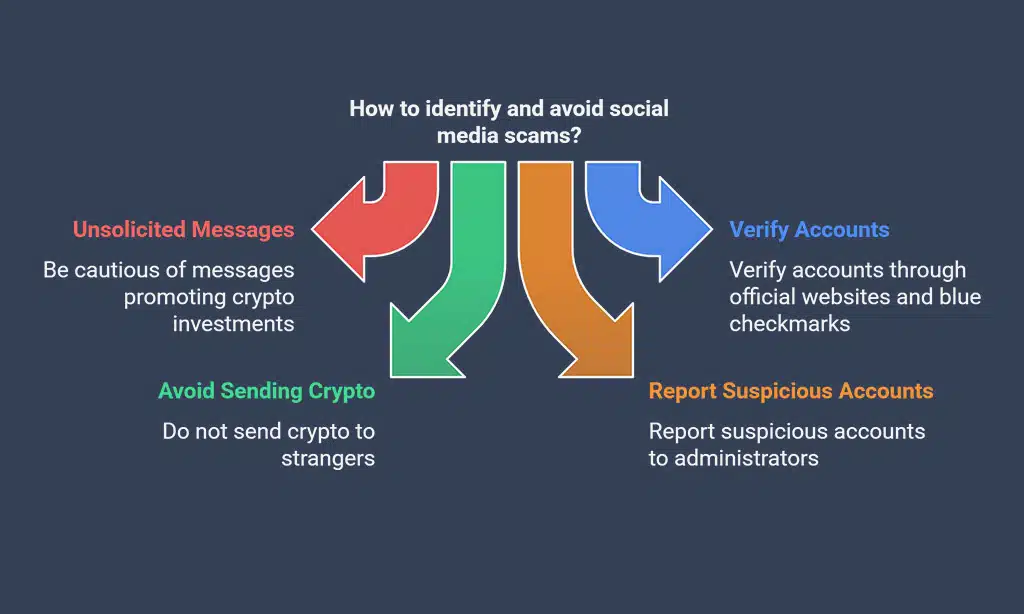
Social media is a breeding ground for crypto scams, with fraudsters creating fake accounts, impersonating influencers, and spreading deceptive investment opportunities.
- Be cautious of unsolicited messages promoting crypto investments.
- Verify social media accounts through official websites and blue checkmarks.
- Avoid sending crypto to strangers, even if they appear reputable.
- Report suspicious accounts and scams to platform administrators.
Example: In 2022, scammers created fake Twitter accounts impersonating Vitalik Buterin, co-founder of Ethereum, to promote fake ETH giveaways. Victims who participated lost thousands in crypto assets.
7. Monitor Transactions and Secure Private Keys
Keeping track of your transactions and safeguarding your private keys are fundamental to avoiding crypto scams.
Best practices:
- Use blockchain explorers to track transactions and identify suspicious activity.
- Store private keys offline in a hardware wallet for maximum security.
- Never share private keys or recovery phrases with anyone.
- Enable alerts for wallet activity to detect unauthorized transactions.
Example: In 2023, a large-scale hack targeted MetaMask users who stored their private keys in online notes. The breach led to the theft of millions in crypto holdings.
8. Be Wary of Pump-and-Dump Schemes
Pump-and-dump schemes involve artificially inflating the price of a cryptocurrency through misleading statements, only for insiders to sell their holdings at a peak, leaving other investors with worthless tokens.
Signs of a pump-and-dump scheme:
- Sudden price spikes without clear reasons.
- Social media hype urging people to buy quickly.
- Lack of project fundamentals or real-world utility.
How to avoid:
- Research the asset before investing.
- Avoid making impulsive purchases based on hype.
- Look for organic growth rather than extreme fluctuations.
Example: In 2022, the Squid Game token experienced a massive pump-and-dump, skyrocketing in price before collapsing to near zero in a matter of days.
9. Watch Out for Impersonation Scams
Scammers often impersonate legitimate cryptocurrency companies, customer service representatives, or influencers to trick victims into sending funds or sharing private information.
How to recognize impersonation scams:
- Fake social media accounts with slight misspellings.
- Unsolicited messages offering “support” or investment opportunities.
- Requests for sensitive data like private keys or passwords.
How to protect yourself:
- Always verify official social media accounts and websites.
- Never share private information with anyone online.
- Contact companies directly through official communication channels.
Example: In 2023, scammers created fake Telegram support groups for popular exchanges, tricking users into sharing their login details.
10. Stay Informed and Educated on Crypto Security
The best way to avoid crypto scams is through continuous education and awareness. Cybercriminals frequently update their tactics, so staying ahead of new threats is essential.
Best practices for staying informed:
- Follow reputable crypto security blogs and news sources.
- Join online communities that discuss scam prevention.
- Take cybersecurity courses to improve digital safety skills.
How to enhance your security mindset:
- Regularly review and update your security settings.
- Encourage friends and family to follow security best practices.
- Keep track of known scams and learn from others’ experiences.
Example: Many users who actively follow crypto security forums on Reddit or Twitter have successfully avoided new and emerging scams by staying informed.
Takeaways
As the cryptocurrency industry continues to grow, so do the risks associated with scams and fraudulent schemes. Protecting your assets requires vigilance, continuous education, and the use of security best practices. Being skeptical of too-good-to-be-true offers, verifying sources, and securing your private keys are fundamental to staying safe in the crypto space.
While regulations and security measures continue to evolve, the best defense against crypto scams is awareness. Stay updated with industry trends, rely on credible sources for investment decisions, and report any suspicious activity to the relevant authorities.
By taking these steps, you can safeguard your digital assets and participate in the crypto economy with confidence. Staying informed and proactive is crucial as scams continue to evolve. Understanding red flags, verifying investment opportunities, and using security best practices will help users protect their assets.
Regularly reviewing new threats, utilizing reliable sources, and fostering a community of awareness can significantly reduce the risks associated with crypto fraud.