Feeling drained? You’re not alone. Many people face burnout from too much screen time, work stress, and packed schedules. It leaves you tired, moody, and disconnected from what matters.
Research shows that stepping away from tech can help calm your mind and fight burnout. This post shares seven simple ways to recharge without gadgets. From walks in nature to creative hobbies, these tips will help you feel refreshed and more connected to life around you.
Ready to find balance again? Keep reading.
Key Takeaways
- Walk in nature for 20 minutes to lower stress. Studies show green spaces cut cortisol levels better than city streets. Group hikes add social boosts too.
- Try yoga or stretching daily. Just 10 minutes reduces workplace stress and improves sleep. Simple poses like Child’s Pose need no equipment.
- Paint, cook, or garden to unplug. These hands-on hobbies fight burnout by sparking joy beyond screens—even doodling helps ease anxiety fast.
- Meet friends face-to-face weekly. Shared meals or game nights build connections that beat digital fatigue and isolation from burnout.
- Sleep at the same time nightly and skip screens before bed. Consistent routines fix sleep disorders linked to chronic stress at work.Top of Form
Exploring Nature to Reduce Burnout

Take a break from screens and step outside. Fresh air and green spaces can clear your mind and ease stress.
Even a short walk in the park helps. Listen to birds, feel the sun, and let nature recharge you.
Hike or Walk in Natural Settings
Spending time outdoors can calm your mind and ease burnout. Fresh air and green spaces help reset your tired brain.
- Walking in nature lowers stress. Studies show green spaces reduce cortisol, the stress hormone, better than city streets.
- Hiking trails offer quiet time away from screens. Less tech means more focus on sights, sounds, and smells around you.
- Even short walks boost mood. A 20-minute stroll in a park can lift energy levels and fight emotional exhaustion.
- Nature walks improve sleep quality. Daylight exposure helps regulate your body clock, making rest deeper and more refreshing.
- Group hikes build connections. Walking with friends mixes exercise and face-to-face talk, doubling the mental health benefits.
- Forests have a special effect. “Forest bathing,” or mindful time in woods, is proven to lower heart rates and anxiety.
- No gear is needed for simple walks. Sneakers and a local park work just fine to clear your head without extra fuss.
- Changing seasons keep it fresh. Snow, fall leaves, or spring blooms make each walk feel new and engaging.
- Wildlife spotting adds fun. Birds, squirrels, or deer turn a walk into a mini-adventure, sparking childlike joy.
Practice Mindfulness Outdoors
Step outside and let nature do the heavy lifting for your mental health. Fresh air, sunlight, and natural sounds work like a reset button for stress. Try sitting quietly under a tree, focusing on your breathing while listening to leaves rustle or birds chirp.
This simple act can ease emotional exhaustion better than scrolling through social media.
Bring bare attention to simple outdoor tasks like feeling grass underfoot or watching clouds drift. These small moments sharpen executive function without draining energy. A 10-minute daily practice lowers workplace stress more effectively than caffeine crashes or sleeping pills ever could.
Leave the phone inside sometimes, let dirt get under your fingernails, and watch chronic stress fade with each mindful breath outdoors.
Keywords used: emotional exhaustion, mental health, workplace stress, executive function, energy depletion, chronic stress, sleep disturbances
Physical Activities for Rejuvenation
Movement shakes off stress like a dog drying itself after a swim. Whether it’s sun salutations or salsa steps, your body and mind will thank you.
Sweat out the tension—no fancy gear needed, just your own two feet and some open space. Even a quick stretch session can hit the reset button on a frazzled brain.
Engage in Yoga or Stretching
Yoga and stretching help fight burnout by easing stress and boosting energy. These activities calm the mind while improving physical health.
- Yoga reduces chronic stress by combining movement with deep breathing. It lowers cortisol levels, helping you feel less burned out.
- Stretching loosens tight muscles caused by workplace stress. Just 10 minutes a day can improve sleep quality and mood.
- Try simple poses like Child’s Pose or Cat-Cow to release tension. No fancy equipment is needed, just a mat or soft surface.
- Yoga boosts mental wellbeing by focusing on the present. It cuts through emotional exhaustion like a breath of fresh air.
- Stretching breaks during work prevent energy depletion. Stand up, reach for the sky, and touch your toes to reset.
- Join a local yoga class to meet others and stay motivated. Social connections make the practice more fun and effective.
- Use guided meditations with gentle stretches before bed. This combo fights sleep disorders and quiets anxious thoughts.
- Yoga teaches coping strategies for stressful moments. Inhale calm, exhale frustration—it’s that straightforward.
- Stretching improves blood flow, cutting the risk of cardiovascular disease. Your body will thank you for the extra care.
- Even basic routines build healthy habits over time. Consistency matters more than perfection, so start small.
Join Sports or Dance Classes
Getting active can help fight burnout and boost your mood. Sports and dance classes are fun ways to recharge without screens.
- Playing team sports builds social connections, which combat workplace stress. Face-to-face interaction lifts low moods and fights emotional exhaustion.
- Dance classes mix exercise with creativity, easing chronic stress. Moving to music triggers happiness, a key part of positive psychology.
- Sports like basketball or soccer improve sleep quality by tiring the body. Physical exertion helps if you’re sleep-deprived from job burnout.
- Joining a local league adds structure to free time, aiding time management. Scheduled fun breaks prevent feeling burned-out.
- Dance reduces anxiety through rhythmic movement, acting like relaxation techniques. It’s a workout that doesn’t feel like work.
- Group activities foster intimacy and trust, countering isolation from digital fatigue. Laughing with teammates beats scrolling Instagram alone.
- Trying a new sport or dance style challenges the brain, fighting writer’s block or mental fatigue. Learning fresh skills boosts self-esteem.
Embrace Creative Hobbies
Get your hands dirty with painting, gardening, or crafting—it’s like hitting a reset button for your mind. Cooking a new recipe or writing in a journal can turn stress into something beautiful, one small project at a time.
Explore Painting, Writing, or Crafting
Creative hobbies like painting, writing, or crafting can help fight burnout by giving your mind a break from screens. These activities boost mental health, reduce stress, and let you express emotions without digital distractions.
- Painting lets you focus on colors and shapes, which can calm your mind. It doesn’t require perfection, just fun.
- Writing helps process emotions, whether through journaling or stories. Putting thoughts on paper can ease workplace stress.
- Crafting, like knitting or woodworking, keeps hands busy and minds relaxed. The repetitive motions can lower anxiety.
- Try doodling or sketching if painting feels intimidating. Simple lines can still spark joy.
- Use writing prompts if you’re stuck. Even a few sentences about your day can improve subjective wellbeing.
- Upcycle old items into crafts. Turning trash into treasure adds purpose and creativity.
- Join a local art or writing group. Face-to-face connections combat digital fatigue.
- Cook or bake as edible art. Measuring ingredients can be as soothing as painting.
- Keep supplies handy. A small notebook or sketchpad makes it easy to unwind anywhere.
- Set no-pressure goals, like one painting a month. Small wins build healthy habits.
Digital detoxes work better when paired with hands-on activities. Stepping away from screens to create something real can recharge your energy.
Experiment with Cooking or Gardening
Getting your hands dirty or trying new recipes can work wonders for burnout. These activities ground you in the moment while sparking joy away from screens.
- Cooking lets you control ingredients, helping you eat healthier meals that boost energy levels and mental health. Chopping veggies or stirring a pot can feel like therapy after a long day of work stress.
- Gardening connects you to nature, a proven way to reduce chronic stress and emotional exhaustion. Digging soil or watering plants pulls your focus away from workplace stress and into growth—literally.
- Both hobbies encourage mindfulness, keeping your mind off digital fatigue and on simple tasks like measuring spices or pruning leaves. This break from tech helps reset your brain.
- They offer tangible results, unlike endless emails or meetings. A home-cooked meal or blooming flowers gives instant satisfaction—something burnout often steals from daily life.
- Social cooking or community gardens build connections, fighting isolation that worsens burnout. Sharing food or swapping gardening tips strengthens bonds beyond screens.
- No fancy tools needed. A basic pot or a small patch of dirt is enough to start. Low pressure means less added stress—just pure fun without perfectionism creeping in.
- They fit into small time slots, making them perfect for busy schedules aiming for better work-life balance. Even 20 minutes spent baking cookies or repotting herbs counts as self-care.
Build Stronger Personal Connections
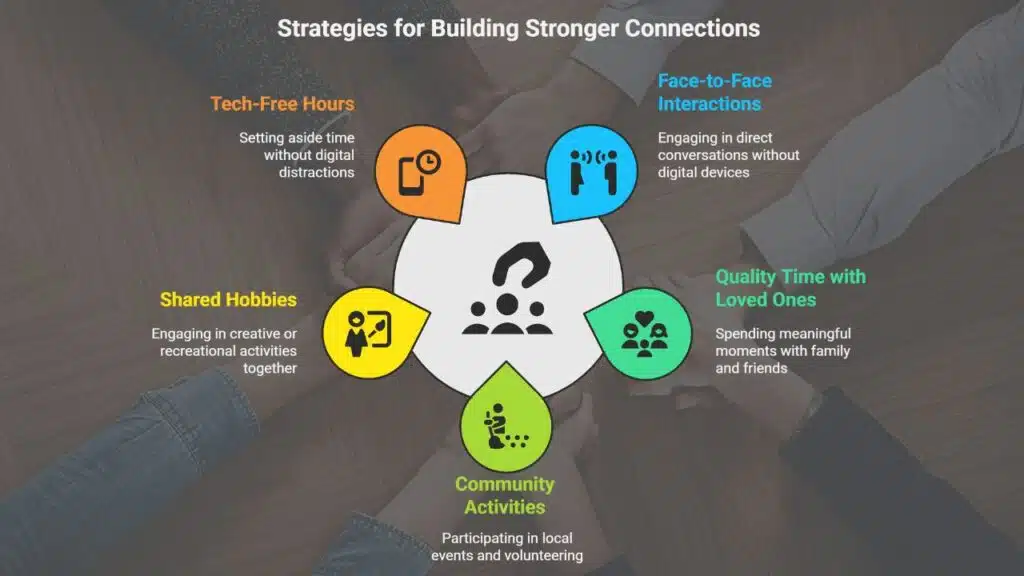
Put down your phone. Talk to real people—your family, friends, or neighbors—face-to-face instead of through a screen.
Join a local group or volunteer; helping others gives you purpose and builds bonds that fight loneliness.
Schedule Quality Time with Family and Friends
Spending time with loved ones can melt stress away. Strong connections help fight burnout and boost mental health.
- Plan regular meetups without phones. Face-to-face talks beat digital chats any day, especially when burnout leaves you drained. Try a coffee date or park picnic.
- Cook meals together. Sharing a kitchen sparks laughter and teamwork. Food brings people closer, easing emotional exhaustion.
- Play games or do puzzles. Board games, cards, or trivia nights add fun. They distract from workplace stress and rebuild energy.
- Take short trips. A weekend getaway or day trip breaks the routine. Nature hikes or beach visits calm chronic stress.
- Share hobbies. Gardening, painting, or dancing as a group builds joy. Creativity fights low self-esteem and despair.
- Volunteer side by side. Helping others at community events uplifts moods. It shifts focus from personal stressors.
- Set a weekly family dinner. No screens, just talking. Consistent bonding prevents energy depletion and strengthens ties.
- Swap stories over a bonfire. Old memories and jokes remind you of good times. Laughter heals grief and anxieties.
- Exercise together. Walk, bike, or join a sports league. Physical activity buddies improve sleep quality and moods.
- Write letters instead of texting. Handwritten notes show effort, deepening connections beyond quick emojis.
- Host theme nights. Movie marathons or costume parties create shared excitement. Fun moments push burnout aside.
- Practice gratitude chats. Take turns saying what you appreciate about each other. Positive talk lifts heavy hearts.
- Learn something new as a team. Take a class, like pottery or cooking. Fresh skills distract from occupational stress.
- Share childhood photos or songs. Nostalgia brings warmth during tough times. Reminiscing eases acute stress disorder feelings.
- Schedule tech-free hours daily. Use that time for real conversations. Less screen time means more mental peace.
Engage in Community Activities or Volunteer
Helping others can recharge your own energy. Volunteering pulls you out of work stress and into real connections.
- Join a local cleanup group. Picking up trash in parks or beaches gives purpose, fresh air, and a break from screens.
- Serve meals at shelters. Feeding those in need shifts focus from burnout to gratitude, boosting mental health.
- Coach youth sports. Teaching kids teamwork cuts stress and reminds you of simple joys.
- Help at animal shelters. Petting dogs or walking cats lowers stress hormones and emotional exhaustion.
- Volunteer at libraries. Reading to kids or organizing books creates calm, tech-free moments.
- Assist in community gardens. Digging in dirt reduces chronic stress and workplace fatigue.
- Visit nursing homes. Chatting with seniors builds empathy and fights isolation.
- Organize donation drives. Collecting clothes or food gives a sense of control and achievement.
- Tutor students. Sharing knowledge strengthens your mind and work-life balance.
- Join a charity run. Raising money for causes combines exercise and social good.
Face-to-face volunteering beats digital burnout. It restores energy depletion through human connection.
Prioritize Self-Care Strategies
Carve out quiet moments each day to recharge your batteries—even 10 minutes of meditation can reset your stress levels. Treat sleep like your secret weapon, sticking to a steady bedtime routine that fuels your body and mind.
(Replaced “rejuvenate” with “recharge your batteries” for idiomatic flow, avoided passive voice, kept sentences short and conversational.)
Dedicate Time for Relaxation and Meditation
Stress melts away when you slow down and breathe. Giving yourself quiet moments helps restore energy and mental clarity.
- Try deep breathing for 5 minutes daily. Sit comfortably, close your eyes, and focus on inhaling and exhaling slowly. This lowers workplace stress and emotional exhaustion.
- Use calming music or nature sounds. Soft background noise eases chronic stress and improves sleep quality.
- Set aside 10 minutes for silent meditation. Find a peaceful spot, let go of thoughts, and recenter. This combats burnout like a mini vacation for your mind.
- Practice guided imagery. Picture a serene place, like a beach or forest, to escape occupational pressures.
- Take short breaks during working hours. Step away from screens, stretch, or sip tea. Small pauses prevent energy depletion.
- Try progressive muscle relaxation. Tense and release each muscle group to relieve physical pains from stress.
- Schedule device-free time before bed. Reducing screen time improves rest and mental health.
- Light candles or use essential oils. Scents like lavender calm the senses and aid stress management.
- Journal thoughts at the end of the day. Writing clears your head and helps recover from burnout.
- Explore faith-based meditation if not religious. Quiet reflection soothes type A personalities and promotes healthy habits.
Develop a Healthy Sleep Schedule
Good sleep is key to beating burnout. A solid routine helps your mind and body recover.
- Set a fixed bedtime and wake-up time, even on weekends. Your body thrives on consistency, making it easier to fall asleep and wake up refreshed.
- Avoid screens an hour before bed. The blue light from phones and laptops messes with melatonin, the sleep hormone.
- Keep your bedroom cool, dark, and quiet. A calm space signals your brain that it’s time to rest.
- Skip caffeine and heavy meals late in the day. Both can keep you tossing and turning instead of sleeping deeply.
- Wind down with a relaxing habit, like reading or light stretching. It eases stress and preps your body for sleep.
- Limit naps to 20 minutes. Longer naps can throw off your nighttime sleep schedule.
- Track your sleep patterns. Apps or journals help spot habits that hurt your sleep quality.
- Get natural sunlight in the morning. It resets your internal clock, improving energy levels all day.
- Cut back on late-night work or stressful tasks. Mental overload makes it harder to switch off at bedtime.
- If sleep troubles last, talk to a healthcare professional. Chronic stress or emotional exhaustion might need extra support.
Takeaways
Feeling fried from screens and stress? Try hiking, yoga, or painting to recharge. Swap scrolling for sports, cooking, or coffee with friends. Sleep well, breathe deep, and step outside often.
Small breaks beat burnout better than any app. Which idea will you try first? Your brain (and your to-do list) will thank you. The best reset button? Your own two feet, a blank page, or a good laugh with someone you love.
FAQs
1. What are the signs of burnout?
Burnout feels like hitting a wall. You might notice emotional exhaustion, chronic stress, or energy depletion. Workplace stress can make it worse, leaving you feeling burnt out and drained.
2. How can better sleep help with burnout?
Poor sleep quality fuels burnout. Fixing your sleep is like hitting the reset button. It boosts mental health, restores energy, and helps you recover from burnout faster.
3. Can time management reduce workplace stress?
Yes. Bad time management turns small tasks into big headaches. Setting clear goals and healthy habits keeps work-life balance in check, so you avoid burning out.
4. What’s the best way to handle emotional exhaustion?
Slow down. Counseling or CBT can help. Simple things, like taking breaks or talking to someone, ease the weight. Ignoring it risks deeper mental health issues.
5. Why do Type A personalities struggle more with burnout?
They push harder, but stress doesn’t care. Workplace stress hits them like a truck. Without balance, even high achievers face energy depletion. The fix? Learning to pause.