

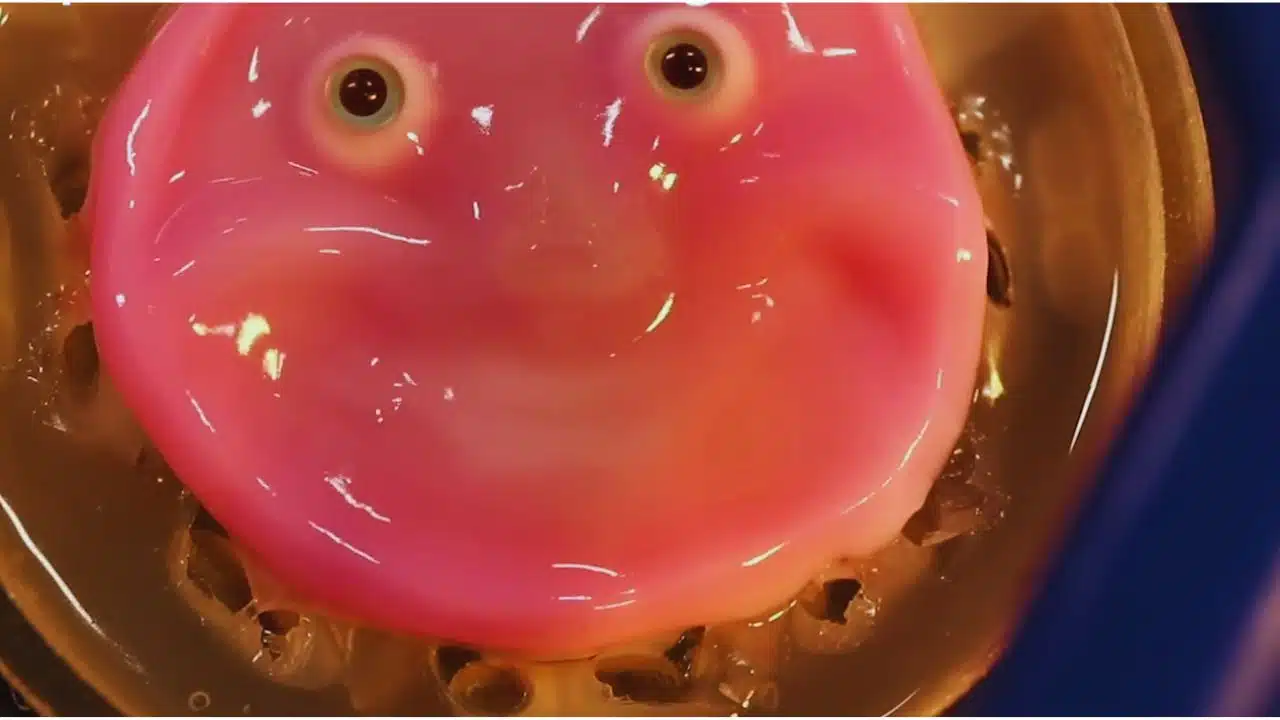
Scientists Develop Smiling Robot Face with Living Human Skin Cells

Smiling Robot Face with Living Human Skin Cells

Japanese scientists from Tokyo University have successfully developed a smiling face using living human skin cells, intended for attachment to a humanoid robot. This innovative research aims to provide robots with realistic facial expressions, enhancing their interaction with humans.

The Process of Creating Living Skin for Robots

The research team utilized a cultured mix of human skin cells grown in a laboratory to develop the living tissue. This new skin, soft like real human skin, can self-repair, making it durable and resistant to ripping or tearing. The journal Cell Reports Physical Science published the study’s findings.

To recreate the skin’s natural flexibility, researchers mimicked the ligaments that tether human skin. They used tiny ropes made of flexible collagen and elastane, drilling small holes into the robot’s surface. They then applied a collagen-containing gel and attached the layer of artificial skin on top. This innovative method ensured that the new skin could move with the robot’s mechanical components without breaking.

Advancing Robotics with Realistic Skin

Professor Shoji Takeuchi, the lead researcher, explained the significance of their method. “By mimicking human skin-ligament structures and using specially made V-shaped perforations in solid materials, we found a way to bind the skin to complex structures,” he told the BBC. This technique not only enhances the robot’s appearance but also its functionality, allowing the skin to move naturally without tearing or peeling away.

Future Applications and Potential Impact

The team cautions that although this breakthrough represents a significant advancement in robotics, it will require many years of testing before commercialization. Their research’s implications extend beyond robotics, potentially impacting fields such as cosmetic science, skin aging research, and surgical procedures, including plastic surgery.

The creation of a robot with living human skin cells opens up new possibilities for developing more lifelike and interactive robots. As the technology continues to evolve, it holds promise for improving human-robot interactions and advancing various scientific and medical fields.


The information is taken from NDTV and and News18


Subscribe to Our Newsletter

Related Articles

Top Trending

How Entity SEO Helps AI Engines Understand You
Best CRM Tools for Small Marketing Teams
10 CRM Tools for Small Marketing Teams Worth Using
how many numbers should a toddler recognize
How Many Numbers Should a Toddler Recognize?
Painless Time Tracking
Why Time Tracking Feels Awful [and How to Make It Painless]
SaaS partnership tools
10 Best Tools for Managing SaaS Partnerships and Integrations

Technology & AI

Best CRM Tools for Small Marketing Teams
10 CRM Tools for Small Marketing Teams Worth Using
SaaS partnership tools
10 Best Tools for Managing SaaS Partnerships and Integrations
White-Label SaaS Platform to Resell
8 Best White-Label SaaS Platforms to Resell
How to Add AI Features to an Existing SaaS
How to Add AI Features to an Existing SaaS: A 7-Step Guide From a Live AI Platform
How to Read the Page Indexing Report in GSC
How to Read the Page Indexing Report Properly

GAMING

Intentional Screen Time
How to Spend Your Screen Time More Intentionally
Complete Guide on Game Programgeeks
Game Programgeeks: A Complete Guide on PC, Game Dev, and Tech
Online Color Game Philippines
Online Color Game Philippines: What Every Beginner Should Know Before Playing
Ways to Reduce Game Development Costs
12 Ways Studios Cut Game Development Costs
NFT game development cost
How Much Does NFT Game Development Cost? A Realistic Budget Breakdown

Business & Marketing

Time to Value: How SaaS Teams Can Reach Results Faster
How to Onboard New Team Members With a Self-Serve Wiki
How to Document Team Processes for Better Teamwork
How to Manage Scope Creep Before It Manages You
How to Manage Scope Creep Without Blocking Good Ideas
Made in America work boots
Made in America Still Matters When You’re Buying Serious Work Boots

EdTech & E-Learning

how many numbers should a toddler recognize
How Many Numbers Should a Toddler Recognize?
Best Educational YouTube Channel for Kids
Best Educational YouTube Channel for Kids: 10 Picks for Ages 2 to 8
what makes an educational app educational
What Makes an Educational App Actually Educational?
How Alphabet Knowledge Predicts Reading Success
Mistakes Parents Made When Teaching Alphabet
8 Mistakes Parents Make When Teaching the Alphabet

Software & Apps

Best CRM Tools for Small Marketing Teams
10 CRM Tools for Small Marketing Teams Worth Using
SaaS partnership tools
10 Best Tools for Managing SaaS Partnerships and Integrations
White-Label SaaS Platform to Resell
8 Best White-Label SaaS Platforms to Resell
How to Add AI Features to an Existing SaaS
How to Add AI Features to an Existing SaaS: A 7-Step Guide From a Live AI Platform
free SaaS alternatives
9 Free Tools That Replace Expensive SaaS Subscriptions





















