

Russian pipeline gas exports to Europe are on track to fall by about 44% in 2025 compared with last year, underscoring how quickly the continent is unwinding decades of energy dependence on Moscow. Flows have dropped to their lowest level since the early days of Soviet gas exports to Western Europe in the 1970s.
Historic low in pipeline flows
According to data compiled from European gas grid operators, Russian pipeline deliveries to Europe are expected to total around 18 billion cubic metres (bcm) in 2025 if current daily flows persist through year-end. That would represent a steep decline from roughly 32 bcm in 2024 and a fraction of the more than 175–180 bcm shipped annually before the Ukraine invasion, when Russian gas dominated the European market. Analysts note that such volumes are comparable to or even below the levels of the mid‑1970s, when Soviet gas exports to Europe were still in their infancy.
The collapse in flows marks a dramatic reversal from 2021, when Russia supplied about 140–150 bcm of pipeline gas to the EU and was by far the bloc’s largest external gas provider. Today, Russian pipeline gas accounts for only a small share of total European supply, with the shortfall replaced by liquefied natural gas (LNG) and higher pipeline imports from Norway and other producers.
End of Ukraine transit and TurkStream’s role
The single biggest structural shift came on 1 January 2025, when Russian gas transit via Ukraine stopped after the long‑running contract between Moscow and Kyiv expired and was not renewed. The halt removed roughly 15 bcm of annual supply that had still been flowing to Central Europe in 2024, forcing buyers in countries such as Slovakia, Austria and the Czech Republic to rely more heavily on storage and west‑to‑east flows from Germany.
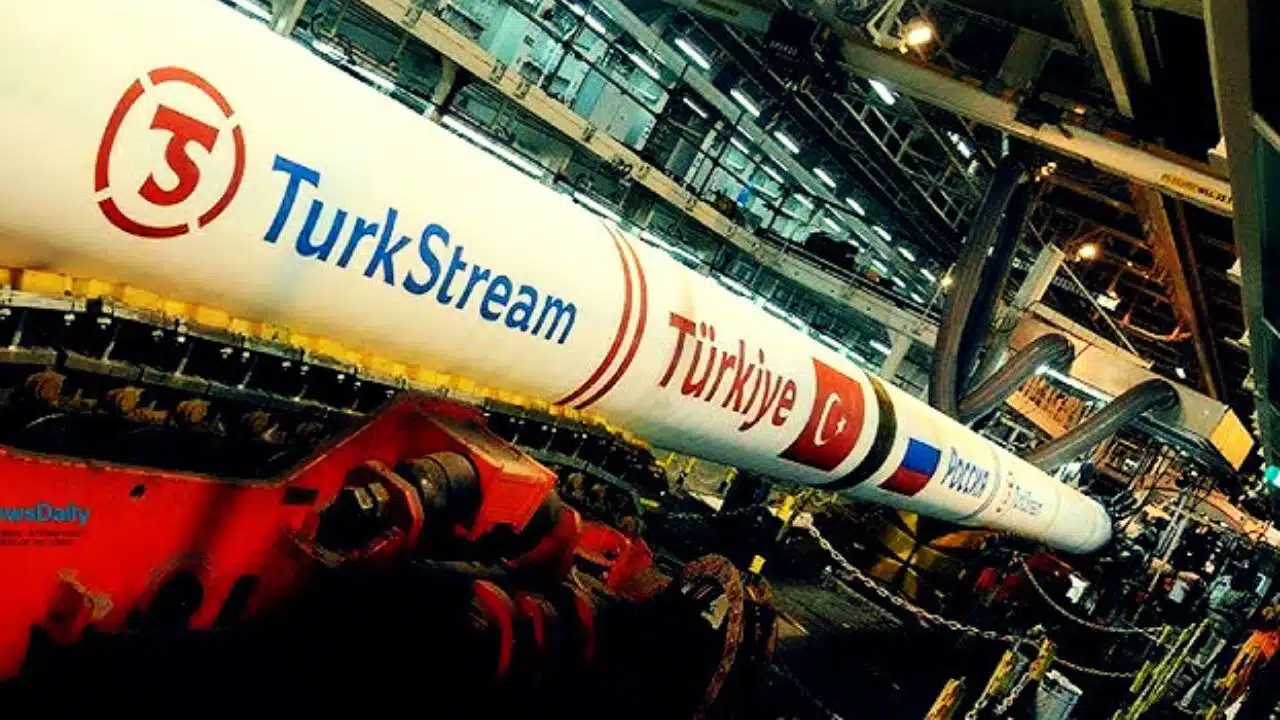
With the Ukrainian corridor closed and the Nord Stream pipelines already out of operation, TurkStream has become the only remaining route for Russian pipeline gas into the EU, serving primarily Southeast Europe. Shipments via TurkStream to European customers in the first eleven months of 2025 were in the mid‑teens of bcm, broadly in line with the pipeline’s maximum export capacity into the EU, which explains why overall exports cannot rise much without new routes.
Europe’s diversification accelerates
The sharp reduction in Russian pipeline gas has coincided with a continued fall in overall pipeline imports to the EU, which declined about 9% year on year in the first half of 2025 as the bloc leaned harder on LNG and demand‑reduction measures. LNG cargoes from the United States, Qatar and other suppliers have filled much of the gap, while Russian LNG itself has paradoxically hit record import levels in some months even as the EU signals plans to phase it out by 2027.
Despite this LNG uptick, Russia’s share of extra‑EU gas imports has dropped sharply from pre‑war levels; in 2021, Russian gas provided roughly 45% of EU gas imports, but that share has fallen to the mid‑teens by 2024–2025. Brussels has kept in place a political commitment to end dependency on Russian fossil fuels by the end of 2027, pushing member states to diversify supply, expand renewables and curb gas demand.
Economic strain on Gazprom and Moscow
For Gazprom, the collapse of the European market has translated into sharply lower export volumes and shrinking revenues compared with the windfall years of high prices and large pipeline flows before 2022. Analysts estimate that, even including sales to Turkey, Russian pipeline exports outside the former Soviet Union remain far below 2021 levels, leaving a significant volume of gas effectively stranded.
Russia has tried to pivot towards Asia, particularly China, through the Power of Siberia pipeline, but those flows are still too small to compensate for the loss of Europe and are tied to separate production regions. Negotiations over additional routes to China have been slow, and plans for a gas hub in Turkey have yet to materialize in a way that would restore export volumes.
Outlook for European energy security
In the short term, European gas security hinges on factors such as winter weather, storage levels and global LNG availability, but the system has so far absorbed the loss of Ukrainian transit without major disruption. Higher storage withdrawals, increased intra‑European flows and robust LNG imports have allowed countries in Central and Eastern Europe to replace missing Russian molecules, albeit often at higher cost.
Longer term, most energy experts see little prospect of Russian pipeline gas returning to Europe in anything like its previous volumes, both because of EU policy choices and the lasting political rupture with Moscow. As a result, the 44% drop in 2025 is viewed less as a temporary fluctuation and more as another step in a structural decoupling that is reshaping the European and Russian gas industries alike.























