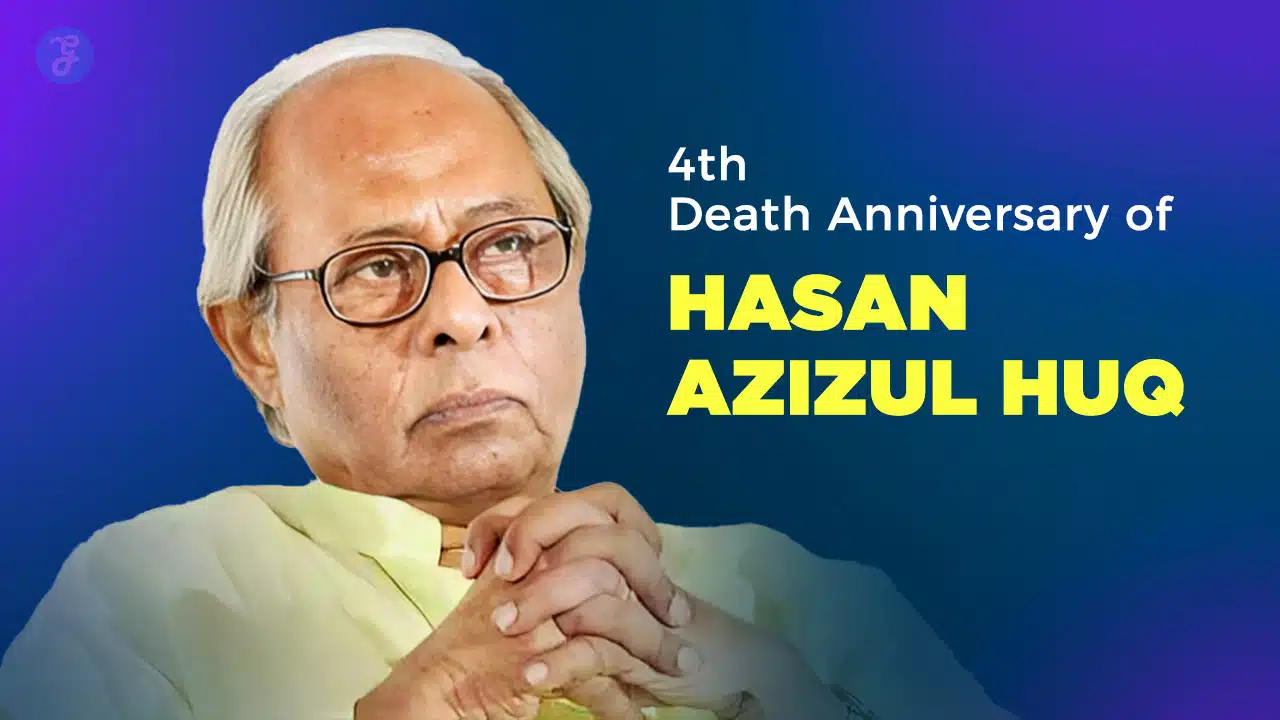
As we mark the 4th death anniversary of Hasan Azizul Huq, it is fitting to reflect on his profound impact on Bengali literature. Huq was not just a storyteller; he was a philosopher and a political thinker whose works captured the essence of a nation’s struggles, the complexities of human nature, and the painful aftermath of historical traumas.
Through his unique narrative style and philosophical depth, Huq’s stories transcend time and continue to resonate with readers today. In remembering Hasan Azizul Huq, we honor not only his literary genius but also the profound intersection of literature, philosophy, and politics that defined his work.
Hasan Azizul Huq: A Brief Overview of His Life and Legacy
Born in 1939 in Jabgraam, Bengal (then British India), Hasan Azizul Huq witnessed firsthand the seismic changes that marked the 20th century, from the brutal partition of India to the eventual independence of Bangladesh. The 1947 Partition, which displaced his family along with millions of others, became a recurring theme in his stories. Educated in philosophy at the University of Rajshahi, Huq’s academic background in the subject laid a strong foundation for his literary endeavors.
His literary journey began with his short stories, which quickly earned him recognition as one of the most important voices in Bengali fiction. Many have praised his work for its psychological depth, its critique of societal structures, and its exploration of existential and philosophical dilemmas. Over his career, he was honored with numerous awards, including the Ekushey Padak (1999) and the Independence Award (2019), solidifying his place in the literary canon of Bangladesh.
Huq passed away on November 15, 2021, but his works continue to be read and appreciated, offering an unflinching lens into the human condition and the social upheavals of post-colonial Bangladesh.
Brief Biography of Hasan Azizul Huq
| Category | Details |
|---|---|
| Full Name | Hasan Azizul Huq |
| Date of Birth | February 2, 1939 |
| Place of Birth | Jabgram, Burdwan District (British India, now India) |
| Date of Death | November 15, 2021 |
| Nationality | Bangladeshi |
| Education | Bachelor’s in Philosophy, University of Rajshahi |
| Occupation | Writer, Philosopher, and teacher. |
| Notable Works | The notable works include Jeeban Ghase Agun, Atmaja o Ekti Karabi Gaachh, Pataale, and Haspataale. |
| Awards | Ekushey Padak (1999), Independence Award (2019), Bangla Academy Literary Award (1970) |
| Literary Contributions | Short stories, novels, and Essays on Philosophy and politics. |
| Major Themes | The major themes include social injustice, identity, trauma, post-partition experiences, and political allegory. |
| Legacy | Considered one of the most important figures in modern Bengali literature |
The Literary Genius of Hasan Azizul Huq
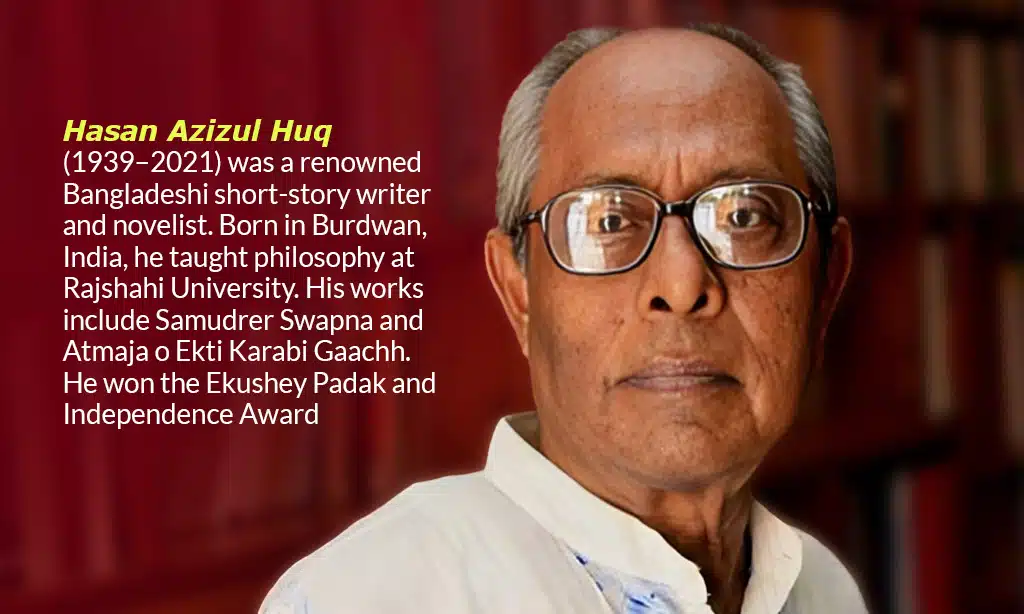
Hasan Azizul Huq’s writing is characterized by a narrative style that is as direct as it is poetic. His short stories, often dealing with themes of alienation, identity, and the harsh realities of life, are grounded in a deep understanding of the human psyche. His characters, frequently shaped by trauma or marginalization, are complex and multi-dimensional.
Huq’s stories don’t shy away from uncomfortable truths. They expose the inequalities of the socio-political landscape, often with a sharp critique of the injustices faced by the marginalized. His works, like Atmaja o Ekti Karabi Gaachh, Jibon Ghashe Agun, and Agunpakhi, stand as testaments to his ability to weave the personal and the political into a single narrative.
In his stories, Huq explored the lives of ordinary people in extraordinary circumstances—individuals struggling with their identity, grappling with their past, and attempting to navigate the complexities of post-Partition Bangladesh. Whether dealing with the effects of the Liberation War or the psychological scars left by social injustices, Huq’s writing remains a powerful force in Bengali literature, offering readers a window into the soul of a nation and its people.
Philosophy in Huq’s Writing: The Depth of His Thought
At the heart of Hasan Azizul Huq’s work lies a deep engagement with philosophy. His academic background in philosophy is evident in the complexity of his stories. While his narratives are grounded in the real world, they are also a meditation on the nature of existence, identity, and the human condition.
Huq’s exploration of existentialism and humanism is central to understanding his work. His characters often grapple with questions of purpose and meaning, struggling to determine their place in a world that seems indifferent to their suffering. His stories reflect on how people’s choices in hard times affect their self-image.
Through his philosophical lens, Huq explored the idea of self in the context of history and society. His works examine how personal identity is shaped by external forces—be it the trauma of war, the pressure of social norms, or the burden of national history. These philosophical inquiries elevate his writing beyond mere storytelling, making his work a profound commentary on the human experience.
The Political Context: Literature as a Tool for Social Change
Hasan Azizul Huq’s work is deeply political. His stories do not just capture the lives of individuals but also reflect the larger socio-political currents of his time. Born into a world marked by Partition, Huq’s early experiences with displacement and loss shaped much of his political worldview. His stories often critique the injustices faced by the marginalized, the impoverished, and those who live in the shadow of national and historical upheavals.
The impact of the 1947 Partition and the 1971 Liberation War on the people of Bangladesh is a recurring theme in Huq’s work. He used literature as a means of exploring the personal and collective trauma caused by these events. His stories show how national identity, social structures, and political realities shape individual lives. Whether addressing the trauma of the Partition or the struggles of the working class, Huq’s fiction provides a powerful critique of the political systems that perpetuate inequality and social injustice.
Through his stories, Huq engaged with the politics of identity, belonging, and power. His work called attention to the often-overlooked voices of those living on the margins of society, using literature as a tool to question and challenge the status quo. For Huq, literature was not just an art form—it was a way to effect change, to illuminate injustice, and to offer a vision of a more equitable society.
The Lasting Legacy: Hasan Azizul Huq’s Influence on Contemporary Literature
Hasan Azizul Huq’s influence extends far beyond his lifetime. His works continue to inspire new generations of writers, particularly those engaged with the complexities of post-colonial identity, social justice, and the human condition. Many contemporary Bangladeshi authors have cited Huq as a major influence on their work, drawing on his themes of alienation, social critique, and the search for self.
In addition to his influence within Bangladesh, Huq’s works have been translated into multiple languages, allowing his voice to resonate globally. His ability to address universal themes—identity, trauma, social justice—has made his writing relevant not only in South Asia but around the world.
The revival of interest in his work, particularly among younger readers, is a testament to his lasting legacy. As modern readers confront issues of displacement, identity, and political upheaval, they find in Huq’s stories a deep resonance with their own experiences. His work remains as relevant today as it was when it was first written, serving as a bridge between past and present and between literature and the political realities of the world.
Takeaways
In remembering Hasan Azizul Huq, we honor a literary figure whose work continues to shape the discourse on literature, philosophy, and politics. His ability to weave the personal and the political, to explore the depths of human nature while engaging with the pressing issues of his time, makes him a writer for the ages. His stories challenge us to think more deeply about the world around us and our place within it.
Hasan Azizul Huq’s legacy as a philosopher and political commentator is as significant as his literary accomplishments. His works will continue to inspire and provoke thought for generations to come, reminding us of the power of literature to reflect, critique, and, ultimately, change the world.
As we remember Hasan Azizul Huq today, we are reminded of the timeless relevance of his voice—one that continues to speak to the complexities of identity, history, and society in a way that few others can.