Quantum computing uses quantum mechanics to process information. This emergent field of computer science and engineering exploits superposition and entanglement to solve problems unlike classical computing.
Qubits hold more than a 0 or 1 at the same time. Quantum algorithms can tackle tasks that are too complex for even the best modern computers.
Researchers have used quantum computers to calculate the energies of small molecules and to simulate the magnetic properties of collections of materials. Industries study uses in drug discovery, financial modeling, energy and logistics optimization, and cryptography.
The field breaks down into key ideas like qubits, gates, circuits, and measurements so students and professionals can learn them in plain language.
How Quantum Computing Differs From Classical Computing
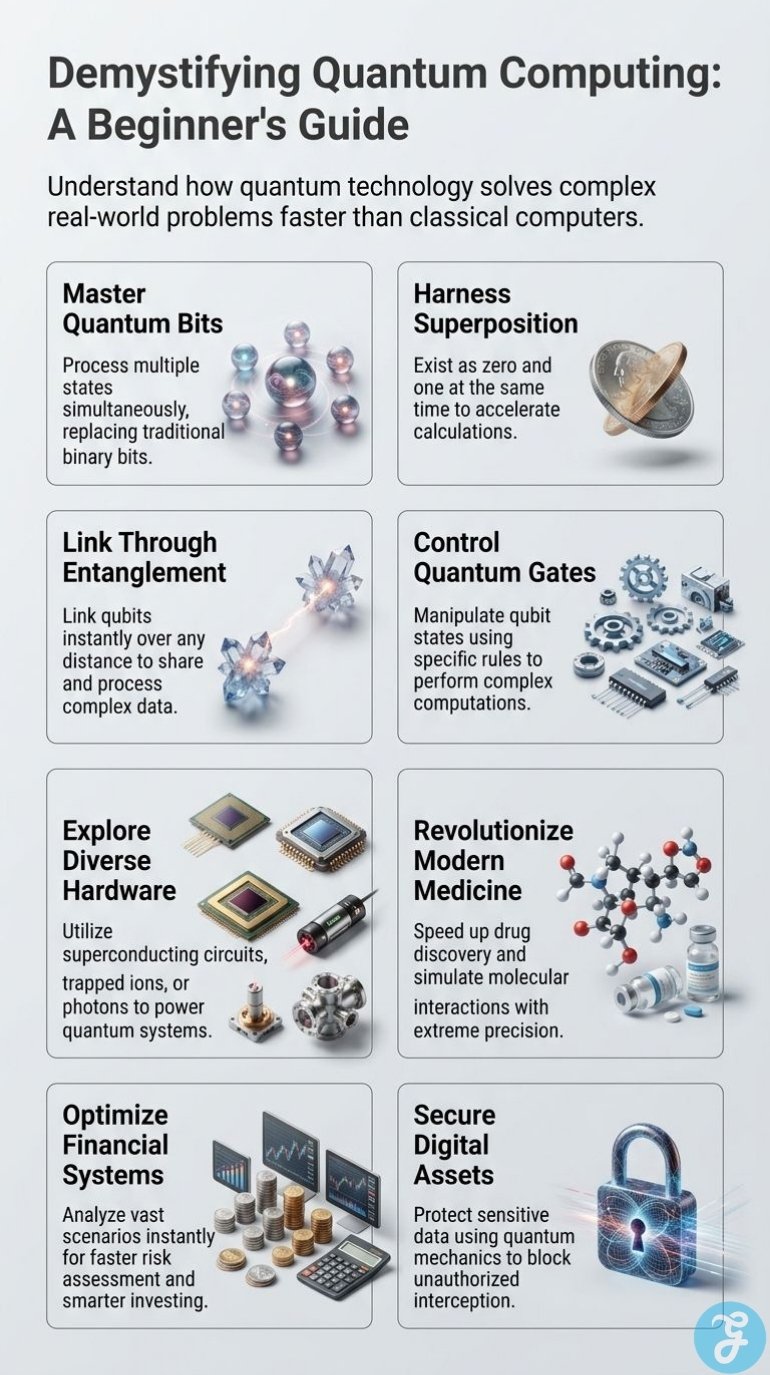
Classical computing uses bits as the basic unit of information. A bit can be either a 0 or a 1. In contrast, quantum computing uses qubits. Qubits can represent both 0 and 1 at the same time due to superposition.
This allows quantum computers to process many possibilities at once.
Superposition and entanglement are key concepts in quantum mechanics that set quantum computing apart from classical computing. Entangled qubits stay connected, even when far apart; changing one affects the other instantly.
These unique properties let quantum computers tackle complex problems that classical computers struggle with or cannot solve. They have shown promise in areas like drug discovery and simulating materials, proving their real-world value beyond just theory.
Why Beginners Should Care
Quantum computing is changing how we think about technology. It uses the strange rules of quantum mechanics to solve tough problems that regular computers can’t tackle. Beginners should care because this new field offers real-world applications.
For example, quantum computing can help discover new medicines faster than before. In finance, it helps with risk analysis and models complex markets.
The differences between classical computing and quantum computing are significant. Quantum computers use qubits instead of bits; they can be both 0 and 1 at the same time due to a concept called superposition.
This allows them to process information much faster than traditional systems. Understanding these ideas opens up exciting opportunities in data science and artificial intelligence for anyone eager to learn more about technology’s future.
Core Building Blocks of Quantum Computing
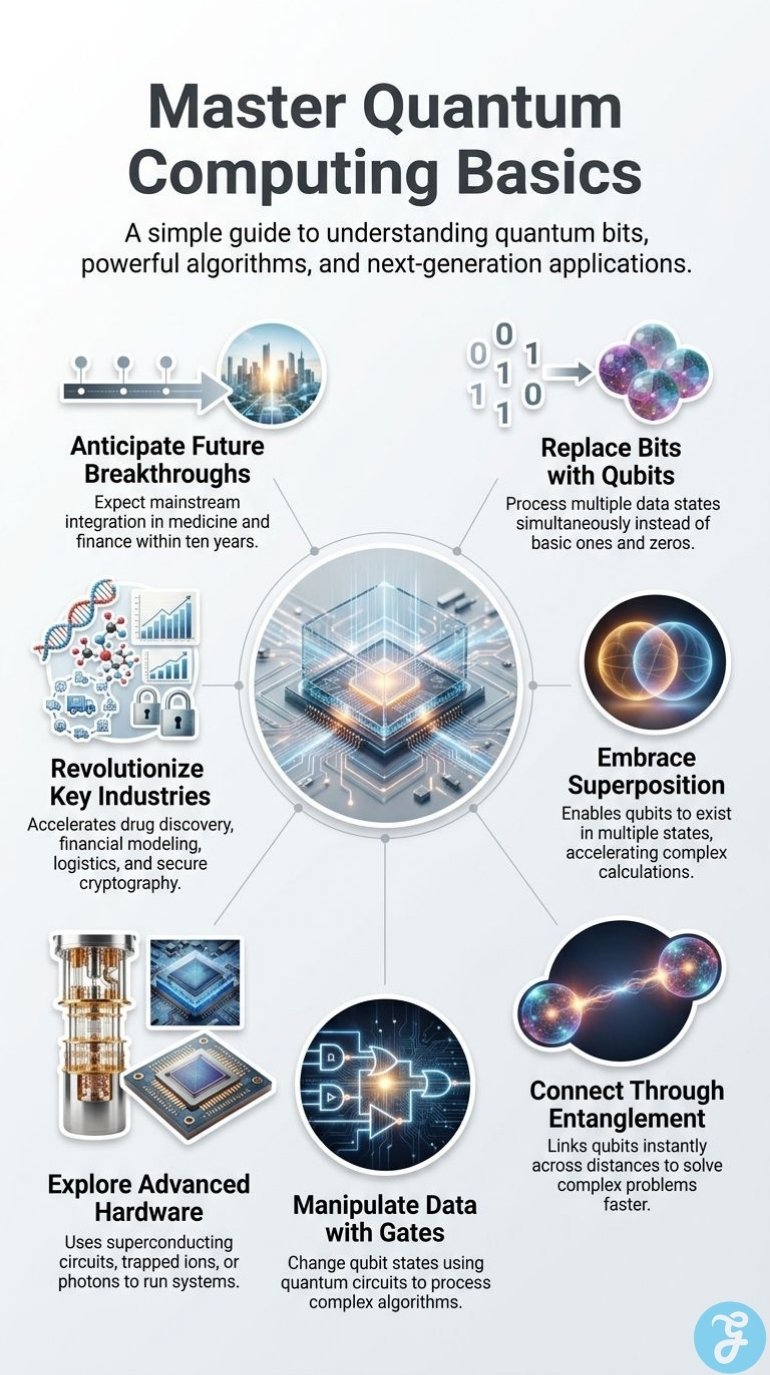
Quantum computing uses simple units called qubits. Qubits can hold more information than regular bits because they can be in multiple states at once. This is due to two main ideas: superposition and entanglement.
Superposition means a qubit can be both 0 and 1 at the same time, while entanglement links qubits together, letting them share information instantly. Understanding these basics helps us see how quantum computers are different from traditional ones.
What Are Qubits?
Qubits are the building blocks of quantum computing. They are like bits in classical computing, but qubits can do more. A bit is either a 0 or a 1, while a qubit can be both at the same time due to superposition.
This feature allows quantum computers to process huge amounts of data much faster than usual computers.
Entanglement is another key trait of qubits. When two qubits become entangled, their states link together. Changing one will affect the other instantly, no matter how far apart they are.
This connection helps solve complex problems that regular computers struggle with. Qubits make quantum computing powerful and unique in computation tasks.
Superposition and Entanglement Explained
Superposition is a key idea in quantum computing. It allows qubits to be in two states at once, like heads and tails of a coin spinning. This means that quantum computers can handle many calculations at the same time.
They process information much faster than classical computers.
Entanglement is another important concept. When qubits are entangled, the state of one qubit depends on the state of another, no matter how far apart they are. This strange link helps quantum computers solve complex problems quickly and accurately.
Together, superposition and entanglement make quantum computing powerful and unique compared to classical computing methods.
Quantum Gates, Circuits, and Measurements
Quantum gates are the basic building blocks of quantum computers. They help change qubits, which are the units of information in quantum computing. Each gate performs a specific operation on one or more qubits.
This is similar to how classical computers use logic gates to process bits.
Circuits connect these gates together. A quantum circuit takes multiple qubits and applies a series of gates to them; this creates complex operations that can solve tough problems quickly.
After processing, we measure the qubits’ states to get an output that helps answer questions or solve tasks. Understanding these concepts gives beginners insight into how quantum computing works in practical terms and its possible uses in fields like cryptography and data science.
How Quantum Computers Work
Quantum computers process information in a unique way. They take inputs, run quantum algorithms, and give outputs through steps that are different from traditional computers.
From Input to Output
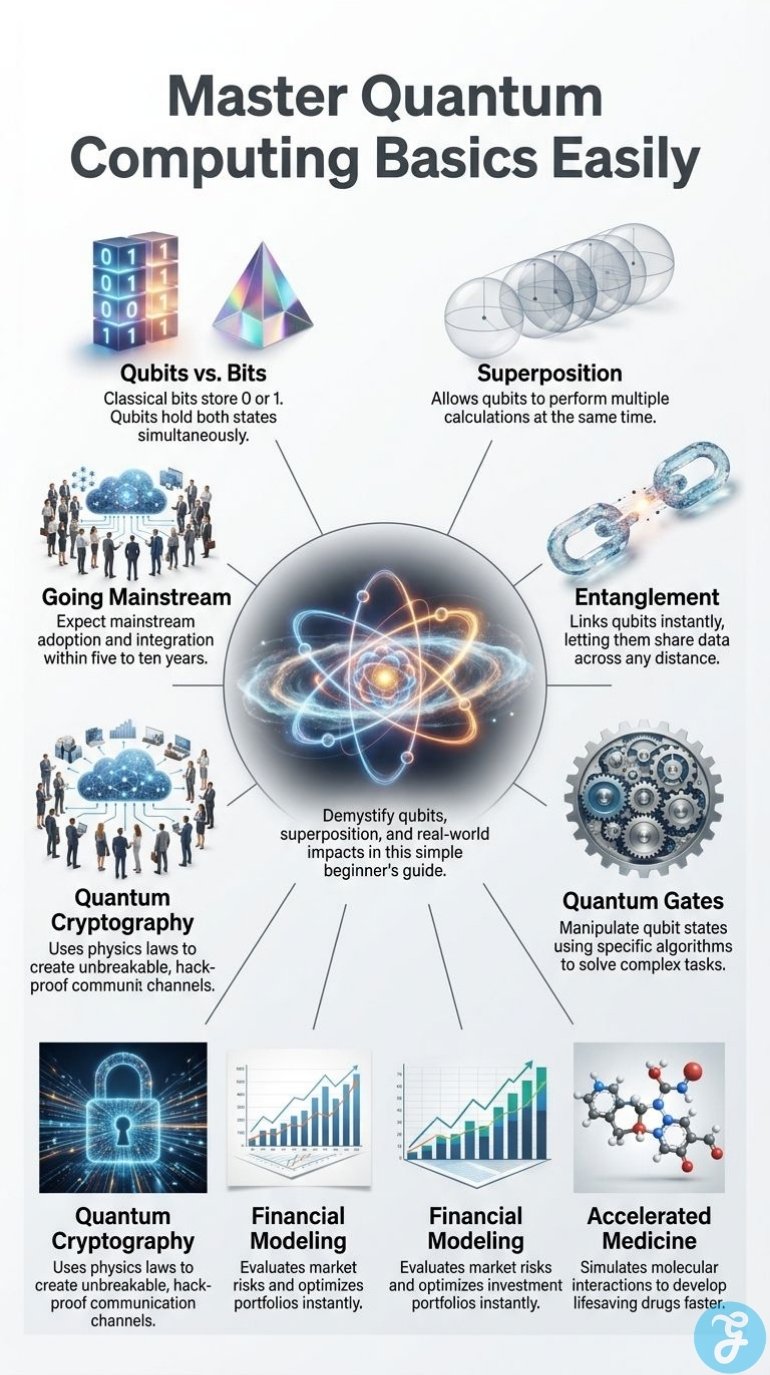
Quantum computers turn inputs into outputs using a unique process. First, they take in data through qubits. Unlike bits in classical computing, qubits can be in multiple states at once due to superposition.
This allows quantum computers to perform many calculations simultaneously.
Next, the computer uses quantum gates to manipulate these qubits. These gates are like switches that change the state of qubits according to specific rules called quantum algorithms.
Once the calculations finish, measurements occur. The output then reveals results based on all the possible states of the input qubits.
This approach lets quantum computers solve problems too complex for traditional machines. They can calculate energies of small molecules or simulate magnetic properties of materials quickly and efficiently.
Real-world applications show how powerful this technology can be today and in future innovations.
The Role of Quantum Algorithms
Quantum algorithms are special sets of instructions for quantum computers. They help these computers solve problems faster than classical ones can. For example, Shor’s algorithm can factor large numbers quickly.
This is important for fields like cryptography, where security often relies on the difficulty of factoring.
These algorithms use unique features of quantum computing, such as superposition and entanglement. Superposition allows a qubit to be in many states at once; this helps with parallel processing.
Entanglement connects qubits so they work together more effectively. These properties make quantum algorithms powerful tools that can tackle complex issues in data science and artificial intelligence much more efficiently than traditional methods.
Main Types of Quantum Hardware
Three main types of quantum hardware are superconducting qubits, trapped ions, and photonic systems. Superconducting qubits use tiny circuits cooled to very low temperatures. This method allows them to process information quickly using quantum mechanics.
Trapped ion systems hold charged atoms in place with electric fields. These ions can be manipulated with lasers, which makes them very precise for computations. Photonic systems use light particles called photons to carry and manipulate information.
They can work at room temperature and offer fast data transmission.
Each type has unique strengths that may help in different applications of quantum computing. For example, superconducting qubits have shown great promise for building powerful computers quickly.
Trapped ions offer high accuracy for tasks like simulating molecules or materials’ properties. Photonic systems enable quick connections over long distances, making them suitable for communication tasks such as cryptography or data sharing.
Real-World Uses of Quantum Computing
Quantum computing is already changing our lives in many ways. In medicine, it helps find new drugs faster. In finance, it improves risk analysis and decision-making. It also makes energy use more efficient and solves logistics problems quickly.
Medicine and Drug Discovery
Quantum computing will change medicine, especially in drug discovery. It helps scientists find new drugs faster and more accurately than traditional methods can. Quantum computers process data in unique ways.
They use qubits to store information, allowing many possibilities at once due to superposition.
In some tests, quantum computers calculated the energies of small molecules quickly. This speed means researchers can test various compounds without long wait times. Many companies now explore these possibilities for better medicines.
For instance, they simulate how drugs interact with the body much faster than classical computing allows. The future looks bright for quantum computing in health care and beyond as it becomes a key tool for solving tough problems in medicine.
Financial Modeling and Risk Analysis
Financial modeling uses data to predict future performance. Quantum computing can make this process faster and more accurate. Traditional methods may take a long time, but quantum computers can analyze many scenarios at once.
This helps businesses understand risks better.
Risk analysis is crucial for making informed decisions. Quantum algorithms can evaluate potential losses or gains quickly. They are suitable for complex financial systems that classical computing struggles with.
Using quantum computing in finance could lead to smarter investments and safer business strategies.
Energy Optimization and Logistics
Quantum computing can help improve energy use and logistics. These tasks often involve complex calculations. Traditional computers struggle with these problems, but quantum computers excel at them.
They can analyze large amounts of data quickly and accurately.
In energy optimization, quantum computers may find the best ways to distribute power. This can lead to less waste and lower costs for consumers. In logistics, they can streamline supply chains.
Businesses could reduce delays and save money by making smarter decisions about routes and resources. Quantum computing has real-world applications that extend beyond research; it offers practical solutions for today’s challenges in various industries.
Cybersecurity and Quantum Cryptography
Cybersecurity is very important today. Quantum cryptography can change how we protect our data. It uses the principles of quantum mechanics to secure information. Superposition and entanglement help create safe communication channels.
Real-world examples show its potential. For instance, some banks are testing quantum systems to keep transactions safe from hackers. Companies are also exploring ways to use this technology for securing personal information online.
With quantum cryptography, sensitive data may become much harder to steal or manipulate in the future. Cybersecurity might reach new heights through these advancements in quantum computing.
The Future of Quantum Computing
The future of quantum computing is full of chances and hurdles. New discoveries keep coming, but there are still many problems to solve for wider use.
Current Limitations and Breakthroughs
Quantum computing faces some limits today. One major challenge is error rates in quantum bits, or qubits. They can lose information quickly due to noise and interference. This makes calculations tricky.
Breakthroughs are happening, though. Researchers have made advances in creating more stable qubits, which could improve performance.
Using quantum algorithms also shows promise for solving complex problems faster than classical computing methods. For example, some quantum computers have already calculated the energies of small molecules and simulated magnetic properties of materials.
These steps show that quantum supremacy might be within reach as scientists work towards making this technology mainstream for everyone to use.
When Quantum Computers May Become Mainstream
Many experts think quantum computers might become mainstream in the next 5 to 10 years. Right now, they are not widely used. They face challenges like high costs and limited understanding of quantum mechanics.
However, breakthroughs are happening every day. Researchers have shown that quantum computing can solve complex problems better than classical computing.
In fields like medicine and finance, real-world examples show promise. Quantum computers can help discover new drugs or analyze risks in investments. As more people learn about qubits, superposition, and entanglement, interest will grow.
Schools and companies are starting programs on these topics now to prepare future generations for this changing landscape of technology.
How Beginners Can Start Learning
Starting to learn about quantum computing can be exciting. One way is to take online courses or watch videos that explain the basics. Look for resources made for beginners. These often use simple words and clear examples.
Reading books and articles on quantum mechanics can also help you grasp core ideas like qubits, superposition, and entanglement. Join forums or groups focused on quantum computing.
Engaging with others will deepen your understanding of topics such as algorithms and cryptography too. With effort, anyone can explore this fascinating field that promises future breakthroughs in computation.
The Verdict
Quantum computing is still developing, but its potential is already becoming clearer. From medicine and finance to logistics and cybersecurity, the technology may eventually help solve problems that remain too difficult for classical computers.
For anyone exploring quantum computing for beginners, the most important first step is understanding qubits, superposition, entanglement, algorithms, and the differences between quantum and classical systems. As hardware improves and educational resources become more accessible, beginners who build this foundation today will be better prepared for the opportunities quantum computing may create.
Frequently Asked Questions (FAQs) About Quantum Computing for Beginners
1. What Is Quantum Computing for Beginners?
It shows how quantum mechanics can change computation. Quantum computing uses qubits, not bits. Classical computing uses bits. Quantum supremacy means a quantum device solves a task a classical computer cannot.
2. What Are Qubits, Superposition, and Entanglement?
Qubits are quantum bits. Superposition lets a qubit hold many states at once. Entanglement links qubits so one change affects the other. These ideas come from quantum mechanics.
3. How Do Quantum Algorithms Work?
Quantum algorithms use superposition and entanglement to solve tasks. Some computation rules let them do work faster than classical methods. Algorithms can speed up search and some math problems.
4. Can Quantum Computing Improve Cryptography?
Yes. Quantum computing can break some current cryptography. It can also make new cryptography that is safer. Real-world examples include simulating molecules and improving logistics.
5. How Should Beginners Start Learning Quantum Computing?
Start with basic quantum mechanics and classical computation ideas. Learn about qubits, superposition, entanglement, and simple algorithms. Try small code demos and clear examples from the book Quantum Computing for Beginners: Simple Explanations and Real-World Examples.