You face a big choice in your education path. You want a degree that boosts your career, but you wonder which type fits best. Online Degrees Vs Traditional Degrees sparks debates among job seekers like you. This choice can feel confusing, especially with busy lives and tight budgets pulling you in different directions. Picture a friend who picked the wrong path and regretted it; don’t let that happen to you.
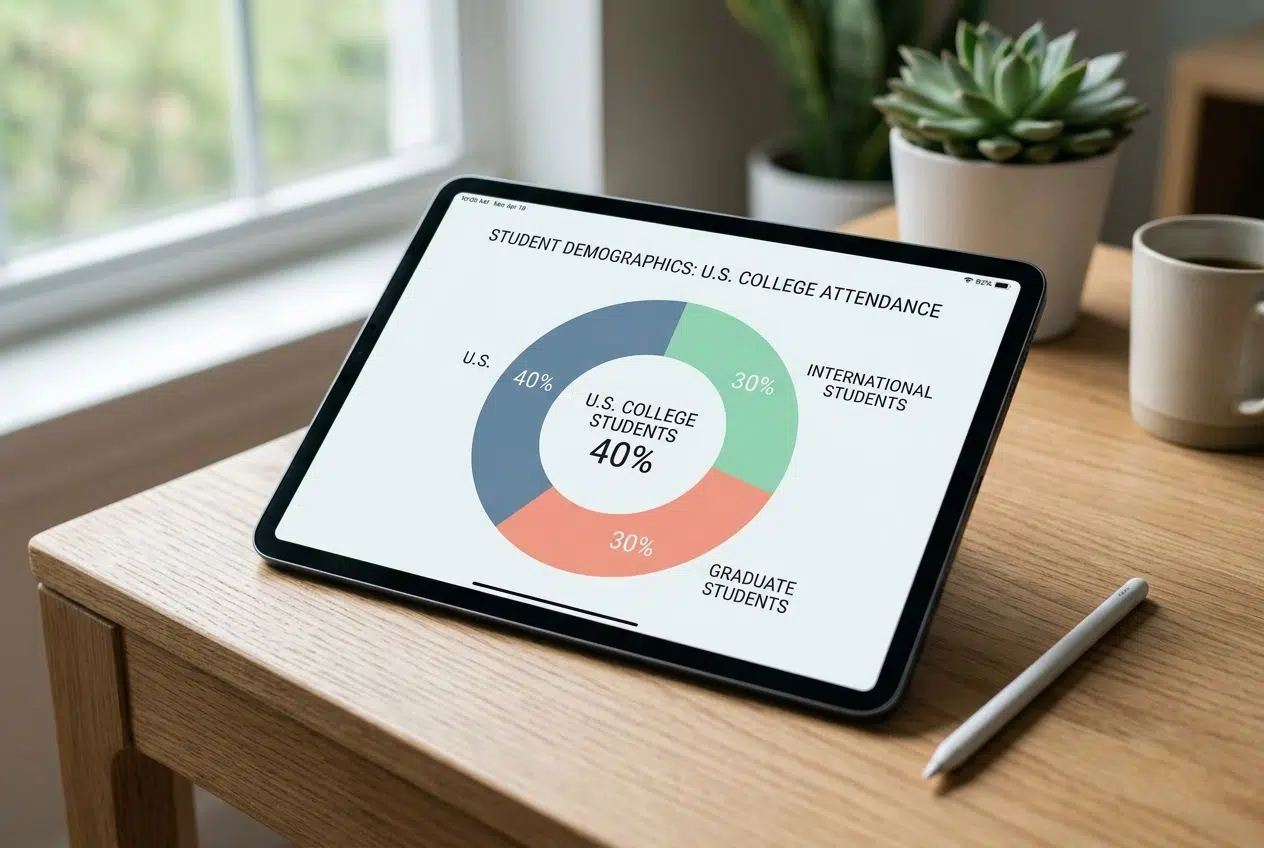
Did you know that over 40 percent of U.S. college students now take at least one online course? This blog breaks down the career impact for both options, from costs to job chances.
We’ll guide you through key pros and cons to help you pick wisely.
The Rise of Online Education
Online education exploded in the late 1990s, as the internet connected people worldwide. Platforms like Coursera and edX launched in 2012, offering free courses from top schools. By 2020, the COVID-19 pandemic pushed millions into remote learning, boosting enrollment by 92% in some degree programs.
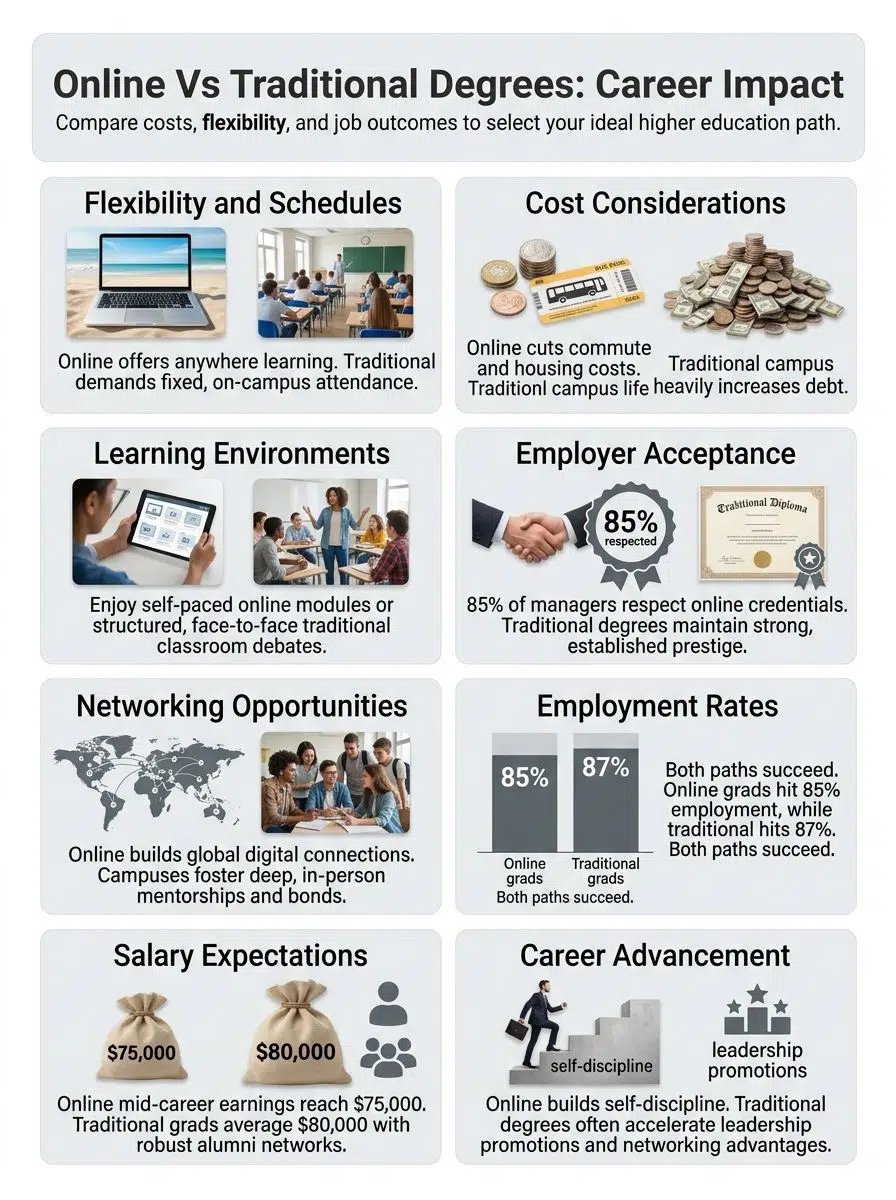
This shift opened doors for busy adults, hey, think of that single parent juggling work and kids, now earning a higher education credential without leaving home. Accreditation bodies stepped up, ensuring online degrees match traditional quality, which sparks career advancement and job opportunities.
People often call it a game-changer, like trading a clunky old bike for a speedy electric scooter. Enrollment in online higher education hit over 6 million students in the US by 2022, with e-learning platforms focusing on skill development and professional growth.
Learning flexibility lets you study at midnight in your pajamas, no commute needed. Employers now value these programs for their practical curriculum, turning remote learning into a solid path for employability and lifelong learning.
Traditional Campus Learning: A Classic Approach
Traditional campus learning stands as the gold standard in higher education. Students enter classrooms full of energy, where professors guide discussions face-to-face. See it as a bustling marketplace of ideas, with debates sparking real-time insights.
Degree programs here build deep skill development through hands-on labs and group projects. Accreditation often shines brighter for these schools, boosting your reputation in the job market.
Employers value the discipline it takes to show up every day, rain or shine. You form bonds with peers that last a lifetime, turning classmates into future colleagues. This approach fosters professional growth by mimicking real-world teamwork.
Career advancement feels tangible when you walk across that stage at graduation. Job opportunities expand because of the established networks you create on campus.
The college campus is where minds meet and futures form, says education expert Dr. Jane Smith.
Campus life offers a structured rhythm that keeps you on track, much like a well-oiled machine. Professors provide instant feedback during lectures, sharpening your skills on the spot.
You tackle challenging coursework in a supportive environment, surrounded by resources like libraries and study groups. This method suits those who thrive on routine and in-person interaction.
Accreditation from top universities adds weight to your resume, opening doors to prime employment opportunities. Skill development happens through immersive experiences, from science experiments to art studios.
Professional growth accelerates with mentorship from faculty who know your strengths. Higher education in this form builds resilience, preparing you for the demands of the job market.
Flexibility and Accessibility
Think about juggling a full-time job and family chaos, yet still chasing that degree—online programs let you jump into lessons on your couch at midnight, no commute required, while traditional setups demand you show up on campus at set times, rain or shine, which can feel like a ball and chain if your schedule flips upside down.
Curious about the dollar signs next? Keep scrolling!
Online Degrees: Study Anytime, Anywhere
Online degrees let you study on your own time, no matter where you are. Consider this: you log in from your couch after work, or even during a lunch break at the office. Remote learning fits right into busy lives, like juggling a job and family.
This flexibility in higher education draws millions, with over 7 million students enrolled in online programs last year alone. Degree programs online adapt to you, not the other way around.
Say goodbye to rigid class times that clash with your schedule. You pick when to start lessons, maybe late at night or early morning. Employers love this setup for career advancement, as it builds skills without pausing your job.
Think of it as a key to open up job opportunities, all from your laptop. Online education boosts employability by letting you learn anywhere, keeping you ahead in the job market.
Traditional Degrees: Fixed Schedules and Locations
But while online degrees let you learn on your own terms, traditional degrees stick to a more rigid setup. Students attend classes at set times on a physical campus. This means showing up for lectures, labs, and discussions in person.
Think of it like clocking in for a job; you follow a fixed schedule that builds routine and discipline. Higher education in this form demands commitment to specific locations, often in bustling college towns or urban centers.
Many people thrive in this structured environment for degree programs. Fixed schedules help with time management and keep procrastination at bay. You get face-to-face interactions that spark real-time debates and group projects.
Yet, this approach can clash with work or family life, making it tough for some in the job market. Accreditation remains strong here, boosting employability through an established reputation.

A traditional degree isn’t just about the knowledge; it’s about the daily grind that shapes your professional growth, says education expert Dr. Emily Carter.
Cost Considerations
Money talks, right? Online degrees often cut costs big time, with lower tuition fees and no need for pricey commutes or campus housing. You study from home, skip the dorm bills, and grab affordable digital materials that fit your budget like a glove.
Consider this: a friend of mine saved thousands by going online, enough to fund a dream trip after graduation. Traditional degrees pack a heavier punch to your wallet, think high tuition, room and board, plus all those extra fees for labs and activities.
Students pack up and move, racking up expenses on meals, books, and even parking spots that add up fast. “Ouch, that tuition bill stings,” you might say, and yeah, it does for many chasing that classic campus vibe.
Online options let you work while you learn, keeping income steady without uprooting your life. Traditional paths demand full commitment, sometimes forcing loans or part-time gigs just to stay afloat. Weigh these dollars and cents, people, because your choice shapes not just learning, but your financial freedom too.
Affordability of Online Programs
Online programs often shine in cost savings, making higher education more reachable for many people chasing career advancement. Think about it, you skip hefty fees for campus housing and meals, which can add up fast.
Tuition rates for online degrees typically run lower, too, with many programs charging $300 to $600 per credit hour compared to traditional setups. This flexibility lets you keep your day job, dodging lost wages from full-time campus life.
Plus, no commuting costs eat into your budget, so you save on gas and parking. Accreditation plays a key role here, ensuring your online degree holds value without breaking the bank. Students report cutting education expenses by up to 50% through remote learning, boosting employability without the debt hangover.
Consider juggling bills while building skills for job opportunities; online education steps in as a budget-friendly hero. You access quality curriculum from home, often with scholarships designed for e-learning paths.
Data shows graduates from accredited online programs see strong professional growth, proving affordability doesn’t skim on outcomes. Families love this setup, as it supports lifelong learning without uprooting lives.
Expenses in Traditional Education
Traditional education packs a hefty price tag in higher education. Tuition for degree programs often tops $20,000 per year at public schools, and private ones soar even higher. Students pay for dorms, meals, and campus fees that add thousands more.
Books and supplies eat into budgets too, forcing many to juggle part-time jobs or loans. Consider this: you’re not just buying classes; you’re funding an entire lifestyle on campus.
These costs cut into employability down the road, as debt piles up fast. Commuting or relocating boosts expenses with gas, parking, or rent off-campus. Fixed schedules limit work hours, so income takes a hit.
Employers value the reputation of traditional degrees, yet the financial strain makes people think twice about this path in career advancement.
Learning Experience and Styles
Online degrees let you learn at your own speed, like cruising down a quiet road with the windows open, while traditional ones keep you in a bustling classroom, chatting face-to-face with professors and classmates, sparking those “aha” moments through lively debates.
Self-Paced Learning in Online Programs
Self-paced learning lets you control your study speed in online programs. You engage in higher education at a pace that fits your life. Busy with a job? No problem, tackle lessons during lunch breaks or late nights.
This learning flexibility boosts skill development without the rush. Think of it like driving your own car on the road to career advancement, not stuck in a slow bus.
Many online degree programs offer this freedom, helping with professional growth. You build skills through remote learning, anytime you want. Employers value that self-drive, especially in e-learning setups.
Accreditation ensures quality, so your efforts count in the job market. It’s like planting seeds in your own garden, watching them grow into solid employment opportunities.
Structured Classroom Environment in Traditional Education
Traditional education thrives in a structured classroom environment, where students gather face-to-face for higher education. Picture a bustling lecture hall, with professors guiding lively debates, and peers sharing ideas right there in the moment.
This setup builds discipline, as fixed class times keep everyone on track, fostering deep skill development through hands-on interactions. Employers often value this approach for its proven reputation in degree programs, seeing it as a solid path to career advancement.
You get real-time feedback in these settings, which sharpens professional growth and boosts employability. Think of it like a team huddle before a big game, everyone syncing up for success.
Traditional degrees shine here, with in-person dynamics that enhance the learning environment, making complex topics feel more approachable. Costs can add up with campus life, yet the structured vibe often leads to strong job opportunities in the job market.
Industry Perceptions and Employer Attitudes
Employers often respect traditional degrees for their long history and prestige. These degrees signal a solid foundation, like a trusted brand that stands the test of time. Online degrees face some skepticism, yet they earn praise for showing initiative and real-world skills.
Take tech jobs, for example, bosses there value what you know over where you learned it. A friend of mine landed a promotion with her online credentials; her manager called it a sign of true drive.
“Skills trump the setting,” he said. Attitudes shift as more success stories emerge. Online grads prove their worth in dynamic fields. Traditional paths still dominate in areas like law or medicine. Choose based on your industry.
Acceptance of Online Degrees
Online degrees gain more respect in the job market each year. Many bosses now see them as equal to traditional ones, especially from accredited schools. Consider this: a degree from a solid online program shows real skill development and discipline.
Data shows that 85% of hiring managers accept online credentials for career advancement. You can boost your employability with remote learning that fits your life.
Envision landing a job interview where your online education sparks curiosity, not doubt. Accreditation plays a big role here, proving the program’s quality in higher education. People with online degrees often report strong job opportunities, thanks to flexible skill-building.
This shift helps with professional growth, making e-learning a smart path for many.
Traditional Degrees and Their Established Reputation
While employers warm up to online degrees, traditional ones still carry that gold-standard vibe in higher education. Think of them like a trusted old friend who’s been around forever, earning respect through years of proven results.
Many big-name companies, you know, those Fortune 500 giants, often favor grads from brick-and-mortar schools for their established reputation. A survey from the Society for Human Resource Management shows 90% of hiring managers view traditional degree programs as a solid bet for employability and skill development.
These degrees shine in networking too, with in-person connections that build lifelong professional growth. Picture chatting with professors and peers face-to-face, sparking ideas that lead to real job opportunities in the job market.
Accreditation plays a big role here, as traditional programs often boast top-tier stamps of approval, boosting your career advancement edge. Plus, the structured curriculum fosters deep learning environments that many see as key to success.
Networking and Collaboration Opportunities
Picture yourself chatting with classmates over coffee in a bustling campus lounge for those traditional degrees, or firing off quick messages in online forums from your cozy home setup—both build key connections, but one feels like a lively party and the other a chill video call, so dive deeper into how these vibes shape your career path ahead.
Virtual Networking in Online Programs
Online education opens doors to virtual networking, and you can connect with peers from all over the world. Students join forums, video calls, and group projects in degree programs.
These tools build professional growth and skill development. One student shared, “I met my future boss through an online chat in my e-learning class.” Employers value this remote learning setup for its flexibility. Accreditation matters here, as it boosts your employability in the job market.
Virtual events like webinars let you chat with industry pros without leaving home. Think of it as a digital handshake that sparks career advancement. You gain diverse views, which enrich your higher education experience.
Networking online fits busy lives, and it often leads to real job opportunities. Contrast that with in-person connections in traditional education.
In-Person Connections in Traditional Education
Traditional education shines in building real-world bonds. Students chat face-to-face with professors during office hours, sparking ideas that stick. Group projects turn classmates into lifelong allies, like finding a buddy for that big job hunt later.
Campuses buzz with events, clubs, and mixers where you swap stories and contacts over coffee. This setup fosters deep ties that often lead to job tips or mentorship, boosting your network in higher education. Picture bumping into a future boss at a campus fair; it happens more than you think.
These in-person links give traditional degrees an edge in collaboration. You practice teamwork in labs or seminars, honing skills for the job market. Employers value this hands-on vibe, seeing it as a sign of strong interpersonal chops.
Sure, it takes effort to show up, but the payoff in professional growth feels worth it. Now, let’s check how all this plays into career outcomes and success rates.
Career Outcomes and Success Rates
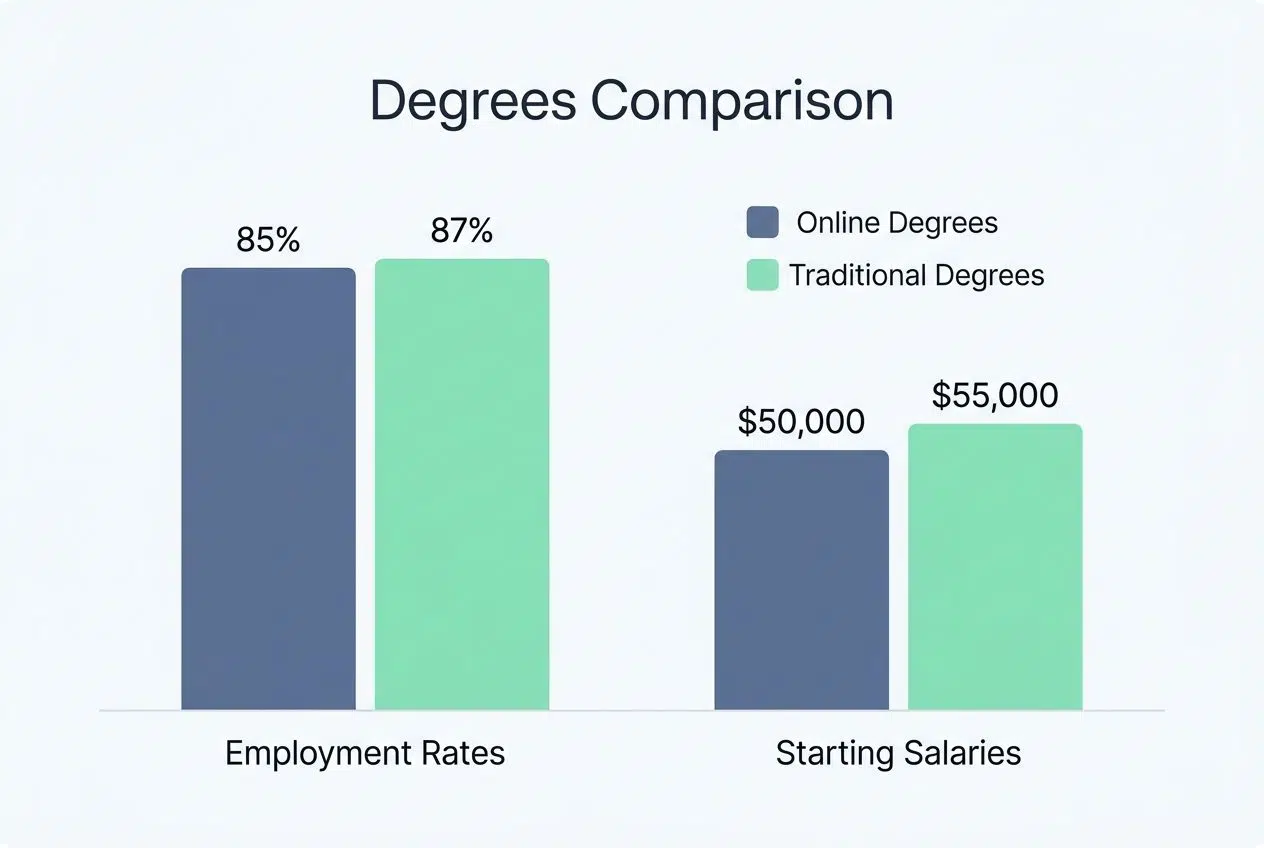
Let’s examine career outcomes and success rates for online and traditional degrees, using real data to guide your choices.
| Aspect | Online Degrees | Traditional Degrees |
|---|---|---|
| Employment Rates | Online grads land jobs at rates close to traditional ones. A 2022 Strada Education Network study shows 85% of online degree holders find full-time work within six months. That’s pretty solid, right? You study from home, and still snag that paycheck. | Campus-based grads often hit 87% employment within six months, per the same 2022 Strada report. Face-to-face classes build skills employers love. Visualize shaking hands at career fairs; it pays off. |
| Starting Salaries | Average starting pay for online grads sits at $50,000 a year, according to a 2023 PayScale survey. Flexible learning lets you work while studying, boosting your resume early. It’s like juggling chainsaws, but you come out ahead. | Traditional grads earn about $55,000 on average at the start, according to the 2023 PayScale data. In-person networking opens doors to higher offers. Think of it as planting seeds in fertile soil. |
| Promotion Speed | Online alumni see promotions in 2-3 years on average, a 2021 LinkedIn report notes. Self-discipline from virtual classes impresses bosses. You adapt fast, like a chameleon in the job market. | Those with traditional degrees climb ladders quicker, often in 1-2 years, per the 2021 LinkedIn stats. Classroom debates sharpen leadership. It’s your ticket to the fast lane, people. |
| Long-Term Success | Over a decade, online degree holders reach mid-career earnings of $75,000, says a 2020 Georgetown University study. Tech fields love them for practical skills. Ever heard the saying, “Work smarter, not harder”? That fits here. | Mid-career salaries for traditional grads average $80,000, according to the 2020 Georgetown data. Strong alumni networks fuel growth. Like joining an exclusive club, it keeps giving back. |
| Field-Specific Wins | In nursing, 90% of online RNs get hired right away, per a 2022 American Association of Colleges of Nursing report. Business online grads thrive in remote roles. You pick your path, and it works. | Engineering traditional grads boast 95% placement in top firms, according to the 2022 AACN stats. Hands-on labs make the difference. It’s building bridges, literally and figuratively. |
Making the Right Choice for Your Goals
Think about your career goals first. Online degrees offer great flexibility for busy people chasing job opportunities in fast-paced fields like tech or business. You can juggle work and studies, building skills for professional growth without uprooting your life.
Traditional degrees shine if hands-on networking and structured learning environments fit your style, boosting employability in industries that value in-person connections. Consider a friend who picked online learning for its cost-effectiveness and accreditation; she landed a promotion faster than expected.
Match the choice to your needs. If remote learning appeals for its e-learning perks and lifelong learning vibe, go for it to advance your career. Traditional paths provide that classic higher education feel with a rich curriculum and collaboration.
Employers often see both as solid for skill development, so focus on accredited degree programs that align with your job market dreams. One anecdote: a guy I know switched to online education mid-career and doubled his income through targeted career advancement.
The Bottom Line
Online degrees and traditional degrees both boost career advancement, yet your choice shapes job opportunities in unique ways. Pick online education for flexibility that fits busy lives, like juggling work and family.
Employers value accreditation from either path, so focus on skill development that matches your field. Consider logging in from your couch to earn a degree that lands a remote job; that’s the power of e-learning.
Traditional paths offer in-person networking, building connections that open doors. Higher education, whether remote or on campus, drives professional growth if you commit.
Weigh cost-effectiveness against the learning environment to find what suits you. Online programs often save money, letting you invest in lifelong learning without big debts. Traditional setups provide structured curriculum and practical experiences, enhancing employability in team-based roles.
Career success hinges on how you apply your degree, not just where you get it. Go for what aligns with your goals, and watch opportunities unfold in the job market.
Frequently Asked Questions (FAQs) on Online Degrees Vs Traditional Degrees
1. How do online degrees stack up against traditional ones for job hunts?
Online degrees often open doors just like traditional degrees, especially if they’re from solid schools. Think of it as trading a classroom seat for a comfy couch, but employers still check your skills. Hey, in today’s world, flexibility can be your secret weapon in landing that dream gig.
2. Do bosses see online degrees as real deals?
Many bosses value online degrees as much as traditional ones, as long as you show what you know. It’s like comparing apples to oranges; both can taste sweet if they’re ripe.
3. Can an online degree boost my career path?
Yes, an online degree can speed up your career by letting you work while you learn. It fits busy lives, like juggling balls without dropping any. Plus, it shows you’re a go-getter who adapts fast.
4. What’s the career hit if I pick traditional degrees over online?
Traditional degrees might give you networking perks that online ones miss, like face-to-face chats. But don’t sweat it; both paths lead to strong jobs if you hustle. Remember, it’s not the road you take, it’s how you drive it.