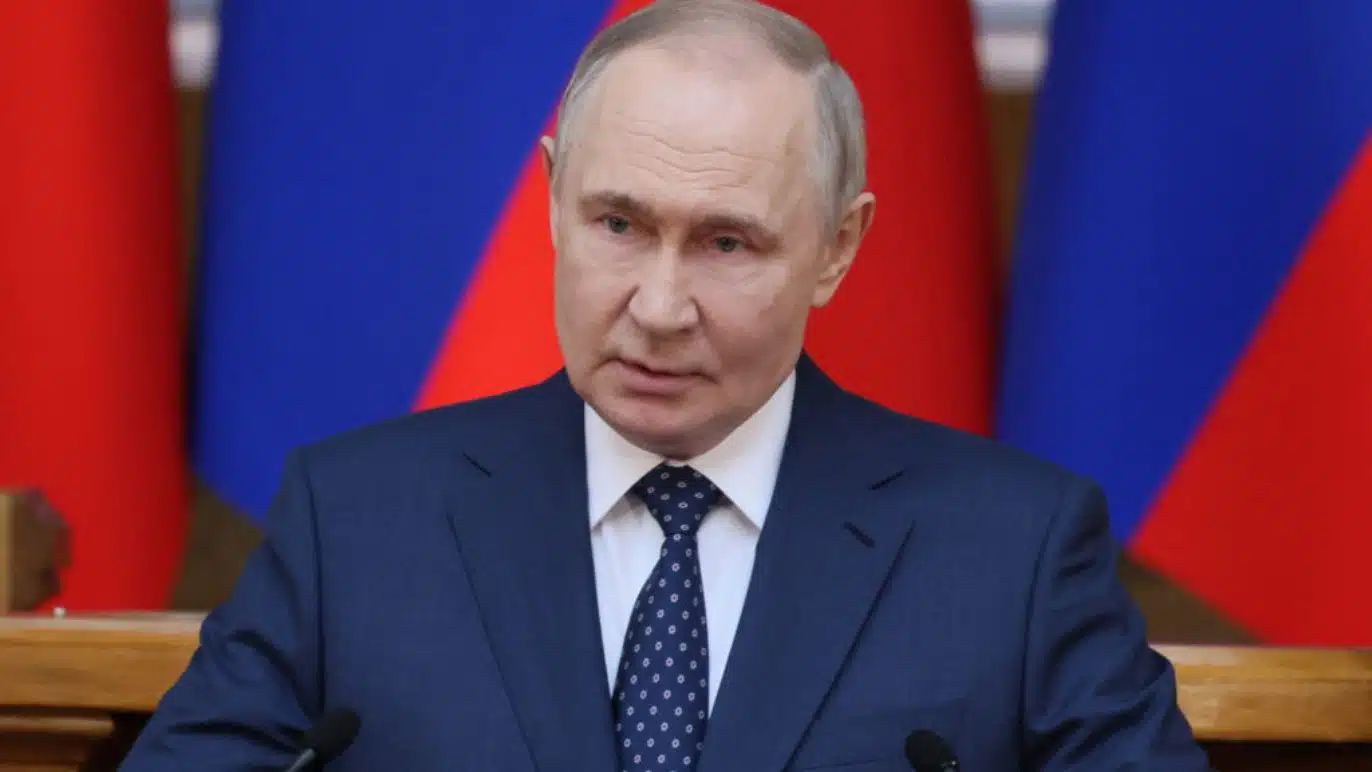
Russian President Vladimir Putin has firmly rejected calls for a Christmas ceasefire in Ukraine, dismissing the proposal as a tactical pause that would allow Kyiv to regroup. Speaking through Kremlin spokesperson Dmitry Peskov, Moscow emphasized its pursuit of lasting peace over temporary halts, amid ongoing advances on multiple fronts. This stance, coupled with vows from Putin and Defense Minister Andrei Belousov for an intensified military push in 2026, escalates tensions as holiday pleas from European leaders fall flat.
Origins of the Christmas Truce Proposal
The latest push for a Christmas truce emerged from German Chancellor Friedrich Merz, who publicly urged Putin to suspend hostilities over the holiday period to allow civilians respite amid the grinding conflict. Merz’s appeal, made earlier this week, echoed similar humanitarian gestures in past years, such as Russia’s unilateral Orthodox Christmas ceasefire in 2023, which Ukraine rejected as a propaganda stunt allowing Moscow to reinforce positions. Ukrainian President Volodymyr Zelenskyy voiced support for Merz’s idea, stressing that its success hinged on Russia’s political will, particularly in protecting energy infrastructure from strikes during winter.
Kremlin response came swiftly and unequivocally. Peskov stated on December 16 that Russia seeks not a mere truce “that would give Ukraine a breather and an opportunity to prepare for continuing the war,” but a comprehensive resolution aligning with Moscow’s objectives. This rejection mirrors historical patterns; in 2024, Putin floated a short-term holiday pause via Hungarian Prime Minister Viktor Orban, only for Zelenskyy to decline, citing distrust after prior Russian-proposed truces collapsed amid violations. Analysts note these seasonal appeals often serve diplomatic posturing, with Russia viewing them as exploitable lulls while Ukraine fears resupply opportunities for its adversary.
The proposal’s timing aligns with heightened U.S. peace efforts under President Donald Trump, who has pushed for negotiations amid stalled talks. Yet, Moscow’s dismissal underscores a broader strategy: leveraging military momentum over concessions during festive periods when global attention peaks on humanitarian costs.
Putin’s Vows at Defense Ministry Meeting
Putin escalated rhetoric during the Russian Defense Ministry’s annual board meeting on December 17, 2025, in Moscow, where he addressed senior military leaders on national security and future priorities. Declaring Russian forces advancing “across all fronts,” he vowed to “liberate” what Moscow terms its “historical lands” through diplomacy or force if Kyiv and its “foreign patrons” shun substantive talks. This comes as Russia controls approximately 19% of Ukraine, including Crimea, most of Donbas, and parts of Kherson and Zaporizhzhia—territories annexed but unrecognized internationally.
Defense Minister Andrei Belousov reinforced the offensive posture, announcing plans to “accelerate” operations in 2026, with a presentation revealing 5.1% of GDP—over $130 billion—allocated to the war in 2025 alone. Belousov accused European powers of sabotaging peace by hyping NATO-Russia war risks, warning their policies pave the way for prolonged fighting next year. Putin mocked European leaders as “piglets” for fearmongering about Russian threats, insisting such claims are “pure nonsense” designed to isolate Moscow.
These statements signal no de-escalation. Putin reiterated that without concessions—like Ukraine ceding claimed territories—military means would prevail, echoing November remarks where he conditioned halting advances on Kyiv’s withdrawal from annexed regions. The meeting, broadcast live, highlighted reforms in military bureaucracy, weaponry production, and mobilization to sustain this tempo, with unlimited budgets for the military-industrial complex.
Current Frontline Dynamics and Russian Gains
Russian forces maintain incremental advances despite Ukrainian resistance, stretching Kyiv’s defenses thin across a 1,000-kilometer front. In Donetsk, Moscow’s “Centre” grouping pierced lines near Dobropillia in August 2025, capturing positions in a bid to pressure talks ahead of potential Trump-Putin summits. Recent claims include surrounding Krasnoarmeysk (Pokrovsk) and Dimitrov, advances in Vovchansk, Siversk, and toward Guliaipole logistics hub, with the “East” group pushing deep into enemy defenses.
British intelligence notes Russia’s territorial gains halved in late 2025 due to redeployments, yet progress persists in Donetsk and Zaporizhzhia, including battles for Orikhiv and Novorhorivka. Ukraine’s lines in Kharkiv and northern regions face pressure from potential multi-axis offensives into Chernihiv and Sumy, per leaked Russian plans aiming for half of Ukraine by 2026—encompassing annexed oblasts plus a vast buffer zone. Zelenskyy acknowledged 10km penetrations in spots but vowed eliminations, highlighting equipment shortages among some Russian units.
Casualties mount on both sides, with Russia grinding through costly assaults using drones, artillery, and infantry waves. Ukraine counters with Western aid, including potential Tomahawk missiles for deep strikes, though frontline strain worsens as winter sets in.
| Frontline Sector | Recent Russian Claims | Ukrainian Response |
|---|---|---|
| Donetsk (Pokrovsk) | Surrounded Krasnoarmeysk/Dimitrov; advances to Guliaipole | Defending logistics hubs; partial destructions reported |
| Kharkiv/Vovchansk | Pushing into urban areas | Fortifying amid northern threats |
| Zaporizhzhia | Verbove captured; Orikhiv battles | Western aid bolstering defenses |
| Overall Pace | Incremental; slowed but steady | Lines stretched; calls for more long-range weapons |
International Reactions and Peace Efforts
Ukraine’s Zelenskyy tempered expectations for holiday peace, predicting Kremlin refusal while preparing counter-proposals for U.S. mediation. He urged allies to render Russia’s 2026 ambitions “pointless” via support and weaponizing $250 billion in frozen assets for loans. Trump remains “optimistic” yet realistic, with envoy Steve Witkoff slated for Moscow amid “platinum standard” NATO-like guarantees for Kyiv—though Moscow demands land cessions.
European leaders face Putin’s barbs; Merz decried the truce snub as “cynical,” while the EU froze Russian assets indefinitely but hesitates on full seizure risks. U.S. sanctions loom on Russia’s shadow fleet if talks fail, per Bloomberg reports. Past truces, like Easter 2025 violated nearly 3,000 times by Russia per Zelenskyy, fuel skepticism.
| Key Player | Stance on Truce/Peace |
|---|---|
| Ukraine (Zelenskyy) | Supports truce; demands guarantees, no land loss |
| U.S. (Trump) | Pushing deal; guarantees offered, no firm deadline |
| Germany (Merz) | Proposed truce; calls response cynical |
| Russia (Putin/Peskov) | Rejects truce; insists on full objectives met |
Strategic Implications for 2026 and Beyond
Russia’s 2026 acceleration—backed by surging defense spending—poses dire challenges for Ukraine’s manpower and aid-dependent army. Plans evoke expansive visions like Medvedev’s “buffer zone” leaving Ukraine a rump state in the west, though operational limits from stretched resources temper feasibility. Putin prioritizes “security buffer zones” expansion alongside war goals: demilitarization, denazification, and neutrality barring NATO/Western bases.
For Ukraine, rejection amplifies winter woes: energy blackouts from strikes, mobilization strains, and frontline attrition. Western fatigue risks aid dips, yet Trump’s involvement injects urgency—potentially freezing lines or forcing concessions. Economically, Russia’s 5.1% GDP war spend underscores commitment, dwarfing Ukraine’s but straining sanctions-hit budgets.
Human costs dominate: civilians in combat zones denied holiday reprieve, with Orthodox Christmas (January 7) unlikely to fare better given precedents. Global markets jitter over escalation, energy prices, and NATO fringes. As 2025 closes, Putin’s words herald no Yuletide mercy—only resolve for intensified conflict, testing diplomatic mettle into the new year.