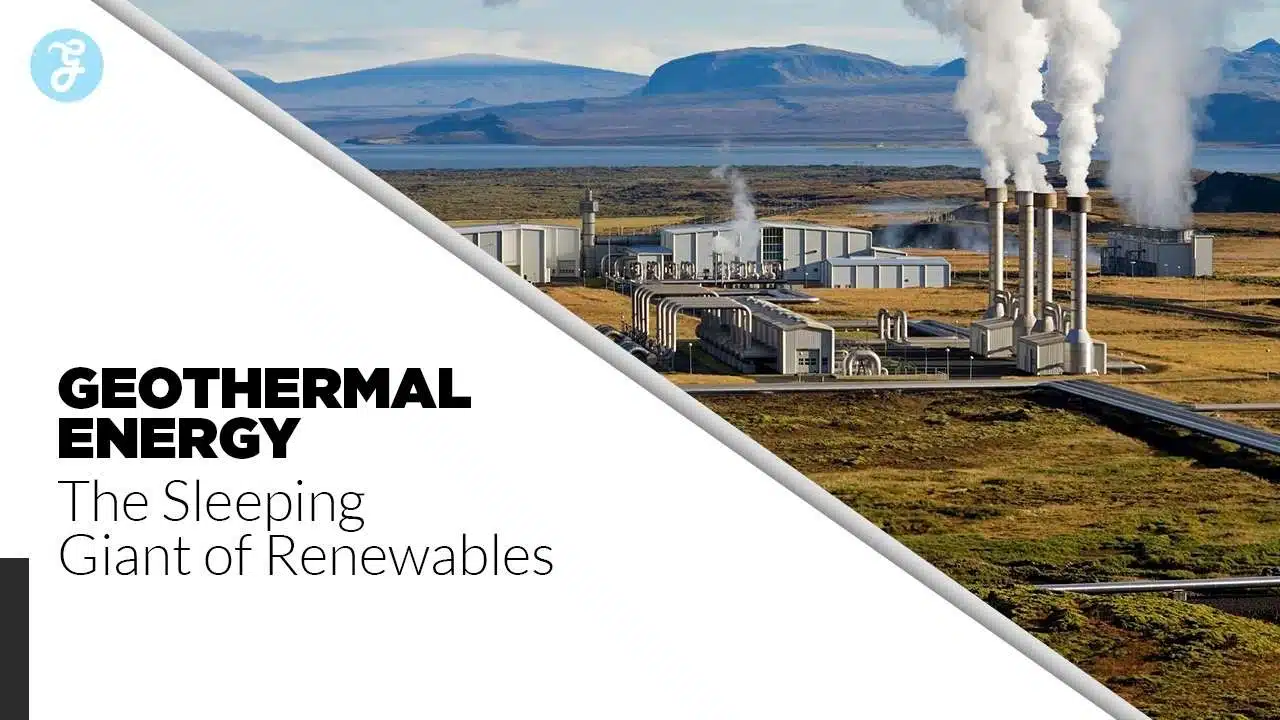
Have you ever opened your utility bill and felt a knot in your stomach? I know how it feels! It seems like energy costs are always climbing, and the worry about our environmental impact never really goes away. Many of us want a cleaner, more stable power source for our homes, but feel limited by the options.
Sometimes renewable energy sounds great in theory, but we wonder if it can really handle our daily needs. Here is the reality: Geothermal Energy uses the natural, steady heat from inside the Earth to generate electricity and keep buildings comfortable. Unlike solar or wind, this heat doesn’t care if the sun is shining or the wind is blowing.
In this guide, I will walk you through exactly how this “sleeping giant” works and why experts believe it is about to wake up in a big way.
What is Geothermal Energy?
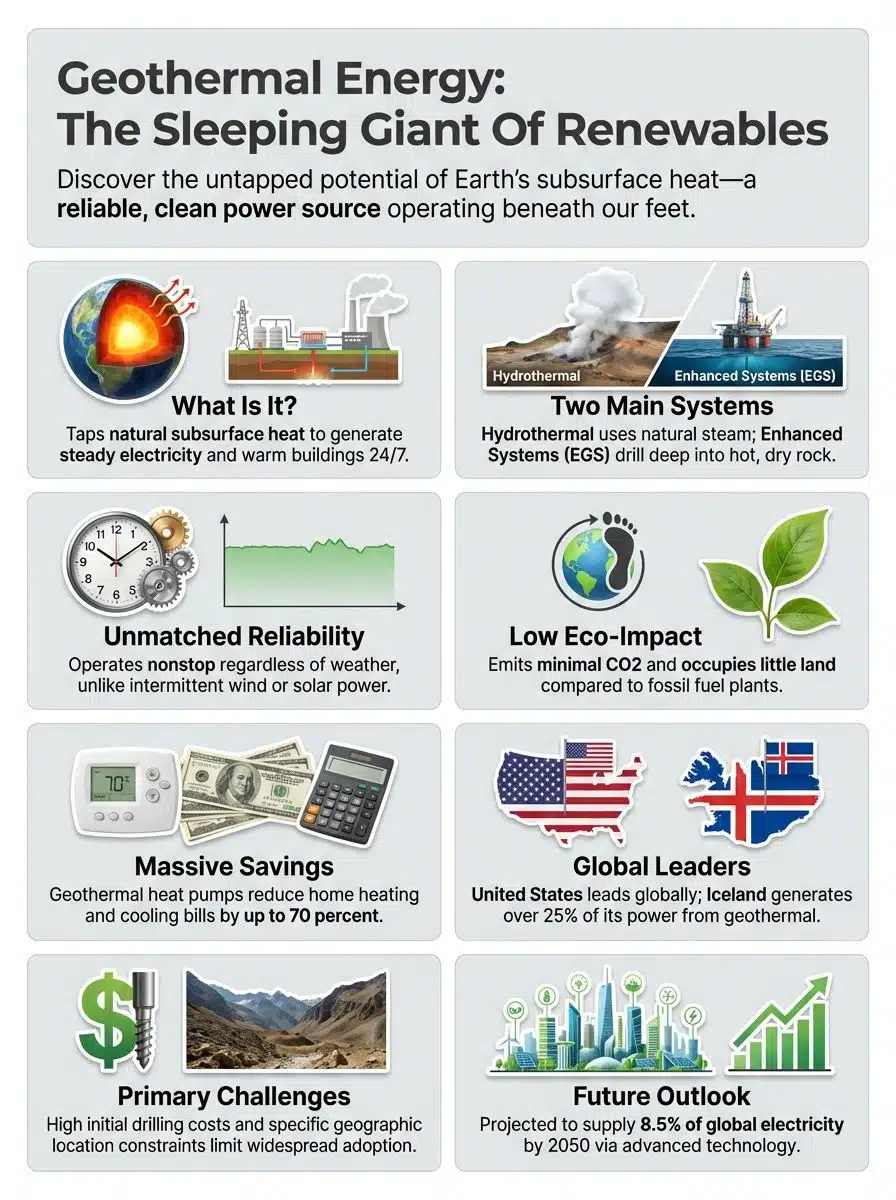
Geothermal energy comes from the heat trapped inside the Earth’s subsurface. Deep underground, hot rocks, steam, and reservoirs of water create a massive, clean power source. Civilizations have tapped into this resource for thousands of years, using hot springs for bathing and warmth.
Today, we use that same concept but on a much larger, smarter scale. Modern geothermal power plants capture this subsurface heat to generate electricity that flows right into the grid. Unlike other renewables that pause when the weather changes, geothermal works 24/7.
The Secret Consistency: Below a depth of about 20 to 30 feet, the ground temperature in the U.S. remains relatively constant, typically between 50°F and 60°F. This stability is the key reason geothermal systems are so efficient; they start with a temperature advantage that the air outside just can’t match.
Lifestyle Contributors spent years analyzing sustainable trends, and this consistency is what makes geothermal truly unique. It cuts carbon footprints significantly while offering a reliability that helps countries move toward genuine energy independence.
This sleeping giant has massive energy potential waiting just below our feet, ready to reshape how we heat our homes and run our industries. Next, let’s look at the specific systems that make this possible.
Types of Geothermal Energy Systems
Geothermal energy systems aren’t one-size-fits-all; they adapt to the geology of the land. Some rely on natural hot spots, while others use advanced engineering to create energy where we once thought it was impossible.
Hydrothermal Systems
Hydrothermal systems are the classic form of geothermal power. They use hot water and steam that naturally exist in fractures or pores within rock deep below the Earth’s surface. When this heat rises, it can appear as geysers or hot springs, but we can also drill into it to power turbines.
Operators drill wells into these reservoirs to bring the steam up, spin a turbine, and generate electricity. The most famous example in the United States is The Geysers in California. This complex is the largest geothermal field in the world and continues to be a critical power source for the region.
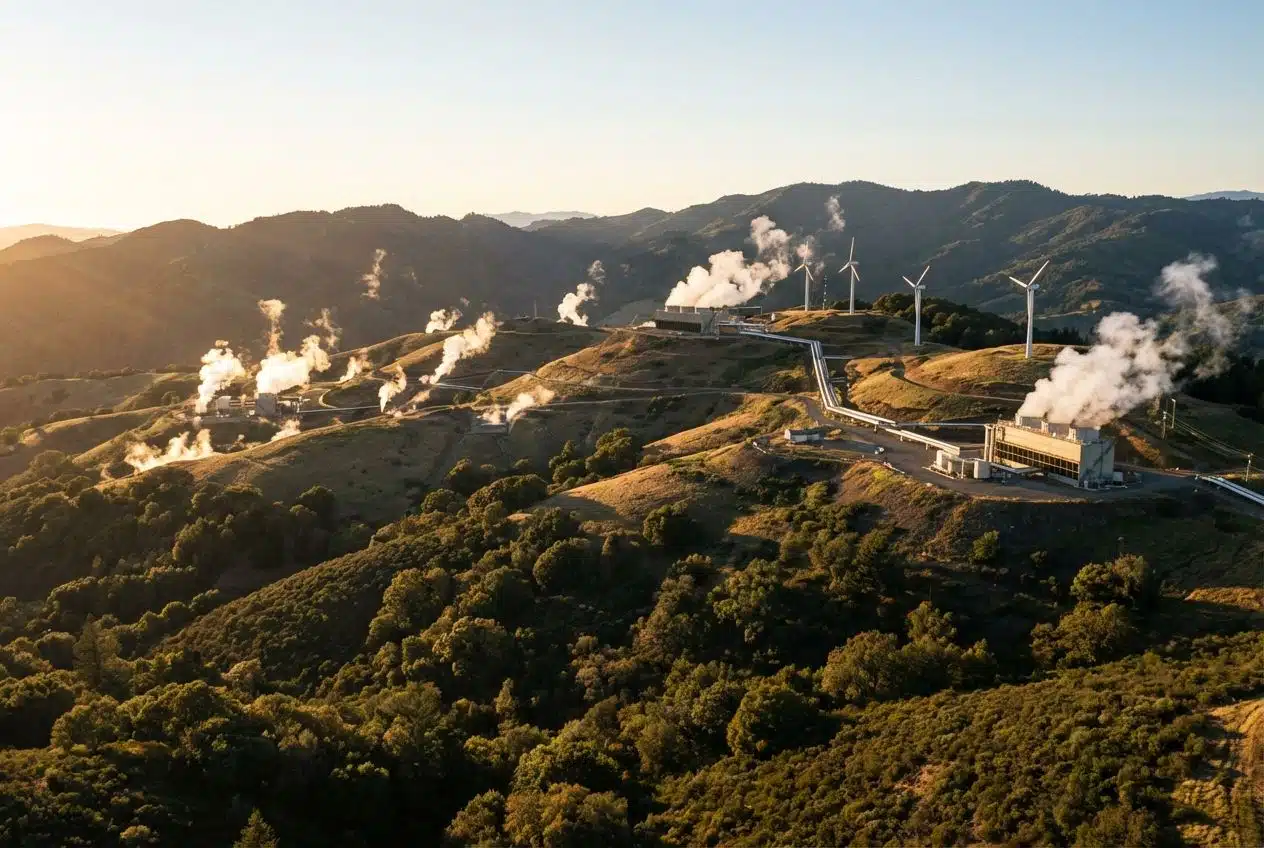
- Location: Mayacamas Mountains, north of San Francisco.
- Capacity: The complex has a net generating capacity of about 900 megawatts (MW).
- Impact: It powers roughly 900,000 homes with clean, reliable energy.
Hydrothermal energy works best in places with high subsurface heat, like the western U.S., Iceland, or Indonesia. It is a proven technology that uses the clean energy locked beneath us without burning a single lump of coal.
Enhanced Geothermal Systems (EGS)
Enhanced Geothermal Systems (EGS) are pushing the boundaries of what is possible. In many places, the rock is hot enough, but there isn’t enough natural water or fluid flow to create power.
Engineers solve this by drilling deep wells and injecting cold water into the hot rock to create man-made fractures. This injected water heats up as it flows through the new cracks and is pumped back to the surface to generate electricity.
It allows us to create geothermal power plants in places that don’t have natural geysers. One of the most exciting developments in this space is Fervo Energy’s “Project Red” in Nevada. Fervo has successfully used techniques from the oil and gas industry to make EGS commercially viable.
In fact, they recently partnered with Google to supply 115 MW of clean power to the grid. This partnership proves that EGS isn’t just a science experiment anymore; it is a scalable solution ready for the big leagues.
Applications of Geothermal Energy
Geothermal power springs to life in surprising ways, from lighting up cities to growing tomatoes in the snow. The applications go far beyond just making electricity, touching our daily lives in ways we might not expect.
Electricity Generation
At the utility scale, hot water and steam spin massive turbines to keep the lights on. This process provides “baseload” power, meaning it produces a steady flow of energy regardless of the time of day. The United States is currently the world leader in this sector, with a total installed capacity of approximately 3.9 gigawatts (GW) as of 2024.
Countries like Iceland rely on this for more than a quarter of their electricity. Because it keeps running when the sun sets, geothermal plants can replace aging coal and gas plants without risking blackouts. With new tech like EGS, we could see this capacity expand significantly in the next decade.
Heating and Cooling
You don’t need a power plant to benefit from the Earth’s heat. Geothermal heat pumps use the stable temperature of the shallow ground to heat and cool individual homes. In the winter, the system pulls heat from the ground into your house; in the summer, it dumps heat from your house back into the cooler earth.
This method can cut your heating and cooling bills by up to 70 percent compared to traditional furnaces or air conditioners. To make this more affordable, the Inflation Reduction Act (IRA) currently offers a 30% federal tax credit for residential geothermal heat pump installations through 2032.
Companies like Dandelion Energy are also making it easier by partnering with home builders, such as their recent deal with Lennar to install systems in 1,500 new homes in Colorado.
Direct Use in Agriculture and Industry
Farmers and business owners also use this heat directly, skipping the electricity step entirely. In Boise, Idaho, the city operates the largest geothermal district heating system in the country. It pumps hot water under the streets to heat over 6 million square feet of building space, including the State Capitol and City Hall.
In agriculture, this clean energy keeps greenhouses warm so crops can grow year-round. For example, businesses in Klamath Falls, Oregon, use geothermal heat to melt snow on sidewalks and heat local buildings. Using this subsurface heat directly is highly efficient because you don’t lose energy converting it to electricity first.
Benefits of Geothermal Energy
Geothermal energy works quietly in the background, shrinking your carbon footprint while offering long-term savings. If you are looking for a reason to switch, the math often speaks for itself.
Reliability and Constant Availability
The heat from the Earth’s subsurface never turns off. While solar panels need clear skies and wind turbines need a breeze, geothermal produces energy 24/7. This high “capacity factor” makes it one of the most reliable sources of clean energy available.
Plants like The Geysers have been delivering power almost nonstop since 1960. This reliability means grid operators don’t have to fire up dirty backup generators during storms or calm days. For homeowners, it means your heat pump works just as well on the coldest night of the year as it does on a mild afternoon.
Low Environmental Impact
Geothermal energy is gentle on the planet. It requires a much smaller land footprint than solar or wind farms to produce the same amount of power. Modern closed-loop systems release almost no greenhouse gases during operation.
Even when compared to other renewables, geothermal stands out for being unobtrusive. Most of the infrastructure is underground, leaving the surface landscape largely untouched. This allows local wildlife to carry on undisturbed, and it keeps our views free of sprawling industrial machinery.
Cost-Effectiveness Over Time
While the initial price tag can be higher, the long-term savings are undeniable. Think of it like buying a high-quality pair of boots that lasts a decade versus cheap sneakers you replace every year. The underground loops used in home systems can last for more than 50 years.
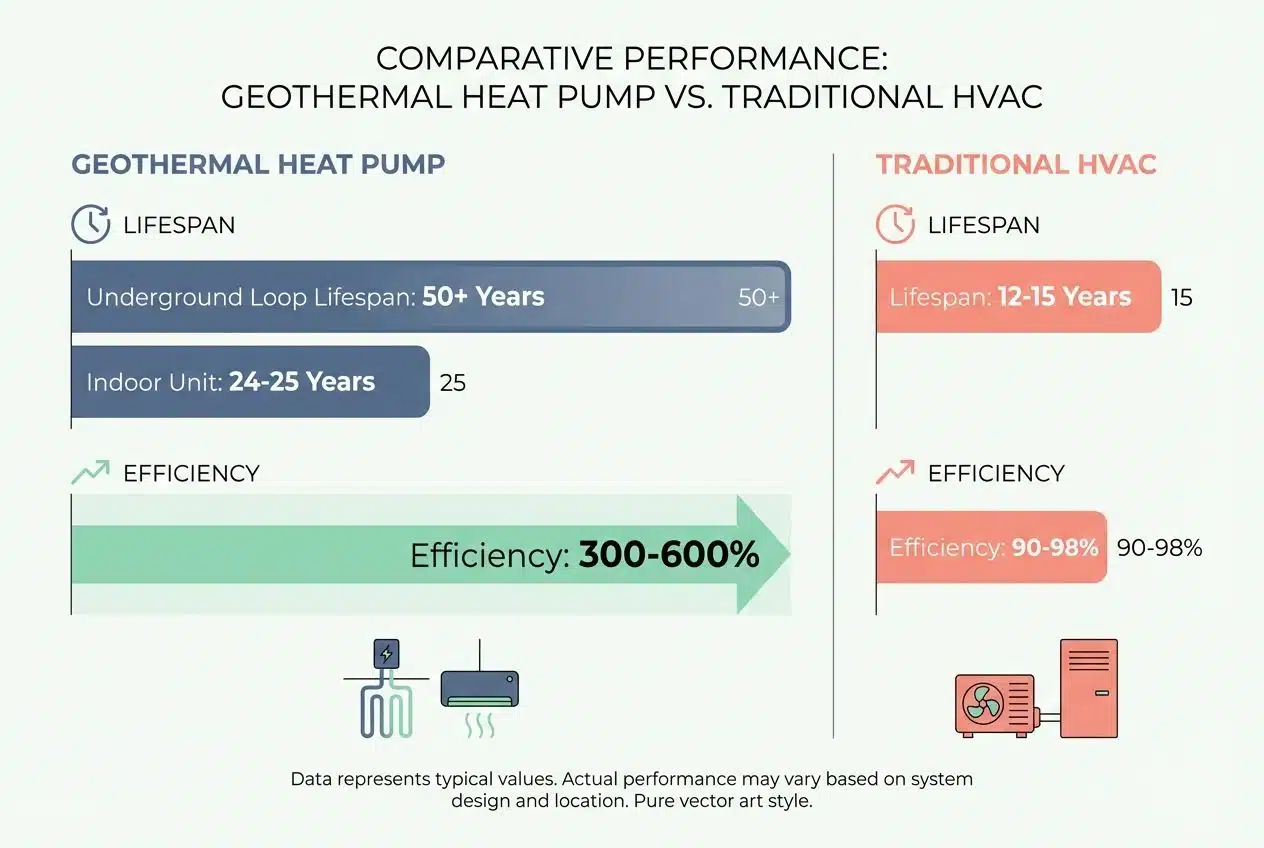
| Feature | Geothermal Heat Pump | Traditional HVAC (Air Source/Furnace) |
|---|---|---|
| Underground Loop Lifespan | 50+ Years | N/A |
| Indoor Unit Lifespan | 24-25 Years | 12-15 Years |
| Efficiency Rating | 300-600% | 90-98% (High-Efficiency Furnace) |
Because the system moves heat rather than creating it by burning fuel, your monthly operating costs plummet. In my point of view, covering eco-conscious habits, this is the kind of smart investment that pays for itself and then keeps paying you back.
Challenges in Geothermal Energy Development
Digging deep for heat isn’t always easy; finding the perfect spot can be tricky. While the rewards are huge, we have to be honest about the hurdles that currently slow down mass adoption.
Exploration and Initial Costs
Drilling into the Earth’s subsurface is expensive and technically difficult. A single deep well can cost millions of dollars, and there is always a risk of hitting a “dry hole” where the heat or flow isn’t sufficient. For a homeowner, installing a ground loop system can cost between $20,000 and $30,000 before tax credits.
To tackle this, the U.S. Department of Energy (DOE) launched the “Enhanced Geothermal Shot.” Their goal is aggressive: they aim to reduce the cost of EGS by 90% to $45 per megawatt-hour by 2035. This initiative is funding research to make drilling faster, cheaper, and more predictable.
Resource Location Limitations
Traditionally, geothermal energy depended on being near tectonic plate boundaries. Places like Iceland, Indonesia, and California have an unfair advantage because the heat is close to the surface. If you live in a tectonically stable area, reaching that useful heat used to require drilling impossibly deep.
This limitation has kept geothermal as a niche player in the energy market for decades. Homes far from these hot zones had to rely on other sources. However, new EGS technology is starting to erase these lines, opening up the possibility of generating power almost anywhere if we can just drill deep enough.
Geothermal Energy’s Global Growth Potential
Geothermal energy is gaining momentum globally as countries look for reliable, clean baseload power. Established leaders are expanding their capacity, while new markets are realizing they are sitting on a goldmine of heat.
Current Leading Countries
A few nations have set the standard for how to harness Earth’s heat effectively. Based on installed capacity data from the end of 2024, here are the top leaders driving the industry forward:
| Country | Installed Capacity (MW) | Key Details |
|---|---|---|
| United States | 3,937 |
|
| Indonesia | 2,653 |
|
| Philippines | 1,984 |
|
| Turkey | 1,734 |
|
| New Zealand | 1,207 |
|
| Kenya | 985 |
|
Emerging Markets in Geothermal Development
Beyond the top five, other nations are stepping up. Kenya is a standout example, having successfully tapped the Rift Valley to power millions of homes. Their success proves that developing nations can leapfrog fossil fuels and go straight to sustainable baseload power.
In South America, Chile is utilizing the Andes Mountains to reduce its reliance on imported fuels. Even in Europe, countries like Germany are exploring deep geothermal for district heating to reduce dependence on natural gas. Every new project brings down costs and improves technology, creating a ripple effect that benefits everyone.
The Future of Geothermal Energy in the Renewable Sector
The next decade promises to be a pivotal shift for geothermal energy. Experts predict that with the success of EGS, geothermal could supply 8.5% of global electricity by 2050. That might sound small, but for a 24/7 power source, it is a massive contribution to grid stability.
One of the most futuristic developments comes from a company called Quaise Energy. They are developing a drilling technology that uses millimeter waves (similar to what is in your microwave) to vaporize rock. This “gyrotron” technology could allow us to drill up to 12 miles deep, where temperatures are hot enough to repower old coal plants with steam from the Earth anywhere in the world.
Projects are expanding fast, moving from volcanic regions to sedimentary basins in Texas and Utah. As drilling costs fall, we will see geothermal become a common partner to wind and solar. It is the steady backbone that a 100% renewable grid needs to function reliably.
Final Words
Geothermal energy relies on a simple, powerful concept: tapping the steady heat beneath our feet to power our lives. We have explored the different systems, from the massive steam plants in California to the efficient heat pump likely humming in a neighbor’s basement.
These technologies are proven, reliable, and ready to scale. It is rare to find a solution that offers 24/7 reliability while also being kind to the planet. Imagine a future where your home stays cozy in winter and cool in summer without spiking your carbon footprint. That isn’t just a dream; it is a very real possibility available right now.
If you are curious about making the switch, I recommend looking into the federal tax credits available for heat pumps or checking if your state offers rebates. Harnessing this “sleeping giant” is one of the most impactful steps we can take toward a cleaner, healthier future.