You have likely stood in front of a closet bursting with clothes and still felt like you had nothing to wear. It is a frustrating feeling. We often buy a cheap shirt on a whim, only to see it unravel after two washes. It ends up in the trash, and we head back to the store. This cycle hits your wallet hard. But it hits the planet even harder.
Here is the reality. The environmental impact of fast fashion is massive. It is not just about too many shirts. It is about water, toxic carbon, and mountains of waste.
I want to walk you through exactly how this happens. More importantly, I want to show you the simple, practical swaps that can make your closet a lot greener.
Understanding Fast Fashion
Fast fashion moves at breakneck speed. Trends appear on TikTok one day, land on racks the next, and hit the discount bin by the weekend. This rush creates a massive problem for our environment. To fix it, we first need to spot it.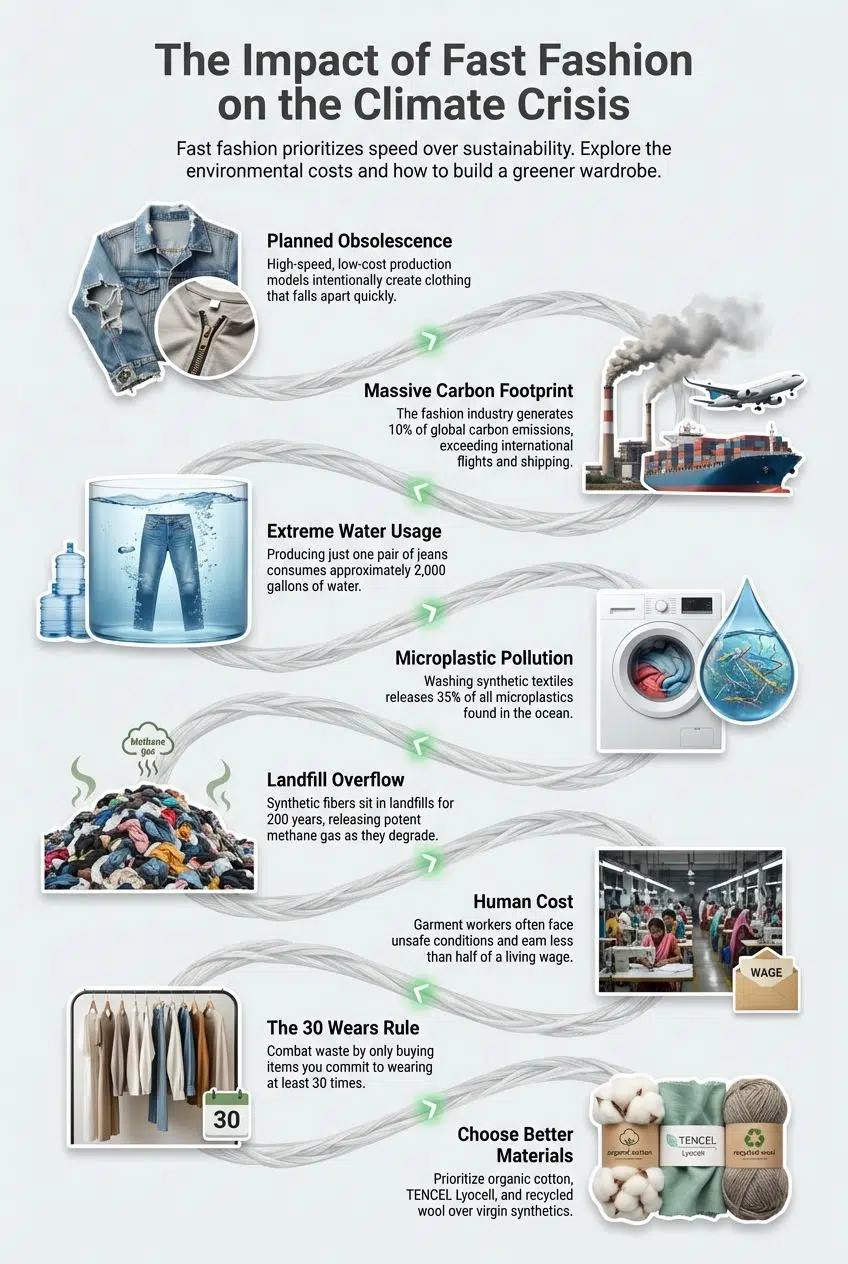
What is fast fashion really?
Fast fashion is a business model dedicated to speed and low costs. Brands like Shein, H&M, and Zara have mastered this. Shein, for example, adds thousands of new items to its website every single day. The goal is to make you feel like your current wardrobe is already outdated.
These companies copy high-end designs and mass-produce them using cheap materials. The result is clothing that is not meant to last.
Experts call this “planned obsolescence” for your closet. The buttons fall off, and the fabric pills quickly. This forces you to buy more, which drives a cycle of waste that is choking the planet.
How to spot the characteristics of the industry
You can identify a fast fashion brand by looking for a few specific red flags. Knowing these signs helps you make better choices when you shop.
- The “New Arrivals” Flood: Traditional brands release clothes seasonally (four times a year). Fast fashion brands restock daily or weekly.
- Synthetic Overload: Check the label. You will mostly see polyester, acrylic, and nylon. These are cheap plastics derived from oil.
- Offshore Production: Labels often read “Made in Bangladesh” or “Made in Vietnam,” where labor laws can be looser. This keeps costs down for the brand but often hurts the worker.
- Micro-Trends: If a store sells a specific viral item you saw on social media yesterday, it is likely fast fashion. They prioritize speed over quality.
- Quantity over Quality: Prices are so low that they seem too good to be true. A $5 t-shirt often means someone else paid the price in unsafe working conditions.
These habits affect more than just your laundry routine. They ripple out to affect air quality and water supplies across the globe. Let’s look at the specific damage this causes.
Key Environmental Impacts of Fast Fashion
The damage caused by cheap clothing is often invisible to us in the store. But the data tells a scary story. The fashion industry is responsible for about 10% of global carbon emissions. That is more than all international flights and maritime shipping combined.
Excessive carbon emissions
Every step of a shirt’s life pumps carbon into the air. It starts with making the fiber and ends with shipping the final product to your door.
Most fast fashion relies on polyester. Producing polyester releases two to three times more carbon emissions than cotton. Factories run on coal and gas to power the machines that knit and dye these fabrics. Then, massive ships and planes transport the goods.
“If the fashion sector continues on its current trajectory, that share of the carbon budget could jump to 26% by 2050,” states a report by the Ellen MacArthur Foundation.
This means your wardrobe choices are directly linked to global warming. Reducing what we buy is the fastest way to lower this number.
Water consumption and pollution
Your clothes are thirstier than you think. The industry gulps down massive amounts of fresh water every year. To make a single pair of jeans, it takes about 2,000 gallons of water. That is enough for one person to drink for seven years.
The problem is not just water use. It is water pollution. Textile dyeing is the second-largest polluter of water globally. In places like the Citarum River in Indonesia, factories dump untreated wastewater directly into the stream. This water is full of lead, mercury, and arsenic.
Local communities rely on this water for drinking and bathing. The toxic soup harms their health and destroys local wildlife.
Microplastic pollution from synthetic fabrics
Here is a hidden danger most people miss. When you wash synthetic clothes like fleece or polyester, they shed tiny plastic fibers. These are called microplastics. A 2017 study by the IUCN found that 35% of all microplastics in the ocean come from washing synthetic textiles.
Wastewater treatment plants cannot catch them all. They flow into rivers and oceans, where fish eat them. We then eat the fish. It is a toxic loop that brings your laundry waste right back to your dinner plate. Using a washing bag like the Guppyfriend can catch these fibers before they flush away.
Waste generation and landfill overflow
The sheer volume of trash is staggering. We are buying 60% more clothing today than we did in 2000, but we keep each item for half as long. In the United States alone, the EPA estimates that over 17 million tons of textile waste were generated in 2018. That number has likely grown.
Synthetic fibers do not rot like banana peels. A polyester shirt can sit in a landfill for 200 years. As it degrades, it releases methane, a potent greenhouse gas. It is a slow-motion disaster that will outlive us all.
Chemical usage and toxicity
Making clothes requires a chemical cocktail. About 8,000 different synthetic chemicals are used to turn raw materials into textiles. You might have heard of PFAS, often called “forever chemicals.” These are frequently used to make rain jackets and stain-resistant pants.
These chemicals do not break down. They accumulate in the environment and in our bodies. Exposure has been linked to serious health issues, including kidney cancer and thyroid disease. Checking for “PFAS-free” labels on outdoor gear is a smart safety move.
Social Impacts of Fast Fashion
The true cost of a $5 t-shirt is often paid by the person who sewed it. The social impact is just as heavy as the environmental one.
Exploitation of labor
The industry chases the cheapest labor possible. This often leads them to countries with weak labor laws. A 2024 report highlighted that many garment workers in the Global South earn less than half of a living wage. They are trapped in poverty.
But this happens in the US, too. The Garment Worker Center in Los Angeles has fought for years against sweatshop conditions right here at home.
Their work led to the California Garment Worker Protection Act (SB 62). This law bans paying workers by the piece (e.g., 5 cents per shirt) and requires an hourly minimum wage.
Unsafe working conditions
Safety is often ignored to keep lines moving fast. The 2013 Rana Plaza collapse in Bangladesh is the most tragic example. Over 1,100 people died when an unsafe factory building crumbled. They had pointed out cracks in the walls, but managers forced them to work anyway.
While safety has improved in some areas, dangerous conditions persist. Workers still face fire risks, verbal abuse, and forced overtime.
The Role of Overproduction and Overconsumption
We are stuck in a cycle of “buy, discard, repeat.” Brands produce too much, and we buy too much.
The rise of “disposable” clothing culture
Clothing used to be an investment. Now, it is treated like a sandwich wrapper. Social media fuels this.
Influencers often promote “hauls” of hundreds of dollars of cheap clothes. This normalizes the idea that you should never wear the same outfit twice.
In reality, many fast fashion items are worn less than seven times before being tossed. This “throwaway culture” creates a demand for constant production that the planet cannot sustain.
Unsold inventory and waste exportation
What happens to the clothes nobody buys? Brands often destroy them. Luxury and fast fashion brands alike have been caught burning unsold stock to “protect their brand value.” They would rather destroy it than sell it cheaply.
The waste that is not burned is often shipped to the Global South. The Atacama Desert in Chile has become a dumping ground for unsold clothes.
Mountains of new, tagged clothing sit there, slowly releasing toxins into the desert sand. It is a stark visual of the industry’s failure.
Sustainable Alternatives to Fast Fashion
You do not have to stop loving fashion to help the planet. You just need to change how you shop. Here is how you can start.
Embracing slow fashion principles
Slow fashion is about quality over quantity. It is the practice of buying well-made items and keeping them for years.
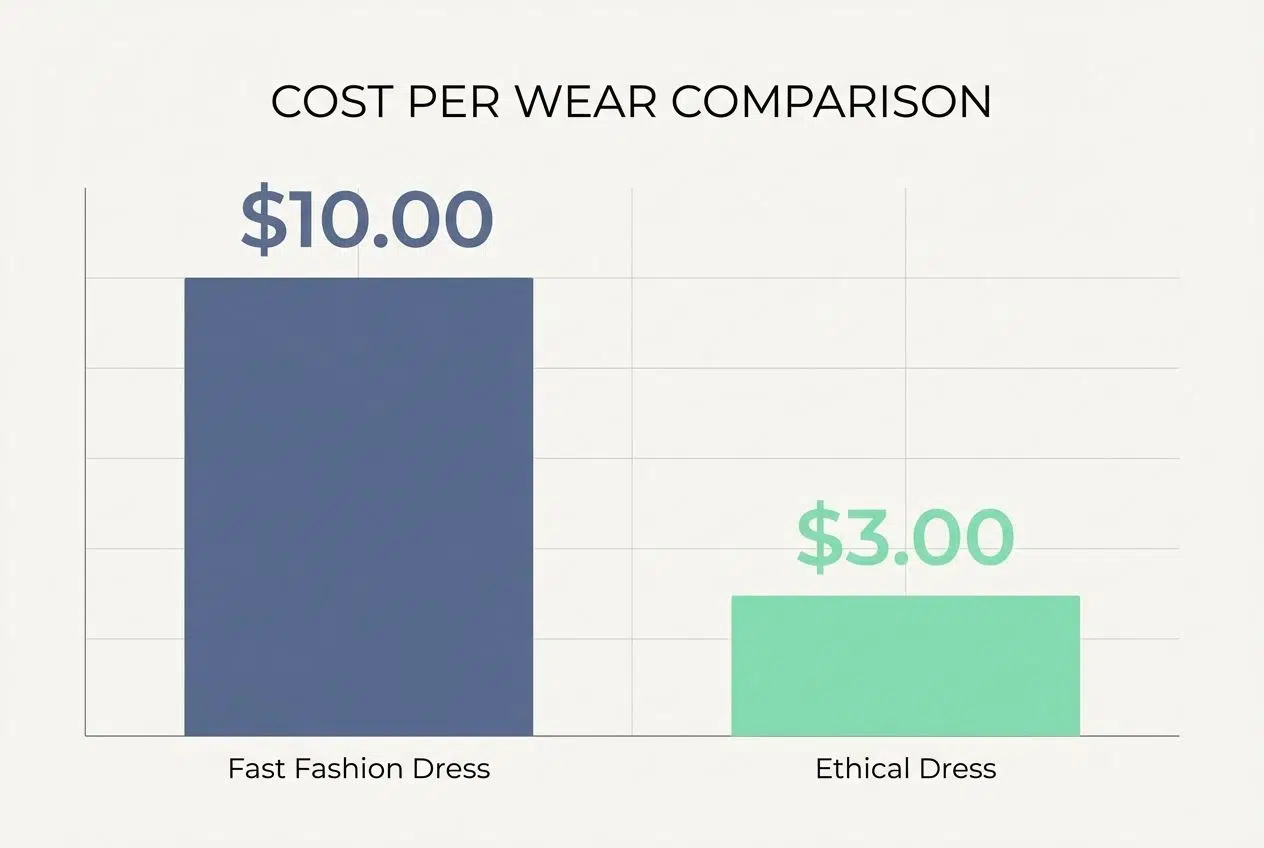
A great way to think about this is Cost Per Wear (CPW). It helps you see the real value of an item.
| Item | Price | Times Worn | Cost Per Wear |
|---|---|---|---|
| Trendy Fast Fashion Dress | $30 | 3 | $10.00 |
| High-Quality Ethically Made Dress | $150 | 50 | $3.00 |
The expensive dress is actually cheaper in the long run. Plus, you keep 49 cheap dresses out of the landfill.
Thrift shopping and upcycling
Secondhand is the most sustainable way to shop. You are using what already exists.
- Online Thrifting: Platforms like ThredUp, Poshmark, and The RealReal make it easy to find specific brands and sizes from your couch.
- Local Gems: stores like Buffalo Exchange or local charity shops are great for finding unique pieces without the shipping footprint.
- Upcycling: If a shirt has a stain, dye it. If jeans are too short, cut them into shorts. There are endless tutorials on YouTube for simple fixes.
Supporting ethical brands
When you do buy new, look for certifications. They verify that a brand is telling the truth. Look for the Certified B Corp logo. This means the company meets high standards of social and environmental performance.
Patagonia is a leader here. They even have a program called “Worn Wear” where they fix your old gear or help you trade it in. Supporting these brands sends a message that you value the planet.
How Consumers Can Make a Difference
You have more power than you think. Every dollar you spend is a vote for the kind of world you want.
Reducing clothing consumption
The most effective step is the simplest: buy less. Challenge yourself with the “30 Wears Rule.” Before you buy anything, ask yourself: “Will I wear this at least 30 times?” If the answer is no, put it back.
Shopping in your own closet is also free. Rediscovering an old favorite jacket is just as satisfying as buying a new one.
Choosing sustainable materials
Fabric choice matters. Natural fibers are generally better, but not all are created equal.
- Organic Cotton: Unlike regular cotton, it is grown without toxic pesticides and uses significantly less water.
- TENCEL Lyocell: This is a soft fiber made from wood pulp in a closed-loop system where chemicals are reused.
- Recycled Wool: This uses old wool garments to create new yarn, saving the massive energy cost of raising sheep.
Advocating for policy changes
Individual action is great, but we need systemic change. You can support laws that hold companies accountable. In the US, the FABRIC Act is a proposed bill that would protect garment workers and incentivize domestic manufacturing.
Contacting your representatives to support bills like this pushes the whole industry forward. It forces brands to clean up their act, not just their image.
The Role of Technology in Sustainable Fashion
Technology is giving us new tools to fight the climate crisis. Brilliant minds are inventing ways to make fashion circular.
Innovations in Eco-Friendly Materials
Science is turning waste into wardrobe staples. We are seeing incredible new fabrics enter the market. Mylo, for instance, is a leather alternative made from mycelium (mushroom roots). It looks and feels like leather but grows in a lab in weeks, not years.
Another breakthrough is Circ. This technology can separate polyester from cotton in blended fabrics, which was previously impossible to recycle efficiently.
Recycling and Upcycling Solutions
We need to close the loop so clothes never become trash. Technology helps us do that better.
- Chemical Recycling: Companies like Renewcell are working on dissolving old cotton jeans to make a new pulp for fresh fabric. This maintains quality better than mechanical shredding.
- Digital IDs: Brands like EON are creating “digital passports” for clothes. A QR code tells recyclers exactly what is in the fabric so it can be processed correctly.
- Resale Tech: AI tools now help sorting centers identify brands and conditions of used clothes instantly, making it faster to get them onto resale sites like Depop.
- On-Demand Manufacturing: New knitting machines can print a sweater in one piece. This creates zero fabric scraps and only makes what is ordered.
Wrapping Up
The impact of fast fashion on the climate crisis is clear. It is a heavy burden of carbon, water, and waste that our planet simply cannot carry anymore. But the solution is in our hands. We can choose to slow down. We can choose to buy better, mend what we have, and support brands that care.
It starts with one small choice. Maybe today, you choose to wear that old sweater instead of buying a new one. That is a win.
Let’s build a wardrobe that looks good and does good. The future of fashion is up to us.