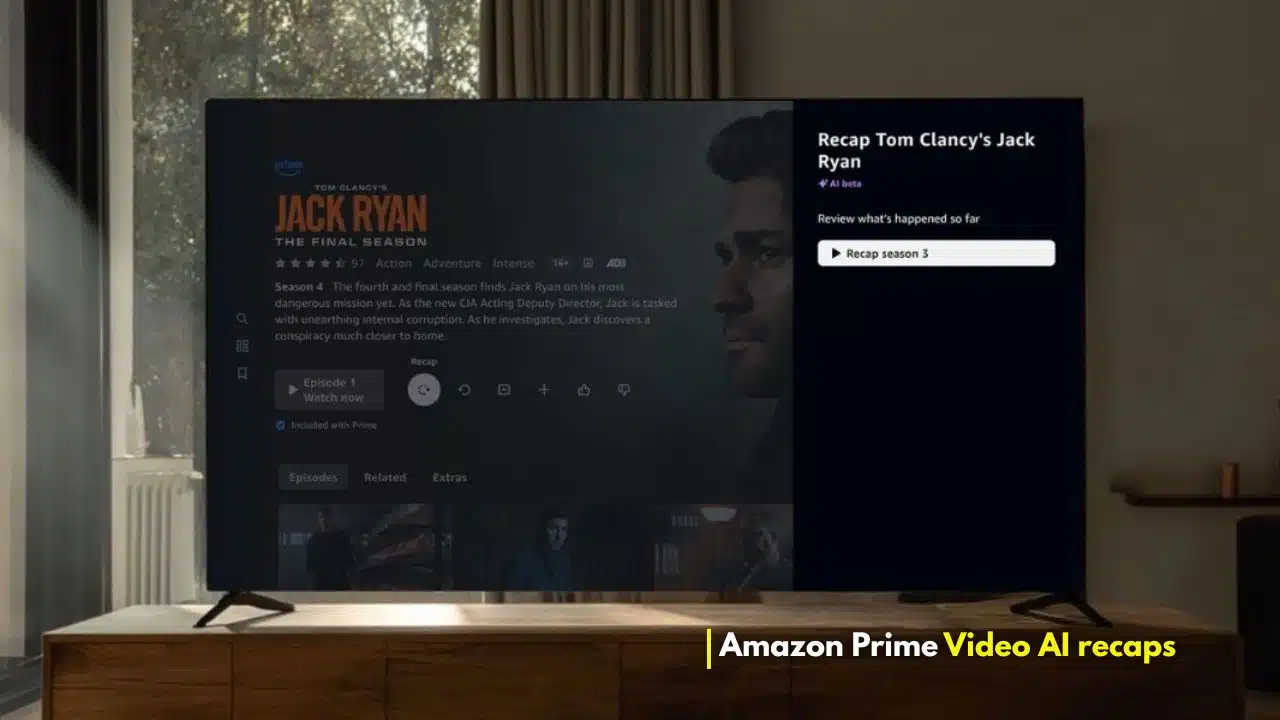
Amazon has officially declared war on the “previous season fog.” In a major technical leap announced yesterday, the streaming giant revealed it is now using AI to produce video recaps for its original series, a move that fundamentally alters how audiences interact with long-form storytelling.
For years, the “gap year” between seasons of high-budget television has been a retention nightmare for streamers. Viewers forget plot lines, lose emotional connection, and often fail to show up for the premiere of a new season. Amazon’s solution isn’t to hire an army of video editors, but to deploy its massive cloud infrastructure.
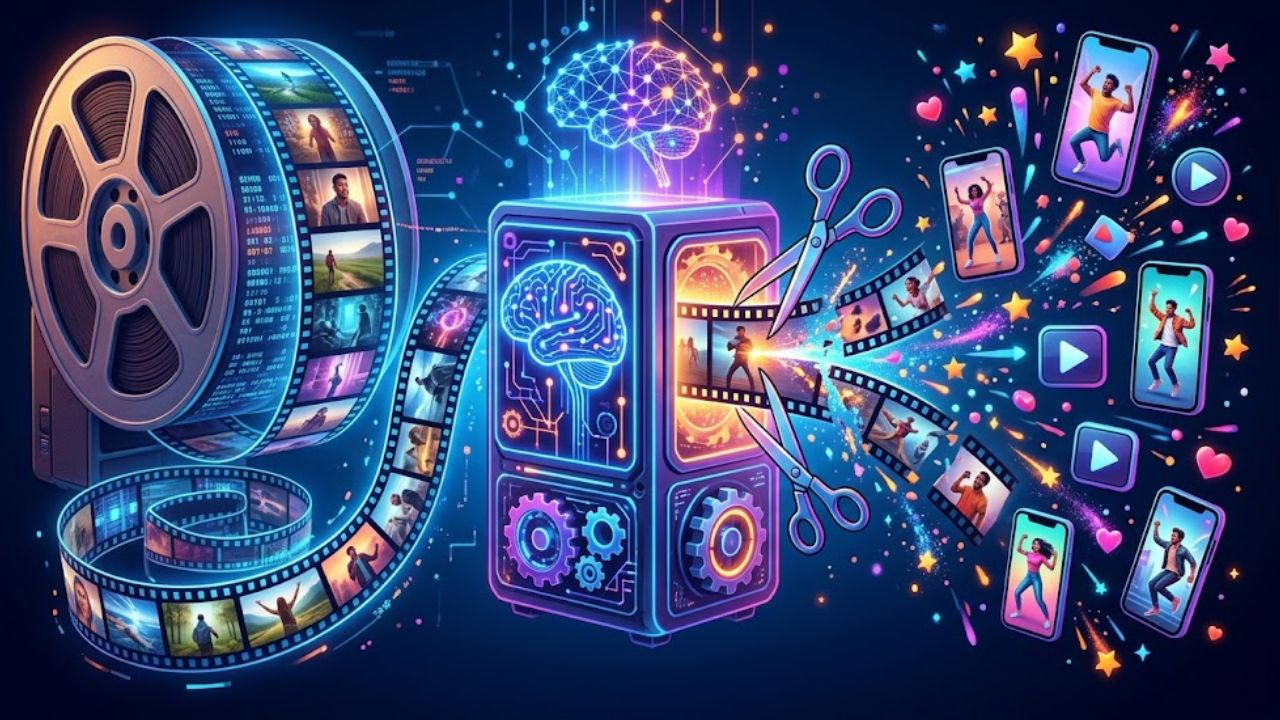
The new feature, simply dubbed “Video Recaps,” leverages Amazon’s AWS Bedrock generative AI capabilities to autonomously edit together “theatrical-style” trailers. These are not pre-cut by human editors; they are generated by deep-learning models that “watch” the show to understand not just what happened, but why it matters.
The Technology: How the AI “Watches” TV
To understand the magnitude of this update, one must look under the hood. While streaming services have used AI for recommendations for a decade, using AI to produce video recaps requires “multimodal” understanding—the ability for a computer to process text, audio, and video simultaneously.
According to technical documentation released by AWS alongside the Prime Video launch, the system utilizes a four-stage pipeline:
1. Semantic Segmentation (The Brain)
The AI doesn’t just look for keywords. It breaks down episodes into “semantic units.” Using Large Language Models (LLMs) within Amazon Bedrock, it analyzes the script and subtitles to identify key narrative arcs—distinguishing between a main plot point (e.g., a character death) and a subplot (e.g., a comic relief moment).
2. Visual Recognition (The Eyes)
This is where it surpasses previous text-based attempts. The system uses computer vision to identify characters, settings, and actions.
- Example: If the script says “Jack Ryan looks worried,” the AI scans millions of frames to find the shot where the actor’s facial expression matches that sentiment, rather than just a shot of him walking.
3. Audio Synthesis (The Voice)
Perhaps the most controversial element is the narration. The system generates a voiceover script to bridge the gap between clips. It then synthesizes a narrator’s voice (or uses a stylized AI voice appropriate for the genre—tense for thrillers, upbeat for comedies) to read the summary, mixing it with background music selected from the show’s original score.
4. Guardrails and Safety
Adam Kimball, VP of Product at Prime Video, emphasized the “guardrails” built into the system to prevent “hallucinations”—a common AI error where the model invents facts.
“The AI is strictly bound to the content of the video files. It cannot invent a scene that doesn’t exist. Furthermore, we have trained custom models on Amazon SageMaker to recognize ‘spoiler boundaries.’ If you are on Episode 5, the recap for Episode 4 will never include a flash-forward to a scene from Episode 6.”
The Strategic “Why”: Fighting the Churn Crisis
Why invest millions in AI video editing? The answer lies in the brutal economics of the streaming wars in 2025.
The “re-watch barrier” is real.
Internal data from major streaming aggregators suggests that when the gap between seasons exceeds 18 months—common for effects-heavy shows like The Rings of Power or Fallout—viewership for the premiere of the next season drops by 15-20% compared to the previous finale.
- The Friction Point: Users want to watch Season 2, but they don’t want to commit 10 hours to re-watching Season 1 to remember who betrayed whom.
- The Solution: By reducing that 10-hour commitment to a 3-minute AI-generated primer, Amazon removes the friction, theoretically boosting “Day 1” streams of new seasons.
Sarah Jenkins, a principal analyst at Digital TV Research, explains the financial incentive:
“Churn is the enemy. If a user logs in, sees a complex show they used to love, but feels too overwhelmed to catch up, they might close the app and cancel the subscription. Amazon is using AI to lower the barrier to entry for its own library. It’s a retention tool masquerading as a cool feature.”
Competitive Landscape: Amazon vs. Netflix vs. Disney+
With this launch, Amazon has taken a technological lead over its rivals in the metadata race.
| Feature | Amazon Prime Video | Netflix | Disney+ |
| Recap Format | Generative Video (AI-edited clips + narration) | Static Video (Manually edited “Previously On”) | Collections (Curated playlists) |
| Flexibility | Can recap a season, a single episode, or a character arc. | Usually limited to full-season recaps. | Limited to editorial collections. |
| Update Speed | Instant (available as soon as an episode airs). | Slow (requires human editing time). | Slow. |
| Tech Base | AWS Bedrock (Generative AI) | Standard Editing / Machine Learning Recommendations | Manual Curation |
Netflix has experimented with “Mobile Previews” and “Fast Laughs” (a TikTok-style feed), but these are primarily for discovery, not retention/memory. Amazon’s application is functionally utilitarian: it is designed to educate the viewer.
The User Experience: A Walkthrough
For the average user, the complexity of the backend is invisible. The experience is designed to be seamless.
- The Entry Point: Upon navigating to a show like The Boys on a Fire TV device, users now see a prominent “Recap” button next to “Watch Episode.”
- The Selection: Clicking it opens a sub-menu:
- Season Recap: “Catch up on everything before Season 4.”
- Episode Recap: “What happened in the last episode?”
- Character Focus (Beta): “Show me Homelander’s story so far.” (Available on select titles).
The video loads instantly. It is not a jagged collection of jump cuts. It includes smooth fades, audio ducking (lowering volume during dialogue), and distinct chapters.
If the user pauses the recap, the X-Ray feature (Amazon’s long-standing overlay tool) identifies the actors and music in the recap itself—a meta-layer of data.
Industry Reaction: Editors and Creatives
While tech enthusiasts are celebrating, the feature has sparked a quiet debate among Hollywood post-production professionals. Trailer editors and promo producers typically craft these summaries.
“It’s a tool, not a replacement—yet,” says a senior editor at a major LA post-production house who worked on promotional materials for Amazon series in the past.
“A human editor understands emotional rhythm better than any AI. We know how to cut to music to make you feel something. The AI recaps are functional—they tell you the facts. But they lack the ‘soul’ of a great trailer. For now, Amazon is using this for back-catalog utility, not marketing. As long as it stays there, it’s helpful. If they start using it for marketing trailers, that’s when the unions will get involved.”
Amazon has stated that these recaps are intended solely for user retention within the app and will not replace the high-end marketing trailers released on YouTube and TV, which remain human-crafted.
The Roadmap: Personalized Trailers?
The launch of Video Recaps is likely just the first step. With the infrastructure now built to “understand” video content, analysts predict the next phase will be Personalized Trailers.
Imagine two different users:
- User A loves romance.
- User B loves action.
Using the same Bedrock technology, Prime Video could theoretically generate two completely different trailers for the same movie—showing User A the love story and User B the explosions. While Amazon has not confirmed this feature, the “Video Recap” technology builds the foundational architecture for it.
Conclusion: A New Standard for Streaming
As of November 2025, the definition of “binge-watching” has evolved. By using AI to produce video recaps, Amazon has acknowledged that content libraries have become too vast and complex for human memory to manage alone.
This feature transforms Prime Video from a passive library into an active narrator, holding the viewer’s hand through complex multiverses and sprawling timelines. While questions remain about the artistic nuance of algorithmic editing, the utility is undeniable: catching up on Jack Ryan just got significantly faster, and the “Previously On” segment may never be the same again.