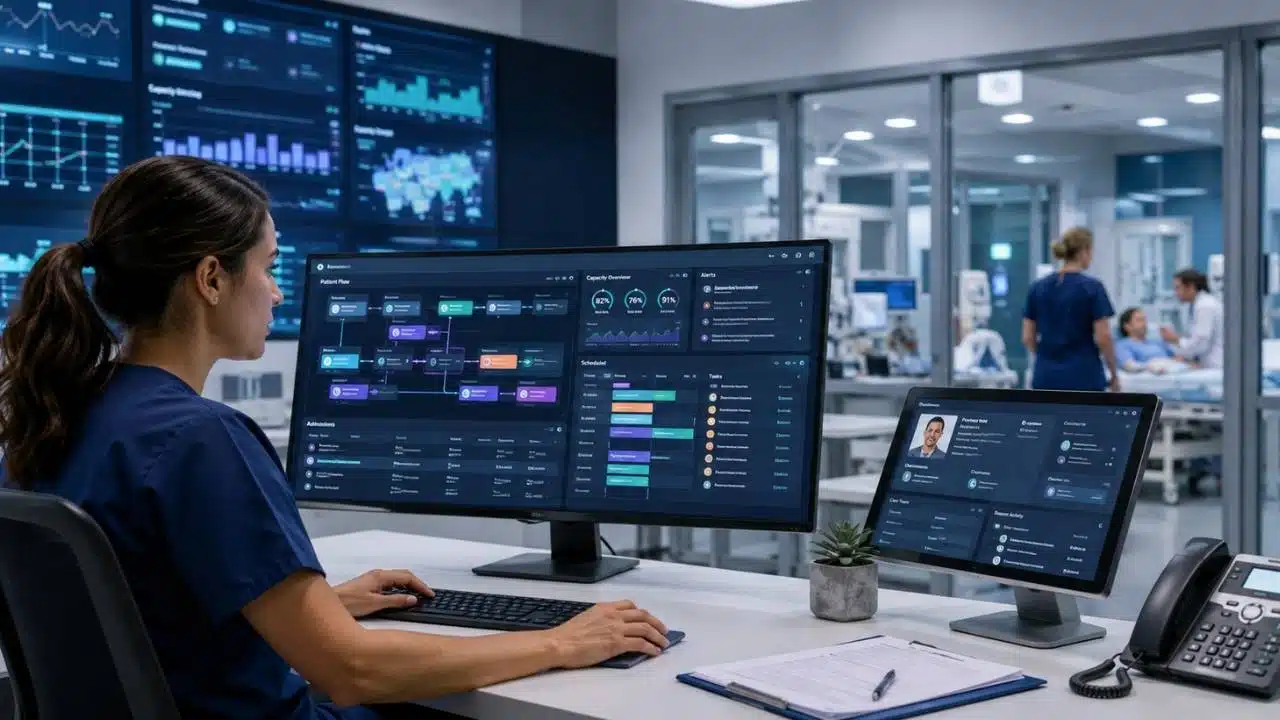
Healthcare organizations are under constant pressure to deliver better patient care while managing rising costs, staff shortages, and increasing administrative work. From scheduling appointments to processing insurance claims, many routine tasks still consume valuable time that could be spent on patient care.
This is why Healthcare AI Automation is becoming one of the biggest technology investments across the industry. Hospitals, clinics, and healthcare providers are increasingly adopting AI Automation Services to streamline operations, reduce manual work, and improve the overall patient experience without replacing the people who make healthcare possible.
The Administrative Burden Is Growing
Healthcare professionals spend a significant portion of their day completing paperwork, updating patient records, responding to emails, verifying insurance information, and coordinating appointments. While these tasks are necessary, they often take time away from patient interactions.
AI automation changes that equation. Instead of asking staff to handle every repetitive process manually, intelligent systems can automate routine workflows in the background. Appointment reminders, patient intake forms, document processing, referral management, and billing updates can all be handled faster and with fewer errors.
The result is a more efficient workplace where medical teams can focus on what matters most delivering quality care.
AI Has Moved Beyond Simple Chatbots
A few years ago, AI in healthcare was mostly associated with basic chatbots that answered common questions. Today, the technology has evolved into intelligent assistants capable of supporting both patients and healthcare professionals.
Modern AI solutions can schedule appointments, answer questions around the clock, summarize patient conversations, organize medical records, and guide patients through follow-up care. Some healthcare providers are even using AI voice assistants to answer incoming calls, reducing wait times while improving accessibility.
This shift shows that AI is no longer just a customer support tool. It has become a practical assistant that helps healthcare teams work more efficiently every day.
Smarter Documentation Means More Time With Patients
Documentation remains one of the most time-consuming responsibilities in healthcare. Physicians often spend hours updating electronic health records after appointments, leading to longer workdays and increased burnout.
AI-powered medical documentation tools are changing this process. By listening to patient conversations with proper consent, these systems can generate structured clinical notes, summarize key details, and prepare documentation for review. Healthcare professionals remain in control, but much of the repetitive typing is eliminated.
Reducing documentation time allows providers to spend more time engaging with patients instead of computer screens.
Predictive Insights Improve Decision-Making
Healthcare generates enormous amounts of data every day. The challenge is turning that information into useful insights.
AI-powered analytics can identify patterns that are difficult to detect manually. Hospitals can forecast patient admissions, monitor bed availability, optimize staff scheduling, and identify patients who may require additional care.
Rather than reacting to problems after they occur, healthcare organizations can make proactive decisions that improve operational efficiency and patient outcomes.
Automation Across the Entire Patient Journey
AI automation is no longer limited to one department. It supports nearly every stage of the patient experience.
Before a visit, AI can manage appointment scheduling, insurance verification, and digital registration. During treatment, intelligent systems assist with documentation, information retrieval, and workflow coordination. After discharge, automated follow-ups, medication reminders, and patient satisfaction surveys help maintain engagement while reducing administrative workload.
This connected approach creates a smoother experience for both patients and healthcare providers.
Security and Compliance Still Come First
Healthcare organizations manage highly sensitive information, making security a top priority.
Modern AI platforms are designed with strong security practices, including encrypted data, access controls, audit logs, and secure system integrations. When implemented responsibly, AI automation supports compliance requirements while helping organizations protect patient information.
Technology should strengthen trust, and successful healthcare providers ensure that AI is introduced with privacy, transparency, and human oversight at every step.
Why Healthcare Leaders Are Investing Now
The demand for healthcare services continues to grow, while many organizations face ongoing staffing challenges and tighter budgets. Hiring more administrative staff alone is no longer a sustainable solution.
Instead, many providers are investing in AI Automation Services to improve productivity without sacrificing the quality of care. By automating repetitive tasks, reducing paperwork, and helping teams make faster decisions, AI allows healthcare professionals to spend more time where they create the greatest value with their patients.
Healthcare organizations that embrace automation today are also preparing for future innovations. As AI continues to evolve, businesses with modern digital workflows will be able to adopt new capabilities more quickly than those relying on outdated manual processes.
Looking Ahead
Healthcare has always been driven by people, and that will never change. AI is not here to replace doctors, nurses, or administrative teams. Instead, it serves as a powerful partner that removes repetitive work, improves efficiency, and supports better decision-making.
Organizations that adopt Healthcare AI Automation thoughtfully will be better positioned to deliver faster services, improve patient satisfaction, and create more sustainable operations. As the healthcare industry continues its digital transformation, AI automation is becoming less of a competitive advantage and more of a necessity. The future of healthcare belongs to organizations that combine human expertise with intelligent technology to deliver safer, smarter, and more connected care.