
Have you ever felt frustrated searching online and not finding exactly what you want? You might notice that search results keep changing, or it’s harder to get quick answers. As a marketer, this can be confusing, especially with all the talk about AI search vs traditional search and how users behave differently these days.
I understand this struggle because I’ve faced the same challenges while working on digital marketing campaigns. One fact stands out: Nearly 40% of Gen Z users now use conversational AI tools instead of classic search engines for information. Realizing this shift, I took time to research both technologies to see what really sets them apart, and how marketers like us can respond.
This blog will break down how AI-powered search is different from old-school methods, why user intent matters more than ever, and which strategies help content stand out in both systems. Get ready to see how “AI search vs traditional search” could change your approach—for good. Stay tuned for ideas that work!
Why the Evolution of Search Matters to Marketers
Search technology has changed a lot over the years. In the past, traditional search engines relied on simple algorithms to find information. They matched keywords in queries with content from websites.
I remember when finding what I needed often took time and many clicks.
Now, AI search offers a new way to look for answers. It uses machine learning and large language models to understand user intent better. This shift affects how we think about SEO and digital marketing strategies today.
Knowing these differences is essential for modern marketers like me, as it helps craft smarter content strategies that meet users’ needs more effectively.
How AI Search vs Traditional Search Work
AI search uses advanced algorithms and machine learning to deliver results based on user intent. Traditional search relies on indexed pages and keyword matching. AI can understand natural language better, making searches feel more like a conversation.
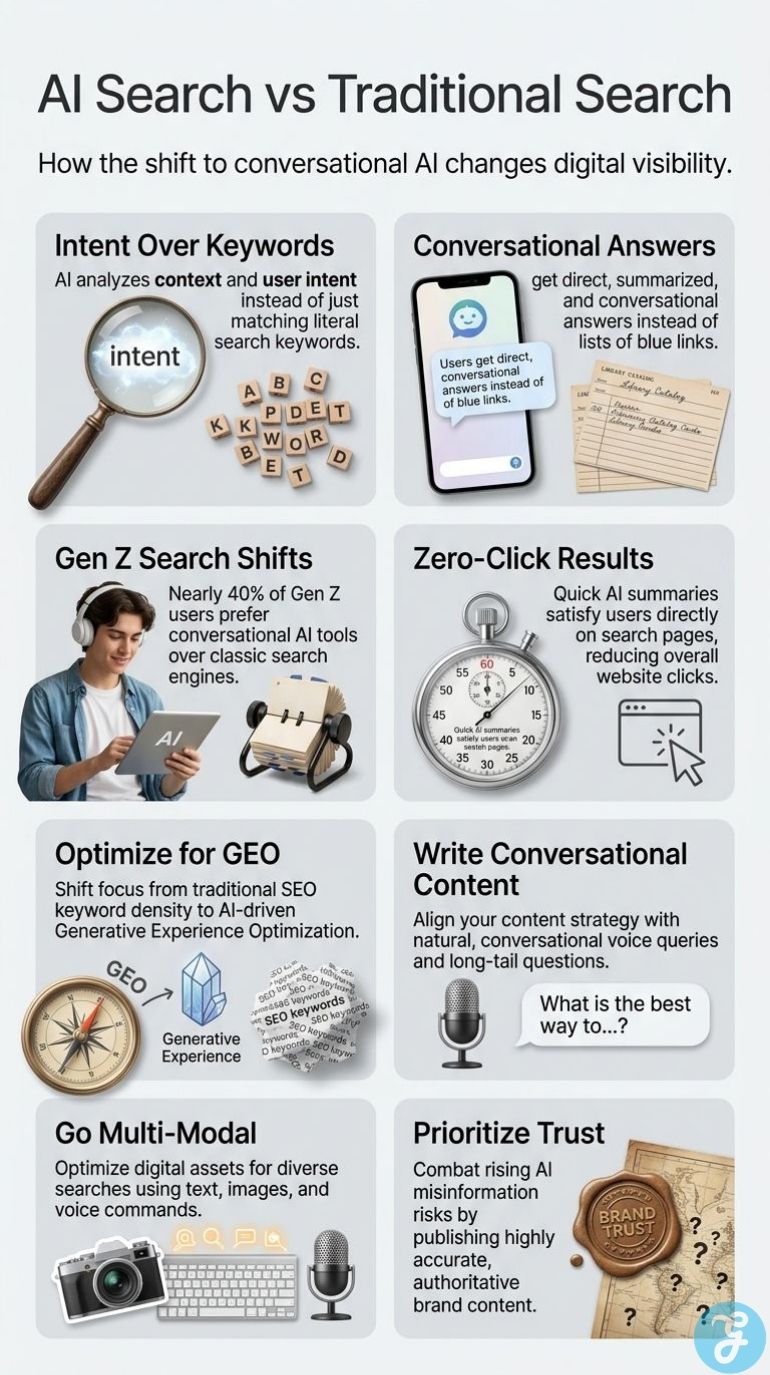
Traditional Search Algorithms vs Generative AI
Traditional search engine algorithms look for keywords in web pages. They rank results based on relevance and authority. These systems rely on set rules to match user queries with content.
Marketers often optimize their websites to improve rankings in this type of search.
Generative AI (GenAI) takes a different approach. It understands natural language better than traditional methods. This technology uses machine learning and large language models to find answers based on context and user intent.
GenAI can provide conversational responses, which change how users engage with search results. I see that many digital marketers will need to adapt their strategies as these technologies evolve.
The Role of Machine Learning, LLMs, and Pattern Recognition
AI search and traditional search have key differences. Traditional search engines rely on fixed algorithms. They match keywords to web pages, often leading to long lists of links. Search results can be less relevant or out of context.
In contrast, AI search uses machine learning and large language models (LLMs). These technologies understand user intent better. They analyze patterns in data and offer more conversational responses.
This change enhances information retrieval and user engagement. With AI, results are summarized and contextual, improving the overall user experience significantly.
How Search Behavior Is Changing
AI search changes how users find information. Results are now more conversational and personalized. Users expect quick answers and better context. This shift affects what they click on and how they discover content.
How AI Search Delivers Results
AI search delivers results in a new way. It focuses on conversation, summary, and context. Users expect quick answers that fit their needs. This approach is different from traditional searches that often show many links.
The search engine uses natural language processing to understand how people talk. Queries become more like conversations rather than simple keywords. Summarized answers appear first, making it easier for users to find information fast.
Context matters too; AI considers user intent and gives results that are relevant and helpful for each specific situation.
Changes in Clicks, Expectations, and Content Discovery
AI search changes how users expect results. People want answers fast and in simple language. They often prefer conversational searches instead of clicking through many links. This new way of finding information makes content discovery easier.
Click behavior also shifts with AI search. Users may click less because they find their answers directly in the results. Zero-click results give quick, direct answers from AI tools.
I must adjust my strategy as a marketer to meet these changing user needs for better engagement and exploration of my content.
SEO and Marketing Implications
As AI search changes the way users find information, marketers need to rethink their SEO strategies and focus on Generative Experience Optimization. This shift opens up new challenges and opportunities for content creation and visibility.
To stay ahead, we must adapt to these changes in user behavior and expectations. If you want to learn how to adjust your marketing plans for this new landscape, keep reading!
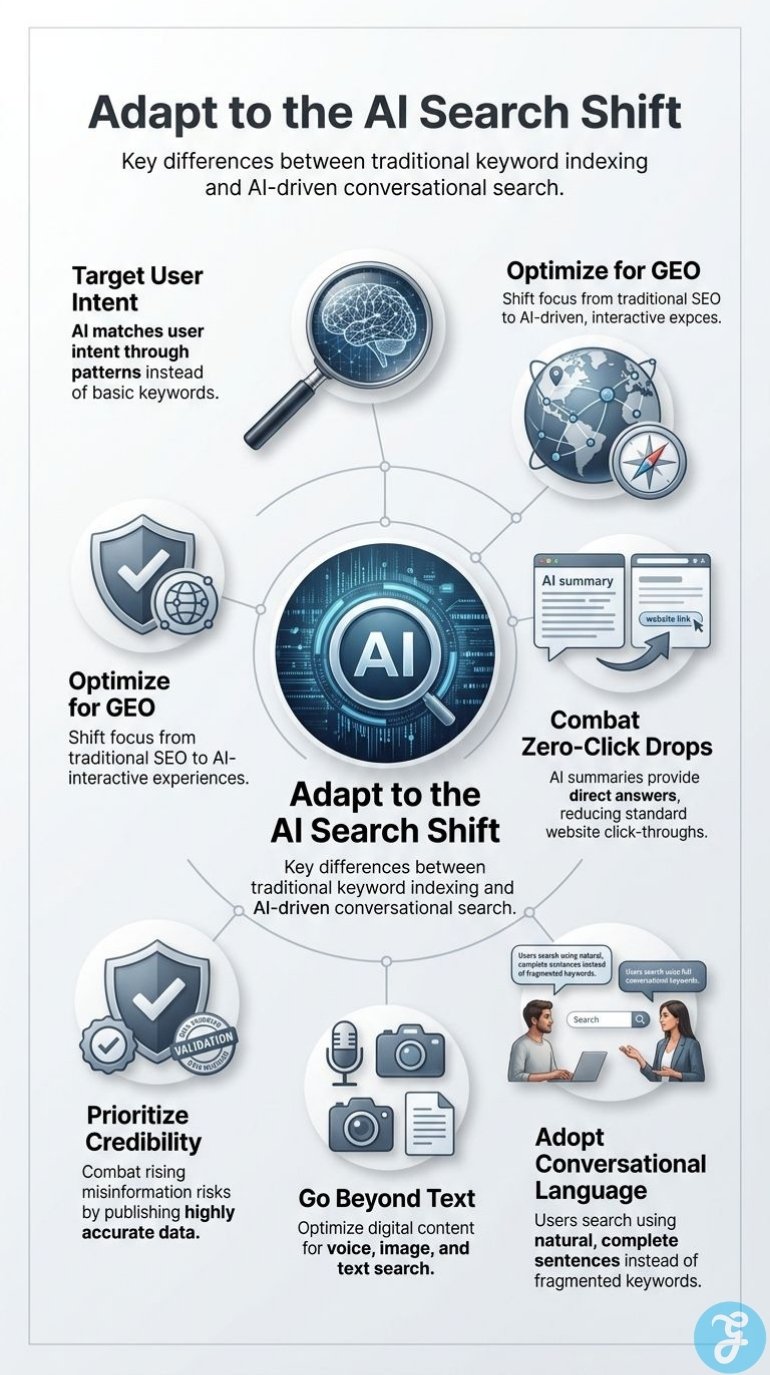
SEO vs Generative Experience Optimization
SEO focuses on improving website visibility through search engine algorithms. It takes into account factors like keywords, backlinks, and site structure. Generative Experience Optimization (GEO) is different.
GEO aims to enhance user interaction with AI-driven tools. This includes conversational search and personalized content delivery.
With SEO, I optimize for traditional search results. For GEO, my goal shifts toward creating engaging experiences that cater to user intent in real time. I must consider how users explore information now versus before.
Understanding both approaches helps me create a solid content strategy that meets changing needs in digital marketing.
New Ranking Factors and Visibility Challenges
AI search changes how I view ranking factors. Traditional SEO used keyword density and backlinks. Now, user intent holds great value. With generative AI, it is important to focus on engaging content that answers questions directly.
Visibility challenges arise with AI-driven search results. Zero-click searches dominate the landscape; users often get answers without clicking links. This makes it harder for websites to gain traffic.
Different content formats are now key too, such as video snippets and interactive tools. I adapt my strategies by creating diverse content tailored to how users explore information today.
How Marketers Can Adapt to AI Search
Marketers should focus on optimizing content for user intent. Understanding what users want helps in creating better content strategies. I find that using natural language processing can improve query optimization.
This makes it easier for AI search to understand and deliver relevant information.
Engagement is key with AI-driven results. Marketers need to adapt by focusing on conversational search techniques. Summarized answers and zero-click results have changed how people navigate information online.
Using these insights, I adjust my SEO strategies to stay visible in this new landscape.
The Future of Search for Marketers
The future of search brings new chances and challenges for marketers. Personalization can help us connect better with users, but misinformation may spread more easily.
Personalization, Misinformation, and Multimodal Search
Trends are changing in the search landscape. Personalization is becoming key for user intent. Users want results that fit their needs, making optimization crucial. Search engines now use data to tailor content and make it engaging.
Misinformation is a rising concern. As AI search grows, so do the risks of false information. Marketers must ensure their content is accurate and trustworthy. Multi-modal search is also on the rise; users search using text, images, or voice.
This shift calls for innovative content strategies to meet diverse queries effectively.
Using Both Search Types for Brand Growth
I see great opportunities in blending AI search and traditional search. Using both can boost brand growth. I focus on understanding user intent more deeply. Knowing what my audience wants helps me create content that speaks to them.
For SEO, I optimize for voice queries too. This means using natural language processing and conversational search techniques. I also pay attention to how users explore information through generative experiences.
Engaging with potential customers at different touchpoints is crucial. Content strategy must adapt quickly as trends change, especially when new algorithms emerge. By staying flexible, marketing efforts can thrive in this evolving landscape of digital marketing encounter engaging results.
Frequently Asked Questions About AI Search vs Traditional Search
1. What Is the Difference Between AI Search and Traditional Search?
AI search uses natural language processing and new search algorithms. It reads full queries and finds user intent. It can do smart information retrieval and give direct answers. Traditional search matches keywords and shows links and raw information.
2. How Does Conversational Search Affect Content Strategy?
Conversational search asks full questions. Marketers must tune content strategy to match user intent. They should give clear answers and short facts. This helps boost engagement with real users.
3. How Should Marketers Optimize Search Queries?
Marketers must track search trends and use real queries. Do query optimization and broad optimization of page text. Use clear headings and short answers. Check for zeroclick results and plan to win featured answers.
4. How Does AI Search Change Content Discovery and Engagement?
AI search aids exploratory search and better navigation. It helps people explore topics and find deep information fast. It raises engagement by showing quick answers and related paths. Traditional search often needs more clicks.
5. How Will AI Search Affect SEO and Digital Marketing?
Yes. AI search will change Digital Marketing and Search Engine Optimization. Marketers must craft clear content and fast web pages. They must tune content strategy, watch search trends, and keep testing for real users.