Have you ever wondered how much power it takes to run your favorite artificial intelligence tools? It takes a massive amount of electricity. In fact, data centers running AI models continuously demand between 100 and 500 megawatts of power. Some facilities need even more than that. This creates a real problem for companies trying to expand AI technology while keeping their carbon footprint small.
Traditional power grids struggle to meet these demands. Getting new power lines built takes five to ten years. Many businesses face a tough choice right now. Do they grow their AI operations, or do they stay committed to clean energy? Most companies want both. That tension is driving major changes in how we power the future.
Here is a very interesting fact. Micro-reactors generate between 1 and 20 megawatts of electricity in self-contained, factory-built units. These units operate around the clock with 90 to 95 percent reliability.
This guide explores micro-reactors and orbital compute and AI power in clean energy. We will look at how these technologies work together to solve the current energy crisis. You will discover why companies are investing billions in nuclear solutions and space-based computing.
I am going to walk you through the exact steps happening right now. I think you will be surprised at how fast these solutions are becoming reality.
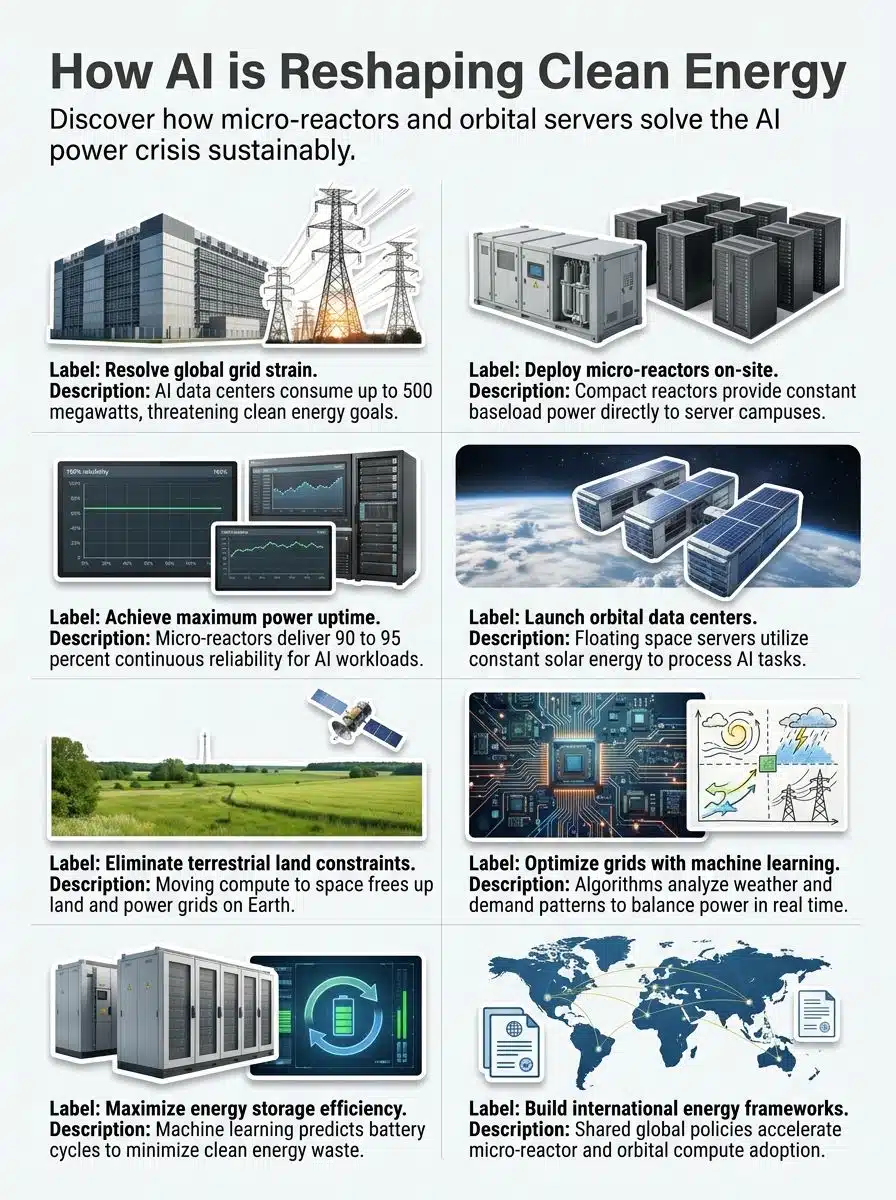
The Energy Demands of Artificial Intelligence
AI systems consume massive amounts of electricity. Data centers now use as much power as entire countries. This energy hunger creates a real problem. We need to power the AI revolution without cooking the planet.
The rising energy consumption of AI data centers
Generative AI’s rapid growth puts real pressure on power grids around the world. The numbers tell a stark story about what we face right now.
A June 2026 report from the Sierra Club estimates that data centers could consume up to 20 percent of all United States energy by 2030. That is a massive jump from just 4 percent in 2023. Morgan Stanley recently forecasted a U.S. power access shortfall of approximately 49 gigawatts by 2028.
We have to find new ways to supply this electricity fast.
| Energy Consumption Factor | Key Details |
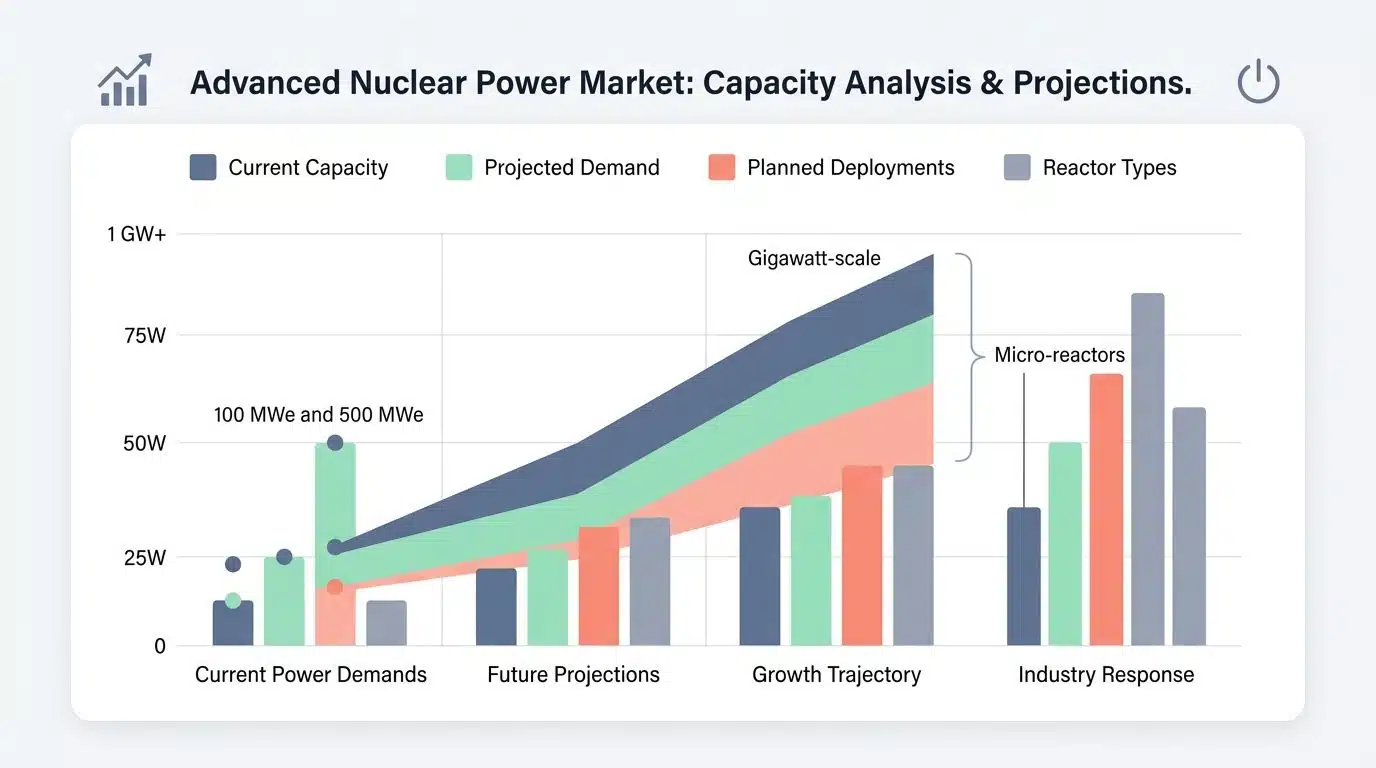
| Current Power Demands | Hyperscale AI data centers consume between 100 MWe and 500 MWe of electricity. That is enough power to run a small city. |
| Future Projections | Tech companies are planning for gigawatt-scale facilities. One gigawatt equals 1,000 megawatts. |
| Growth Trajectory | Generative AI expansion strains global power grids significantly. Grid operators scramble to meet demand without compromising reliability. |
| The Challenge Ahead | Balancing explosive AI growth with clean energy remains the central tension. Companies need lots of power while keeping carbon emissions low. |
| Industry Response | Tech companies explore micro-reactors and renewable partnerships to meet energy needs sustainably. |
Data centers run hot in every sense of the word. Cooling systems alone consume massive amounts of water and electricity. Traditional renewable sources struggle with intermittency. Solar and wind cannot always deliver power when data centers need it most. This gap between demand and supply drives companies to find solutions that provide constant electricity.
The challenge of balancing AI growth with sustainability
The rapid growth of generative AI stresses global power grids due to high power density requirements. We need more computing power to solve big problems. We also need to protect our natural resources.
Water usage is becoming just as critical as electricity demand. A 2026 Newsweek analysis found that U.S. data centers consume an estimated 163.7 billion gallons of water per year. Many facilities rely on evaporative cooling to keep servers safe.
CBS News reported in June 2026 that up to 85 percent of the water used in these specific cooling systems is lost as evaporation. That means the water does not return to the local watershed.
Balancing AI growth with sustainability requires smart solutions to fix these resource drains. Here are a few ways the industry is adapting:
- Deploying closed-loop water systems to drastically cut evaporation waste.
- Building data centers in cooler climates to reduce the need for active chilling.
- Investing in nuclear microreactors that do not require massive water reserves for cooling.
- Shifting processing loads to times of day when renewable energy is abundant on the grid.
Companies face a tough choice between keeping AI innovation moving forward or slowing things down to protect the environment. This tension defines the clean energy conversation today.
Micro-reactors and small modular reactors provide reliable electricity to meet AI uptime demands. These compact nuclear systems can be quickly deployed on-site. This avoids the long delays associated with traditional power sources.
Micro-Reactors: A Clean Energy Solution for AI
Small modular reactors pack enormous power into tiny packages. This makes them perfect for feeding AI data centers that never sleep. These compact nuclear systems sit right where the computing happens. They cut energy losses and slash carbon footprints at the exact same time.
Small modular reactors (SMRs) for localized power
Microreactors pack serious power into compact packages. These advanced reactors scale up to 300 MWe. They are perfect for AI data centers that gulp electricity constantly.
Unlike massive traditional nuclear plants that take decades to build, these deploy much faster. Companies like Oklo are leading the charge in the United States. Oklo plans to deploy its first “Powerhouse” Aurora microreactors by 2027.
The Aurora model generates 1.5 MWe but scales up to 75 MWe when multiple units connect. This modular approach delivers continuous baseload electricity with high capacity factors. AI workloads get steady, reliable power around the clock.
Tech giants are already securing these technologies. Meta recently announced partnerships with both TerraPower and Oklo to power future facilities. This decentralized power approach takes pressure off aging power grids.
The future of AI power isn’t about finding one giant solution, it is about placing the right energy source in the right place at the right time.
SMRs also feature cutting-edge safety technology. They use High-Assay Low-Enriched Uranium (HALEU) in TRISO fuel particles. This prevents radioactive release even if temperatures spike dangerously high.
Energy storage and grid stability improve dramatically when SMRs work alongside renewable power sources. Tech companies stop competing with homes and hospitals for electricity. These reactors handle localized demand independently.
Benefits of micro-reactors for AI data centers
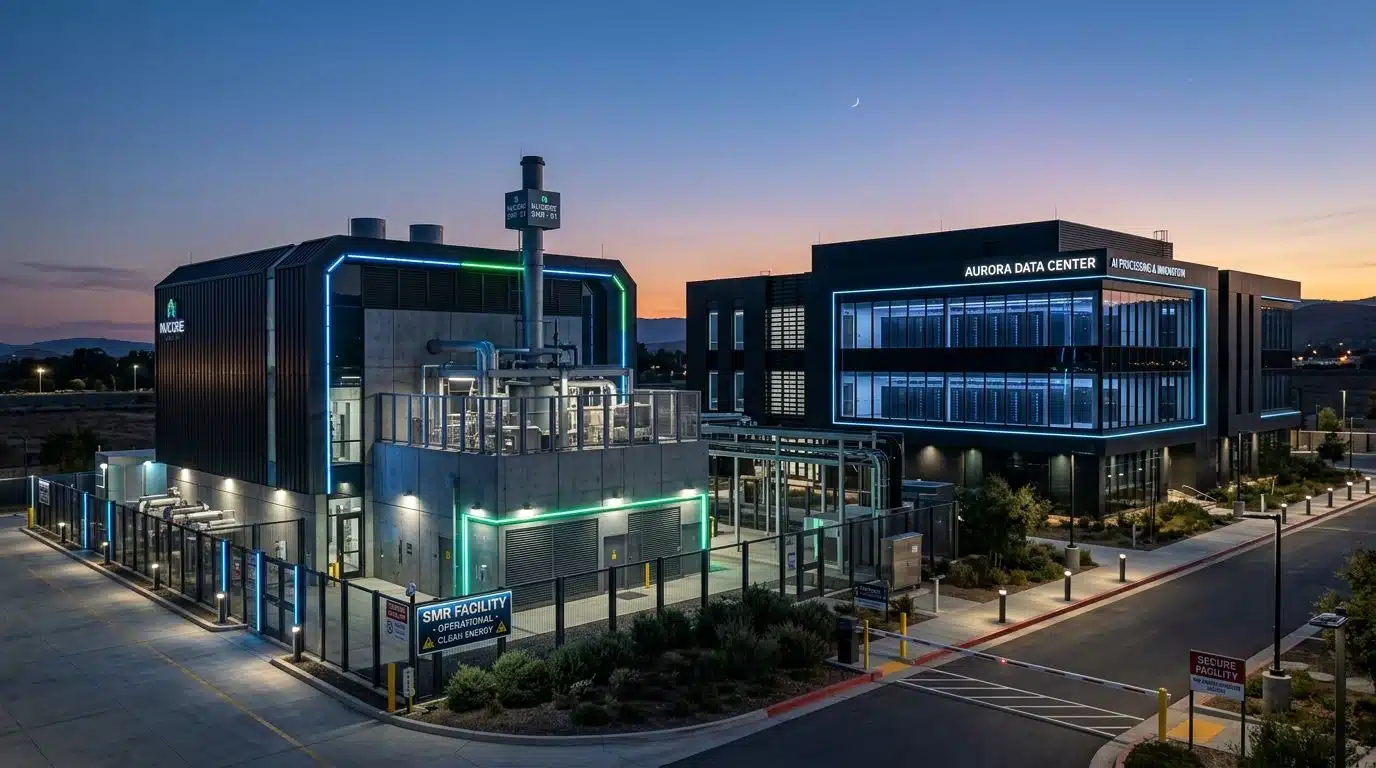
Small modular reactors create a game-changing path forward for powering AI data centers. They provide clean, reliable electricity directly to the source. These compact nuclear systems deliver the performance that server farms desperately need to operate at peak efficiency.
Here are the top advantages of using microreactors for artificial intelligence workloads:
- Perfect Power Matching: Microreactors generate between 1 and 20 megawatts of power, matching high energy demands perfectly.
- Unmatched Reliability: Continuous baseload electricity flows with capacity factors reaching 95 percent, surpassing standard solar panels.
- Advanced Safety: Built-in safety features eliminate radioactive release risks and prevent meltdown scenarios from occurring.
- Faster Deployment: Placing them behind-the-meter skips lengthy grid interconnection delays that often stretch five to ten years.
- Limitless Scalability: The SOLO Node concept allows multiple clusters to connect together as data centers expand.
Clean technology credentials make micro-reactors an excellent fit for modern organizations. Power generation remains steady and predictable. Integration with existing data center infrastructure happens smoothly. These systems operate independently from the broader electrical grid.
Orbital Compute: The Future of Space-Based AI
Space-based data centers float high above Earth. They pull power from solar panels and operate without the cooling challenges that plague ground-level servers. AI systems running in orbit process massive amounts of information. They completely sidestep the energy bottlenecks limiting computing on the planet’s surface.
What are orbital compute data centers?
Orbital compute data centers are server racks that float in Low Earth Orbit. They sit roughly 200 to 2,000 kilometers above our heads. These facilities handle AI inference workloads that do not need super-fast response times.
They tap into space-based solar arrays that deliver consistent, uninterrupted power. This energy is free from the clouds and rain that plague ground-based systems.
Startups are already making this science fiction a reality:
- Starcloud: In November 2025, this U.S. startup became the first company to successfully run an Nvidia H100 GPU in orbit, later raising 170 million dollars in a March 2026 Series A funding round.
- Orbital: This major player plans to launch its first test mission named Orbital-1 in April 2027, with long-term plans to deploy up to 100,000 small satellites to deliver 10 gigawatts of compute power.
Getting these orbital compute centers off the ground involves solving serious engineering puzzles. Heat dissipation in a vacuum presents a major challenge because there is no air to carry warmth away from the equipment. Cosmic radiation batters satellites constantly, so hardware needs robust shielding to survive the harsh space environment.
| Challenge | Ground-Based Data Centers | Orbital Compute Centers |
| Cooling Systems | Uses millions of gallons of fresh water annually. | Relies on radiative cooling in the vacuum of space. |
| Power Source | Strains local grids, relies partly on fossil fuels. | Uses 100% continuous solar energy above the clouds. |
| Maintenance | Easy physical access for IT technicians. | Requires specialized robotic servicing or hardware redundancy. |
Despite these hurdles, the payoff is absolutely enormous. You gain access to reliable, clean energy from the sun. Your data processing infrastructure stays completely separate from Earth’s power grid.
Advantages of space-based AI computing
Space-based AI computing solves a massive problem facing our planet right now. Earth’s grids are already straining under the load of new AI applications. Moving these servers to space offers some incredible benefits.
Here is why tech leaders are looking to the stars for artificial intelligence:
- Zero Grid Strain: High-intensity solar energy powers systems in Low Earth Orbit without drawing from terrestrial grids.
- No Land Disputes: Land constraints disappear since orbital data centers do not compete with agriculture or housing.
- Superior Cooling Efficiency: Operational efficiency reaches higher levels where radiative cooling works in the cold vacuum of space.
- Infinite Scalability: Space offers virtually unlimited room for expansion compared to geographic limitations on Earth.
- Stable Processing Environments: Satellite computing achieves better performance metrics thanks to completely stable solar conditions.
Engineering challenges still exist today. Space-based systems can overcome terrestrial grid limitations that currently prevent scaling AI infrastructure. Renewable energy investments accelerate because AI technologies improve clean energy management. This prompts companies to develop better solar and nuclear power solutions.
Innovations in AI-Driven Energy Management
AI systems now learn exactly how power grids work. They predict when storms will hit and adjust energy flow in real time. Machine learning algorithms squeeze more juice from batteries and storage systems. This cuts waste while keeping the lights on for everyone.
AI for grid management and renewable energy forecasting
Smart grids use artificial intelligence to look at real-time weather data and consumption trends. This technology analyzes patterns across entire energy networks. Grid operators gain a clearer picture of what people need moment by moment.
Predictive modeling helps utilities balance supply and demand effortlessly. The U.S. Department of Energy realizes how critical this is. In March 2026, the Department of Energy announced a 1.9 billion dollar “Speed to Power” initiative to rapidly accelerate large-scale transmission projects.
Data analytics tools process millions of data points to spot energy waste hiding in plain sight. A June 2026 Capgemini report revealed that over 75 percent of electricity executives struggle to forecast future energy needs accurately. They are now turning to AI to solve this exact problem.
Here is how AI improves renewable energy forecasting directly:
- Machine learning models predict cloud cover and solar intensity hours ahead of time.
- Advanced algorithms simulate millions of energy scenarios to prevent blackout events.
- Smart systems redirect excess wind power into battery storage before grid congestion happens.
Demand forecasting becomes precise enough to prevent brownouts. Sustainability gains traction as energy management becomes completely data-driven. Smart grids powered by artificial intelligence transform how we distribute power from wind farms.
Machine learning for optimizing energy storage and battery efficiency
Machine learning accelerates the discovery of new materials for energy storage. Scientists find better chemical solutions much faster than before. AI technologies improve the efficiency of large-scale batteries and electrolyzers.
These systems work harder without wasting any power. Predictive analytics forecast renewable energy outputs perfectly. Storage systems know exactly when to charge and discharge.
This alignment reduces waste and keeps energy flowing smoothly through the grid. Cost reduction follows naturally when machines optimize every aspect of battery performance.
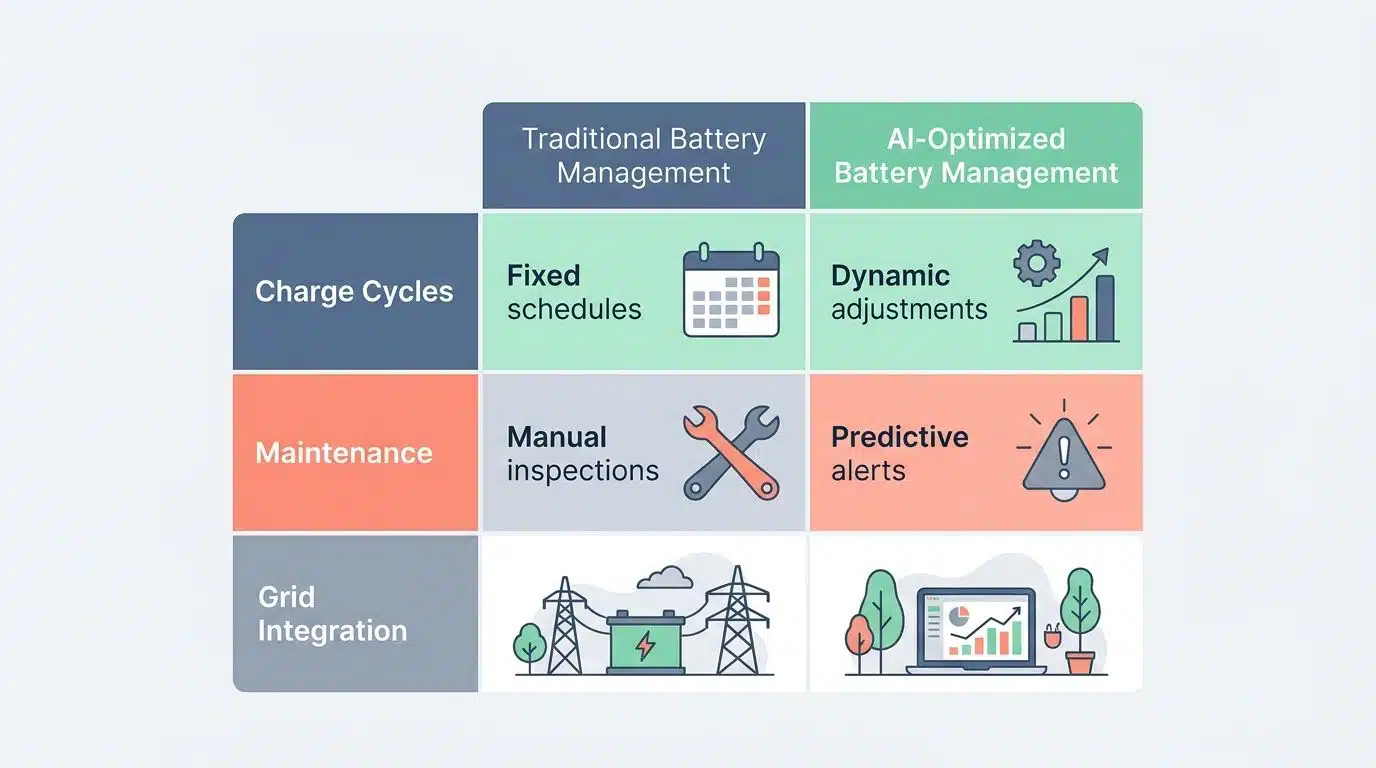
| Feature | Traditional Battery Management | AI-Optimized Battery Management |
| Charge Cycles | Fixed schedules based on historical averages. | Dynamic adjustments based on real-time weather forecasts. |
| Maintenance | Scheduled manual inspections every few months. | Predictive alerts that catch failures before they happen. |
| Grid Integration | Manual dispatch during peak demand events. | Automated micro-second responses to stabilize grid frequency. |
Predictive maintenance for energy assets increases battery reliability significantly. Energy management systems now handle fluctuating energy demands easily. They store power when the sun shines bright and release it when clouds roll in.
Machine learning innovations make energy storage solutions incredibly cost-effective. These smart systems truly support the transition to renewable energy.
Co-Benefits of AI and Clean Energy Integration
When AI systems work alongside clean energy sources, amazing things happen. They slash carbon emissions and speed up our shift to renewable power. Smart algorithms learn from energy patterns to cut waste and help power grids run smoothly.
Reducing carbon emissions with AI-driven solutions
AI technology acts as a powerful tool for cutting carbon emissions across energy systems. Data centers powered by AI can now predict renewable energy output with remarkable accuracy. Machine learning algorithms analyze weather patterns, cloud cover, and seasonal trends.
Grid operators use these predictions to balance power supply and demand perfectly. The Bipartisan Policy Center projected that data centers will account for 25 percent of all new U.S. electricity demand by 2030. This smart grid management reduces waste and cuts our reliance on fossil fuel backup systems.
Hyperscale data centers require increasing power densities. Companies are aggressively turning to clean energy sources to meet these needs.
Here are the most effective ways AI directly reduces carbon emissions:
- Optimizing cooling systems inside data centers to reduce overall electricity draw.
- Routing computing tasks to servers located in regions where renewable energy is currently producing excess power.
- Enhancing battery efficiency by predicting the exact optimal moment to charge and discharge power.
Energy storage systems benefit tremendously from AI optimization. Predictive analytics identify the best times to store excess renewable energy for later use. Investments in renewable energy and nuclear infrastructure are accelerating fast.
Supporting the transition to a renewable energy grid
Generative AI systems consume massive amounts of power every single day. This surge in demand is forcing us to completely rethink how we power data centers. Traditional energy sources simply cannot keep pace with the modern appetite for electricity.
Micro-reactors and small modular reactors offer a truly game-changing solution. The renewable energy grid becomes stronger, more flexible, and genuinely sustainable when clean technology and artificial intelligence work in close partnership.
Companies are investing heavily in renewable energy infrastructure to support AI growth. They recognize that clean power and artificial intelligence must advance together. Grid management becomes much smarter when AI enters the picture.
Energy forecasting powered by machine learning makes the electric grid highly efficient. AI integration transforms how we store and use energy across the entire system. Solar energy installations work harder when AI algorithms predict cloud cover accurately.
Space-based data centers represent the next exciting frontier for this industry. They leverage orbital solar energy to power computing without straining Earth’s electrical grid. Infrastructure investment flows toward these advanced technologies rapidly.
The Role of International Collaboration and Investment
Countries and companies must work together to build smart global standards. These rules make clean energy and artificial intelligence work as a seamless team. Money flows toward the exact technologies that solve real problems. Global investment in microreactors and orbital compute will accelerate the solutions we desperately need.
Developing global standards for clean energy and AI integration
Governments and tech companies must collaborate to connect clean energy with AI systems. Right now, traditional power transmission lines face grid interconnection delays of five to ten years. This slows down both renewable energy projects and AI data center expansion.
The U.S. government is starting to address this administrative bottleneck directly. In early 2026, the Department of Energy directed the Federal Energy Regulatory Commission to create new rules. These rules aim to rapidly move electricity onto the grid specifically for large AI data center loads.
International collaboration creates a shared rulebook for these massive projects. Microreactors and orbital compute systems can operate smoothly across borders with these rules in place. These standards help companies invest in advanced energy technologies with absolute confidence.
Shared global standards aim to accomplish three main goals:
- Streamlining the approval process for connecting microreactors to local distribution grids.
- Establishing unified safety protocols for launching hardware into orbital compute environments.
- Creating transparent metrics for reporting water consumption and carbon emissions at data centers.
Developing shared frameworks for energy storage lets innovation spread quickly. Nations that lead this effort gain massive competitive advantages. Technological innovation accelerates rapidly when countries align their policies.
Encouraging investment in advanced energy technologies
Investors are pouring money into advanced energy technologies because the numbers make sense. Micro-reactors generate perfect power for massive AI data centers. These small modular reactors come packed with incredible safety features, which reduces risks and makes them highly attractive to venture capitalists.
Companies backing these technologies see real financial returns, not just environmental wins. Orbital compute centers represent another massive investment frontier. The 1.1 billion dollar valuation of space computing startups like Starcloud proves this market is heating up.
Tech companies and energy firms are racing to develop these orbital data centers. This intense competition drives engineering innovation forward every single day. AI applications in clean energy create direct opportunities for technological investment.
Venture capital flows toward solutions that tackle real problems head-on. The energy crisis facing artificial intelligence is very real right now. Governments, corporations, and private investors recognize that sustainable technology is great for business.
Wrapping Up
AI and clean energy stand at a very important crossroads today. The path forward demands serious action from everyone involved. This is exactly why Micro-Reactors And Orbital Compute: How The Race For AI Power Is Reshaping Clean Energy is such an important topic.
Micro-reactors offer reliable baseload electricity that outperforms standard solar and wind energy alone. Orbital compute centers utilize consistent solar energy to support heavy AI workloads. Companies and governments must collaborate to develop global standards for clean energy right now.
The computational infrastructure we build today shapes the exact sustainability we experience tomorrow. Grid stability depends on smart choices happening at this very moment. AI technologies enhance clean energy initiatives through better grid management and advanced material discovery.
Organizations investing in these solutions gain huge competitive advantages while reducing carbon emissions. The race for AI power does not have to compromise our beautiful planet. Instead, it can drive massive innovation in renewable energy and power generation.
Frequently Asked Questions About AI Power In Clean Energy
1. What are micro-reactors, and why do they matter for clean energy?
Micro-reactors are compact nuclear power plants, typically under 10 megawatts, that can fit in a shipping container and power about 1,000 to 10,000 homes. According to the U.S. Department of Energy, companies like BWXT and Westinghouse are developing units that provide steady, carbon-free electricity for AI data centers, especially in places where solar and wind can’t keep up with demand.
2. How does orbital compute connect with the race for AI power?
Orbital compute puts processors in space to run AI workloads without draining Earth-based power grids. Startups like Lumen Orbit are testing this approach, which could reduce cooling costs since space is naturally cold.
3. Why is there a rush to combine micro-reactors and orbital computing?
AI models like GPT-4 can use as much electricity as 17,000 U.S. homes over a year, according to recent industry estimates. Pairing portable nuclear reactors with space-based servers helps tech companies meet this massive energy appetite while keeping carbon emissions low.
4. Can these new technologies really reshape clean energy as we know it?
Yes, they’re already making waves. By 2025, Microsoft announced plans to test small modular reactors for its data centers, showing how nuclear and orbital tech can cut reliance on fossil fuels and prevent grid overloads during peak hours.