

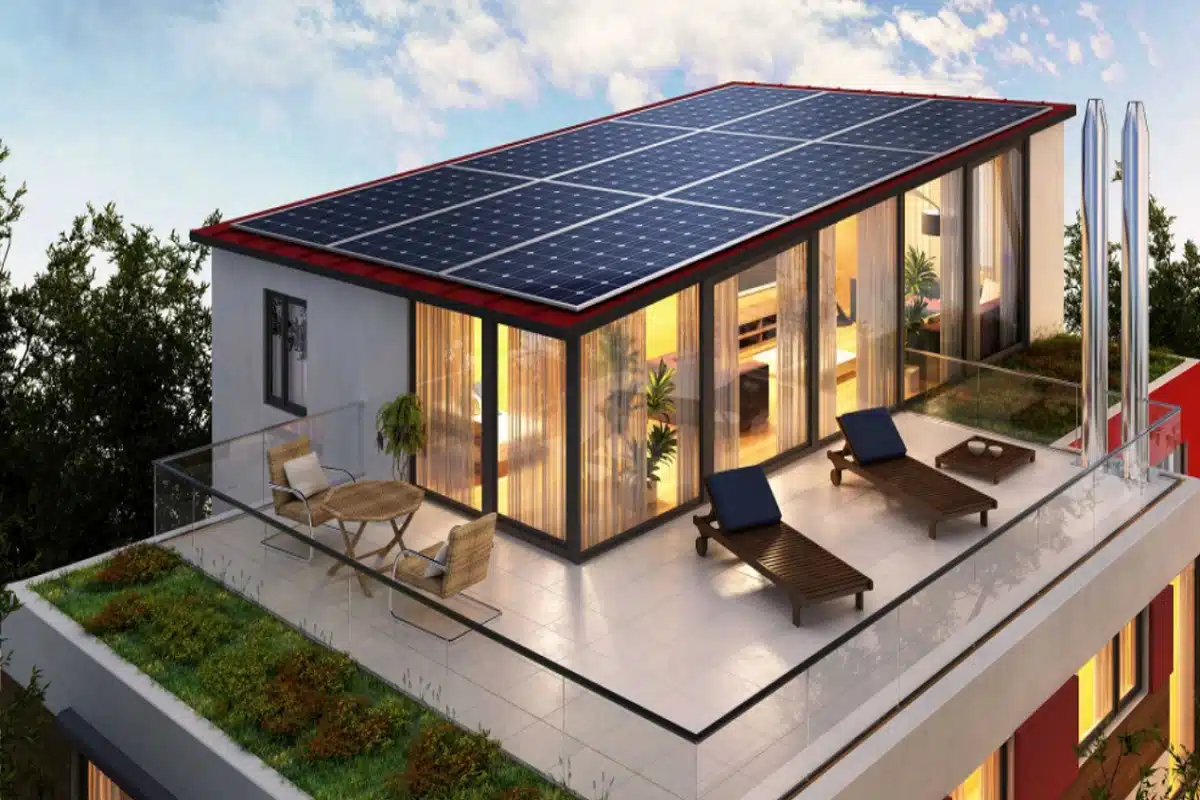
The off-grid solar system (also called the photovoltaic island system) is a subtype of the PV system. Power is generated independently, and there is no connection to the public power grid. It is often temporarily stored to make the energy usable throughout the day. In addition to the island system, a distinction is made in photovoltaics between a feed-in system and a zero-feed system.
The right solar system for you should not only depend on your power requirements but also other factors. All important factors for the decision and tips for purchasing an off grid solar system can be found here.
The normal feed system
A feed-in system is a PV system that feeds the excess electricity generated into the public grid. The solar power of this system first covers your electricity needs, and you can earn something with what is left. According to the Renewable Energy Sources Act (EEG), feeding into the public grid is remunerated.
Depending on your system’s nominal output, you can feed the electricity that you no longer need into the public grid for 8.20 cents per kilowatt hour (kWh) (as of August 2022). You then obtain electricity from the public grid when there is heavy cloud cover or in the evening when the sun is no longer shining.
The zero-feed system
The difference between a zero feed-in system and a normal one is that the excess self-generated electricity cannot be fed into the public power grid. The PV system is configured so you cannot feed any electricity into the grid, but the system is expanded to include a solar power storage unit.
This is a specially developed lithium ion solar battery that temporarily stores the total solar power of the day. Then it can be used at a later date for personal needs. If you have a zero-feed system, you will not receive any feed-in tariffs, but you will save yourself a lot of bureaucratic work. The feed-in of self-produced electricity requires a business registration.
Solar cells produce the most electricity when the bright sun shines during the day. However, because most households only consume most of their electricity in the evening, households with a simple feed-in system without storage often lack electricity and have to buy additional external ones. Thanks to the additional electricity storage, the zero feed system helps to save costs and additional self-sufficiency.
While electricity storage is optional for feed-in systems, zero feed-in systems require them to be mandatory. Because without the feed-in, you produce a lot of excess electricity during the day, which you must store. If the storage becomes empty, you can also use electricity from the public grid with zero feed-in systems as with the feed-in system.
The off grid solar system
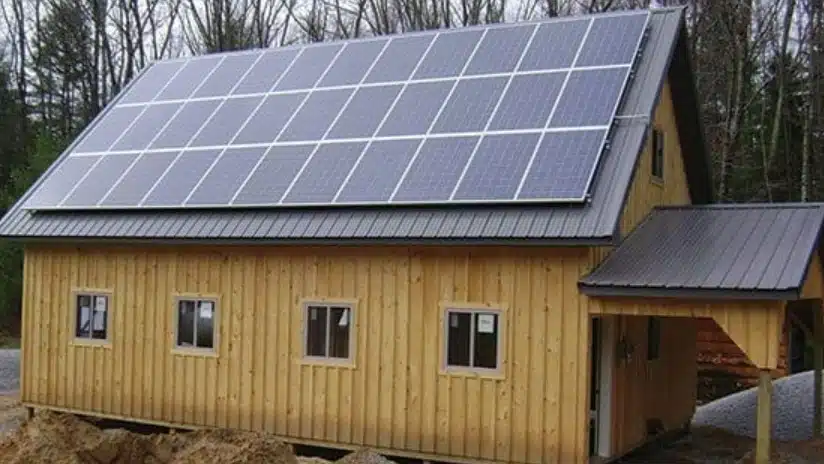
The stand-alone solar system is the type of PV system that allows for the greatest self-sufficiency. Like the zero feed-in systems, the stand-alone solar system has a power storage unit through which the electricity produced during the day can be used in the evening.
However, the big difference with the stand-alone solar system is the missing connection between the house and the public power grid. This means that there are no costs for purchasing external electricity. At the same time, however, the household completely depends on the hours of sunshine and self-produced solar energy.
The stand-alone solar system is a common model for caravans because complete independence from the power grid must be guaranteed when traveling or camping. Mini PV systems are often used here, integrated on the roof or the ground.
The construction of a off grid solar system
The structure of a stand-alone solar system is a bit more complicated than the structure of a normal feed-in system. Like the feed-in system, the stand-alone system also has numerous solar modules that produce electricity and an inverter that converts the direct current generated into alternating current. This step is necessary to use solar power in the household.
However, a solar battery that stores the total solar power is essential for the stand-alone solar system. The charge controller is also very important. This controls the charging and discharging of the solar battery to prevent battery overcharging.
When does a stand-alone solar system make sense?
Is it worth the risk of not being connected to the public power grid? And in which cases does it definitely, make sense to choose the stand-alone solar system?
The first logical situation for using an off-grid system is when connecting to a public power grid is simply impossible. This is often the case in mountain huts, boats, or remote regions in developing and emerging countries. These areas would often live without any electricity if there were no possibility of a off grid solar powered generator system.
Apart from that, it makes a lot of sense to use an off-grid solar system if houses are not occupied all year round (e.g. only in the summer months) or have a very low power consumption. This category mainly includes holiday homes and garden houses. The installation of a stand-alone solar system is more worthwhile here than in a single-family house with high electricity consumption throughout the year.
With our electricity consumption calculator, you can quickly determine your electricity consumption and costs.
Are off-grid systems subject to registration?
According to the EEG, photovoltaic systems must be reported, whereby the location and output of the system must be reported. The island system is the exception and can be installed with little or no bureaucratic effort.
Which factors do you have to consider before buying a stand-alone solar system?
Before investing in a stand-alone solar system, you should pay close attention to a few key figures. In addition to the efficiency and maximum output of the system (measured in kilowatt peak), the key figures of the storage system must also match your needs exactly.
The most important criteria are storage capacity, maximum discharge depth or usable capacity, efficiency, and service life. Added to this are considerations of the region’s climate, such as the average hours of sunshine and the regularity of the sun.
Make sure that the system’s maximum output is significantly higher than your actual consumption. This way, you can be sure that you always produce enough electricity – even if the sun doesn’t shine for a while. The rule of thumb for the off grid solar system is a maximum output that is at least 1.2 to 1.5 times the amount of your electricity requirement.
If you only have little space available, you should use solar modules with higher efficiency. Monocrystalline solar modules have the highest efficiency with over 20%, closely followed by polycrystalline modules (approx. 17%). However, thin-film modules only have an efficiency of around 7%, so they are very inefficient in comparison. If you opt for thin-film modules, you would have to install three times as many PV modules as the monocrystalline variant to achieve the same output.
Which battery to use for a stand-alone solar system?
When selecting a battery for an off-grid system, the following factors should be considered.
- Sufficient storage capacity
- High efficiency
- Long term
- When choosing storage, you need to ensure that the battery has enough storage capacity to store the PV array’s power. At the same time, it must be large enough to provide you with enough power for a long time without running out. Not only the available storage capacity is important here, but above all, the “usable storage capacity” depends on the maximum depth of discharge. To protect the service life and functionality of the batteries, they are never completely discharged, usually only 60 – 90%.
- Be sure to check the efficiency of your storage. While lead-acid batteries have an efficiency of around 70 to 85%, lithium storage is usually around 90 to 98%. Due to their higher efficiency, lithium storage systems are often the best choice for off-grid solar systems. If the efficiency is too low and too much energy is lost in the storage process, you would have to compensate with a higher system output. And that can be an expensive affair.
- To sustainably store the power of your off-grid system, your power storage unit must have a long service life. The service life of lead storage is around 5 – 10 years, while lithium storage can be expected to last around 10 – 15 years. However, because PV systems have 20 to 35 years lifespan, you have to buy several storage units during this time. The service life of the individual storage units, therefore, decides whether you only need two or even up to four. So don’t just look at the price of the memory, but also include the service life in your calculation.
The region where you install your stand-alone solar system also significantly influences your purchase decision. The fewer hours of sunshine you get in a year, the larger and more powerful your system should be. In this case, the efficiency of the PV stand-alone system should also be as high as possible to compensate for the missing hours of sunshine.
Likewise, the regularity of the sun plays a role in the choice of storage. The more erratically the sun shines on you, the larger your memory needs to be. With this, you can easily bridge a few days without sun.
Conclusion
Since the stand-alone solar system is not connected to the public grid, you never have the option of drawing external electricity. Therefore, you should first inform yourself thoroughly and seek advice from an expert before you make your decision.
The stand-alone solar system is only perfectly suitable in a few cases. For example, if your electricity consumption is low, you only use electricity in the summer months, or your system is installed in a remote area.
If the completely self-sufficient power supply is not that important to you, then a simple feed-in system with storage is the best choice in most cases. Because it is cheap and flexible at the same time, you can earn money by feeding it into the grid, and an optional storage system ensures that you use a lot of the electricity yourself. In addition, you get a refund of the 19% sales tax and can draw electricity from the public grid at any time.






















