You wake up tired, check your sleep tracker, and see a score that looks worse than you feel. Or you lie awake in a warm, noisy room wondering whether a gadget can help. Sleep technology may offer a useful tool, but the right choice depends on the problem you want to solve.
The eight options below are not a ranked list. They range from structured insomnia treatment to bedroom comforts, and they do not have the same level of evidence. Some help people follow a treatment plan; others make a room more comfortable or provide estimates that can prompt better questions.
How to Choose Sleep Technology
Start with the problem, not the device. Are you struggling with persistent insomnia, waking to noise, or trying to understand a changing schedule? A sleep score may show a pattern, but it cannot explain the cause or diagnose a disorder.
The American Academy of Sleep Medicine says consumer sleep devices should not replace validated diagnostic tools or a medical evaluation. The best place to start is usually the simplest option that addresses your situation. For ongoing symptoms, talk with a health professional.
1. Digital CBT-I programs
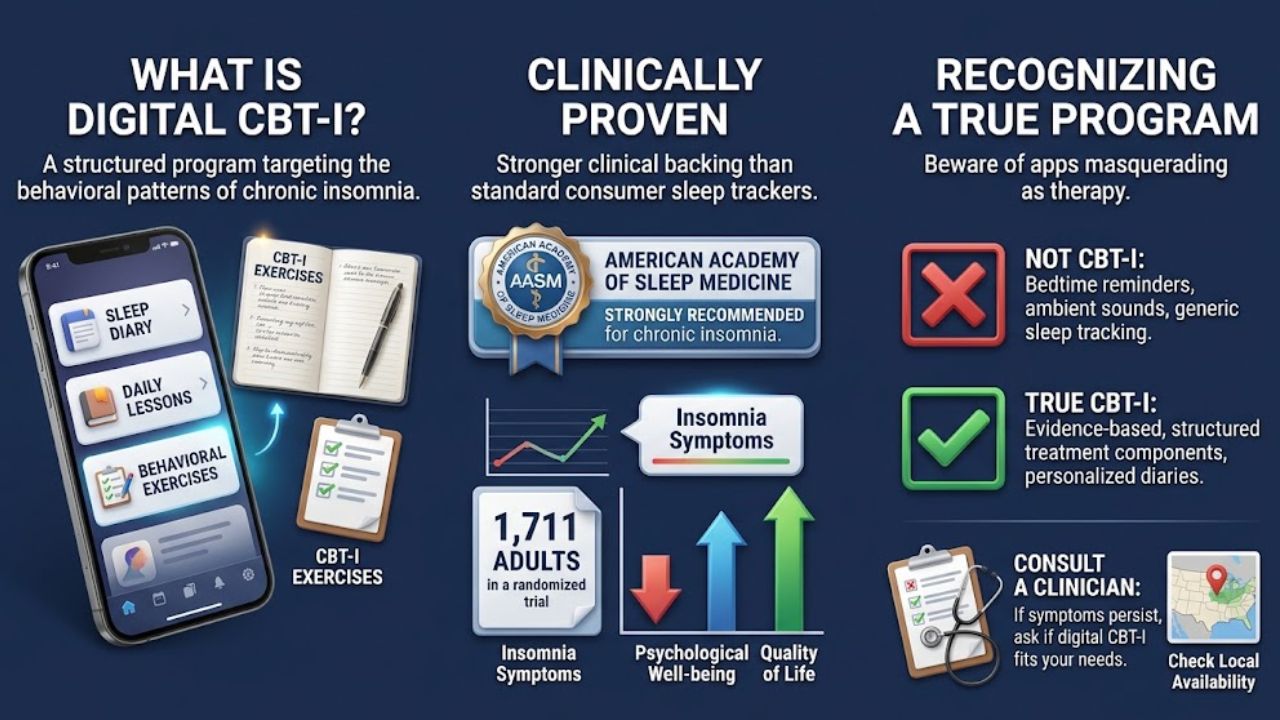
For persistent insomnia, a structured digital CBT-I program deserves more attention than another tracking feature. Cognitive behavioral therapy for insomnia (CBT-I) uses behavioral and cognitive techniques to address patterns that can keep insomnia going. A program may include lessons, exercises, and a sleep diary.
The treatment has stronger support than most consumer sleep tools. An American Academy of Sleep Medicine guideline strongly recommends multicomponent CBT-I for adults with chronic insomnia. A randomized trial involving 1,711 people with insomnia symptoms found that digital CBT improved insomnia symptoms, psychological well-being, and sleep-related quality of life compared with sleep education.
That does not mean every app with bedtime reminders or relaxation audio is CBT-I. Check that the program describes its treatment components and is available where you live. If symptoms persist or affect your daily life, ask a clinician whether a self-guided program fits your needs.
2. Wearable sleep trackers
Smartwatches, wristbands, and rings estimate sleep timing and duration, often alongside activity and heart-rate data. A few weeks of records may help someone notice a pattern, such as consistently going to bed later after evening shifts.
The numbers are estimates, not a sleep-lab result. In a 2024 study comparing three commercial wearables with polysomnography, accuracy varied across devices and sleep measures. Consumer trackers can be useful for broad patterns, but sleep-stage estimates should not be treated as exact.
Sleep technology is most helpful here when it answers a practical question. If a nightly score makes you anxious or tempts you to change your routine every morning, turn off the score or stop tracking. A simple sleep diary can be a calmer way to record bedtimes, wake times, and how rested you feel.
3. Contactless bedside sensors
Bedside and under-mattress sensors estimate sleep without requiring a wearable. Depending on the device, they may use movement or pressure to estimate time in bed, sleep duration, or other patterns.
The convenience is real: there is no watch to charge or ring to wear overnight. But a contactless sensor still infers sleep from indirect signals. Reviews have found that performance varies by device and measure; some metrics, including sleep stages, are less dependable than basic sleep-wake estimates.
Before buying, check how the sensor handles a shared bed, whether a subscription is required, and what data it stores. Do not use its readings to rule out sleep apnea or another medical condition.
4. CPAP and other PAP devices
Positive airway pressure (PAP) machines are medical devices that may be prescribed to treat sleep apnea. CPAP delivers steady air pressure to help keep the airway open during sleep. APAP adjusts pressure automatically, while bilevel PAP uses different pressure when a person breathes in and out.
For someone prescribed PAP, mask comfort and fit matter. The mask, pressure, or humidification may need adjustment with help from a health professional. The National Heart, Lung, and Blood Institute advises working with a provider if you have problems using CPAP.
This treatment is for people with a diagnosed condition; it is not a general sleep aid to buy and try. If you suspect sleep apnea, ask a clinician about evaluation instead of relying on a wearable or app.
5. Smart lighting
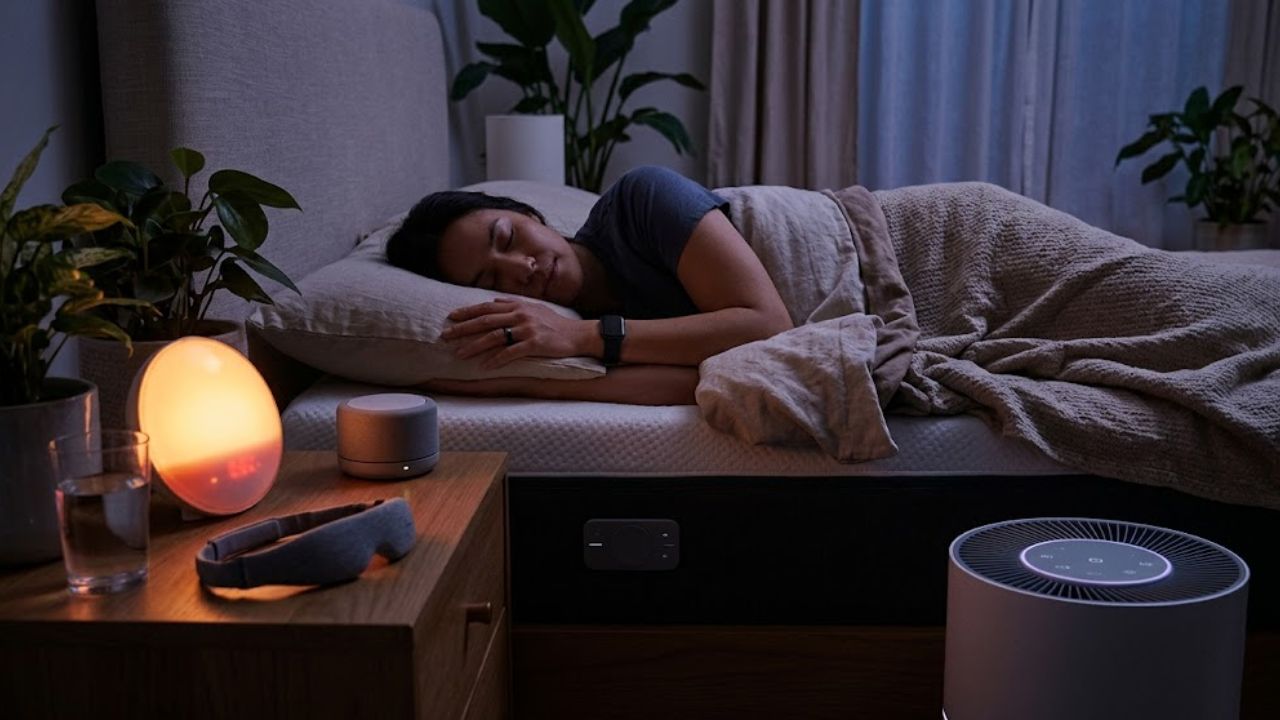
Smart bulbs can dim lights in the evening or turn them on at a chosen time in the morning. Their practical value is routine: lights can follow a schedule without someone having to remember each night.
Light affects circadian timing, and when it reaches your eyes matters. CDC guidance notes that light exposure can shift circadian rhythms, so poorly timed bright light may work against the schedule you want. A dimmer evening environment and morning daylight can support a regular routine, but smart lighting does not treat insomnia. Shift workers or people deliberately changing their sleep schedule may need professional guidance about timing.
6. Sunrise alarm clocks
A sunrise alarm gradually brightens a lamp before the set wake time. Some people prefer that to waking abruptly in a dark room, especially during winter.
Think of it as a waking aid, not a proven sleep treatment. People who sleep through gradual light may still need a sound alarm, and a brightening lamp can disturb a partner. A sunrise clock focuses on waking; smart bulbs can control room lighting at other times. Neither is the same as a clinical light-therapy device.
7. Sound machines and sleep headphones
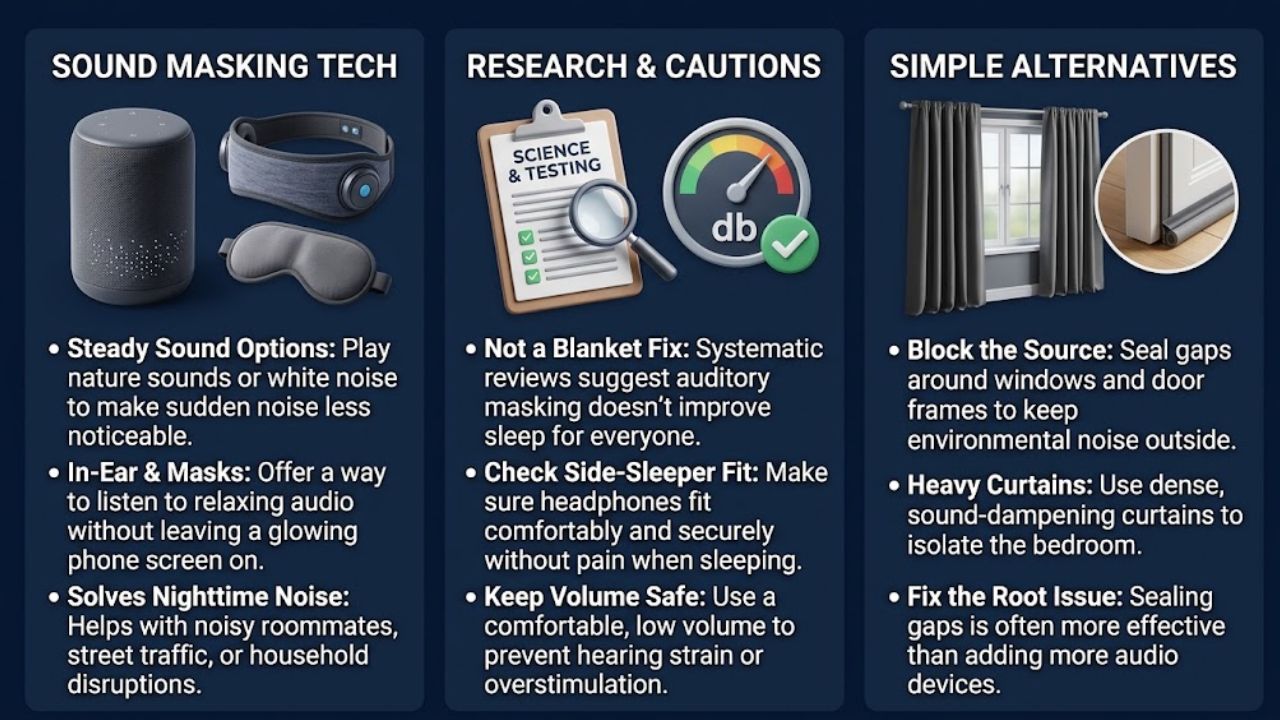
Sound machines play steady noise or nature sounds to make sudden environmental sounds less noticeable. Sleep headphones and speakers built into sleep masks offer another way to listen without keeping a phone screen on.
They may help when a roommate, street, or intermittent household noise is the problem. But research does not support a promise that white noise improves sleep for everyone. A systematic review examined auditory devices used for masking and relaxation, but that evidence is not a blanket endorsement of every sound product.
Keep the volume comfortable, and check that headphones fit if you sleep on your side. If outside noise is the main issue, sealing a gap or using curtains may be more effective than adding a device.
8. Temperature-controlled mattress covers
Some mattress covers let users adjust bed temperature through a schedule or app. A thermostat or fan can also help keep the room comfortable without a midnight trip to change the settings.
Temperature matters, but an expensive smart bed is not the first step for most people. The NHLBI recommends keeping the bedroom cool, quiet, and dark. Research on temperature-controlled covers remains limited. A 2024 study tested one system with 54 participants over eight nights; the authors included people affiliated with its maker. A separate 2025 crossover study found improvements in perceived sleep quality but no significant changes in objective sleep measures.
Try adjusting airflow, bedding, sleepwear, or room temperature first. Consider a specialized cover only if temperature discomfort remains a regular problem and its cost and upkeep make sense for your household.
Final Thoughts
The most useful sleep technology is the one that addresses a real problem. If you have persistent insomnia, a structured CBT-I program is a more evidence-based place to start than chasing a better sleep score. If you suspect sleep apnea, seek an evaluation; if your main issue is noise, light, or heat, try a simple room adjustment before buying specialized equipment.
Choose one change, give it time, and notice whether your sleep or daytime energy actually improves. If poor sleep continues, disrupts daily life, or comes with loud snoring or gasping, speak with a health professional.
Frequently Asked Questions (FAQs) About Sleep Technology
Can a sleep tracker diagnose insomnia or sleep apnea?
No. Consumer trackers estimate sleep from signals such as movement or heart rate. They cannot replace a clinical evaluation or validated diagnostic testing.
How is CBT-I different from a general sleep app?
CBT-I is a structured treatment with specific behavioral and cognitive components. A general sleep app may offer reminders, relaxation audio, or habit tracking without providing CBT-I. Check what the program actually includes.
Do I need a smart mattress to sleep better?
Usually, try room temperature, bedding, and airflow adjustments first. Research on temperature-controlled covers is limited, and current findings do not establish that they benefit everyone.
When should I ask a clinician about my sleep?
Seek advice if sleep problems persist or affect your daytime functioning. Loud snoring, gasping, or significant daytime sleepiness are also reasons to ask about an evaluation; a device score cannot identify the cause.
Disclaimer: This article is for general informational purposes only and is not a substitute for professional medical advice, diagnosis, or treatment. Sleep technology and consumer devices cannot diagnose sleep disorders. Talk with a qualified health professional about persistent sleep problems or before starting, changing, or stopping a treatment.