A child can sing the alphabet perfectly and still get stuck on cat. Letter names are useful, but reading calls for another step: connecting letters to sounds, blending those sounds into a word, and doing it again when the word changes.
That is the difference I looked for in these reading apps. Each offers a way to work with sounds and print. Some take a child through a substantial phonics sequence. Others concentrate on a smaller skill, such as reading first words or learning sh and ch. The right choice depends on what the child can do now and how much help an adult can give.
These picks are based on the instruction and practice each app offers. A phonics-based design does not guarantee that every child will learn to read from the app alone.
The 12 phonics apps at a glance
| App | Best fit | Access |
| Reading Eggs: Fast Phonics | A full phonics sequence with decodable books | Subscription |
| Phonics Hero | Structured reading and spelling practice | Subscription |
| Reading.com | Lessons a parent and child do together | Subscription |
| Hooked on Phonics | App lessons paired with books and workbooks | Subscription; plans vary |
| Duolingo ABC | Short, free reading lessons | Free |
| Khan Academy Kids | Free phonics within a wider learning app | Free |
| Teach Your Monster to Read | Game-based phonics practice | Free on desktop web; mobile terms vary |
| Starfall Learn to Read | Early words and vowel patterns | Free standalone app |
| ABCmouse | Phonics within an all-subject curriculum | Limited free access; subscription for full program |
| Nessy Hairy Phonics 1 | Digraphs after basic letter sounds | Separate app purchase |
| Bob Books Reading Magic #1 | Sounding out first short words | Paid iPhone and iPad app |
| GraphoGame American English | Adaptive sound-to-word practice | Varies by edition and store |
Access models can change, and app-store terms may differ by country. Check the current listing before subscribing or buying.
What makes a reading app useful for phonics?
Phonics teaches children how written letters and letter groups represent sounds. In ship, for example, sh works together to represent one sound. A child has to recognize that relationship and blend the sounds to read the word.
For this list, I looked for more than letter recognition or narrated stories. The stronger options introduce sound–letter relationships in an order, ask children to blend and spell words, and give them something to read with the patterns they have learned. A focused app can still earn a place if it teaches one of those steps well. It simply needs to be described as focused practice rather than a complete course.
1. Reading Eggs: Fast Phonics: best for a full learning path
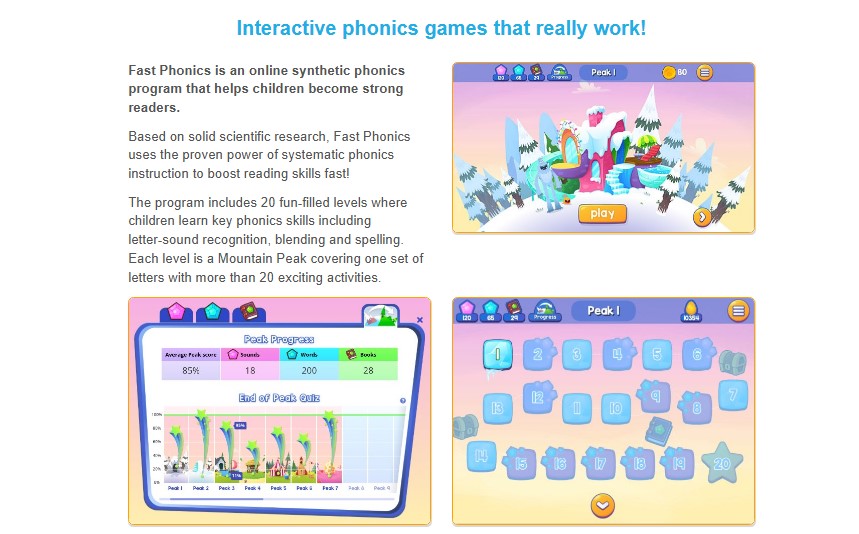
If phonics is your main reason for choosing Reading Eggs, go straight to Fast Phonics. This part of the platform follows a sequence of letter sounds and spelling patterns. Children practice recognizing sounds, blending words, spelling, and reading decodable books connected to their lessons.
Fast Phonics is aimed at children roughly ages 5–10. That range includes beginners as well as older children who need to revisit foundational reading skills. The wider Reading Eggs service offers other reading activities once a child is ready to move on.
It is a substantial option, but it requires a Reading Eggs subscription. Families who want only a few targeted phonics games may find it more than they need.
2. Phonics Hero: best for reading and spelling practice
Phonics Hero gives children a clear route through sounds, words, spelling, and sentences. Its 26 levels cover the main sounds and spelling patterns of English. The activities ask children to use what they have learned repeatedly, instead of simply tapping a letter and hearing its name.
Its games are designed for children to practice independently. Phonics Hero also offers parent-led lessons for adults who want help teaching the material. Check the plan before paying, because those two forms of access serve different purposes.
The publisher says the games tend to appeal most to children around ages 4–7. A child’s starting level matters more than that range: a seven-year-old who needs help blending should begin where the blending work begins.
3. Reading.com: best for a parent and child working together
Reading.com is built for shared lessons. An adult follows the app’s guidance while the child listens for sounds, learns their written forms, blends words, and begins reading books. It takes much of the guesswork out of what to teach next.
I would put this near the top of the list for a parent who wants to be involved but has never taught phonics. The lesson gives the adult a structure, while the child gets someone who can hear their attempt and help when a sound does not quite come together. The program is chiefly intended for beginning readers around ages 3–8.
It does ask for the adult’s time. If you need an app a child can use mostly alone, choose one of the independent practice options instead.
4. Hooked on Phonics: best for moving from app to printed books
Hooked on Phonics starts with a Pre-reader stage for alphabet knowledge and letter sounds. Its Learn to Read stage builds toward words and simple stories in a sequence. Children have an opportunity to read a book after each lesson, which gives the new skill somewhere to go.
That connection between lesson and book is the main appeal. Some subscriptions also include physical workbooks and storybooks, so a family can practice away from the screen. The program is designed for children ages 3–8.
Look closely at the plan before subscribing. App access, physical packs, price, and shipping arrangements can differ. The book-based approach is useful only if the materials and routine fit your household.
5. Duolingo ABC: best free dedicated reading app
Duolingo ABC offers short activities involving letter sounds, spelling patterns, word reading, tracing, and stories. Its phonics lessons follow an explicit sequence. The child has to respond to sounds and print rather than only watch an animation.
The sessions are approachable for a beginner who tires quickly of long lessons. Duolingo ABC is free and advertised as ad-free. It is a separate app from the main Duolingo language-learning service.
A child may still need help saying a sound clearly or blending all the way through a word. Sitting together occasionally lets you see whether they understand the task or have learned how to guess the game’s answer.
6. Khan Academy Kids: best free all-around learning app
Khan Academy Kids includes phonics lessons that move from sounds to blending and simple-word reading. It also has early readers and decodable texts, giving children a chance to use those skills in a book. The family app is free and ad-free.
Its breadth is a strength for a household that wants reading, writing, stories, math, and other early learning activities in one place. It is designed for children ages 2–8, though the appropriate phonics activity will depend on the child’s readiness.
The breadth also means you should choose the reading activities deliberately. A fun session in the app may be valuable, but it will not necessarily be phonics practice.
7. Teach Your Monster to Read: best for playful reinforcement
Teach Your Monster to Read gives phonics practice an adventure story. Across its stages, children match sounds with letters, blend and segment words, meet new spelling patterns, and read short sentences. It can sit comfortably alongside the phonics sequence a child follows at school.
The game offers plenty of repetition without making every attempt feel like a drill. It is particularly appealing when a child knows a sound in a lesson but needs more chances to recognize and use it.
There is one access detail worth checking. The website games are free on a desktop or laptop browser. The mobile app’s payment model has been changing during 2026, so its current purchase or subscription terms depend on the version and store.
8. Starfall Learn to Read: best free early decoding practice
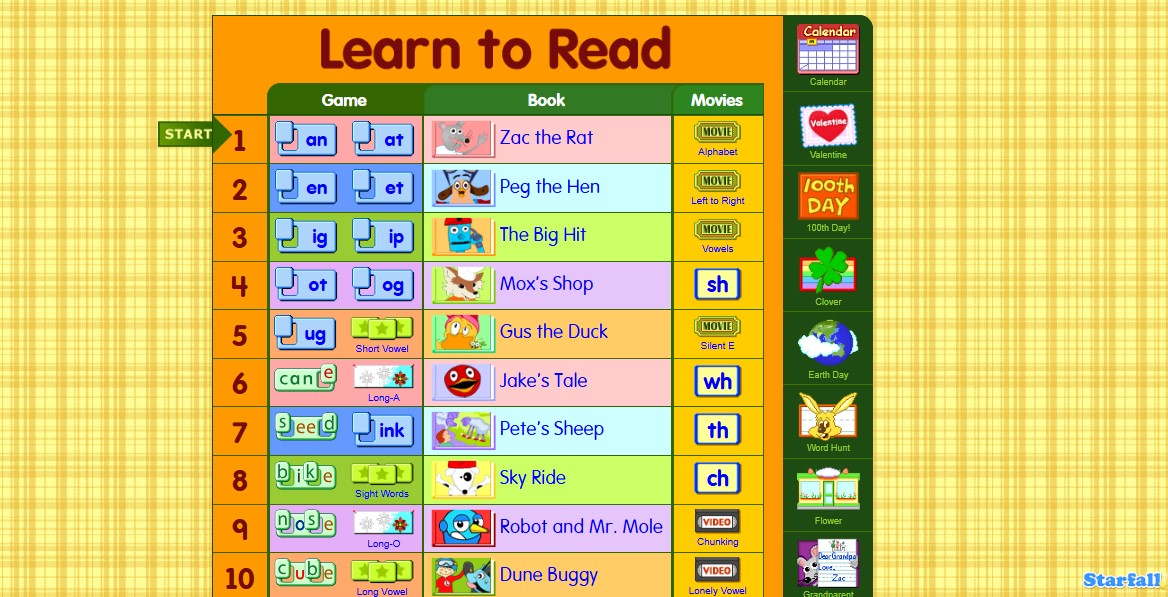
Starfall has a useful progression: ABCs for alphabet knowledge, followed by Learn to Read for early phonics. In Learn to Read, children meet short vowel words, sight words, and later vowel patterns through an ordered set of activities and books.
The focused standalone Learn to Read app is free. It is a sensible choice for a child who is ready to move beyond naming letters and start working through simple words.
Start at the right point in Starfall’s sequence. A child who does not yet know letter sounds may need ABCs first. The larger Starfall app offers additional activities through a separate membership or subscription.
9. ABCmouse: best for phonics within a broad curriculum
ABCmouse has a defined phonics path. It begins with letters and sounds, then moves through short vowels, word families, blends, digraphs, vowel teams, and more advanced word patterns. Decodable books give children another place to apply what they have learned.
This can work well for families who want one service covering several subjects. Reading sits alongside math, science, art, and other activities. ABCmouse offers limited free access, while its full phonics program is part of a subscription.
If decoding is the reason you signed up, follow the reading path. The large activity library can otherwise make it easy to spend time in the app without addressing the skill your child needs.
10. Nessy Hairy Phonics 1: best for sh, ch, and other digraphs
Hairy Phonics 1 is for a child who has already learned basic letter sounds. It introduces consonant digraphs such as sh, ch, th, and ng, along with double-letter patterns. Children trace, listen, and blend sounds into words through a structured set of games.
That makes it useful at a specific point: the child can handle simple words but hesitates when two letters represent one sound. Nessy offers other Hairy Phonics apps for later patterns.
The first app is not a complete beginner course. Check the sound patterns your child knows before choosing it, and remember that the series is sold as separate apps.
11. Bob Books Reading Magic #1: best for first short words
Bob Books Reading Magic #1 keeps the first reading task manageable. Children connect letters to sounds, sound out simple words, and spell words they have read. Its small set of words and increasing game levels suit a child who needs early success with decoding.
Families already reading Bob Books may like seeing the familiar characters and words appear in an interactive activity. The app can make a useful bridge back to the printed books.
Its scope is intentionally small. Once a child reads those words comfortably, they will need new patterns and more text. The verified version is a paid app for iPhone and iPad.
12. GraphoGame American English: best for adaptive sound-to-word practice
GraphoGame takes children through sounds and their written forms, syllables, and eventually whole-word blending. Its levels adapt as the child responds, giving them repeated practice at an appropriate point. There are separate English editions, so check whether you want American or British pronunciation.
I would use it as additional sound-to-word practice, particularly for a child who benefits from repetition. Check the exact app listing before downloading: similarly named GraphoGame versions have different prices and access terms.
Keep the evidence in proportion. An independent trial of a related version, GraphoGame Rime, did not find better reading or spelling results than the other support children received in that study. That finding does not establish the result for every current edition, but it is a reason to avoid promising that the game alone will solve a reading difficulty.
For Children Still Learning Letters and Sounds
Our Editorialge team developed Alphabet Magic trace & phonics. The app includes uppercase and lowercase tracing, letter matching, sounds, letter-joining activities, and spelling practice.
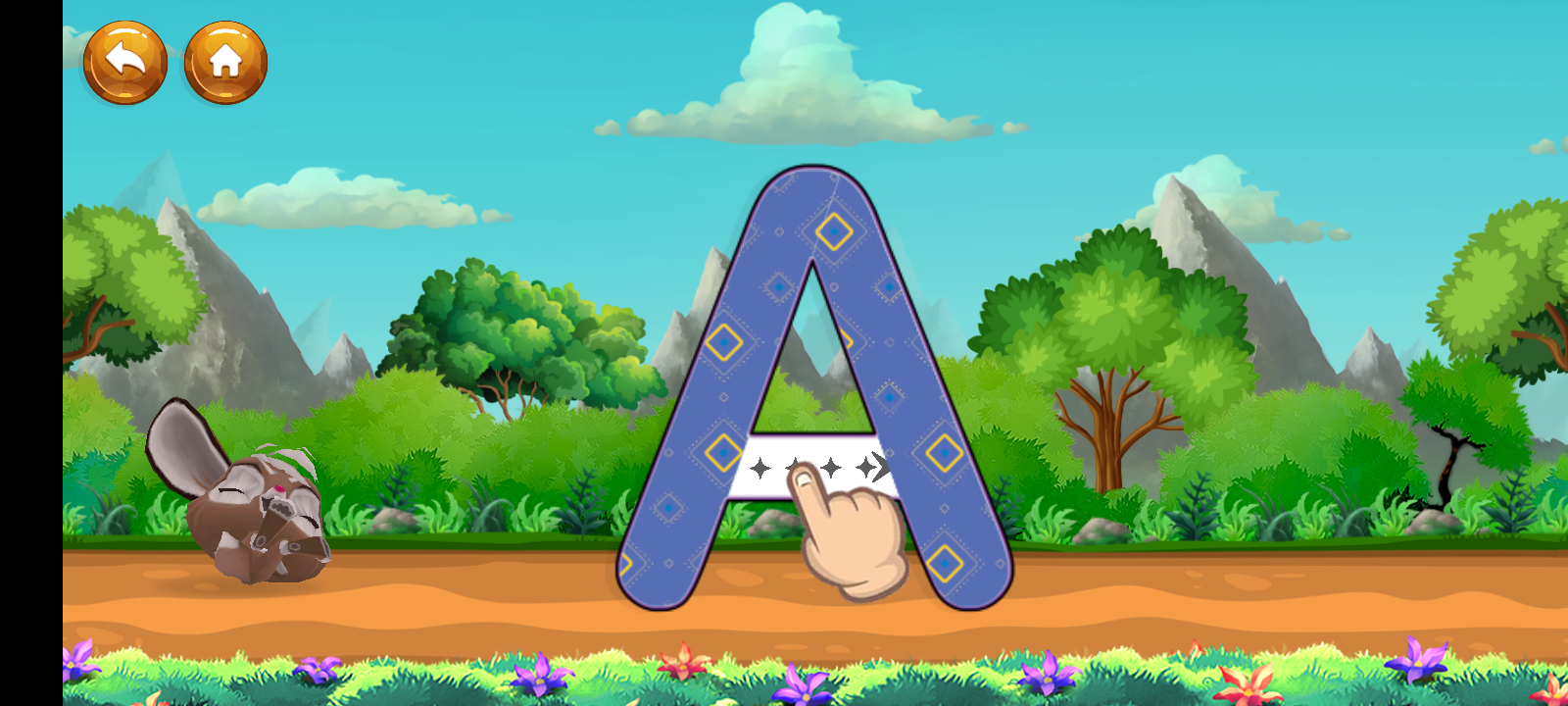
I have watched my nephew begin with guidance and later handle familiar activities more independently. I also noticed him recognizing letters in books outside the app. He was learning through books, toys, and preschool activities at the same time, so those observations cannot be credited to one app.
Alphabet Magic Trace makes sense as a companion while a child is building letter knowledge, letter formation, and early sound awareness. That is why I would recommend it for those early skills.
Frequently asked questions on reading apps that teach phonics
Which app is best for teaching phonics from the beginning?
For a substantial sequence, look at Reading Eggs: Fast Phonics, Phonics Hero, or Reading.com. The deciding factor is how your family will use it: independent practice, parent-led teaching, or a mix of both. For a free starting point, Duolingo ABC and Khan Academy Kids are worth considering.
Are free phonics apps good enough?
They can teach and reinforce real skills. Judge them by what your child does: Can they connect a sound to its letters, blend an unfamiliar word, and try the skill in a book? A paid subscription is not a requirement for useful practice.
Is a phonics app suitable for a three-year-old?
It depends on the child’s interest and current skills. At that age, playing with sounds, talking about books, and learning some letters may be plenty. There is no benefit in pushing a child into advanced word patterns before they are ready to hear and work with the sounds.
Are sight words and phonics in conflict?
No. Children need to recognize common words efficiently, including words with spelling patterns they have not yet learned. They can also pay attention to the sound–letter relationships within those words. A good reading program does not rely on guessing every word from its shape or the picture beside it.
Can an app replace reading instruction for a child who is struggling?
An app can provide extra practice, but a child who continues to struggle needs someone to identify where the difficulty lies and respond to it. That may mean help from a teacher or reading specialist. An app should not be treated as a diagnosis or a treatment for dyslexia.
Let the reading continue after the app closes
The most meaningful result is not a completed level. It is a child meeting a new word, trying its sounds, blending them, and realizing they can read it.
Choose an app for that child’s next step. Then read together, notice where they hesitate, and give them chances to use the new skill in books they can hold.