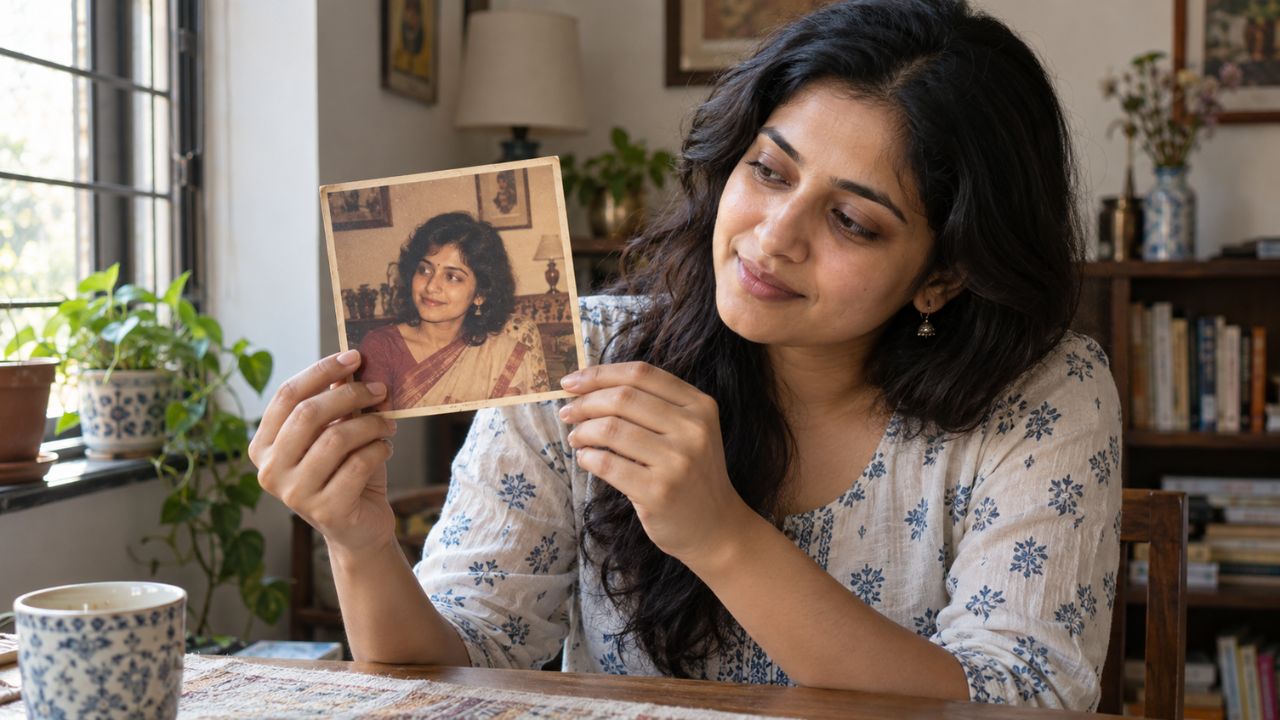
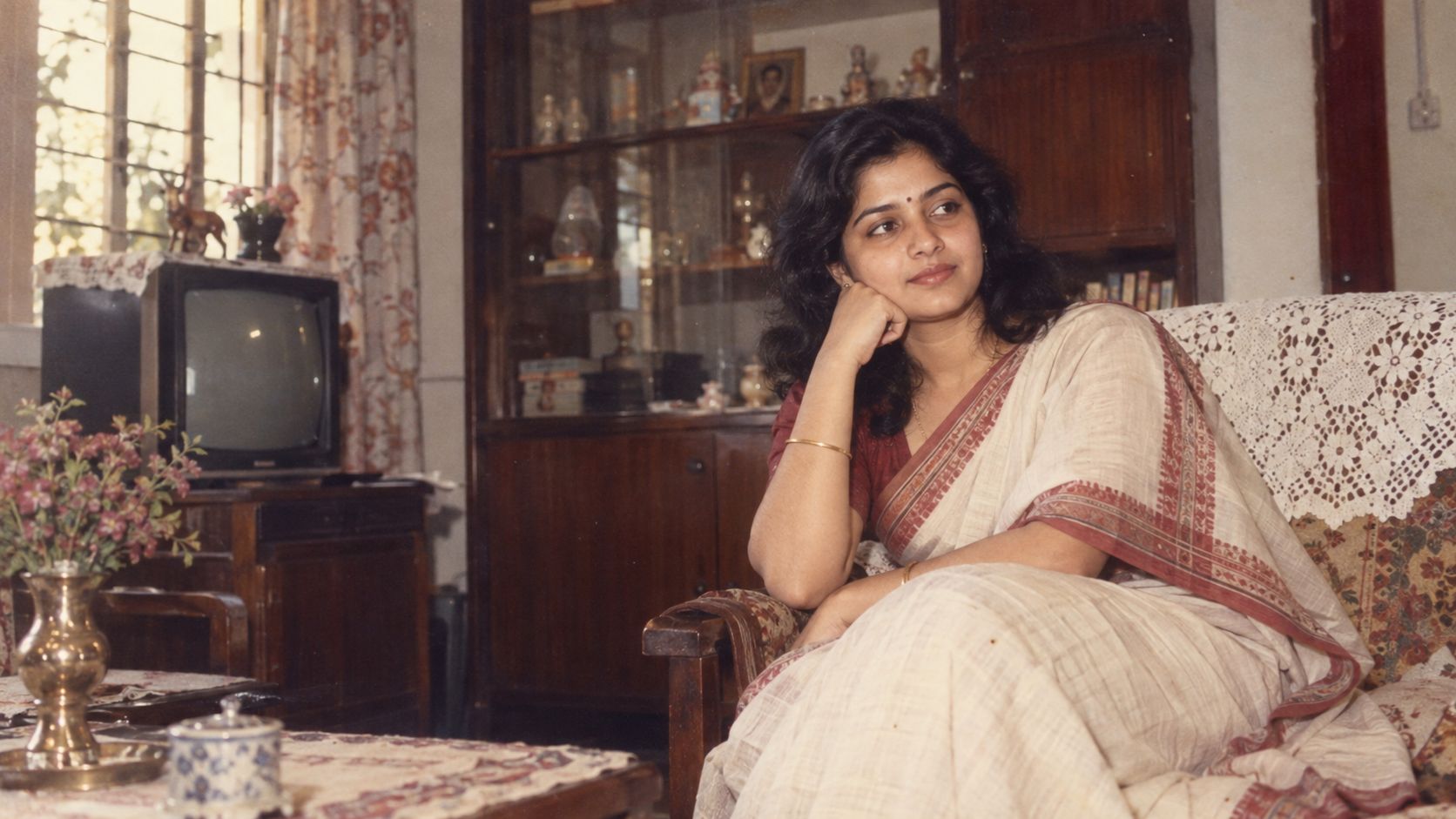
An AI portrait can look as though it was taken forty years ago. The clothes are right. The room looks familiar. The colours have faded in just the way we expect an old family photograph to fade. Then you remember that the person in it may not have been born in the 1980s. This is the nostalgia economy at its most personal: an image that gives us a place in a past we never lived!
I understand the appeal of the portraits that circulated in August-September 2026. Seeing yourself in another era is fun, and sharing the result is part of it. What stays with me, though, is the photograph’s borrowed sense of history. For a moment, it looks like a record of someone’s life. That moment never happened.
This seems like a new turn in our long relationship with the past. We have been listening to old songs, wearing revived fashions and revisiting familiar stories for years. Now we can put ourselves inside the picture. It makes me wonder what, beyond the hairstyle, we hope to find there.
The Nostalgia economy: A past we never lived
In a 2025 Ipsos survey across 30 countries, 44% of respondents, on average, said they would rather have been born in 1975; 24% chose 2025. But the result was hardly unanimous. Gen Z was the only generation surveyed that narrowly favoured being born in the present. Bangladesh was not among the countries surveyed.
A question about birth years cannot explain why somebody makes an AI image. It does show how attractive an earlier life can seem, even to people who never knew it. I think we should take that feeling seriously without treating the past as a place everyone wants to move back to.
Why an unfamiliar era can feel familiar
Research offers part of an explanation. Recalling a cherished memory can strengthen a person’s sense of connection and continuity. Researchers also describe communal nostalgia: an attachment to a period that belongs to a wider culture rather than to your own memories. In consumer experiments, threats to social stability made certain retro products more appealing.
A younger person does not need to remember the 1980s to recognize them. The decade can arrive through parents’ photographs, films, furniture and music. Those fragments give it a shape. The future has no such album to open.
Still, I would hesitate to read private despair into a stranger’s playful portrait. Some people like the clothes. Some are joining their friends. The research helps me think about why an imagined past might feel comforting; it does not tell me what any particular person felt while making an image.
Hope alongside uncertainty
What gives the question more weight is the tension between hope and uncertainty. In a 2026 UNFPA survey of internet-connected young adults in Bangladesh, roughly two-thirds were deeply worried about conflict, economic insecurity and environmental risks. Roughly two-thirds also felt positive about their own future.
The survey did not investigate AI portraits, and its respondents do not represent every young person in Bangladesh. But their answers resist the easy claim that young people have given up on tomorrow. Many still want lives they can plan. They worry about the conditions in which they must build them.
A feeling the market can sell
There is commercial value in things we recognize. US vinyl records generated more than $1 billion in wholesale revenue in 2025. New music is released on vinyl too, so that figure alone cannot measure a yearning for older decades. Film studios have their own reasons to return to familiar stories and characters. A known form has an audience before a new one has introduced itself.
The portrait puts us inside the past
The AI portrait does something more intimate. A record offers a sound and an object to hold. A film invites us into a story. The portrait gives us a sense of place in an earlier world. It supplies the clothes, the lighting, and a room around our own face.
That is what I find both clever and unsettling about it. An old family photograph connects us to something that happened. An AI portrait draws on the same visual cues to show a life that could have happened only in our imagination. Most people know exactly what they have made. The picture can still stir something real.
Businesses do not have to create our attachment to the past. They can make its signs easy to generate, buy, and share. I enjoy an old song as much as anyone might, and I see no reason to scold someone for making a portrait. I do think we should notice where the pleasure ends. A room that looks welcoming cannot make a home affordable. An image of a slower life cannot give someone more time with the people they love.
What the photograph leaves out
The edges of the picture do a great deal of work. Inside them, an earlier decade can look warm and orderly. Outside them are the bills, the long days, the pressures within a household and the opportunities that were closed to some of its members.
When I say I miss a sense of community, I need to ask what kind of community I mean. Who felt welcome in it? Who had choices? A fondness for old music or family photographs can sit comfortably beside those questions. Calling an entire era better asks much more of us.
A present worth remembering
I also do not want to drain the pleasure from looking back. Studies have found that nostalgia can increase optimism. A familiar song or an old photograph may help us remember people we love and imagine more of what matters to us. There is value in that.
For me, the portraits become most interesting when I stop asking whether we truly want the 1980s and start asking what would make the present feel more like a place we belong. Secure work. Homes people can afford. Time with one another. Places to gather without having to buy something first. These are less photogenic than a carefully made AI image, but they have the power to change a life.
We can make an old-looking photograph in seconds. A present worth remembering will take longer.