Every day on the calendar holds a wealth of stories—triumphs and tragedies, births of visionaries, and moments that shifted the course of nations. September 14 is no exception. This date has witnessed scientific breakthroughs, literary milestones, acts of rebellion, and the birth of iconic figures. As we peel back the layers of history, we uncover a tapestry woven with global significance.
From the vibrant cultural sphere of Bangladesh and India to monumental events in the Americas, Europe, and beyond, let’s explore the legacy of September 14.
The Bangalee Sphere
Historical Events:
-
1949 (India): The Constituent Assembly of India adopted Hindi (written in the Devanagari script) as an official language of the Republic of India. This monumental decision laid the groundwork for India’s linguistic framework, attempting to unify a deeply diverse nation while honoring its regional languages.
-
2025 (Bangladesh): A heartbreaking, yet scientifically notable medical event occurred when a 23-year-old mother delivered sextuplets at Dhaka Medical College Hospital (DMCH). Tragically, despite intensive medical intervention, four of the six infants passed away shortly after birth.
Famous Births:
-
Ram Jethmalani (Born 1923, India): A titan of the Indian legal system. Jethmalani was an eminent lawyer and politician, known for his sharp wit and involvement in numerous high-profile criminal cases. He served as India’s Union Minister of Law and Justice.
-
Ayushmann Khurrana (Born 1984, India): A versatile actor, singer, and television host who redefined the quintessential Bollywood hero. Khurrana is celebrated for choosing socially relevant and unconventional roles, earning him a National Film Award and immense critical acclaim.
-
Suryakumar Yadav (Born 1990, India): A phenomenal Indian cricketer renowned for his unorthodox and explosive 360-degree batting style in T20 internationals.
Famous Deaths:
-
Tarashankar Bandopadhyay (Died 1971, West Bengal): One of the most prominent Bengali novelists. His works, such as Arogya Niketan and Ganadevata, are masterful portrayals of rural Bengal, capturing the socio-economic transformations and the struggles of common people. He was awarded the Jnanpith Award, India’s highest literary honor.
Cultural/Festivals:
-
Hindi Diwas (India): Celebrated annually across India to commemorate the adoption of Hindi as an official language in 1949. Schools, colleges, and government offices hold literary programs, poetry recitations, and competitions to promote the language.
International Observances & Holidays
While September 14 might not host a major UN-designated holiday, it is a day of varied regional and cultural celebrations.
-
Feast of the Cross / Holy Cross Day (Christianity): Observed by many Christian denominations, this feast commemorates the discovery of the True Cross by Saint Helena (mother of Emperor Constantine) in Jerusalem in 326 AD, and the subsequent dedication of the Church of the Holy Sepulchre in 335 AD. It is a day marking the exaltation of the cross as a symbol of salvation.
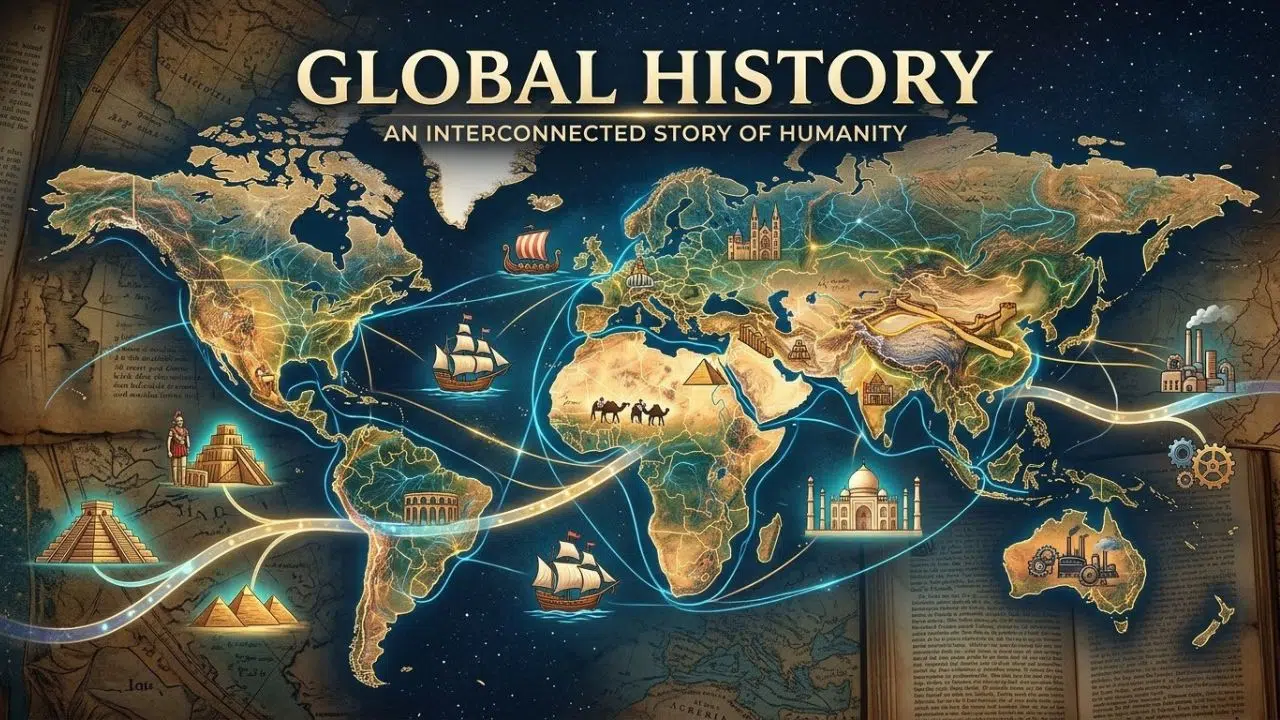
Global History
United States:
-
1814: The inspiration for the American National Anthem. During the War of 1812, lawyer Francis Scott Key witnessed the British bombardment of Fort McHenry in Baltimore. Seeing the American flag still flying at dawn inspired him to write the poem “Defence of Fort M’Henry,” which later became “The Star-Spangled Banner.”
-
1847: The Mexican-American War effectively ended when U.S. forces under General Winfield Scott captured Mexico City.
-
1901: President William McKinley succumbed to gangrene after being shot by an anarchist eight days earlier. Vice President Theodore Roosevelt was immediately sworn in as the 26th President.
-
1956: IBM introduced the 305 RAMAC, the first commercial computer to utilize a hard disk drive for data storage. This massive machine revolutionized data processing.
-
1975: Elizabeth Ann Seton was canonized by Pope Paul VI, making her the first native-born citizen of the United States to become a saint.
Russia / Soviet Union:
-
1812: French invasion of Russia: Following the Battle of Borodino, Napoleon Bonaparte and his Grande Armée entered Moscow. However, they found the city deserted and largely destroyed by fires set by retreating Russians, a turning point that led to the disastrous French retreat.
-
1911: Pyotr Stolypin, the conservative Prime Minister of Russia who implemented significant agrarian reforms, was fatally shot at the Kiev Opera House (he died four days later).
-
1954: The Soviet Union conducted a secret, devastating nuclear test near Totskoye. A Tu-4 bomber dropped a 40-kiloton atomic weapon, deliberately exposing thousands of soldiers and civilians to radiation to study the effects of nuclear warfare.
-
1959: The Soviet space probe Luna 2 intentionally crashed into the Moon, becoming the first man-made object to reach the lunar surface.
Rest of World:
-
1752 (United Kingdom): The British Empire fully adopted the Gregorian calendar. To align with the new system, 11 days were skipped; Wednesday, September 2, was immediately followed by Thursday, September 14.
-
1829 (Europe): The Russo-Turkish War (1828–29) ended with the signing of the Treaty of Adrianople (Edirne).
-
1960 (Middle East/South America): At a conference in Baghdad, representatives from Iran, Iraq, Kuwait, Saudi Arabia, and Venezuela established OPEC (Organization of the Petroleum Exporting Countries) to coordinate oil policies.
-
1982 (Lebanon): Bachir Gemayel, the President-elect of Lebanon, was assassinated when a massive bomb exploded at the Phalange party headquarters in Beirut, plunging the country deeper into civil war.
-
2015 (Science): A monumental day in astrophysics: The LIGO and Virgo collaborations made the first direct observation of gravitational waves, confirming a major prediction of Albert Einstein’s 1915 general theory of relativity.
Notable Births & Deaths (Global)
Famous Births:
-
Alexander von Humboldt (1769, Prussian/German): A pioneering geographer, explorer, and naturalist. His extensive travels in the Americas and his holistic view of nature laid the foundations for modern physical geography and biogeography.
-
Ivan Pavlov (1849, Russian): The Nobel Prize-winning physiologist renowned for his groundbreaking research in classical conditioning (often associated with his experiments using “Pavlov’s dogs”).
-
Margaret Sanger (1879, American): A prominent birth control activist, sex educator, and nurse who opened the first birth control clinic in the U.S. and founded organizations that evolved into Planned Parenthood.
-
Sam Neill (1947, New Zealander): The acclaimed actor internationally recognized for his role as Dr. Alan Grant in the Jurassic Park franchise.
-
Amy Winehouse (1983, British): A brilliant, profoundly influential soul and R&B singer-songwriter known for her deep contralto vocals and eclectic mix of musical genres.
Famous Deaths:
-
Dante Alighieri (1321, Italian): The preeminent philosopher and poet whose masterpiece, The Divine Comedy, is considered one of the greatest works of world literature.
-
Aaron Burr (1836, American): The 3rd Vice President of the United States, primarily remembered for killing Alexander Hamilton in their infamous 1804 duel.
-
Isadora Duncan (1927, American): A pioneer of modern contemporary dance. She died in a tragic and bizarre accident in France when her long silk scarf became entangled in the open-spoked wheels of the car she was riding in.
-
Grace Kelly (1982, American/Monegasque): The Academy Award-winning actress who became Princess of Monaco after marrying Prince Rainier III. She died following a car crash in Monaco.
-
Patrick Swayze (2009, American): A beloved actor, dancer, and singer, famous for his iconic roles in Dirty Dancing and Ghost.
“Did You Know?” Trivia
-
The Missing 11 Days: When the British Empire switched from the Julian to the Gregorian calendar in 1752, the transition meant the days between September 2 and September 14 essentially never existed. This caused confusion and even riots among people who mistakenly believed their lives had been shortened by 11 days.
-
The RAMAC’s Massive Size: The first hard drive, the IBM 350 RAMAC introduced on this day in 1956, weighed over a ton and had to be moved with forklifts. Its storage capacity? A mere 5 megabytes—less than the size of a single high-quality photo today.
-
Einstein Proven Right: When LIGO detected gravitational waves on September 14, 2015, they were capturing the ripples in spacetime caused by two black holes colliding roughly 1.3 billion light-years away.
Final Thoughts
September 14 offers a fascinating glimpse into the past, bringing together major historical events, influential figures, remarkable births, and notable deaths from different periods and parts of the world. From moments that changed the course of nations to the lives and achievements of people who left a lasting impact, this date reflects the richness and complexity of history.
Looking back at September 14 in history reminds us that every day can carry stories of courage, creativity, discovery, struggle, and transformation. Whether through famous birthdays, significant global events, or the legacies of those who passed away, the events of this day continue to shape how we understand the world today.