

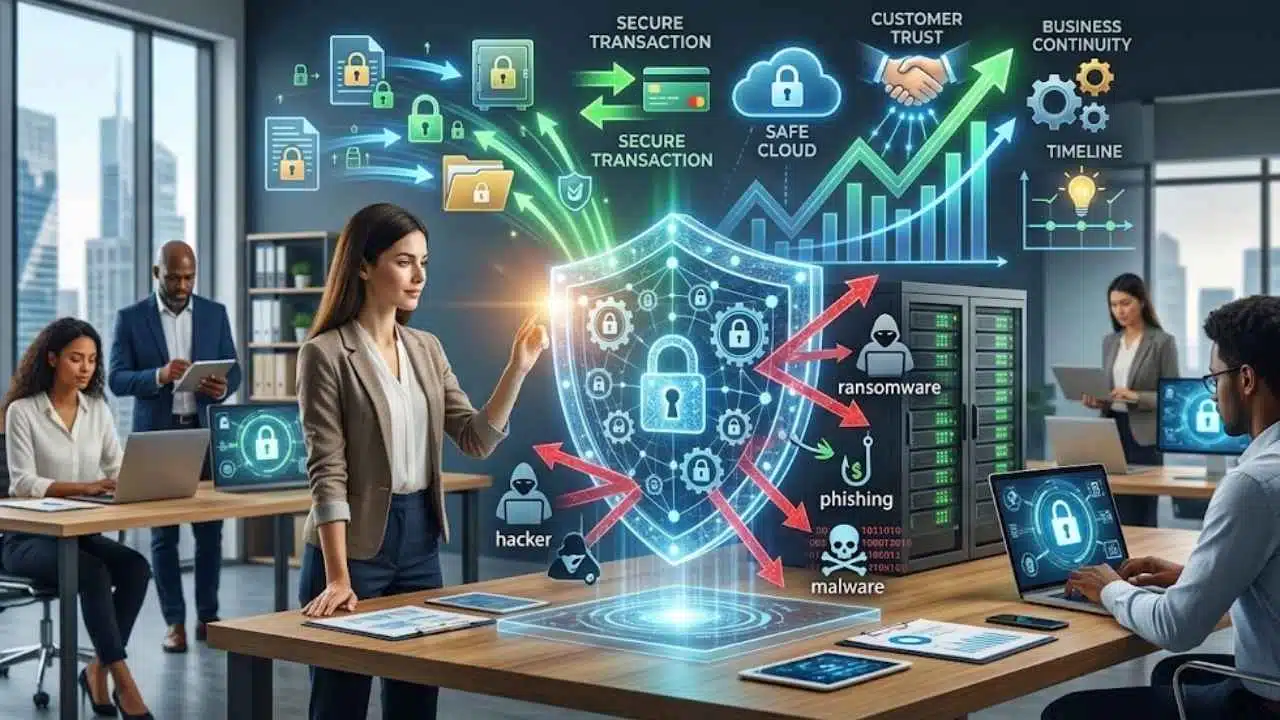
In today’s digital-first, tech-savvy world, cybersecurity is more important than ever. Think about your own personal, day-to-day activities that are interconnected. You can log in to your bank from anywhere in the world from your smartphone’s app, paying bills and paying off loans. Your email is a treasure chest of sensitive information, including your personal information, health and financial records, and perhaps passwords. Even your social media platforms — most of which are always logged in — can be accessed by intruders and impersonate you in direct messages or change your passwords to lock you out of your account permanently.
From a small business perspective, data and sensitive information can be an even greater threat if they fall into the wrong hands. Growing your small business takes dedicated time, money, and effort, and a preventable cybersecurity incident is no way to derail your progress or destroy your hard-earned reputation in the marketplace. Here are three reasons why small business leaders should invest in cybersecurity solutions.
Financial Protection
First and foremost, the right cybersecurity protection can guard you and your small business from financial risk. Cybersecurity will safeguard you from hackers, ensuring your online bank accounts, payment processing gateways, and even digital ledgers are safe. Because remember, when you run a small business, it’s not only your data that you’re trying to protect, but it’s also the data of your customers.
Large corporations such as Target, Yahoo, and Equifax have all been victims of cybersecurity attacks — causing damage and a loss of trust for years. Small businesses that are just getting their feet wet don’t necessarily have the resources or time to convince customers to remain loyal after their own financial information was compromised. Incident response costs, such as data recovery expenses, legal fees, and other defense measures, can be expensive and cumbersome to navigate.
Moreover, cybersecurity solutions can go a step further in blocking phishing attacks that freeze a small business’s operations, tricking employees and consumers into unauthorized transactions. Newer, sophisticated levels of protection, including advanced email filtering, multi-factor authentication (MFA), and real-time link scanning, are all cybersecurity measures that can be implemented to block unauthorized access.
Operational Resilience
Hackers are smart. They are on the cusp of finding new, innovative ways to exploit emerging technologies — everything from generative artificial intelligence to quantum computing to advanced social engineering. Another reason for small businesses to invest in cybersecurity is to build operational resilience, or the ability for a business to anticipate, adapt, and recover from unanticipated disruptions. Operational resilience focuses on implementing the necessary systems and structures within a business to bounce back after something like a malware attack.
Investing in cybersecurity solutions helps build operational resilience by transforming a business’s mindset from breach prevention to adaptation. Your organization will be best equipped to prepare, withstand, adapt, and (most importantly) recover from cybersecurity disruptions. With the right protocols in place, a phishing scam or attack will be minimized. Your revenue will continue to flow, and client expectations will still be met because your team will know exactly how to handle the threatening situation.
Some examples of operational resilience include implementing advanced monitoring and threat intelligence to detect potential vulnerabilities sooner rather than later. Regular disaster recovery testing can shorten downtime, ensuring that all operations run swiftly if a cybersecurity attack were to happen.
Reputation and Trust
To win the trust of future clients, small businesses need to prioritize transparency. Not only does this include avoiding hidden fees, confusing terms or agreements, and overly complicated cancellation processes, but it also means ensuring clients’ data is safe in your hands. This is important for nearly every industry, but particularly those who have access to sensitive information.
For instance, healthcare companies must adhere to rigorous standards to protect patient data — particularly as data is increasingly collected through wearable devices and smartphone-based health tracking tools. Banks and financial institutions are another highly regulated industry, and customers will expect that their financial information is handled with your small business. Even e-commerce businesses, which handle various transactions every hour, need to be set up to block potential threats.
Small businesses that protect sensitive information by investing in cybersecurity solutions are actively proving that they value their client’s information. This can go a long way in a world where misinformation and “fake news” spread like wildfire. A proactive approach to cybersecurity measures can differentiate you from other competitors on the market as well, creating a clear competitive advantage.
Final Takeaways
No small business wants a cybersecurity attack to occur. However, wishing for one never to come is not a good business strategy! Implementing various cybersecurity solutions ensures that your small business isn’t vulnerable, blocking potential hackers and deterring threats from occurring before they start. Thinking proactively can save your small business from insufferable financial loss, operational downtime, and permanent damage to customer trust.





















