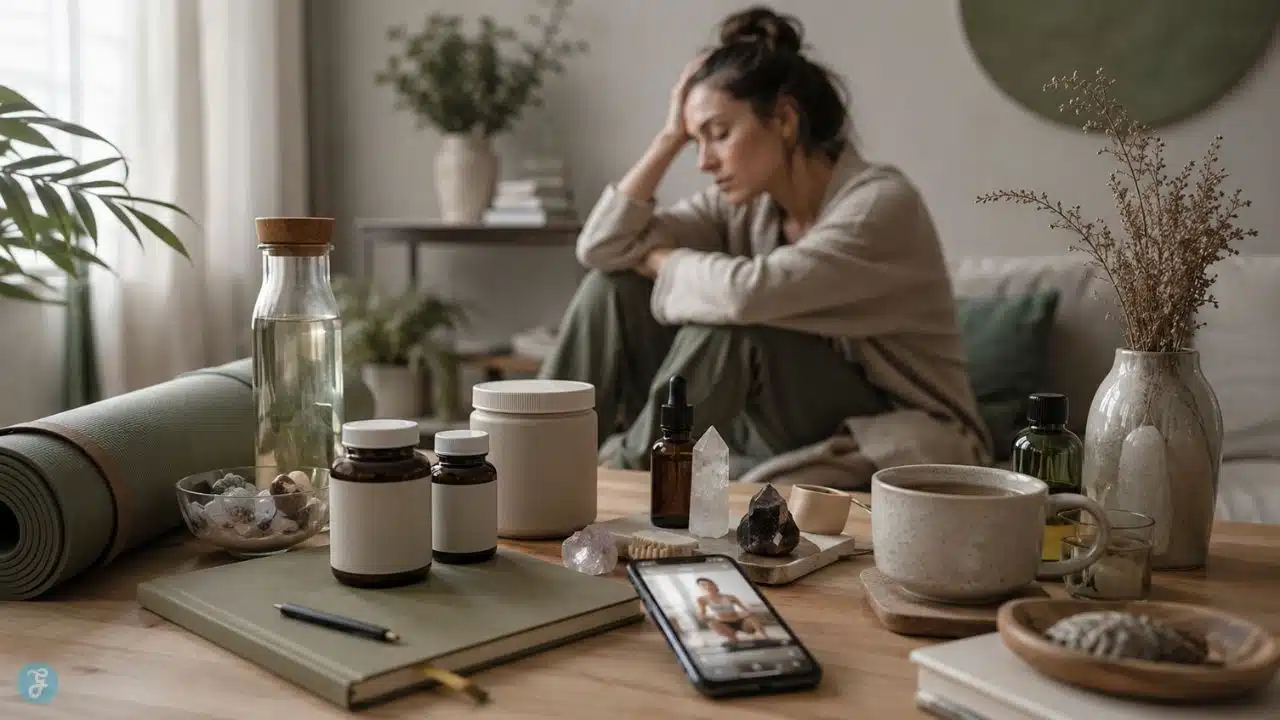
There is a point where self-care stops being self-care and starts looking like obedience. That is where the modern wellness industry cult has taken us. Not into better sleep, calmer minds, or healthier bodies, but into a market where people are trained to distrust normal hunger, ordinary tiredness, basic medicine, and even their own instincts. The promise sounds gentle. Heal yourself. Optimize your life. Listen to your body. Become your highest self.
But beneath the soft language, the wellness machine often runs on fear. Fear of toxins, aging, inflammation, processed food, bad energy, and the most alarming concern is thinking that they are not doing enough.
I am not against wellness. Sleep matters. Movement matters. Food matters. Mental health matters. Community matters. A quiet walk can do more for a tired mind than another productivity app. The problem is not wellness itself. The problem is what the industry has done to wellness.
It has turned care into consumption, health into identity, and an ordinary human discomfort into a shopping funnel. And that is why we need to be honest about it.
The Wellness Industry Did Not Grow Because Everyone Became Healthier
The wellness industry loves to present itself as a response to human awakening. People are becoming more conscious. People are taking ownership of their health. People are moving beyond outdated systems.
There is some truth there. Many people are tired of rushed doctor visits, expensive healthcare, confusing food systems, burnout, and being told their symptoms are “normal” when they clearly do not feel normal. The industry did not appear out of nowhere. It grew in the gaps left by modern life.
But the industry also learned how to monetize those gaps.
- When a person cannot get affordable therapy, they are sold a nervous system course.
- When a woman feels dismissed by healthcare, she is sold hormone-balancing powders.
- When a stressed employee cannot change their workload, they are sold breathwork subscriptions.
- When someone feels lonely, they are sold retreats, rituals, and online communities built around lifestyle purity.
This is one of the biggest wellness industry problems today. It takes real pain and offers a product-shaped answer.
That does not mean every product is useless. Some tools help. Some teachers are sincere. Some practices have real value. But sincerity does not cancel out the structure of the machine. And the structure is simple: make people feel unfinished, then sell them a path to wholeness.
Why Wellness Feels Like Religion Now
One reason wellness culture has become so powerful is that it gives people what religion used to give many communities: rituals, language, identity, belonging, discipline, and moral order.
- There is a morning routine
- Purity rules
- Forbidden foods
- Sacred objects
- Conversion stories
- Leaders with testimonies
- Enemies: toxins, seed oils, Big Pharma, lazy people, low-vibration people, processed food, tap water, “negative energy.”
And like religion, wellness gives people a way to explain suffering.
You are anxious because your gut is broken. You are tired because your mitochondria are weak. You are single because your energy is blocked. You are sick because you did not detox properly. You are poor because you have a scarcity mindset.
This is where wellness culture criticism becomes necessary. A culture that begins with “care for yourself” can quietly turn into “everything wrong with your life is your fault.”
That is not healing. That is moral pressure wearing yoga pants. The best kind of wellness makes people freer. The cult-like version makes them more afraid, more judgmental, and more dependent on the next rule.
The Optimization Obsession Is Making People Sick
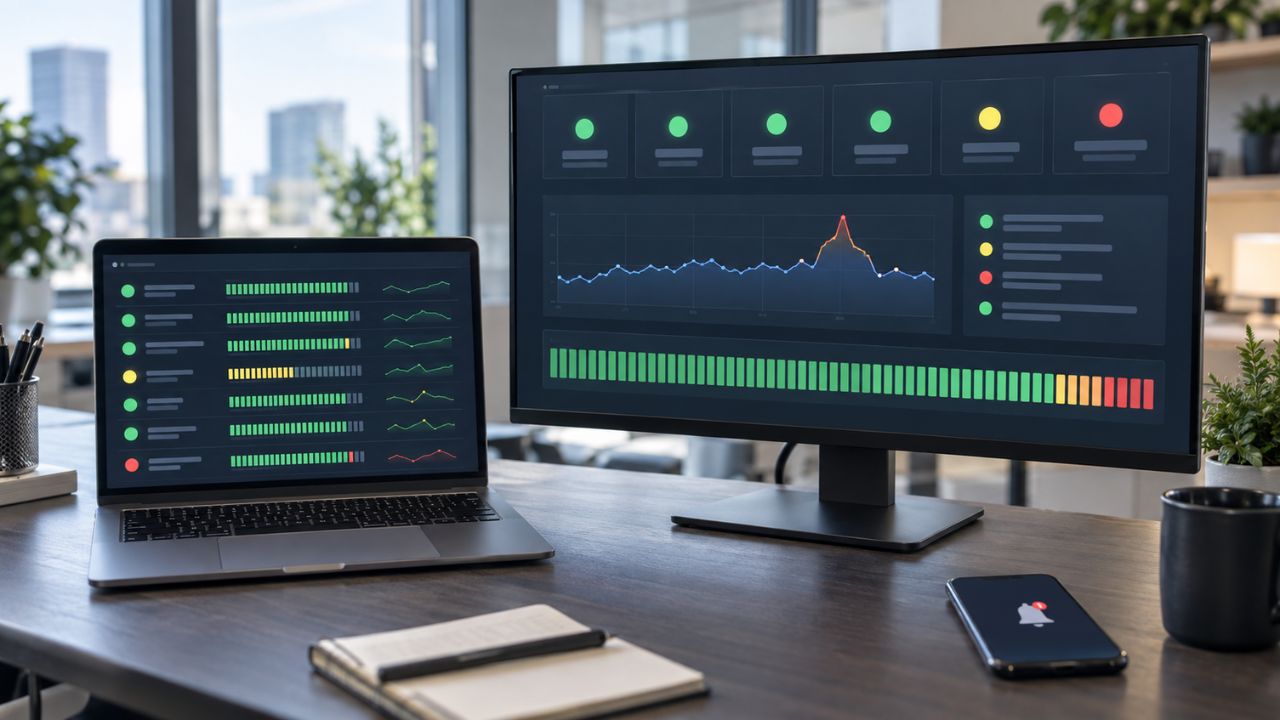
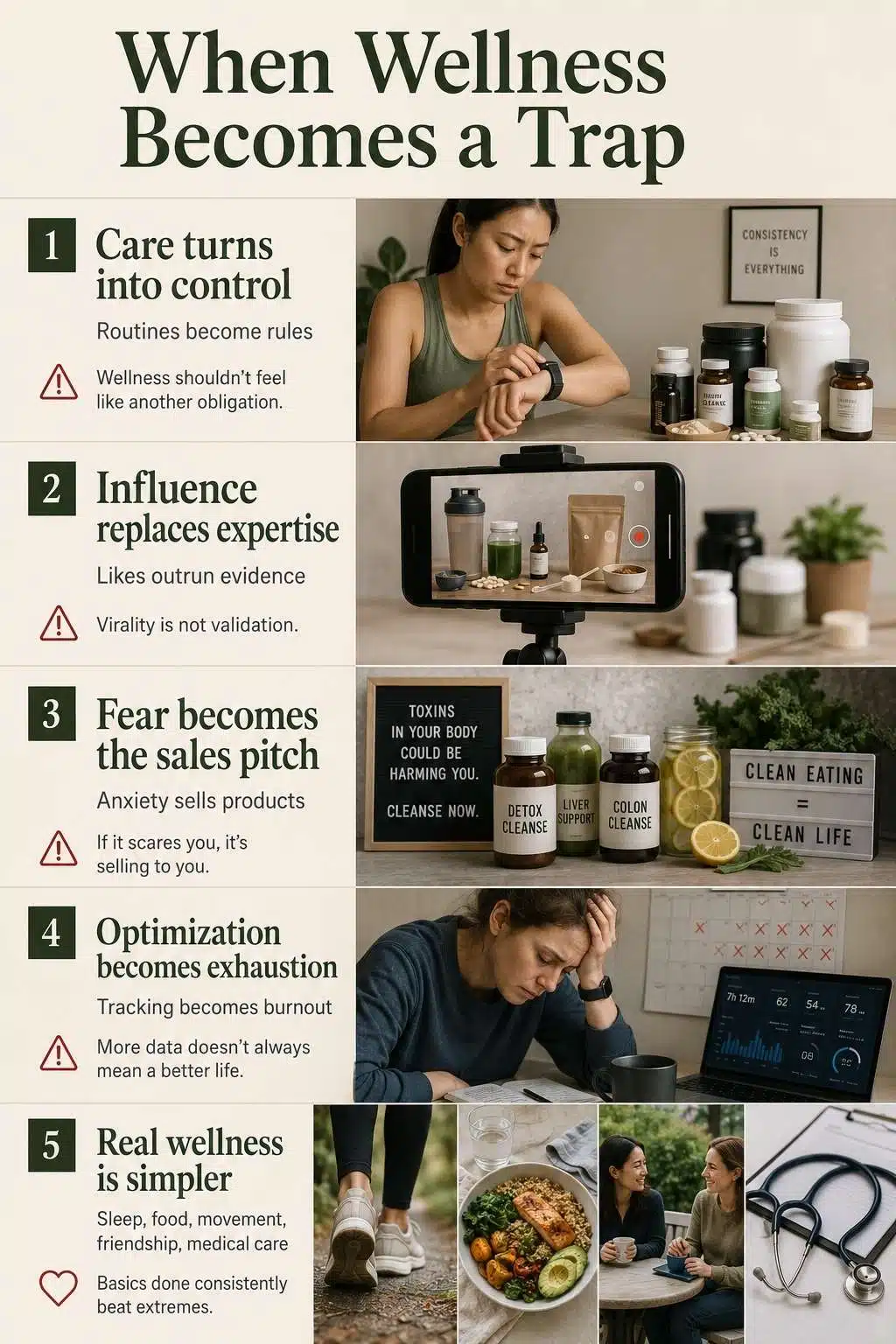
Modern wellness has taken normal life and turned it into a performance dashboard. Sleep is no longer sleep. It is a score. Walking is no longer walking. It is steps. Eating is no longer eating. It is macros, glucose curves, fasting windows, protein targets, toxin avoidance, and guilt. Rest is no longer rest. It is recovery optimization.
This is not always bad. Data can help people notice patterns. A sleep tracker can remind someone to stop scrolling at 1 a.m. A glucose monitor can help people with medical needs. A fitness tracker can encourage movement.
But the problem begins when the metric becomes the master.
I have seen how this language changes people. They stop asking, “How do I feel?” and start asking, “What does the device say?” They wake up rested, see a bad sleep score, and suddenly feel tired. They enjoy a meal, then punish themselves because it was not “clean.” They skip dinner with friends because their fasting window has become more important than their relationships.
That is not healthy. That is surveillance. A body is not a startup. A person is not a project management board. The human nervous system does not need a constant performance review.
The wellness industry sells optimization as freedom. But for many people, it becomes another form of control.
Wellness Influencers Are Not Harmless Entertainment
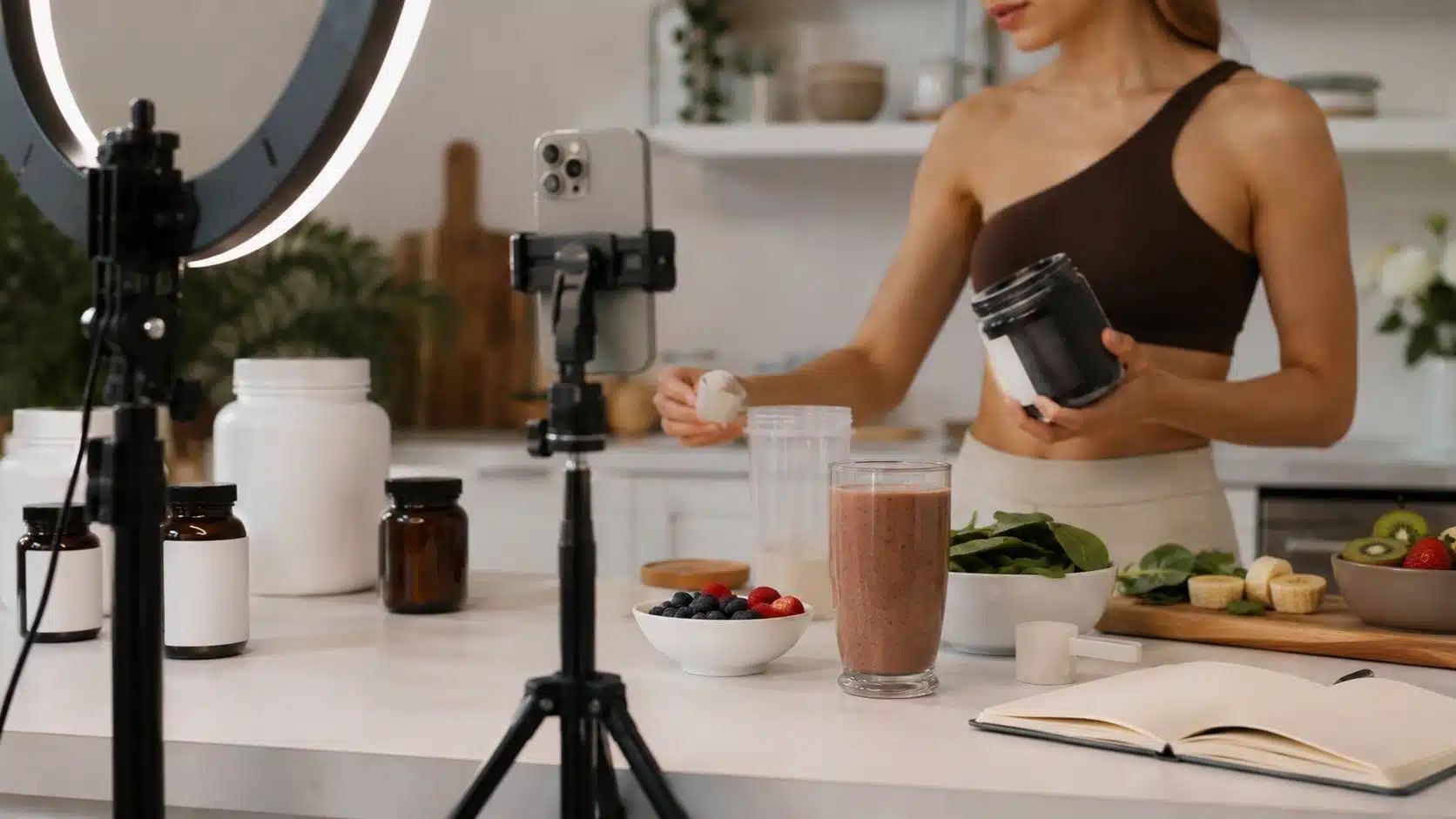
The wellness influencer has become one of the most dangerous figures in online health culture. Not because every influencer is malicious. Many are not. Some genuinely believe what they are saying. Some have personal stories that are moving. Some share useful habits in simple ways.
The danger is that social media rewards confidence more than accuracy.
A doctor saying “it depends” will often lose to an influencer saying “this is the one thing destroying your hormones.” A dietitian explaining nuance will lose to a creator holding a supplement bottle and promising a flat stomach. A public health expert talking about evidence will lose to a charismatic person saying, “They do not want you to know this.”
That sentence should be treated like a siren.
“They do not want you to know this” is one of the most profitable lines in the wellness economy. It creates instant drama. It makes the influencer look brave. It makes the audience feel special. And it turns skepticism into proof that the influencer must be right.
This is how a wellness scam often begins. Not with a villain in a dark room, but with a friendly face, a personal story, a discount code, and a claim that sounds just scientific enough to feel credible.
The audience not only buys the product. They buy the identity of being awake, informed, and in control. That is a powerful drug.
The Supplement Industry Has an Accountability Problem
Supplements are the perfect product for wellness culture because they sit in the emotional space between medicine and lifestyle.
- They feel medical, but they are marketed like self-care.
- They look scientific, but many are sold through vibes.
- They promise agency, but often depend on confusion.
The average consumer sees capsules, dosage instructions, clinical-looking labels, and health claims, then assumes someone must have approved the product before it reached the shelf. That assumption is often wrong.
This is one of the most important points readers need to understand: availability is not the same as proof.
A product can be online, popular, beautifully packaged, influencer-approved, and still be weakly supported, poorly labeled, or inappropriate for many people. Some supplements are useful in specific cases. Vitamin D may matter for someone with low levels. Iron may matter for someone with a deficiency. Folate matters in pregnancy guidance. But that is very different from the wellness habit of throwing twenty products at vague symptoms and calling it empowerment.
The supplement world thrives on the phrase “supports.” For example:
- Supports immunity.
- Supports metabolism.
- Supports gut health.
- Supports calm.
- Supports detoxification.
“Supports” is a magic word because it sounds helpful without always promising a measurable outcome. It gives marketers room to imply more than they prove.
And when something goes wrong, accountability becomes blurry. Was it the supplement? The dose? The combination? The user’s body? Another medication? A hidden ingredient? A bad batch?
This is not a small issue. It is a trust issue. If an industry wants to act like healthcare, it should accept healthcare-level responsibility.
Detox Culture Is Marketing, Not Medicine
Detox is one of the most successful myths in wellness. The word feels clean. It feels disciplined. It feels like a reset button. After holidays, stress, alcohol, sugar, travel, grief, or ordinary eating, detox culture says: your body is dirty, and we can help.
But the body is not a dirty kitchen. You already have detox systems. Your liver, kidneys, lungs, digestive system, skin, and lymphatic system are not waiting for a celebrity tea to start working. They work quietly every day.
The wellness industry knows this, but “support your liver through normal nutrition, hydration, sleep, and medical care when needed” does not sell as well as “7-day toxin flush.”
Cleanses and detoxes also give people a socially acceptable way to restrict food. That is part of their appeal. They dress up control as purification. They turn hunger into virtue. They make people feel morally better for eating less.
And when the weight comes back, the industry wins again. The product did not fail. You failed to maintain the lifestyle. So you buy another reset. That cycle is not healing. It is marketing with a halo.
The Manifestation-Wellness Pipeline Is Cruel in Disguise
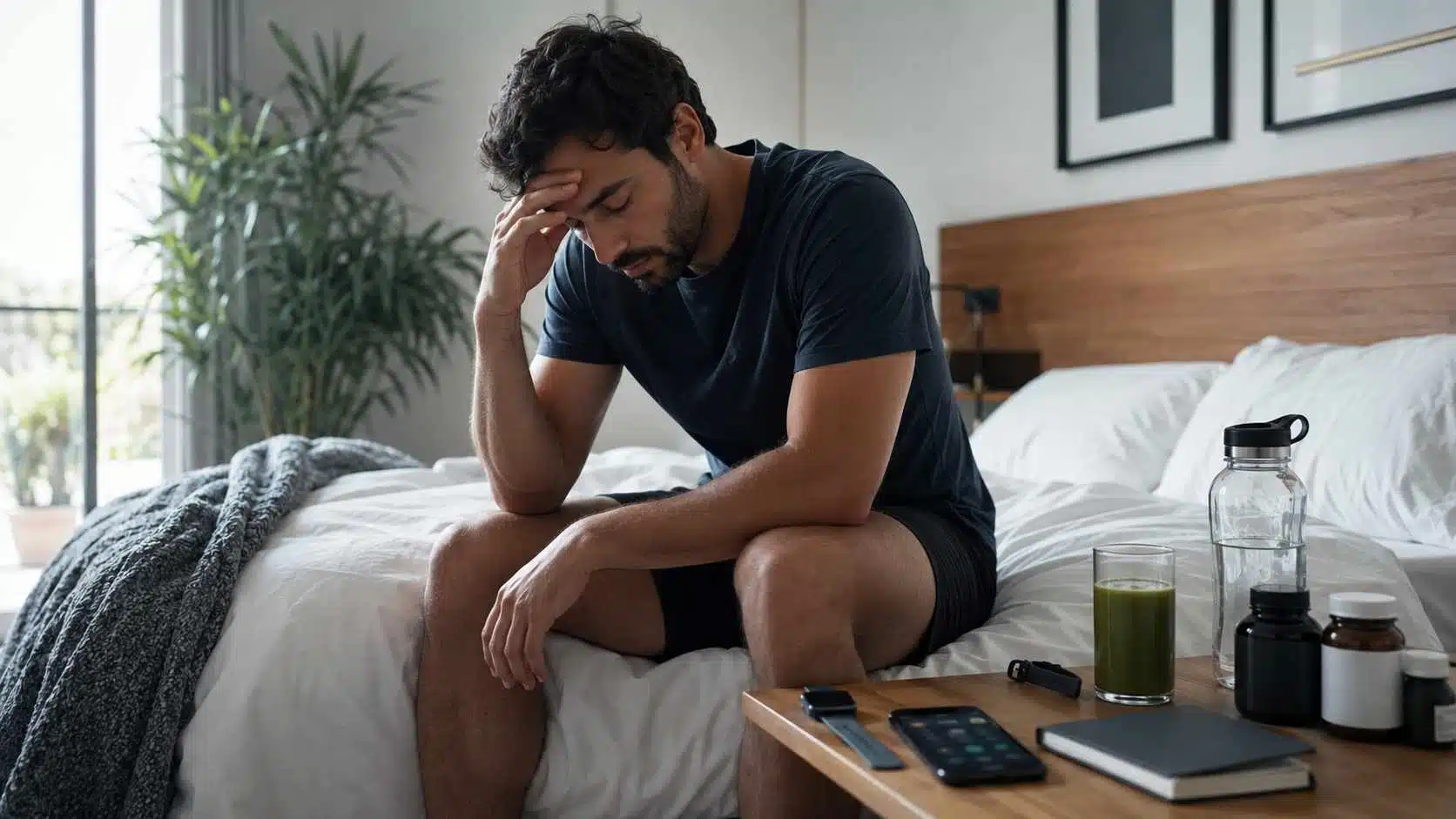
Manifestation sounds harmless when it means setting goals, visualizing a better future, journaling, or trying to stay hopeful. Hope is not the problem. Intention is not the problem. A positive mindset is not the problem. The problem begins when manifestation turns into metaphysical blame.
- If your dream did not happen, you were not aligned.
- If you got sick, your vibration was low.
- If you are struggling financially, you are blocking abundance.
- If your life is painful, you attracted it somehow.
This is where wellness becomes emotionally cruel.
A person facing illness does not need to be told they manifested their suffering. A person trapped in poverty does not need a lecture on abundant energy. A burned-out worker does not need a vision board more than they need fair pay, sleep, healthcare, and time.
The manifestation-wellness pipeline takes social problems and turns them into personal mindset failures. It tells people to heal their beliefs while leaving the conditions that harmed them untouched.
That is why this pipeline is so attractive to the industry. It keeps responsibility on the individual. It says the system is not broken. Your frequency is.
Biohacking Is Mostly Old Advice in Expensive Clothing
Biohacking has a branding problem because the word makes ordinary habits sound revolutionary. Sleep enough. Eat better. Move often. Lift weights. Get sunlight. Reduce alcohol. Manage stress. Build relationships. Do not smoke. Treat medical problems seriously.
That is not biohacking. That is basic health. But basic health is not sexy enough for the premium wellness market. So it gets repackaged with devices, dashboards, tests, protocols, injections, powders, cold plunges, red lights, genetic reports, and longevity claims.
Some tools may have legitimate uses. Some treatments may have evidence in specific clinical contexts. But the consumer version often outruns the science. A small study becomes a life-extension promise. A medical device becomes a lifestyle flex. A recovery method becomes a personality.
Biohacking also attracts the same fantasy that drives much of wellness culture: the fantasy of total control.
Control your biology.
Control your aging.
Control your mood.
Control your productivity.
Control your lifespan.
But the body is not fully controllable. Health is affected by genetics, environment, money, work, housing, food access, trauma, healthcare, luck, and time. Pretending otherwise does not make people healthier. It makes them ashamed when reality refuses to obey the protocol.
The Cult-Like Pattern Is Not an Accident
When I call the wellness industry cult-like, I do not mean every gym, yoga class, supplement brand, meditation app, or health coach is a cult.
I mean, the industry often uses cult-like patterns.
It creates insiders and outsiders. It gives people a new language, encourages distrust of outside authorities, turns the leader into a guide, frames doubt as weakness, sells purification, promises transformation, and makes leaving feel like failure.
That pattern matters because it changes how people think.
Once someone believes mainstream medicine is always corrupt, every doctor becomes suspicious. Once someone believes symptoms are always caused by toxins, every meal becomes a threat. Once someone believes success depends on vibration, every setback becomes spiritual failure. Once someone believes their influencer has secret knowledge, evidence starts to feel like an attack.
This is how wellness stops being a set of habits and becomes a worldview.
Why People Fall for It
It is easy to mock people who fall for wellness scams. I think that is lazy.
People do not enter wellness culture because they are stupid. They enter because they are tired, dismissed, anxious, sick, lonely, aging, grieving, overwhelmed, or desperate for control.
- A person with chronic symptoms wants answers.
- A person who failed by healthcare wants alternatives.
- A person burned out by work wants relief.
- A person afraid of aging wants hope.
- A person who feels invisible wants a community that sees them.
The wellness industry understands these emotions better than many institutions do. That is part of the problem. Conventional healthcare can be cold, rushed, expensive, and confusing. Public health messaging can sound robotic. Work culture burns people out and then tells them to meditate. Food systems make healthy choices harder than lifestyle gurus admit.
So yes, wellness fills a gap. But filling a gap does not make an industry innocent. Sometimes the person offering comfort is also the person selling dependence.
What Real Wellness Should Look Like
Real wellness should make life simpler, not more obsessive.
It should help people sleep, eat, move, connect, rest, recover, and seek medical care without shame. It should respect science without worshiping institutions blindly. It should allow nuance. It should admit uncertainty. It should never make people feel morally superior for eating one way or morally dirty for eating another.
Real wellness does not need a guru. It does not require a shelf full of powders, fear of normal food, a perfect morning routine, hating your body into discipline, and does not require turning every symptom into a conspiracy.
Real wellness is boring in the best way. It is sleep. Food. Movement. Friendship. Meaning. Medical care. Safe housing. Fair work. Clean air. Less loneliness. Less shame.
Most of that cannot be solved by a discount code. And maybe that is why the industry avoids talking about it.
The Hard Truth of The Wellness Industry Cult
The wellness industry has become a cult because it sells salvation without responsibility. It promises purity but profits from anxiety. It promises empowerment but often deepens self-blame. Promises truth but rewards misinformation. Promises healing but keeps people buying.
The answer is not to reject every wellness practice. That would be childish. Many practices are helpful. Many people find real relief through movement, mindfulness, nutrition, therapy, community, and spiritual life.
The answer is to stop confusing wellness products with wellbeing. A healthier culture would not tell people to optimize themselves endlessly. It would ask why so many people feel broken in the first place.
That is the conversation the wellness industry does not want to have. Because once people realize they are not broken, they become harder to sell to.