History is far more than a sequence of dates on a calendar; it is a tapestry woven from the threads of human triumph, catastrophe, innovation, and reflection. Every day carries the weight of the past, but June 10 stands out as a particularly vivid chapter in the global story. It is a date that has seen the declaration of major wars, the signing of transformative legislation, the birth of artistic visionaries, and the silencing of profound creative voices.
In this in-depth report, we peel back the layers of time to understand why June 10 remains significant, with a specialized lens on the South Asian intellectual landscape and the broader, interconnected history of our world.
The Bangalee Sphere
The date of June 10 resonates deeply within the Indian subcontinent, where cultural memory is often intertwined with the arts and social activism.
The Artistic Legacy of Girish Karnad
On June 10, 2019, the cultural world mourned the passing of Girish Karnad, an Indian playwright, actor, and director who fundamentally reshaped the landscape of contemporary Indian theater.
Karnad was a titan of the Kannada literary tradition, but his impact was truly pan-Indian. His plays—most notably Tughlaq (1964)—were revolutionary. While his contemporaries often looked to Western models, Karnad turned to the deep reservoirs of Indian history and mythology, using them as allegories to critique the political cynicism and corruption of post-independence India. His ability to fuse the ancient with the urgent made his work timeless. For the Bangalee reader, Karnad represents the quintessential “intellectual artist”—someone who was not just an entertainer, but a conscience of the nation. His passing on this day serves as a poignant reminder of the enduring power of literature to challenge authority.
International Observances & Holidays
June 10 is marked by several significant national observances that reflect the identity and history of nations across the globe.
-
Portugal Day (Dia de Portugal): Officially known as the “Day of Portugal, Camões, and the Portuguese Communities,” this is perhaps the most significant observance on this date. It commemorates the death of the legendary poet Luís de Camões in 1580. Camões is the defining figure of Portuguese language and literature; his epic, Os Lusíadas, captured the spirit of the Age of Discovery. This day is a powerful celebration of national identity, bringing together Portuguese communities worldwide.
-
Abolition Day (French Guiana): In French Guiana, June 10 is a solemn public holiday marking the abolition of slavery. It serves as an essential moment of remembrance for the suffering endured under colonial rule and a celebration of the ongoing journey toward human dignity and equality.
-
Father’s Day (South Sudan): In the world’s youngest nation, June 10 is dedicated to the role of fathers. It highlights the importance of the family unit as the bedrock for rebuilding society in the wake of decades of civil strife.
Global History: A World in Flux
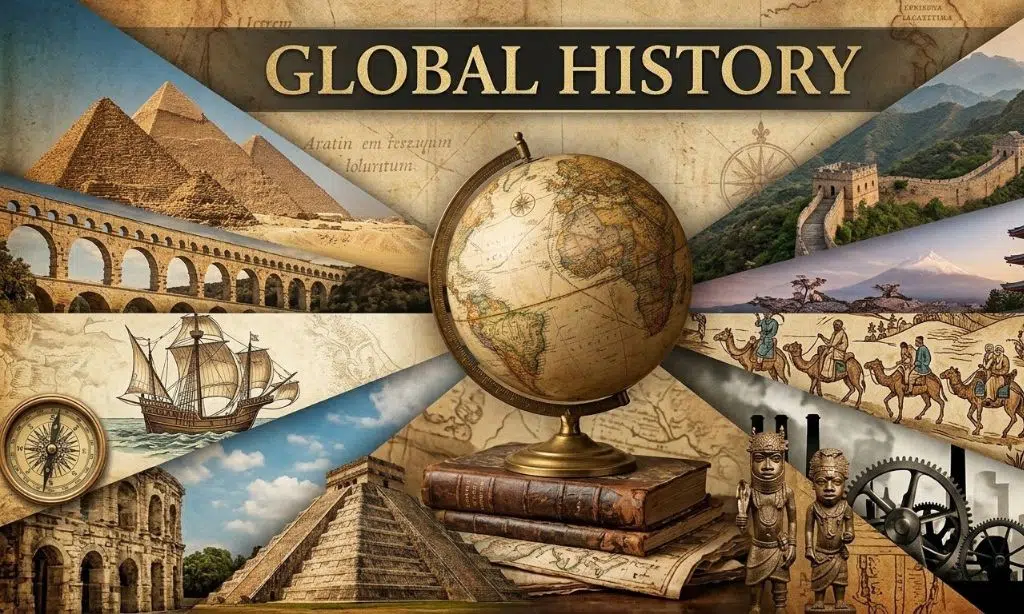
June 10 has been a stage for monumental events that redirected the course of history.
United States: The Path to Equality
1963: The Equal Pay Act: President John F. Kennedy signed the Equal Pay Act, a landmark federal law that prohibited wage discrimination on the basis of sex. While the struggle for gender pay parity continues well into the 21st century, this moment was the vital “opening of the door.” It acknowledged, for the first time in federal law, that the market must be held accountable to the principles of fairness.
United Kingdom: Royalty and Modernity
1921: The Birth of Prince Philip: Born in Corfu, Greece, Prince Philip, the Duke of Edinburgh, eventually became the longest-serving royal consort in British history. His life, which spanned nearly a century, mirrored the transition of the United Kingdom from an imperial power to a modern, multicultural state. His legacy is one of balancing rigid tradition with the modernization of the monarchy.
Europe: The Scars of War
1940: Italy Enters WWII: On this day, Benito Mussolini brought Italy into the Second World War. This decision changed the Mediterranean and North African theaters of the war, bringing the conflict to the doorstep of the Middle East and East Africa. It is a dark day in the Italian collective memory, marking the beginning of a period of immense tragedy and eventual liberation.
1999: The End of the Kosovo War: After months of NATO-led air strikes, Serbian forces began their withdrawal from Kosovo. This date marked the end of a conflict defined by ethnic cleansing and humanitarian catastrophe. It remains a study in the complexity of international intervention and the fragile nature of peace in the Balkans.
Rest of the World: Middle East & Technology
1967: The End of the Six-Day War: A UN-mediated ceasefire brought an end to the Six-Day War between Israel and Egypt, Syria, and Jordan. The repercussions of these six days—the occupation of the West Bank, Gaza Strip, and the Golan Heights—remain the central axis of Middle Eastern geopolitics. History was literally redrawn in less than a week, and the diplomatic shockwaves are still felt today.
Notable Births & Deaths (Global)
The individuals born and lost on June 10 provide a diverse look at the human experience.
Notable Births
| Name | Year | Profession | Contribution |
| Saul Bellow | 1915 | Author | Nobel Prize-winning novelist who captured the existential complexity of American urban life. |
| Prince Philip | 1921 | Royal Consort | The Duke of Edinburgh; defined modern British royal service for over 70 years. |
| Judy Garland | 1922 | Performer | A Hollywood legend; her voice and persona in The Wizard of Oz defined an era of cinema. |
| Elizabeth Hurley | 1965 | Actress/Model | A prominent figure in global fashion and film advocacy. |
| Kate Upton | 1992 | Model/Actress | A contemporary icon of digital-age pop culture. |
Notable Deaths
| Name | Year | Profession | Legacy |
| Alexander the Great | 323 BCE | Ruler | Ancient conqueror; his death created a power vacuum that birthed the Hellenistic Age. |
| Antoni Gaudí | 1926 | Architect | The visionary behind the Sagrada Família; a master of Catalan Modernism. |
| Spencer Tracy | 1967 | Actor | The first actor to win consecutive Oscars; a master of naturalistic acting. |
| Ray Charles | 2004 | Musician | The “Genius of Soul”; revolutionized American music by blending gospel, jazz, and R&B. |
| Girish Karnad | 2019 | Playwright | The giant of Indian theater; known for modernizing classical narratives. |
“Did You Know?” Trivia
To make your next dinner table conversation a bit more interesting, consider these three fascinating facts about June 10:
-
The Great Mystery: While June 10 is the traditional date cited for the death of Alexander the Great in Babylon, the historical record is messy. Ancient historians like Plutarch and Arrian rely on the “Royal Diaries” of the time, which suggest he may have died anywhere between June 10 and 13, 323 BCE. We are essentially celebrating a historical “window” rather than a precise clock-tick.
-
The Invention that Changed Writing: On June 10, 1943, László Bíró was granted a U.S. patent for the ballpoint pen. Before this, fountain pens were the standard—they leaked, they smeared, and they were difficult to carry. The ballpoint pen was the “tech startup” of its day, revolutionizing everything from bank transactions to school exams.
-
The Longest-Running Martian Resident: On June 10, 2003, the Spirit rover launched for Mars. Scientists hoped it would last 90 days. It ended up operating for over six years. It didn’t just look for water; it fundamentally changed our understanding of the Martian geology, proving the planet had a much more active, water-filled past than previously thought.
Quote of the Day
It is fitting to remember the words of Judy Garland, born on this day, whose life was as turbulent as it was brilliant. She once said:
“Always be a first-rate version of yourself, instead of a second-rate version of somebody else.”
In an era where we are constantly pressured to conform, this sentiment remains a vital reminder of the value of authenticity.
Final Thoughts: The Echoes of June 10
As we survey the events of June 10, we see a fascinating paradox. It is a date marked by the violence of war, such as the entry of Italy into WWII and the conclusion of the Six-Day War. Yet, it is equally a date defined by the pursuit of equality, as seen in the signing of the Equal Pay Act in 1963.
History is a cycle of tension and resolution. Whether it is the artistic brilliance of Girish Karnad or the architectural wonder of Antoni Gaudí, we see that the human drive to create often seeks to heal the divisions created by politics and war. We study these dates not just to memorize facts, but to understand the trajectory of our civilization.
If there is one lesson to take from this archive, it is that the actions taken on a single day can resonate for centuries. Whether you are reading this from Dhaka, Kolkata, London, or New York, the date of June 10 invites us to look at our own potential to effect change, however small, in our own sphere of influence.