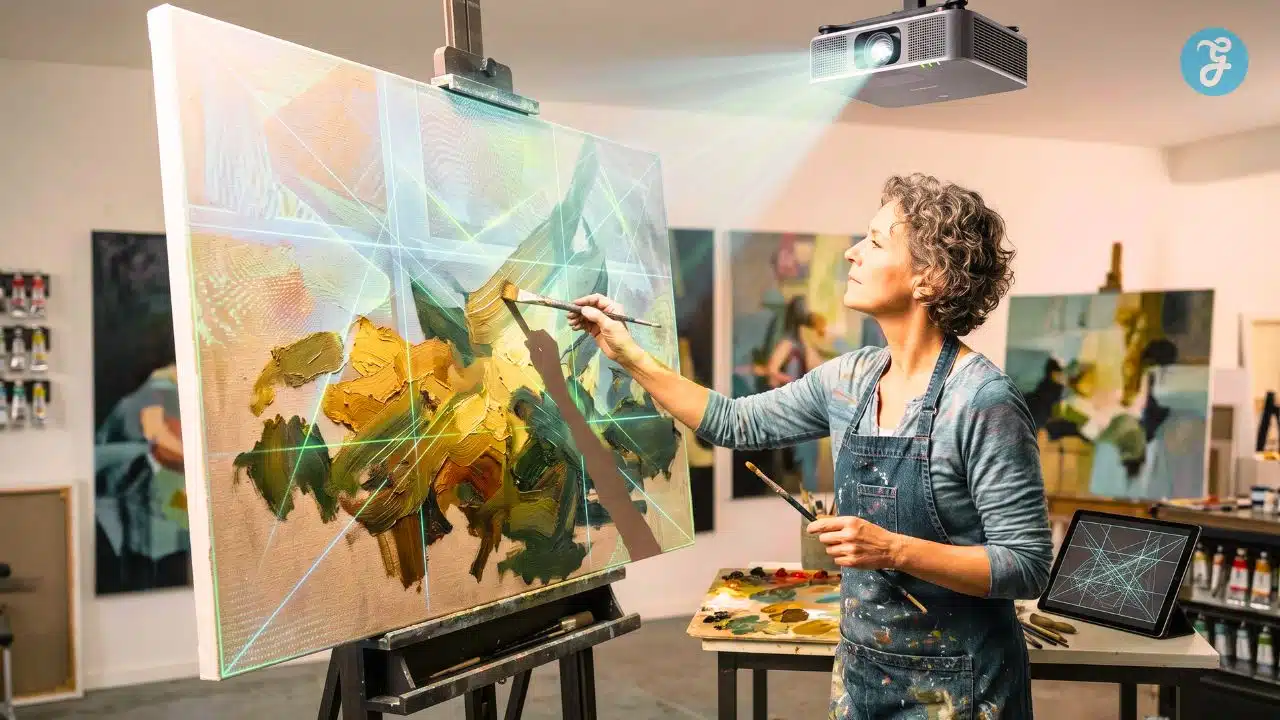
The cold glow of a monitor displays a complex, algorithmically generated geometric grid, casting a sharp blue light across the studio. It stands in stark contrast to the earthy, heavy scent of linseed oil and raw pigments nearby. This is the birthplace of the Synthetic Movement, a shift where AI in modern painting acts not as a replacement, but as a sophisticated compositional collaborator. By merging machine precision with human intuition, fine art is entering a new renaissance, proving the human touch remains irreplaceable in an automated world.
The Algorithm as the Modern Apprentice
The masters of the Renaissance never worked alone. Walking into a 16th century studio, you would find a bustling workshop. Young apprentices spent years grinding pigments and blocking in the broad strokes of a master’s vision. Today, the studio looks different, but the hierarchy remains. Generative AI has stepped into the role of the workshop assistant. It does the heavy lifting of initial ideation so the artist can focus on the soul of the work.
Renaissance Roots Meet Digital Data
Historical workshops were centers of collective labor. Apprentices like the young Leonardo da Vinci prepared canvases and mapped out perspective grids for their teachers. This tradition of delegation has simply shifted from human hands to mathematical code. Modern artists use algorithms to handle spatial problem solving. The machine suggests the grid. The human provides the heartbeat. This is not a takeover. It is a technological lineage that honors the classic method of preparation.
Rapid Drafting and Color Theory
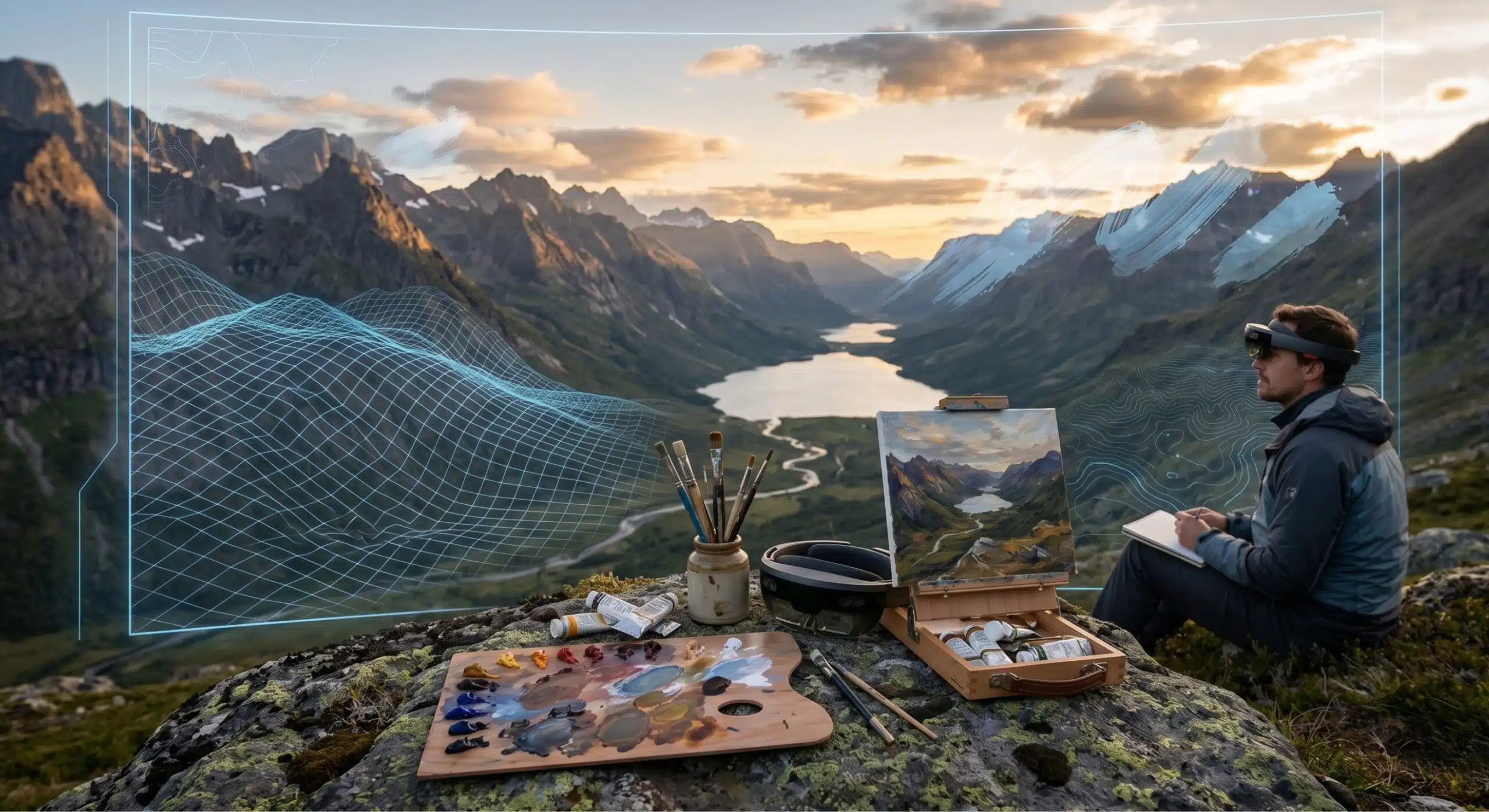
Modern creators use text-to-image platforms to bypass the blank canvas syndrome. They iterate through dozens of versions in minutes. They test how a specific light source hits a subject. They explore complex color palettes before a single drop of oil is mixed. This workflow allows for an exhaustive exploration of generative AI art composition. It brings a level of speed to the planning phase that was once impossible. By the time the brush hits the linen, the artist has a refined roadmap.
Solving the Burden of Choice
Decision fatigue is the enemy of the creative process. Mapping out every geometric intersection manually can drain an artist before they even begin to paint. Algorithmic ideation removes this exhaustion. It handles the technical math of the composition. This keeps the artist’s mind fresh for the physical execution. When you mix algorithms and traditional oils, you use the machine for logic and the hand for emotion. The result is a piece that feels both calculated and deeply human.
The Case for Digital Underpainting
The true value of a hybrid work is found in the math of labor. A high end generator like Midjourney can produce a stunning visual reference in less than two minutes. It offers a shortcut to seeing a concept. However, the physical translation of that image onto a canvas often requires hundreds of hours of manual labor. This is the massive gap between digital sight and physical execution.

In this workflow, the screen serves as a modern version of the camera obscura. Artists use iterative prompting to find the perfect Vermeer style lighting or a specific shadow depth. They are essentially creating a digital underpainting. This stage is purely about solving visual puzzles before the expensive and time consuming oil painting begins. By the time the artist picks up a brush, the machine has already helped them exhaust every bad idea.
This quantification of effort is what separates art from a mere file. The initial two minute burst of AI ideation is just the prologue. The following weeks are spent in a slow, meditative grind. The artist layers thin glazes and builds texture that no printer can replicate. This process proves that the human touch remains the primary value driver in the art market. We are not paying for the speed of the algorithm. We are paying for the 100 hours of human life required to make that algorithm tangible. Moving from a fleeting pixel to a permanent pigment is where the real work happens.
The Architecture of a Hybrid Studio
The modern workspace is no longer divided by a hard line between the digital and the analog. It has become a unified environment where high resolution screens sit next to drying racks. This is the birthplace of the creative technologist. In this setting, the artist uses neural network foundations to build the scaffolding of a piece. They are not looking for a finished product from the machine. They are looking for a complex set of geometric wireframes that would take weeks to plot by hand.
The physical tools have evolved to keep pace with the software. Artists now use high lumen projector mapping to cast these algorithmic grids directly onto large scale linen. This allows them to trace the skeletal structure of a composition with absolute precision. It is a digital update to the grid systems used by the Old Masters to scale their frescoes.
Once the proportions are locked in, the artist might use style transfer software to run a simulation. They can see how a modern, neon-lit cityscape reacts to the light logic of a 17th century glazing technique.
This setup allows for a level of experimentation that was previously too expensive or too slow. The artist can fail a thousand times in the digital space before committing a single drop of pigment to the canvas. By the time they pick up a palette knife, the technical risks have been managed. This leaves the artist free to engage with the tactile soul of the paint. The studio becomes a place where data provides the discipline and the human provides the spirit.
The Critical Mirror: AI as a Conceptual Frontier
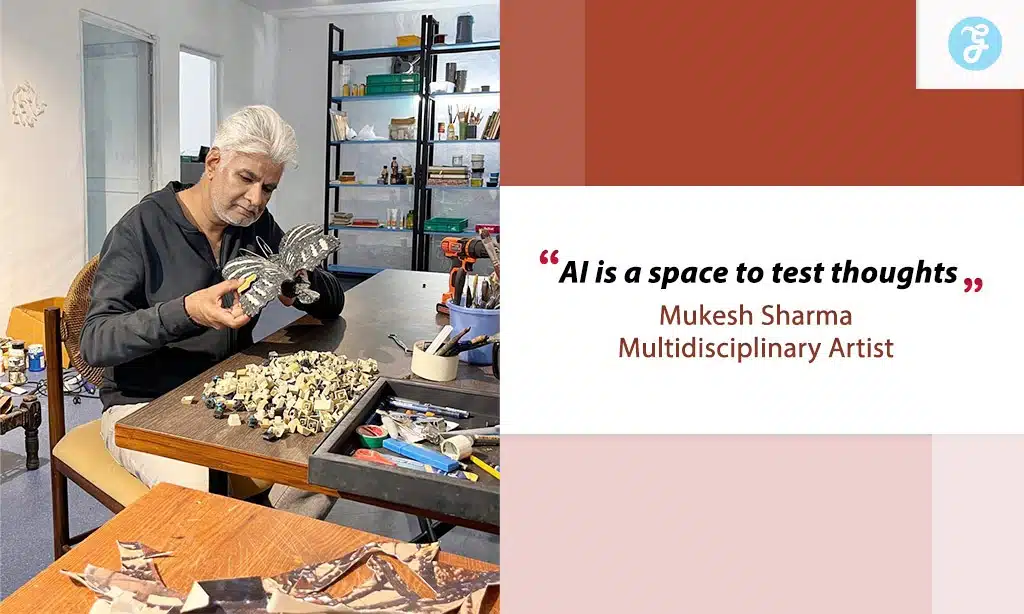
In an exclusive interview with Editorialge, multidisciplinary artist Mukesh Sharma explained: “AI becomes a space to test thoughts, to stretch an idea, and to see it from a fresh perspective. My artistic practice remains deliberately independent of AI as a tool or collaborator; I do not incorporate it into the creation of my work. However, I engage with AI critically as a phenomenon to be examined, probing its behavior, its internal logic, and the ways it is reshaping thought and perception in our current technological moment.”
The Tangible Translation
The digital blueprint eventually hits a wall. A screen can suggest a million colors, but it cannot feel the drag of a brush against linen. This stage is where the synthetic process turns visceral. Artists take the data from the machine and subject it to the messy, beautiful reality of physical paint. It is a transition from cold pixels to warm, textured oil.
“For me, it’s not a tool at the moment to create the work, but a way to probe and reflect. Simply trying to understand how this technology sits within the contemporary moment,” Mukesh Sharma reflects.
The Power of Intentional Imperfection
AI is often too perfect. Its lines are mathematically straight and its gradients are eerily smooth. To make AI in modern painting feel authentic, artists use a “human in the loop” approach.
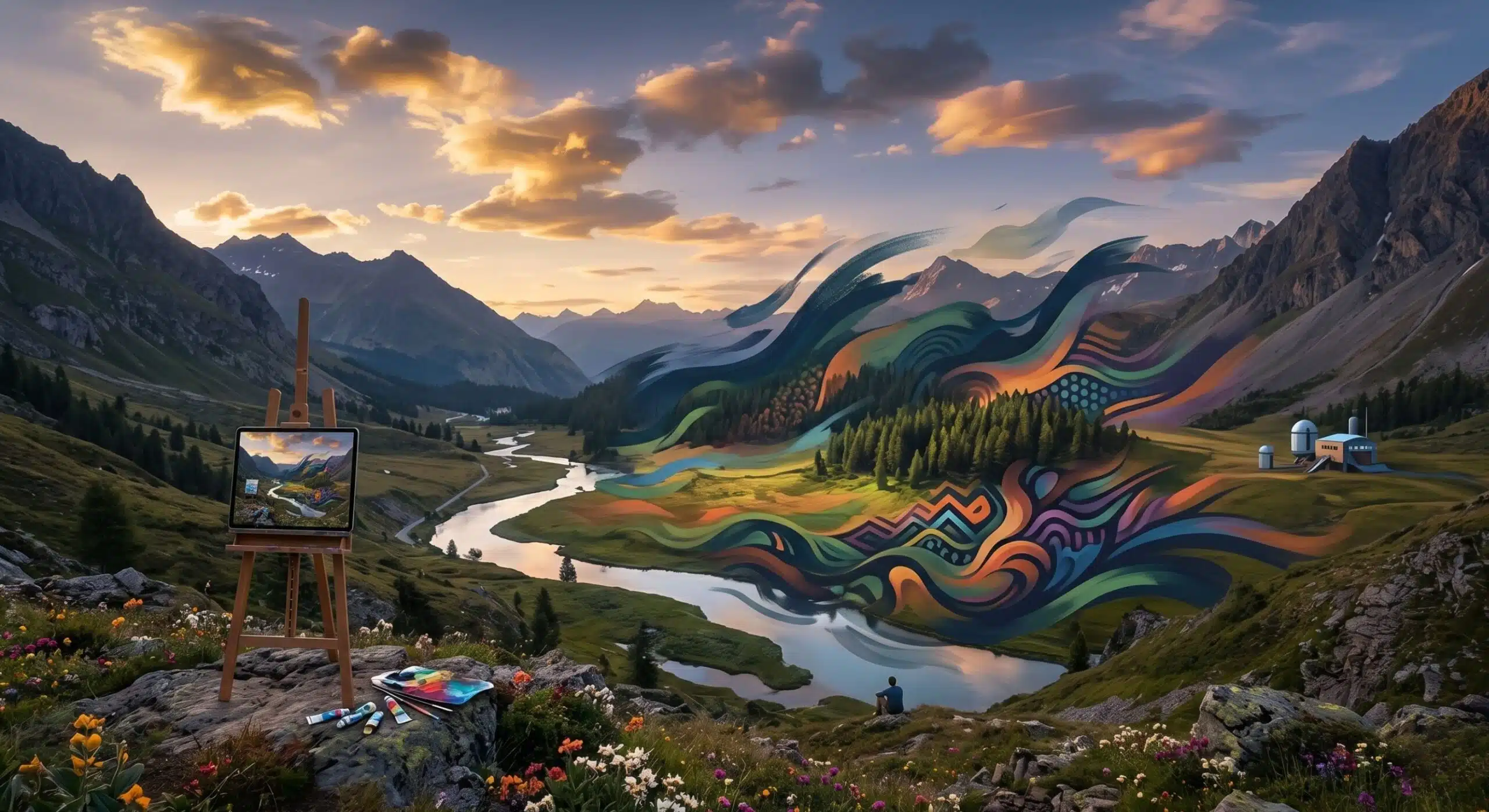
They deliberately break the machine’s logic. They add rough edges. They apply asymmetric brushstrokes. By using thick impasto techniques, they create a surface that catches real light. These small “errors” tell the viewer that a person was here. The clinical perfection of the model dies so the art can live.
The Resistance of Physical Matter
Oil paint has a temper. It takes weeks to dry. It changes as you layer transparent glazes. It resists the artist in ways a software program never will. No algorithm can fully simulate the way pigments mix on a physical palette. The unpredictability of the medium is the secret sauce. This materiality creates a sensory experience that stays outside the reach of any digital processor.
The Gaman of the Brush
The transition from a screen to a physical surface introduces a level of unpredictable resistance. This is where the Japanese concept of Gaman: the virtue of enduring the difficult with patience and dignity, becomes central to the process. Unlike a digital mock up, physical paint has a will of its own. It drips, dries at uneven rates, and reacts to the humidity in the room. The artist must negotiate with these material quirks rather than simply commanding them. This endurance creates a layer of depth that a machine cannot simulate. It turns the act of painting into a disciplined struggle, where the beauty lies in how the creator survives the chaos of the medium.
Creating Value Through Labor
A digital file is infinitely reproducible. It has no singular home. However, a physical painting is a unique artifact. The labor of the artist transforms a concept into a valuable object. This physical presence is what collectors crave. They want to see the texture. They want to know the artist spent hours wrestling with the canvas. This manual effort elevates the work. It turns a data-driven image into a high value piece of fine art that exists in the real world.
The Psychology of the Human Touch
Purely digital images often feel hollow. They lack the grit and sweat of a physical studio. When AI in modern painting is used without a human hand, the result often falls into the uncanny valley. It looks right, but it feels wrong. This section explores why the human brain searches for the mark of the maker.
Beyond the Uncanny Valley
The human eye is trained to spot perfection as a sign of the artificial. In art, we crave the evidence of struggle. We look for the slight tremor in a line or the uneven thickness of a glaze. These small errors create a sense of trust. Purely algorithmic outputs are too smooth. They lack the friction of reality. By adding a physical touch, artists bridge this psychological gap. They give the viewer something to hold onto that feels real and lived in.
Lived Experience Against Statistical Probability
A machine builds an image based on pattern recognition and statistical likelihood. It calculates what should come next based on billions of data points. A human artist works from memory and raw emotion. They draw from a rainy afternoon in Paris or a specific childhood loss. These are not data points. They are lived experiences. This creates a depth that no algorithm can fake. While the machine uses probability, the artist uses the soul. This distinction is what keeps fine art relevant.
The Trialogue of Modern Viewing
The experience of looking at art has changed. It is no longer just a talk between the artist and the viewer. A third voice has entered the room. We now have a three-way conversation. The artist sets the intent. The algorithm provides the data synthesis. The audience brings the final interpretation. This dynamic interaction makes the work more complex. It forces the viewer to ask where the machine ends and the person begins. This tension makes the viewing experience active rather than passive.
Redefining Authorship and Agency
The definition of a creator is shifting in the digital age. Critics now look past the surface of the canvas to question the source of the idea. It is no longer enough to ask whose hand held the brush. We must ask who directed the data and who owns the final vision.
A New Lens on Art History
Academia is currently grappling with the concept of the machine as a silent partner. Traditional art history focused on the singular genius of the painter. Today, the conversation includes the engineers who built the models and the datasets that fed them. This shift does not diminish the artist. Instead, it adds a layer of complexity to the narrative of creation. The focus is moving toward how a person steers the software to reach a specific goal.
Sovereignty Through the Brush
The use of models trained on existing datasets continues to spark ethical debates regarding ownership and originality. Within this context, some traditionalists argue that relying entirely on digital output distances the creator from their medium. For these artists, the physical application of oil paint becomes a deliberate reclamation of agency, a method to assert sovereignty over the algorithm. By interpreting a digital suggestion through a one-of-a-kind physical execution, the artist reinforces their primary role, allowing the manual labor to serve as a tangible and conceptual anchor for the finished piece.
The Economic Validation of the Hybrid Artifact
While the act of physical painting serves as a moral anchor for the creator, the global economy has begun to codify this preference into raw data. The shift from ethics to economics is visible in the soaring premiums placed on works that prove human intervention.
The 2026 Art Market Shift
The economic reality of the current gallery circuit reflects a massive structural change. According to recent industry projections, by mid-2026, the global market for AI in art and creativity has climbed to a valuation of over $7 billion. This growth is not driven by digital files alone. Instead, the highest hybrid artifact value is being found where code meets canvas. Collectors are increasingly skeptical of infinite digital copies. They are moving toward works that offer digital scarcity combined with physical permanence.
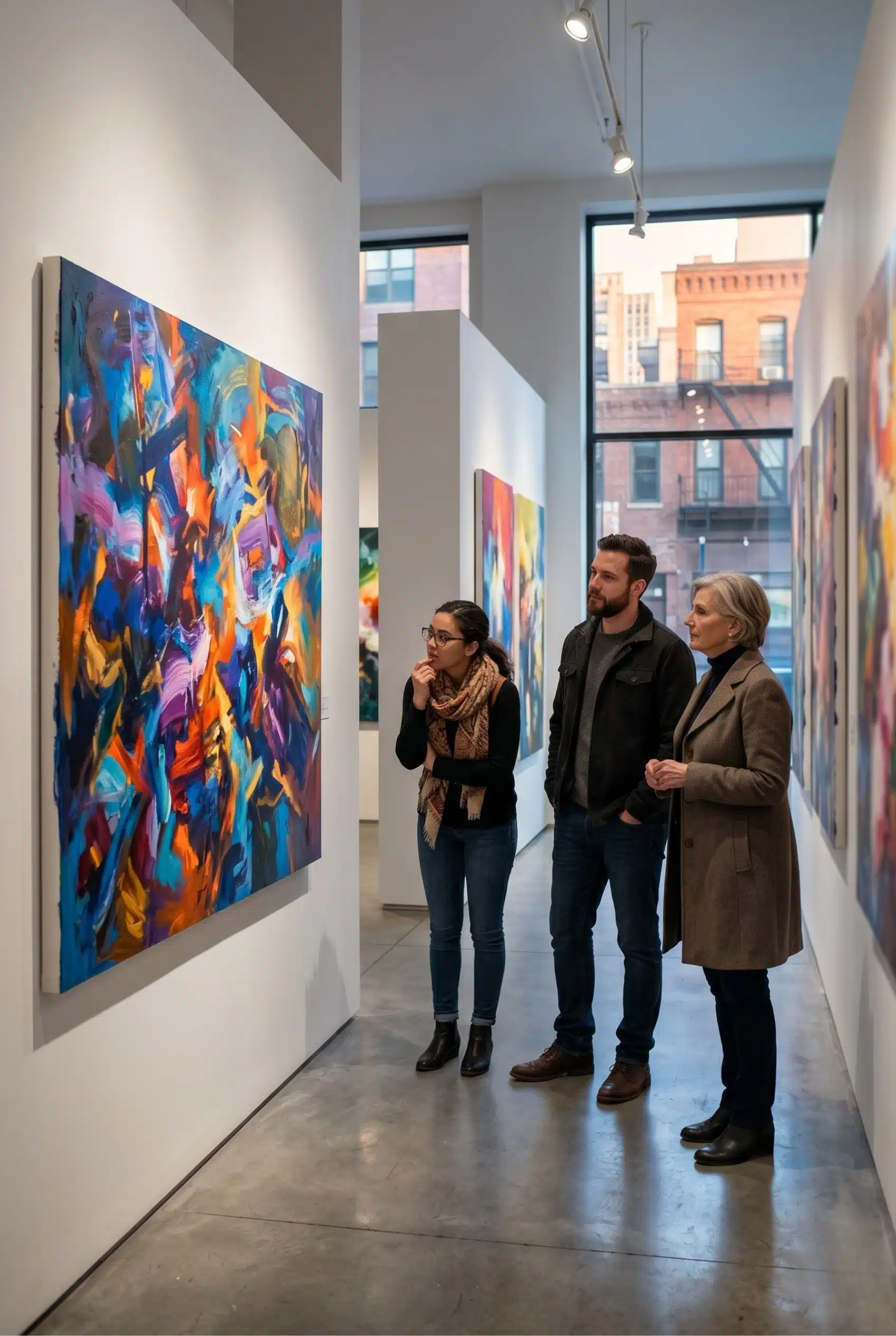
This shift is rooted in a new collector psychology. While the art market CAGR remains strong for tech-driven works, the premium is placed on pieces that require a human to finalize the data. Investors now view the algorithmic part of a painting as a sophisticated provenance. They see the machine as a guarantee of modern relevance and the oil paint as a guarantee of historical value. This hybrid model provides the “Trustworthiness” and “Authoritativeness” that the 2026 market demands. The machine creates the interest, but the physical rarity closes the deal.
The Evolution of the Underpainting
The art market is beginning to embrace this hybrid approach. High end galleries and serious collectors often see the algorithmic blueprint as a modern version of the traditional underpainting. They recognize that the machine provides a foundation, but the value lies in the human finish. This perspective helps stabilize the market for AI in modern painting. It bridges the gap between tech-forward investors and traditional art connoisseurs.
Key Pillars of the Synthetic Movement
- Scarcity over Infinity: Collectors are prioritizing unique physical artifacts over infinitely reproducible digital files to ensure long term value.
- The 100 Hour Rule: Economic worth is tied to the human stamina required for physical execution, not the speed of the initial algorithmic spark.
- Scaffolding vs. Soul: Data provides the geometric discipline and technical wireframes, while the artist provides the emotional depth and tactile texture.
- Virtue in Resistance: Concepts like Gaman define the artist’s ability to endure the unpredictable nature of physical paint against a digital blueprint.
- Code as Provenance: The 2026 market views digital underpainting as a sophisticated historical layer that adds to a work’s overall authoritativeness.
A Canvas Augmented, Not Automated
The marriage of data driven preparation and physical execution does not signal the death of the artist. Instead, it marks a sophisticated evolution of the studio. While the algorithm provides a map of mathematical precision, it is the intuitive hand that breathes life into the work. The machine offers a blueprint, but the human offers a soul.
Traditional fine art is not a relic of the past. It remains the ultimate grounding medium in an increasingly virtual world. The physical canvas will never become obsolete because it satisfies a primal human need for materiality and presence. As we move deeper into the digital age, the value of the tangible only grows.
We are witnessing a moment where the physical brush stroke effectively masks the digital pixel. This act of painting over the code solidifies the enduring legacy of the creator. In the end, the machine is just a shadow on the wall. The light still comes from the person standing in the room.