
You swipe your credit card at the store, grab coffee, or book a trip, but those rewards often feel like a mystery. Why do some purchases earn big bonuses while others give you peanuts? It’s frustrating when you think you’re saving money, only to miss out because you don’t get the rules.
A friend brags about free flights from points, and you’re stuck wondering, “How do I join the fun?” Many folks face this puzzle in their daily spending habits, chasing credit card rewards without a clear map.
Here’s a key fact, credit card rewards programs get funded by merchant fees that shops pay, around 2.2% per swipe, which often hikes prices for everyone. This blog post explains it all, from earning cash back or miles on bonus categories to smart redemption options like statement credits or gift cards.
Learn tips to dodge interest charges, pick the right rewards credit cards like the Chase Sapphire Preferred® Card or Citi Double Cash® Card, and boost your rewards balance without annual fees eating your gains.
Ready to make your wallet work harder?
What Are Credit Card Rewards Programs?
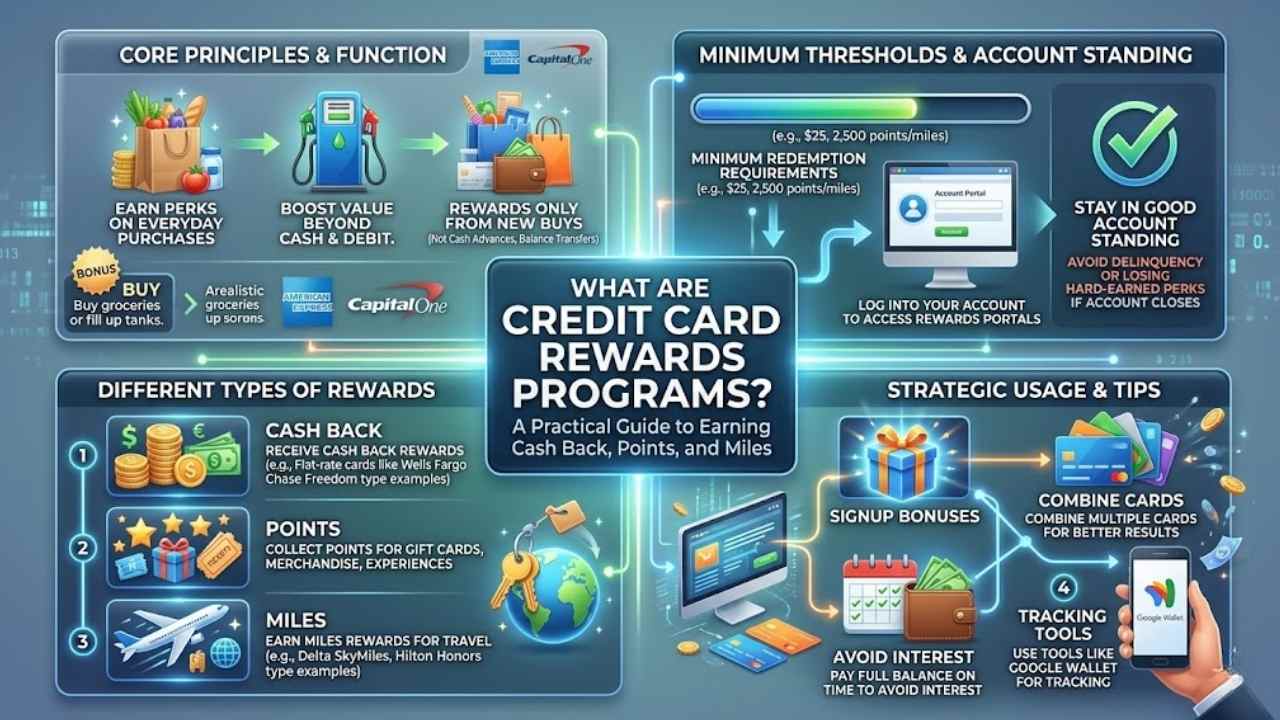
Credit card rewards programs let you earn cash back rewards, points rewards, or miles rewards on your purchases. They boost the value of spending compared to using cash or debit cards.
Think like getting a little bonus for buying groceries or filling up your tank. Issuers such as American Express and Capital One run these loyalty programs. You gain rewards only from new buys, not from balance transfers or cash advances.
Many set a minimum threshold for cashing in, often around $25 or 2,500 points or miles. Stay in good account standing, or you might lose those hard-earned perks if the card closes or goes delinquent.
Log into your account to access rewards portals for tracking and redeeming, just like checking your email. Think of it as a smart way to manage personal finance, tying into your credit score and spending categories.
Cards like the Wells Fargo Active Cash® Card or Chase Freedom® offer flat-rate cashback rewards. Travel rewards shine with options from Delta SkyMiles® or Hilton Honors American Express Card.
Signup bonuses add extra appeal, especially for hotel rewards or miles. Avoid credit card interest rates by paying on time, and combine multiple cards for better results. Tools like Google Wallet make tracking easy, fitting into everyday credit card usage.
Types of Credit Card Rewards
You know, picking the right rewards card can feel like finding money in an old jacket pocket, especially when it matches your spending habits. Explore options like flat-rate cards for steady earnings, or chase those from issuers such as American Express with their Membership Rewards for flexible perks that keep things exciting.
Cash Back
Cash back stands out as the simplest type of credit card rewards program. People love it because you earn real money on your spending. Take a flat-rate card like the Citi Double Cash Card.
It gives 2% cash back on every purchase. You get 1% when you buy, and another 1% when you pay. Swiping for a $100 grocery run. That nets you $2 back, no sweat. Most rewards cards start with a base earning rate of about 1% cash back.
Cards like the Blue Cash Preferred® Card from American Express® boost that in bonus categories. Think gas stations or supermarkets. Rewards points turn into statement credits that offset your bill.
This helps with financial management, especially if consumer debt weighs you down. Federal Reserve data shows folks juggle a lot of plastic these days. Credit One Bank offers options too, like their Visa® cards with cash back perks.
CNBC Select often ranks these for value. Adam Hayes and Thomas J. Catalano write about behavioral economics in rewards. They say small wins keep you spending smart. QuickBooks or TaxSlayer might even tie into tracking these earnings.
Accept cookies on sites to see personalized tips, or reject cookies if privacy policy matters more.
Cash back is like finding money in your old jeans pocket, but you earn it on purpose, says a savvy user on Reddit.
Flat-rate cards suit everyday spenders. The Avant® Cashback Rewards Mastercard® gives steady returns without fuss. Delta SkyMiles® Blue American Express Card mixes miles with cash options, but stick to pure cash for simplicity.
Redemption value shines here; no tricky conversions needed. Marriott Bonvoy Brilliant® American Express® Card leans travel, yet cash back feels more tangible. American Airlines AAdvantage® MileUp® Card tempts with miles, but cash wins for quick wins.
Citi Strata Premier® Card offers points that convert to cash. Bluevine or SBG Funding might use these for business perks. Sociology shows rewards influence habits, like choosing a rewards card over basic ones.
Membership rewards from American Express® Gold Card can shift to cash, but why complicate it? Essential cookies help sites recommend the best fits. Monarch app tracks your progress.
Points
Points programs give you flexible rewards for your spending. Cards like the Chase Freedom earn points that convert straight into cash value. You rack up these points on everyday buys, and they add up fast.
The Chase Sapphire Preferred Card offers Ultimate Rewards points, perfect for travel lovers. American Express Gold Card provides Membership Rewards points, which shine in various redemptions.
Think of points as versatile tools, like adjusting cookie settings on your browser to fit your needs; they adapt to what you want.
These programs don’t always mean direct cash. Their worth changes with how you redeem them. Folks often value points at about one cent each, but that number can shift up or down. You might get more bang for your buck on travel bookings.
Points feel like hidden gems in your wallet, ready to unlock deals. Chase points, for example, boost in value when transferred to partners. Keep an eye on those fluctuations to make smart choices.
Miles
Miles offer a fun way to earn travel perks, like free flights or hotel stays. You collect them through spending on cards tied to airlines or travel brands. Take the Delta SkyMiles Blue American Express Card, it hands out rewards as SkyMiles for your purchases.
Capital One Venture cardholders snag bonus rewards on Uber Eats, turning food deliveries into extra miles. Think of miles as tickets to adventure, but their value shifts with how you cash them in.
Value those miles wisely, folks. They don’t always equal straight cash; redemption methods change their worth. Aim for a 1:1 ratio, where one mile hits one cent in value. Booking a dream trip, you might stretch them further on flights than on other stuff.
Cards like these make everyday buys feel like steps toward your next getaway.
How Credit Card Rewards Programs Work
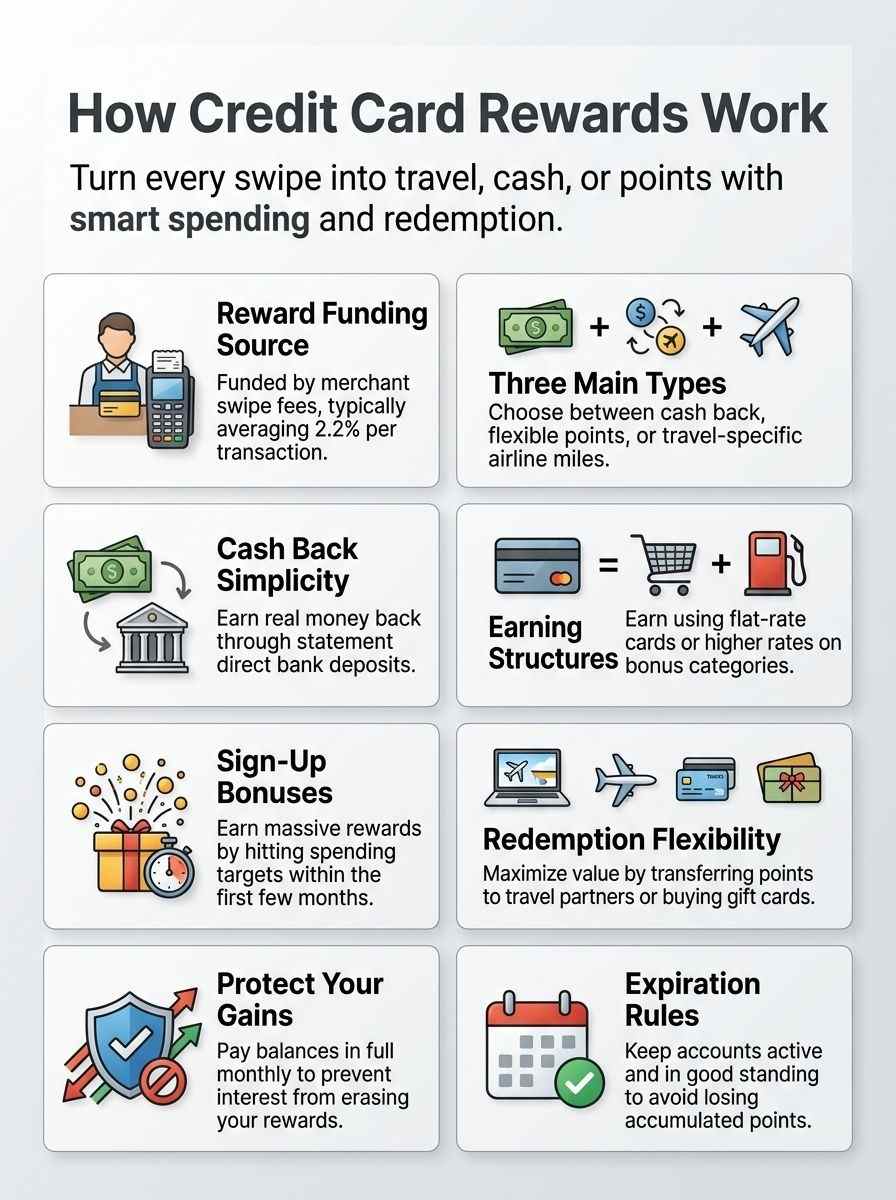
You rack up points or airline miles through daily buys in bonus spots like gas stations and restaurants, snag big welcome bonuses by hitting spend targets right away, and dodge limits that cap your earnings on things like supermarket runs, so dig in below for the full scoop on making these perks pay off big time.
Earning Rewards: Spending Structures
Credit cards earn rewards through two main structures, flat-rate and bonus categories. Flat-rate rewards give you the same amount on every purchase, like 1% cash back no matter what you buy.
Bonus rewards kick in with higher rates on specific spends, say, dining out or picking up groceries. You rack up these rewards from purchases alone, not by carrying a balance, which avoids those pesky interest fees.
Swiping your card at the gas station, and bam, you earn extra points just for filling up.
Cards offer higher rates that range from 2% to 5% cash back, or 2x to 5x points, on categories like groceries, gas, or dining. Some cards rotate these categories periodically, keeping things fresh, like switching from travel perks in summer to online shopping in winter.
You pick a card that matches your habits, so if you love eating out, chase those 3x points on restaurant tabs. This setup turns everyday buys into a little treasure hunt, rewarding smart spending without the hassle.
Bonus Categories and Sign-Up Offers
Credit card companies hook you with sign-up bonuses, and they pack a punch. Issuers offer these hefty rewards if you spend a set amount in a short time. Take this example: spend $3,000 in the first three months after opening your account, and you snag the bonus.
Think of it like a welcome gift that jump-starts your rewards pile. Some cards throw in rotating bonus categories too. These give you extra points or cash back on things like groceries or gas for a few months.
You earn more where you spend most, like hitting the jackpot on everyday buys.
Chasing those elevated rewards in bonus categories that shift quarterly. Cards with this feature amp up earnings on dining one season, then travel the next. Users love how it fits their habits, almost like the card reads your mind.
Sign-up offers often tie into this, boosting your total fast. Meet that $3,000 spend, and combine it with category bonuses for a rewards explosion. Stay alert for these deals; they turn regular spending into something special.
Reward Caps and Restrictions
Many credit cards set limits on how much you earn in bonuses, especially with high cash back rates. You chase that sweet 5% back on groceries, but hit a spending cap each quarter.
Then, your rewards drop to a basic 1% rate. Cards do this to keep things balanced, so watch those thresholds to avoid surprises.
You earn rewards only on fresh buys, like that new gadget or dinner out. Skip the perks on balance transfers or cash advances; those don’t count. Think of it as a game with clear rules, you play smart by sticking to qualified spending.
How to Redeem Credit Card Rewards
You’ve earned those points, now let’s cash them in like a pro. Turning your everyday buys into free flights or statement credits, with options that fit your life, from booking trips through airline portals to swapping miles for gift cards at stores like Amazon.
Cash Back Redemption Options
Credit card rewards often come as cash back, and you can redeem them in smart ways. Pick a statement credit to lower your bill, or go for a bank deposit straight to your account. Capital One and Chase let you cash in points at any amount, so no waiting for a big pile.
Treating yourself to coffee with just a few bucks from rewards; it’s like free money in your pocket. Statement credits might take up to a week to show up after you redeem, but that small wait beats paying full price.
Folks love these options because they fit everyday life, like depositing cash to cover groceries. Banks make it easy with apps or websites for quick redemptions. You earn from spending, then turn points into real dollars without hassle.
Envision this: your card’s app buzzes, you tap redeem, and boom, cash flows in. Capital One keeps it flexible, Chase does too, letting small amounts count big time.
Travel Bookings and Transfer Partners
You love booking trips with rewards, right? Card issuers offer their own travel portals for that. Use points or miles to pay for flights, hotels, or car rentals directly. It feels like magic, turning everyday spending into a vacation fund.
You snag a flight to Hawaii without touching your wallet. Many folks redeem this way for quick, easy wins.
Transfer points to airline or hotel partners for bigger bang for your buck. This often boosts value over straight redemptions. American Express shines here; move points between your Membership Rewards cards to pool them up.
Build a hefty stash for that dream getaway. Smart travelers chase these transfers, like hunting treasure, to stretch rewards further.
Gift Cards and Merchandise
Many credit card rewards programs let you swap points or cash back for gift cards and merchandise. Pick from popular stores like Amazon or Walmart, and turn your rewards into something tangible.
E-gift cards show up in your inbox within minutes, perfect for last-minute gifts or quick treats. Think of it like finding spare change in your couch, but way more rewarding. You might snag a coffee shop card to fuel your mornings, or score gadgets from the merchandise lineup.
Watch the value, though. Redemption for these options often falls short of a true 1:1 match, so a point worth a dollar in travel might drop to 80 cents here. Compare rates before you click redeem, to stretch your rewards further.
My friend once traded points for a fancy blender, only to realize he could have gotten more bang for his buck elsewhere. Choose wisely, and make those rewards work for your lifestyle.
Tips to Maximize Credit Card Rewards
Want to squeeze every last drop from your Chase Sapphire Preferred card, like turning everyday groceries into free flights? Pair it with a Capital One Venture card for those big sign-up bonuses, and watch your points stack up fast, making your wallet smile.
Focus on High-Reward Spending Categories
Pick your card for everyday buys, and match it to what you spend most on. Groceries, gas, or dining out often give you 2% to 5% cash back, or 2x to 5x points and miles. Capital One Venture and Savor cards boost rewards on Uber Eats orders, like extra points for your takeout habit.
Think of it as steering your shopping toward a gold mine, where each dollar digs up more value.
Pay your balance in full each month, folks, to dodge those interest fees that eat away at your gains. This habit keeps rewards pure profit, not a wash. Stack spending in bonus spots, and watch points pile up fast, turning routine errands into smart wins.
Take Advantage of Sign-Up Bonuses
Many rewards cards come with sizable sign-up bonuses, a common feature that packs a punch. You qualify by spending $3,000 within the first three months, no sweat if you plan your buys.
Think of it as a welcome gift, like finding money in an old coat pocket, that jumpstarts your rewards pile. Cards from banks like Chase or American Express often dangle these offers to lure you in.
Grab them wisely, and watch your points or miles stack up fast.
Stack the deck in your favor by comparing bonuses across cards before you apply. Some demand that initial spend on everyday stuff, like groceries or gas, to hit the mark. You snag extra cash back or travel perks without much extra effort.
Credit card issuers sweeten the deal this way, so scout for the best fit. Your wallet thanks you when those rewards roll in.
Combine Rewards Across Multiple Cards
Credit card issuers let you transfer or combine rewards only between their own cards. Take American Express, for example; you can move points from one of their cards to another. This setup makes sense, right? It keeps things simple and under one roof.
Stick with cards from the same issuer, and you gain easy access through a single login. Plus, you might transfer rewards between them without hassle. Pooling your points like collecting rainwater in one big barrel, ready for a bigger splash.
Chase offers great flexibility with its Ultimate Rewards points. You can shift points between cards like the Chase Freedom and Chase Sapphire Preferred. This move boosts your options for redemptions.
Users find managing multiple programs simpler this way. One login handles all your cards from that issuer. Think of it as teaming up your rewards, like friends sharing snacks at a picnic, to get more value out of every point.
Are Credit Card Rewards Worth It?
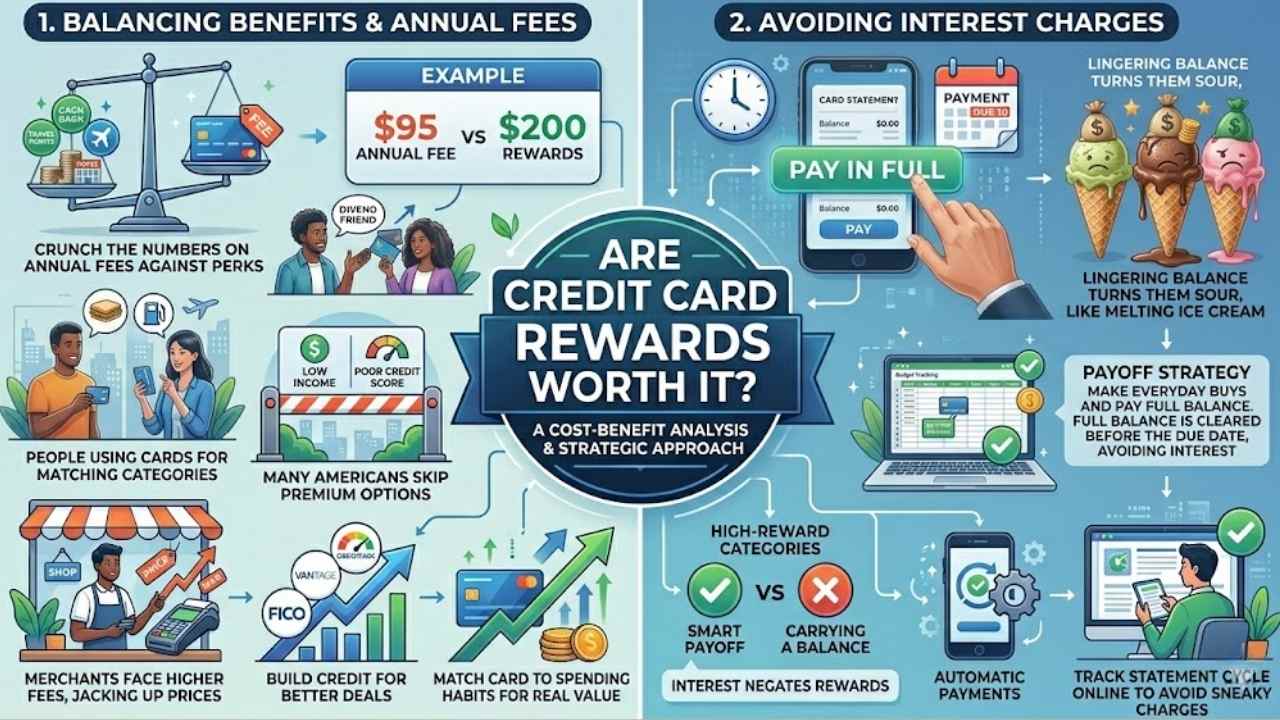
You bet credit card rewards pack real value when you weigh perks like cash rebates against those pesky yearly charges, and dodge sky-high interest by paying your bill on time every month, turning everyday buys into smart savings.
Stick around for answers to common questions next!
Balancing Benefits with Annual Fees
Credit cards with annual fees often promise big rewards, but you must weigh the costs. Think of it like buying a gym membership; that fee only pays off if you show up and sweat. Many Americans skip premium cards because low income or weak credit scores block access, so they stick with debit cards or cash instead.
Merchants face higher fees from these reward programs, which can jack up prices for everyone or even force small businesses to shut down. Ouch, right? That hits your wallet in sneaky ways.
Smart folks crunch the numbers on annual fees against the perks, like cash back or travel points. A friend who grabs a card with a $95 fee but racks up $200 in rewards yearly; that’s a win.
Lower-income users might dodge fees altogether by choosing no-fee options, avoiding debt traps. Credit bureaus track your scores, so building them opens doors to better deals later.
Always match the card to your spending habits for real value.
Avoiding Interest Charges
Pay your credit card balance in full each month. This habit stops interest fees from eating away at your rewards. You earn points or cash back through spending, but those gains vanish if interest piles up.
Think of it like this: rewards act as a sweet bonus, yet a lingering balance turns them sour, like ice cream melting on a hot day. I get it, life throws curveballs, so set up automatic payments to keep things smooth.
That way, you maximize every dollar without the sting of extra costs.
Carrying a balance negates the value of rewards earned due to accruing interest. Focus on high-reward categories, sure, but pair that with smart payoff strategies. Use your card for everyday buys, then clear the slate before the due date.
It’s like juggling balls; drop one, and the show flops. Stay ahead by tracking your statement cycle online. You avoid those sneaky charges, and hey, your wallet thanks you with real savings.
Common Questions About Credit Card Rewards
Ever scratched your head over whether those hard-earned cash back perks or airline miles vanish after a while, or puzzled about their true dollar value in everyday spending, well, stick around as we break it down simply and share tips to boost your card game even more.
Do Rewards Expire?
Credit card rewards often stick around, as long as you keep your account open and in good standing. You earn them through spending, and they stay accessible for redemption. Close the account, though, and you might forfeit those hard-earned points or miles.
The same goes if your account turns delinquent, like missing payments. Many issuers, such as Chase or American Express, require a minimum threshold before you cash in, say $25 for cash back or 2,500 points for other rewards.
Think of it like a savings jar; neglect it, and poof, the goodies vanish.
You’ve racked up miles for that dream vacation, but life gets busy, and you let the account slip. Don’t let that happen, folks. Issuers set these rules to keep things fair, yet they hit hard if you ignore them.
Rewards programs from banks like Capital One or Citi follow similar paths, with no strict expiration date in sight, provided you play by the rules. Hit that 2,500-mile mark, redeem wisely, and enjoy the perks without the worry.
How Much Are Points or Miles Worth?
Points and miles hold a general value of about one cent each. This number shifts based on how you use them, like a rubber band that stretches or shrinks. Booking a flight that costs $200 in cash but needs 20,000 miles.
You divide 200 by 20,000 and get one cent per mile, hitting that sweet 1:1 spot. Travel redemptions often boost the worth, while merchandise might cut it down. Statement credits and gift cards fall somewhere in between, so pick wisely to stretch your rewards.
Folks, think of points like hidden treasures in your wallet. Their value dances around that one-cent mark, but it fluctuates with options such as travel bookings or gift cards. To check, grab the item’s cash price and divide by the points required.
Say a $50 gift card asks for 6,000 points. That shakes out to less than one cent each, a raw deal compared to travel perks. Merchandise redemptions sometimes deliver the lowest bang for your buck, so compare before you commit.
Final Thoughts
Credit card rewards programs let you earn cash back, points, or miles on everyday buys, with options like flat rates or bonus categories to boost your gains. These perks come from merchant fees that fund the system, so smart users pay off balances to dodge interest and keep rewards worthwhile.
Have you checked your spending habits yet; which card fits your life best? Mastering rewards can save you hundreds each year, turning routine purchases into real savings or dream trips.
Visit issuer sites like Chase or American Express for more tools and calculators to track your progress. Go ahead, grab those bonuses and watch your wallet grow, just like I did on my last vacation splurge.
Frequently Asked Questions (FAQs) About Credit Card Rewards Programs
1. What exactly are credit card rewards programs, and how do they hook you in?
You’re swiping your card for everyday buys like coffee or gas, and bam, you rack up points or cash back. These programs, run by banks, dangle goodies like travel miles or gift cards to keep you loyal, turning spending into a game where you win, sort of.
2. How do you earn those sweet rewards points without breaking a sweat?
You earn points by using your card on purchases, with bonuses for categories like dining or groceries. Sign-up offers can flood you with extra points right away. Just watch your spending, or you’ll end up in a pickle.
3. What’s the deal with redeeming credit card rewards, is it as easy as pie?
Redeeming is simple; log in, pick your perk like statement credits or travel bookings, and apply your points.
High interest rates can gobble up your rewards if you carry a balance, like a wolf in sheep’s clothing. Annual fees might sneak in too, so read the fine print to avoid surprises. And remember, overspending to chase points is like chasing rainbows; it often leads nowhere good.