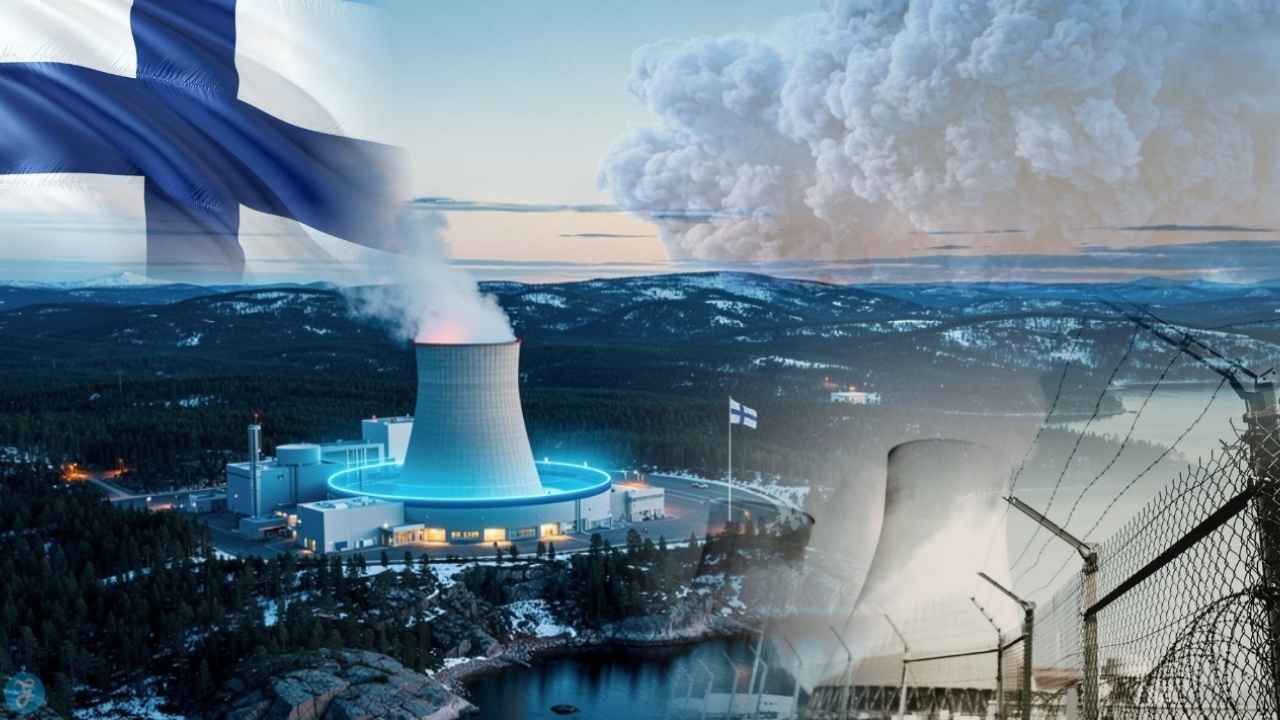
Finland is currently showing the rest of the world how to handle a modern power crisis without losing its cool. While many nations are stuck in endless debates about whether atomic energy is “green” enough, the Finns have simply put their heads down and built a system that works. The Finland nuclear energy expansion is not just a series of construction projects; it is a full-scale national strategy designed to keep the lights on, the prices low, and the environment clean.
By looking at how they have integrated massive reactors with high-tech waste solutions, we can see a future where energy is no longer a source of political stress or environmental guilt.
1. The Massive Power of Olkiluoto 3
The biggest part of the recent Finland nuclear energy expansion is the Olkiluoto 3 (OL3) reactor. This machine is a beast, providing about 14% of the country’s electricity all by itself. It took a long time to get here—the project faced many delays—but now that it is running, the impact is impossible to ignore. It is an EPR (Evolutionary Power Reactor) design, which means it is built with multiple layers of safety and high efficiency in mind. Since it started full operations, it has helped push Finland toward a future where fossil fuels are a thing of the past. Having such a large, reliable source of power means the grid can handle the ups and downs of wind and solar much better than before.
The Engineering Feat of EPR Technology
The EPR design used at Olkiluoto is essentially the “safety-first” model of the nuclear world. It features four independent safety trains, ensuring that even if one or two systems fail, the reactor stays under control. This H3 subhead highlights the technological jump Finland took. The reactor is designed to run for 60 years or more, making it a multi-generational investment that will keep providing clean power long after the people who built it have retired. It is a massive anchor for the Nordic energy market, helping to stabilize electricity prices across the entire region.
| Feature | Details and Data |
| Reactor Model | EPR (Evolutionary Power Reactor) |
| Generation Capacity | 1,600 Megawatts (MW) |
| Annual Production | Approximately 12-13 Terawatt-hours (TWh) |
| Lifespan Expectation | 60+ Years with proper maintenance |
| Grid Impact | Supplies roughly 14-15% of national demand |
2. Solving the Waste Problem with Onkalo
For decades, the biggest argument against nuclear power was the question of what to do with the leftovers. Finland decided to solve this problem once and for all with Onkalo. This is a deep geological repository carved into ancient bedrock that has been stable for nearly two billion years. It is the first facility of its kind in the world, and it is designed to keep spent nuclear fuel safe and isolated for at least 100,000 years. Instead of waiting for a global solution, the Finland nuclear energy expansion included a plan for the “end of the road” right from the beginning.
A Multi-Barrier Safety Strategy
The safety at Onkalo relies on a system of multiple barriers that work together to prevent any leaks. This H3 subhead refers to the combination of copper canisters, bentonite clay, and the solid rock itself. The canisters are airtight and corrosion-resistant, while the clay acts as a buffer that swells if it gets wet, sealing off any gaps. By burying the waste 430 meters underground, Finland has essentially removed the “waste problem” from the political table. This proactive approach is a major reason why the public in Finland is so comfortable with nuclear expansion; they know there is a plan that actually works.
| Barrier Level | Material Used | Function |
| Internal Barrier | Cast iron insert | Provides mechanical strength against pressure |
| Primary Container | Pure copper canister | Resists corrosion from groundwater for millennia |
| Buffer Layer | Bentonite clay | Absorbs shocks and seals out water flow |
| Final Barrier | Crystalline bedrock | Provides 430m of physical isolation from surface |
3. A Strategic Shift Toward Small Modular Reactors (SMRs)
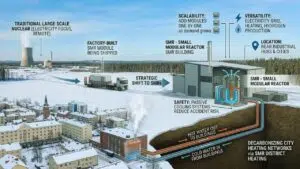
The future of the Finland nuclear energy expansion is not just about these massive, billion-dollar plants. There is a huge push right now toward Small Modular Reactors, or SMRs. These are much smaller than traditional plants and can be built in a factory and shipped to where they are needed. This makes them faster to build and much cheaper to finance. Several Finnish energy companies are already looking at these reactors as a way to provide heat for cities, not just electricity for the grid.
Decarbonizing City Heating Networks
In a cold country like Finland, heating homes is a huge challenge that usually requires burning a lot of fuel. This H3 subhead explains how SMRs can change the game by providing “district heating.” Instead of using coal or gas, a small reactor can heat up water that is then pumped through pipes to warm up entire neighborhoods. It is a incredibly efficient way to use nuclear energy. Because they are smaller and have passive safety features, these reactors can be placed closer to cities than the giant plants of the past, making the whole system more local and resilient.
| SMR Advantage | Impact on Finland |
| Scalability | Can be added one by one as demand grows |
| Versatility | Used for electricity, heating, and hydrogen production |
| Location | Smaller footprint allows placement near industrial hubs |
| Safety | Passive cooling systems reduce the risk of accidents |
4. Reclaiming Energy Sovereignty from Russia
Geopolitics has played a massive role in the Finland nuclear energy expansion. For a long time, Finland relied on its neighbor, Russia, for a significant chunk of its gas and electricity. After the invasion of Ukraine in 2022, that relationship changed forever. Finland realized that energy is a weapon, and the only way to stay safe was to produce its own power. The expansion of the nuclear fleet became a matter of national security. By boosting domestic production, Finland has effectively cut its energy ties with the East.
Building a Resilient Nordic Grid
Being energy-independent means Finland is no longer vulnerable to sudden price spikes or supply cut-offs from outside forces. This H3 subhead highlights the strength of the new Nordic energy market. Now, Finland often produces more power than it needs, allowing it to export clean energy to its neighbors. This shift has not only made the country safer but has also made it a leader in the European energy transition. The reliability of nuclear power provides a “baseload” that makes the entire northern European grid more stable, even when the wind isn’t blowing in the Baltic.
| Security Factor | Before 2022 | Post-Expansion (2026) |
| Import Dependency | High (mostly from Russia) | Nearly Zero (domestic & Nordic) |
| Supply Risk | Subject to political pressure | Secure and self-managed |
| Price Control | Tied to global gas markets | Stable and based on domestic cost |
| Fuel Sourcing | Heavy reliance on Russian fuel | Diversified (USA, Canada, Australia) |
5. The Role of Unmatched Public Support
One of the most surprising things about the Finland nuclear energy expansion is how much the regular people actually like it. In many countries, “nuclear” is a scary word, but in Finland, it is seen as a high-tech solution to climate change. Recent surveys show that nearly 70% of the population supports nuclear energy. This did not happen overnight; it was the result of decades of transparent communication and a perfect safety record. People trust that the scientists and engineers know what they are doing.
Transparency as a Tool for Trust
The government and energy companies do not hide information from the public, which is key to maintaining support. This H3 subhead looks at the culture of honesty in the Finnish energy sector. When projects were delayed or costs went up, the companies were open about it. This created a environment where the public felt like they were part of the process, not just having a technology forced on them. Today, nuclear power is seen as a “green” choice that helps save the Finnish wilderness from the worst effects of global warming, making it a point of national pride.
| Support Level | Demographic Group | Key Reason for Support |
| High (68%) | General Population | Energy independence and lower bills |
| Very High (80%+) | Industry Leaders | Reliability for manufacturing and tech |
| Moderate (50%+) | Environmentalists | Essential for hitting zero-carbon goals |
| Growing Support | Young People | Seen as a solution to climate anxiety |
6. Decarbonizing the Heating Sector with Atoms
While many people think of nuclear power as just an electricity source, Finland is using it to fix a much bigger problem: heating. In the winter, Finnish cities need a massive amount of energy just to keep people from freezing. Historically, this meant burning coal, gas, or biomass. The Finland nuclear energy expansion is now focusing on replacing these “burning” technologies with heat from reactors. This is a massive step toward reaching the country’s climate goals because heating is often the hardest sector to clean up.
The Helsinki District Heating Vision
The capital city, Helsinki, is already exploring how to hook up its massive heating pipe network to future nuclear reactors. This H3 subhead describes the plan to phase out coal completely. By using reactors to create hot water, the city can provide “emission-free warmth” to hundreds of thousands of people. This isn’t just a theory; pilot projects for heat-only reactors are already being designed. If this works in Helsinki, it will provide a model for every cold-weather city in the world to ditch fossil fuels for good.
| Heating Source | CO2 Emissions | Sustainability |
| Coal | Very High | Unsustainable/Phase-out phase |
| Natural Gas | High | Fossil fuel/Geopolitical risk |
| Biomass | Low/Medium | Land use concerns |
| Nuclear Heat | Zero | High efficiency and long-term |
7. The 2026 Nuclear Energy Act Reform
To keep up with the fast pace of technology, Finland has completely overhauled its laws. The 2026 Nuclear Energy Act was designed to make the Finland nuclear energy expansion smoother and faster. The old laws were written in the 1980s and were meant for giant plants that took 15 years to build. The new laws are much more flexible, especially when it comes to Small Modular Reactors. This legal reform ensures that safety is still the top priority while cutting through the “red tape” that often kills energy projects in other countries.
Streamlining the Path to Power
Under the new rules, the licensing process is more predictable, which makes it much easier for companies to invest money. This H3 subhead explains why investors love the Finnish model. Instead of a “one-size-fits-all” approach, the regulator can now assess different types of technology more efficiently. This means that if a company wants to build a small, safe reactor for a local town, they don’t have to go through the same 10-year paperwork process as a massive 1,600 MW plant. It is a common-sense approach that is helping the industry move at the speed of modern technology.
| Legal Change | Old System (Pre-2026) | New System (Post-Reform) |
| Licensing Time | 10-15 Years | Estimated 5-7 Years |
| SMR Treatment | Same as large plants | Custom, streamlined process |
| Safety Oversight | Reactive | Proactive and digital-integrated |
| Investor Risk | High due to uncertainty | Low due to clear regulatory path |
8. Loviisa: The Hybrid Success Story
While the new plants get all the headlines, the existing reactors at Loviisa are a massive part of the Finland nuclear energy expansion story. These plants have been running since the 1970s and have some of the highest efficiency ratings in the world. They were built using a unique mix of Soviet-designed reactors and Western safety and control systems. Recently, the government granted them a life extension, meaning they will keep producing clean power until the 2050s.
Maximizing Existing Assets
By keeping these older plants running, Finland gets incredibly cheap electricity because the construction costs were paid off decades ago. This H3 subhead highlights the importance of “life extension” in the energy strategy. Instead of tearing down perfectly good infrastructure, Finland invests in upgrades to keep them safe and modern. This provides a steady, reliable floor of electricity that keeps the national grid strong while the newer projects like OL3 and the SMRs are being phased in.
| Plant Unit | Original Deadline | Extended Operation |
| Loviisa 1 | 2027 | Until 2050 |
| Loviisa 2 | 2030 | Until 2050 |
| Efficiency (Load Factor) | Consistently 90%+ | High output and low downtime |
| Technology Type | VVER-440 (Pressurized Water) | Hybrid Soviet/Western design |
9. Economic Stability and Lower Electricity Prices
The Finland nuclear energy expansion has had a direct impact on the wallets of Finnish citizens. In 2023 and 2024, when the rest of Europe was struggling with record-high energy prices, Finland saw its prices drop. At certain times, the price of electricity even went negative because there was so much clean power on the grid. This kind of stability is a massive advantage for a country’s economy, as it makes everything from manufacturing to grocery shopping more affordable.
Attracting Energy-Intensive Industries
Because Finland can now promise cheap, reliable, and carbon-free power, many big companies are moving their operations there. This H3 subhead looks at the industrial side of the expansion. Data centers, battery factories, and green steel mills need a lot of electricity, and they need it to be clean. The nuclear expansion has turned Finland into a “green industrial hub.” This creates thousands of high-paying jobs and ensures that the country stays competitive in the global market as the world shifts away from oil and coal.
| Economic Metric | Before Expansion | After Expansion |
| Average Power Price | Volatile and high | Stable and competitive |
| Industrial Growth | Slowed by energy costs | Rapid (Green steel, Battery hubs) |
| Energy Exports | Occasional | Consistent to Nordic neighbors |
| Public Utility Cost | Rising | Lowering or stabilizing |
10. STUK: The World’s Strictest Safety Watchdog
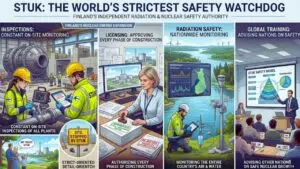
Safety is the most important part of the Finland nuclear energy expansion, and the organization in charge of that is STUK. They are the Radiation and Nuclear Safety Authority, and they are famous for being incredibly tough. If a screw isn’t tight enough or a document isn’t perfectly filled out, STUK will stop a billion-dollar project without hesitating. This “safety first” culture is exactly why the Finnish public trusts nuclear power so much.
Setting the Global Standard for Oversight
STUK does not work for the energy companies; they work for the people. This H3 subhead emphasizes their independence. They are widely considered to be the most competent and strict nuclear regulators in the world. Other countries often send their own scientists to Finland to learn how STUK operates. By maintaining these impossibly high standards, Finland ensures that its nuclear expansion is not just productive, but the safest in the history of the industry.
| Regulator Role | Responsibility |
| Inspections | Constant on-site monitoring of all plants |
| Licensing | Approving every phase of construction |
| Radiation Safety | Monitoring the entire country’s air and water |
| Global Training | Advising other nations on safe nuclear growth |
11. Creating a High-Tech Job Ecosystem
A major benefit of the Finland nuclear energy expansion that people often forget is the job market. Building and running nuclear plants requires thousands of highly skilled workers. This has created a massive boom in engineering, cybersecurity, and specialized construction. These aren’t just temporary jobs; a nuclear plant runs for 60 years, which means it provides stable employment for generations of workers in local communities.
Investing in the Next Generation of Scientists
Finnish universities have seen a surge in students wanting to study nuclear physics and energy engineering. This H3 subhead highlights the educational impact. The country is creating a workforce of “energy experts” that can help solve global problems. Beyond just the plants, many Finnish companies are now exporting their specialized knowledge to other countries. This has turned the nuclear sector into a major part of the Finnish technology export economy.
| Job Category | Impact of Expansion |
| Engineering | Massive demand for civil and nuclear roles |
| Maintenance | Long-term, stable trade jobs in rural areas |
| Cybersecurity | High-level tech jobs to protect the grid |
| Research | Funding for new materials and fuel types |
12. Finland as the Global Blueprint for Energy
As the world realizes that wind and solar can’t do the job alone, many nations are looking at the Finland nuclear energy expansion as a map to follow. Countries like Estonia, Poland, and even the UK are studying how Finland managed to build public trust and solve the waste problem. Finland has proved that nuclear energy can be part of a modern, democratic, and green society. They are essentially the “test case” for a successful energy transition.
Exporting the “Finnish Model”
Finland is now in a position to lead the global conversation on climate change. This H3 subhead refers to the country’s growing influence. By showing that you can have a strong economy and hit your carbon goals at the same time, Finland is giving other leaders the confidence to invest in nuclear. They are proving that the “atomic age” isn’t a thing of the past—it’s the foundation of a clean future. The “Finnish Model” is now being discussed in the halls of the EU and the United Nations as the gold standard for energy policy.
| Country Observing | Interest in Finland |
| Estonia | Looking to build their first SMRs |
| Sweden | Learning from the Onkalo waste solution |
| Poland | Seeking advice on large-scale grid planning |
| USA | Studying STUK’s regulatory efficiency |
13. The Path to Carbon Neutrality by 2035
The ultimate goal of the Finland nuclear energy expansion is to help the country become carbon neutral by 2035. This is one of the most ambitious goals in the world, and Finland is actually on track to hit it. By combining nuclear power with a massive increase in wind and solar, the country is rapidly shutting down its last coal and peat plants. Nuclear provides the “steady hand” that keeps the grid running when the weather isn’t cooperating.
A 24/7 Clean Energy Future
You cannot run a modern society on intermittent power alone. This H3 subhead explains why the “mix” is so important. While wind power is great when it’s breezy, nuclear is there every second of every day. This reliability allows Finland to electrify its transport system and its heavy industry without worrying about blackouts. By 2035, Finland will likely be one of the first industrialized nations to truly move beyond the age of fire and into the age of clean, carbon-free atoms.
| Goal Year | Target Milestone |
| 2023 | Olkiluoto 3 reaches full production |
| 2026 | New Nuclear Act simplifies SMR builds |
| 2030 | Over 95% of electricity is carbon-free |
| 2035 | Full Carbon Neutrality achieved |
Final Thoughts
The Finland nuclear energy expansion is a masterclass in how a country can take control of its own destiny. By ignoring the noise and focusing on the facts, the Finns have built an energy system that is the envy of the world. They have shown that you can be pro-environment and pro-nuclear at the same time.
As we look toward a future where the climate is changing and the world is becoming more unpredictable, the Finnish model offers a rare glimmer of hope. It proves that with enough transparency, engineering skill, and long-term planning, we can build a world that is clean, safe, and powered by the heart of the atom. The journey isn’t over yet, but Finland is already miles ahead of the pack.
Frequently Asked Questions (FAQs) About Finland’s Nuclear Future
Why did Finland choose nuclear over just using more wind power?
While Finland is building a lot of wind power, the wind doesn’t always blow. Nuclear provides a “baseload” of power that is always there, making the grid reliable 24/7. It’s about having a balanced mix rather than relying on just one source.
Is nuclear fuel sourcing a risk for Finland?
In the past, some fuel came from Russia, but Finland has moved quickly to diversify. They now source fuel from stable partners like Canada and the US, and they keep large stockpiles to ensure they never run out in a crisis.
How does nuclear power affect the price of my heating bill?
As Finland switches from burning expensive fossil fuels to using nuclear heat for its district heating pipes, the cost becomes much more stable and usually lower. It also protects you from “carbon taxes” that make coal and gas more expensive.
What happens if a small modular reactor (SMR) has an issue?
SMRs are designed with “passive safety,” which means they can cool themselves down without needing electricity or human intervention. They are built to be much simpler and safer than the giant reactors of the 1970s.
Is the waste repository at Onkalo really safe for 100,000 years?
The rock itself has been stable for two billion years, and the canisters are designed to survive almost anything. Experts from all over the world have reviewed the plan and agree it is the safest way to handle nuclear waste ever invented.