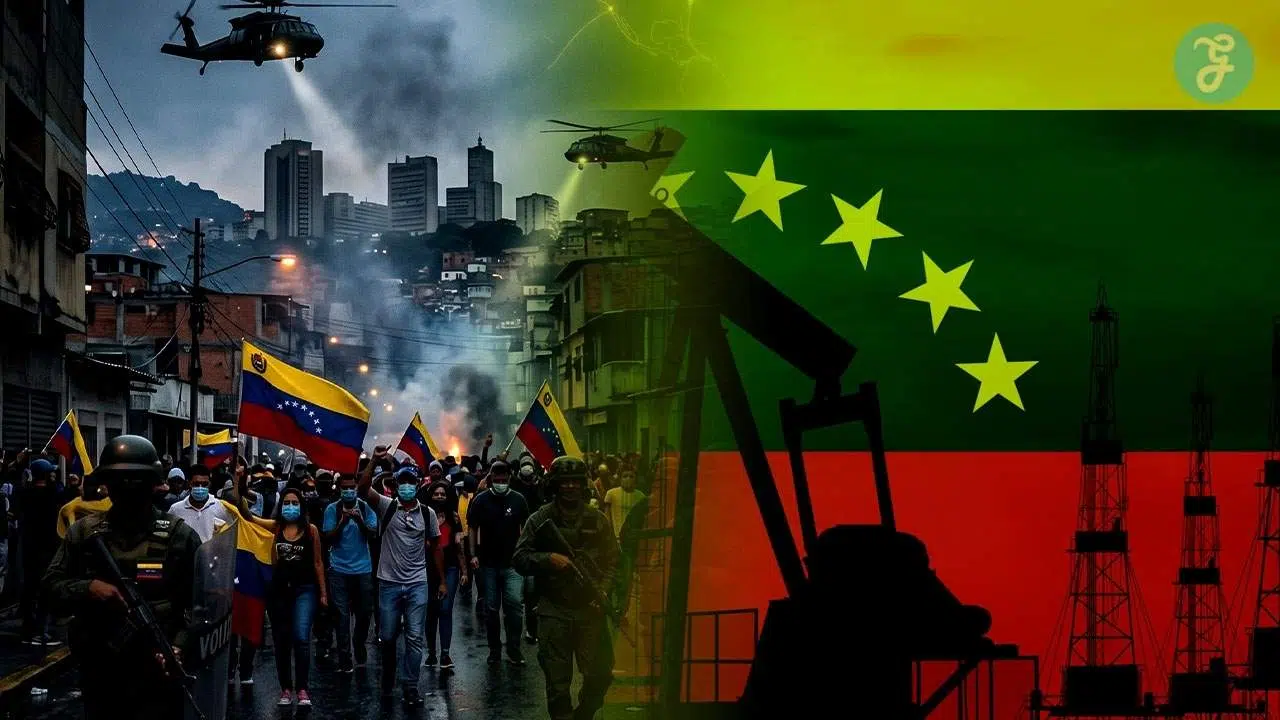
When historians analyze the geopolitical flashpoints 2026 has delivered, they will not begin their timeline in the contested waters of the South China Sea or the grinding artillery lines of Eastern Europe; they will start in the heart of Caracas. We have officially entered an era where the old rules of international engagement have been ripped up and discarded.
The unprecedented U.S. military intervention in Venezuela has done more than just destabilize South America; it has sent a massive, undeniable shockwave across the globe, forcing every major power to rapidly recalculate its strategic postures.
As a geopolitical analyst, I have researched the steady erosion of the post-Cold War order. However, the events of early 2026 represent a dramatic, kinetic acceleration of that decay. We are no longer dealing with proxy wars and polite diplomatic standoffs. We have entered the New Western Frontier, a brutal, transactional reality where sovereignty is conditional, and raw power dictates the terms of global trade.
The Eruption in the Americas: Operation Absolute Resolve and Regional Dominance
The geopolitical landscape of 2026 has been immediately defined by a level of U.S. military action in the Western Hemisphere not seen since the invasion of Panama. This aggressive shift in U.S. foreign policy in Latin America signals a fundamental departure from diplomatic containment, moving toward direct, unapologetic intervention.
The Slow-Burn Pretext: Operation Southern Spear
Before the dramatic events of January 3, the groundwork for intervention was laid under the guise of counter-narcotics. Beginning in September 2025, “Operation Southern Spear” saw a massive U.S. military buildup in the Caribbean basin. What started as missile strikes on suspected drug smuggling vessels quickly escalated into a full naval and aerial blockade by December.
The rapid transition from law enforcement against cartels to deploying aircraft carriers, B-1B bombers, and nuclear-powered submarines revealed the true objective: dismantling the Venezuelan state apparatus. This escalation bypassed traditional legal frameworks, utilizing the label of “narco-terrorism” to justify an unprecedented kinetic buildup without requiring formal congressional war authorization.
The Decapitation Strike and the Power Vacuum
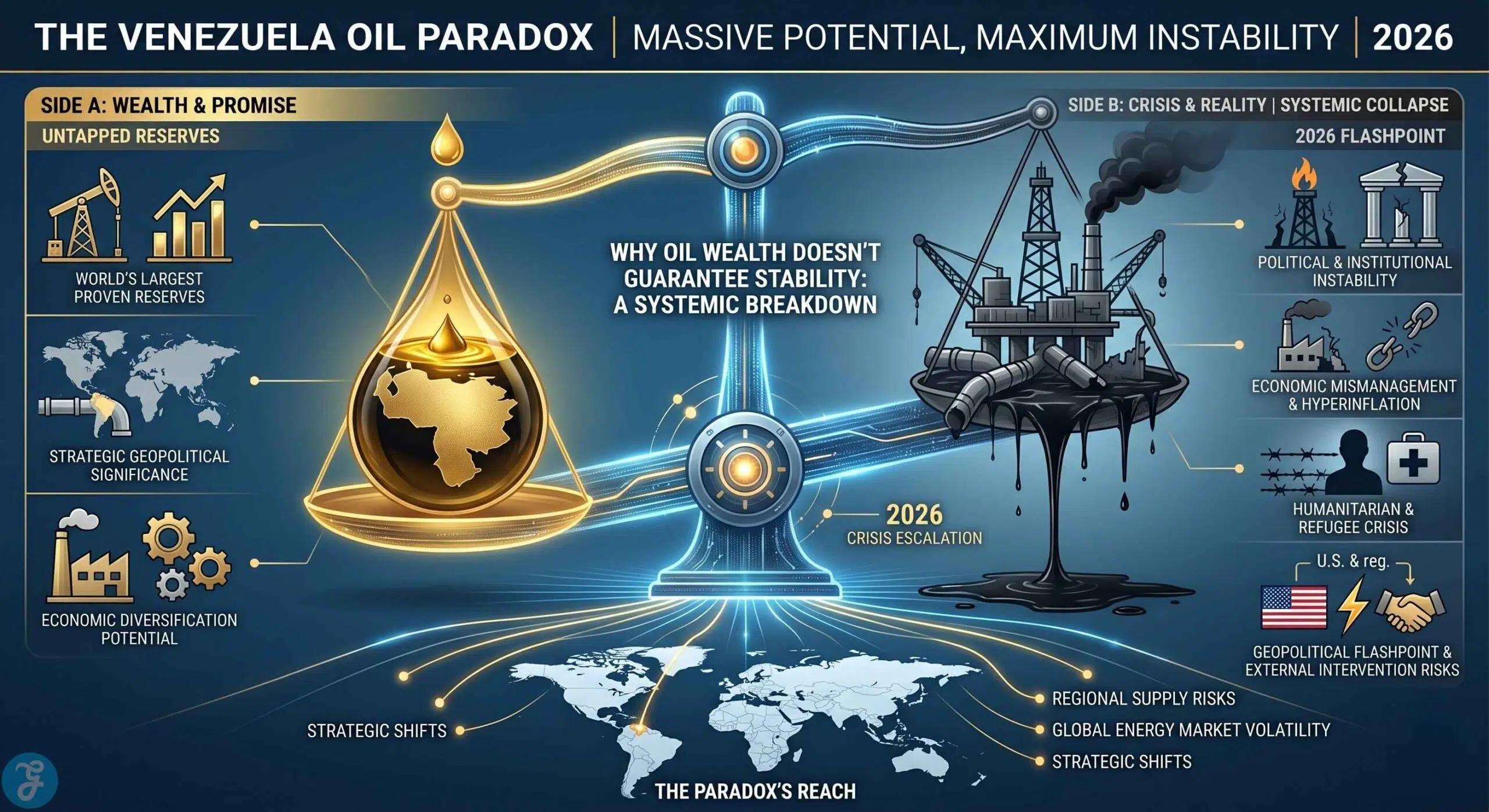
The sheer scale and aggressive posture of the new U.S. administration’s foreign policy became violently clear on January 3. Operation Absolute Resolve, the capture of Nicolás Maduro and Cilia Flores by U.S. Delta Force and Night Stalkers, is the defining catalyst of the year.
This was not a slow-moving political coup; it was a rapid, decapitating military strike that neutralized communications infrastructure in Caracas and resulted in direct casualties among Venezuelan soldiers and their foreign advisors.
The immediate political fallout has created a massive, unstable power vacuum. Delcy Rodríguez was hurriedly sworn in as acting president on January 6, but her administration operates under the shadow of American air superiority and the constant threat of further land strikes. The sovereignty of the Venezuelan state has effectively been suspended by an outside power, setting a terrifying new precedent for international relations.
To understand the velocity of this crisis, we must look at how rapidly the U.S. escalated its military and economic pressure in the months leading up to the strike.
| Date | Geopolitical Event | Strategic Impact |
| September 2025 | Operation Southern Spear begins | U.S. military buildup and maritime strikes commence in the Caribbean basin. |
| December 2025 | U.S. implements full oil blockade | Venezuelan economic lifelines are entirely severed, crippling the state’s revenue. |
| January 3, 2026 | Operation Absolute Resolve | Maduro is captured; U.S. forces strike critical infrastructure in Caracas. |
| January 6, 2026 | Interim Transition | Delcy Rodriguez is sworn in amid total systemic collapse. |
Testing the Future of Warfare in Caracas
The capture of Maduro was not merely a political decapitation; it served as a live-fire testing ground for next-generation U.S. military technology. Supported by over 150 aircraft, the January 3 raid showcased the first operational deployment of advanced one-way attack drones by U.S. forces. More alarmingly, eyewitness accounts from the ground and subsequent intelligence leaks highlighted the use of highly classified acoustic and non-lethal technologies.
These systems, referred to colloquially by the administration as “discombobulators,” effectively neutralized Russian and Chinese-supplied air defense systems across the capital without traditional explosives. The sheer technological overmatch demonstrated in Caracas was a direct, calculated message to adversaries globally: American hard power retains capabilities that peer competitors cannot currently counter.
The Geoeconomic Shock of the Oil Quarantine
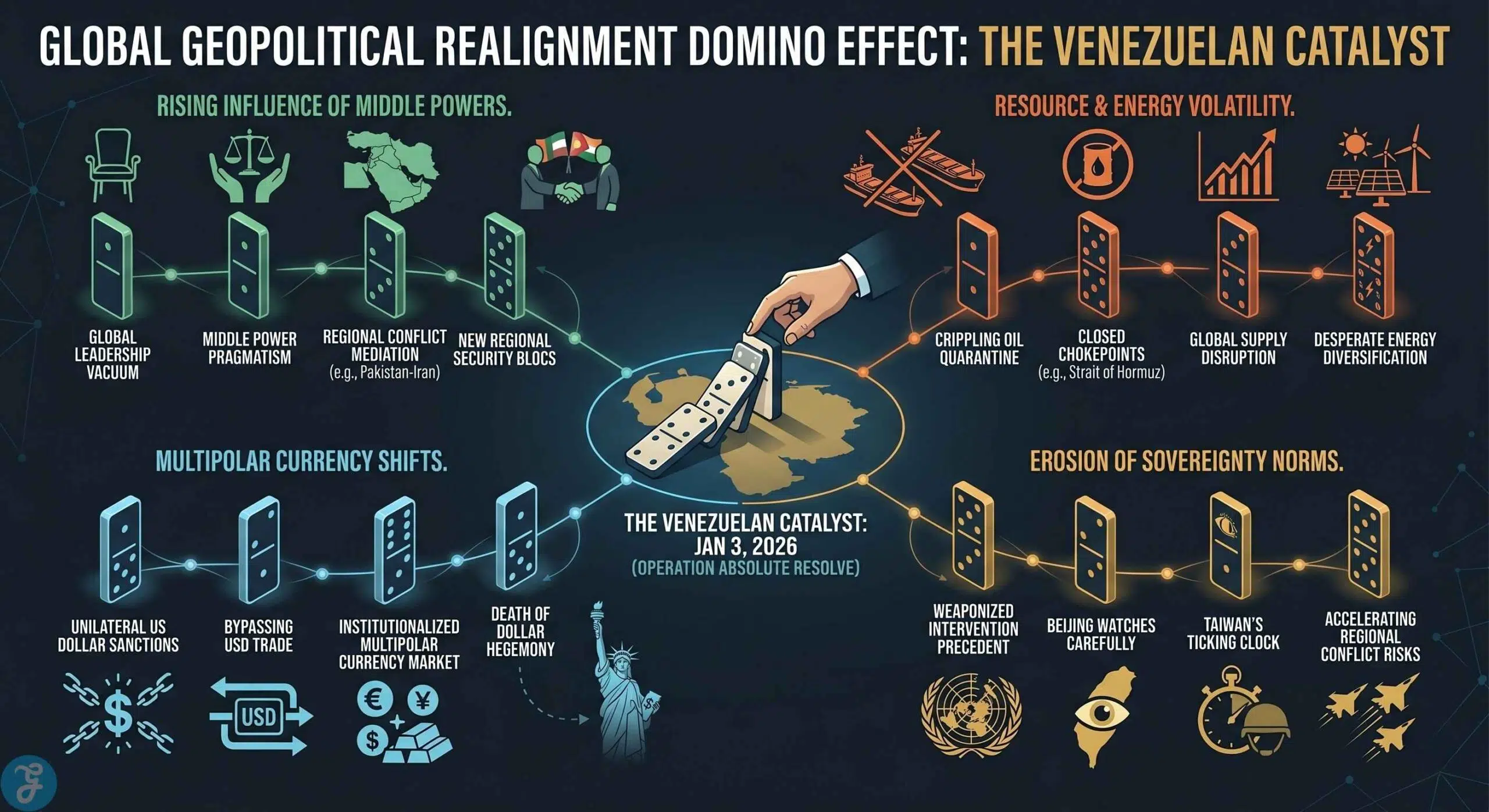
Beyond the kinetic military action, the geoeconomic consequences are actively reshaping global commodity markets. The explicit goal of using U.S. firms to seize and develop Venezuela’s massive oil reserves highlights a highly controversial shift toward a resource-driven foreign policy.
However, the Venezuelan oil market impact has presented a fascinating paradox. Despite Venezuela possessing the world’s largest proven oil reserves, over 300 billion barrels, the immediate disruption to global supply was initially muted. Why? Because the domestic output of the state-owned PDVSA had already collapsed to roughly 1 million barrels per day under years of mismanagement and existing sanctions.
The real danger lies in the immediate future. With the strict U.S. quarantine blocking critical diluent imports, production threatens to crater to a mere 200,000 barrels per day. The multi-year, multi-billion-dollar investments required to actually revive Venezuela’s decrepit oil infrastructure mean that the “prize” of Venezuelan oil is a long-term mirage, while the short-term reality is profound market volatility and regional economic strangulation.
The Middle Eastern Tinderbox: A Closed Strait and Escalating Warfare
The aggressive posture in the Americas does not exist in a vacuum. By pivoting so aggressively toward the Western Hemisphere, a massive security crisis has been allowed to erupt in the Persian Gulf. As the U.S. focuses its military bandwidth on the Caribbean, the Middle East is threatening the core of the global economy.
The Complete Closure of the Strait of Hormuz
In direct response to shifting global power dynamics and perceived American overextension, Iran made the catastrophic decision to fully close the Strait of Hormuz. This is the nightmare scenario economists have warned about for decades, instantly severing nearly 20 percent of the world’s oil supply.
The global geoeconomic shifts of 2026 are heavily dictated by this single chokepoint. The immediate firing upon commercial vessels has caused maritime insurance premiums to skyrocket, prompting a desperate scramble by Asian and European economies to secure alternative energy sources.
Supply chains are failing, and the risk of a direct, widespread military confrontation in the Gulf is at its highest point in this century. The economic leverage once held by Western powers is being systematically dismantled by regional actors willing to plunge the global market into chaos to secure their own strategic depth.
Pakistan’s Unlikely Rise as a Regional Broker
In the absence of traditional, unified global leadership, the diplomatic landscape is morphing. Middle powers are stepping into the void. Pakistan’s proactive shift to mediate the escalating Gulf conflict perfectly illustrates this new reality.
Islamabad is acting out of pure, desperate self-interest. They recognize that a full-scale regional war on their border would result in devastating refugee flows and total economic ruin.
Pakistan must maintain a delicate, nearly impossible balance between its historical ties with Washington and its immediate geographic proximity to Tehran. Their emergence as a regional broker is less about newfound diplomatic prestige and more about sheer survival in an incredibly dangerous neighborhood.
The Asian Theater: Hegemonic Ambitions and Trade Interdependence
The supply chain disruptions originating in the Middle East are sending severe tremors into the Indo-Pacific. Here, a dual crisis is unfolding: the acute threat of a massive military invasion and the slow, agonizing structural decay of long-standing economic partnerships.
Taiwan’s Ticking Clock and Beijing’s Posturing
We cannot discuss the new global frontier without addressing the highest-stakes standoff on the planet. The events in Venezuela are being closely monitored in Beijing. From the perspective of the Chinese Communist Party, Operation Absolute Resolve drastically lowers the international threshold for kinetic action and forced regime change.
If the United States can unilaterally decapitate a sovereign government in its hemisphere, Beijing’s hawks argue, why should China hesitate regarding what it considers a renegade province? With massive U.S. arms sales flowing into Taipei and unprecedented defense spending by President Lai Ching-te, the systemic risk of a superpower collision is peaking.
The 2027 timeline for Beijing’s military readiness is rapidly accelerating; the Caribbean operation may inadvertently serve as the blueprint China uses for its own forced reunification strategy.
The Fracture of the Korea-U.S. Economic Corridor
Beyond the immediate military threats, the economic architecture of the Asia-Pacific is undergoing a fundamental realignment. We are witnessing the fracture of the Korea-U.S. Free Trade Agreement, a relationship that was once the bedrock of Asian economic stability.
Geopolitical friction is bleeding directly into bilateral trade. As South Korea faces extreme energy shortages due to the closure of the Strait of Hormuz, the erratic, protectionist tariff policies emanating from Washington are forcing Seoul to reconsider its alignment.
Allied Asian economies are realizing that relying entirely on the U.S. security and economic umbrella is no longer a viable strategy. They are actively seeking diversification away from the dollar, shifting from cooperative globalization to a hardened, defensive regionalization.
The Geopolitical Echoes in Moscow and Beijing
The sheer audacity of the Caribbean intervention immediately drew the ire of America’s primary geopolitical rivals, cementing the narrative of a hardened, multipolar split. Within hours of the strike, Vladimir Putin pledged unwavering solidarity with Venezuela, while Xi Jinping issued fierce condemnations of what Beijing views as unchecked imperial aggression.
By systematically ignoring international law and constitutional governance norms to achieve regime change, the U.S. has inadvertently handed Moscow and Beijing the ultimate rhetorical weapon. They are now actively using the Caracas intervention to justify their own spheres of influence, arguing that if Washington can unilaterally rewrite the rules in its hemisphere through brute force, the concept of global sovereign equality is officially dead.
The European Pivot: Securing Autonomy Amidst U.S. Withdrawal
As the United States pivots aggressively to the Americas and prepares for conflict in Asia, a stark security vacuum has been left on the European continent. The era of American-subsidized security in Europe is over.
The Merz-Draghi Agenda and Continental Defense
The suspension of U.S. support for Ukraine was the wake-up call Europe desperately needed, but fiercely dreaded. It has forced the continent into a painful era of self-reliance. Following the realization that U.S. foreign policy has become strictly transactional and occasionally hostile to European interests, the rapid implementation of a unified defense and industrial policy has become an existential requirement.
Led by the Merz-Draghi agenda, we are seeing Germany rapidly expand its role in financing NATO weapons and a massive push to build next-generation military technologies independent of U.S. supply chains. Europe must now figure out how to degrade Russian imperial ambitions without Washington’s logistical or financial help.
This has resulted in a fragmented reality of global capital and trade flows, creating distinct geopolitical blocs operating on completely different strategic imperatives.
| Geopolitical Bloc | Primary Economic Driver | Strategic Focus for 2026 |
| The Americas | U.S. Executive Action & Intervention | Resource control, energy dominance, and extreme protectionism. |
| Europe & Middle East | Defense Rebuilding & Crisis Management | Euro-denominated capital markets and continental survival. |
| Asia-Pacific | Supply Chain Resilience & Security | Bypassing U.S. trade networks and bracing for territorial conflict. |
The Institutionalization of a Multipolar Currency Market
This restructuring naturally leads to a profound shift in global finance. The monolithic global economy is dead. The weaponization of the U.S. dollar and the erratic application of extreme tariffs have accelerated the creation of trade arrangements that actively bypass the United States.
We are witnessing the institutionalization of a multipolar currency market. Reference currencies are the new battleground. The rising policy risk associated with dollar exposure is forcing nations to strategically reprice euro-denominated assets. As Europe forcefully rebuilds its industrial and technological sovereignty, global capital is seeking safe havens outside the reach of the U.S. Treasury.
The Electoral Calculus: Projecting Strength at the Ballot Box
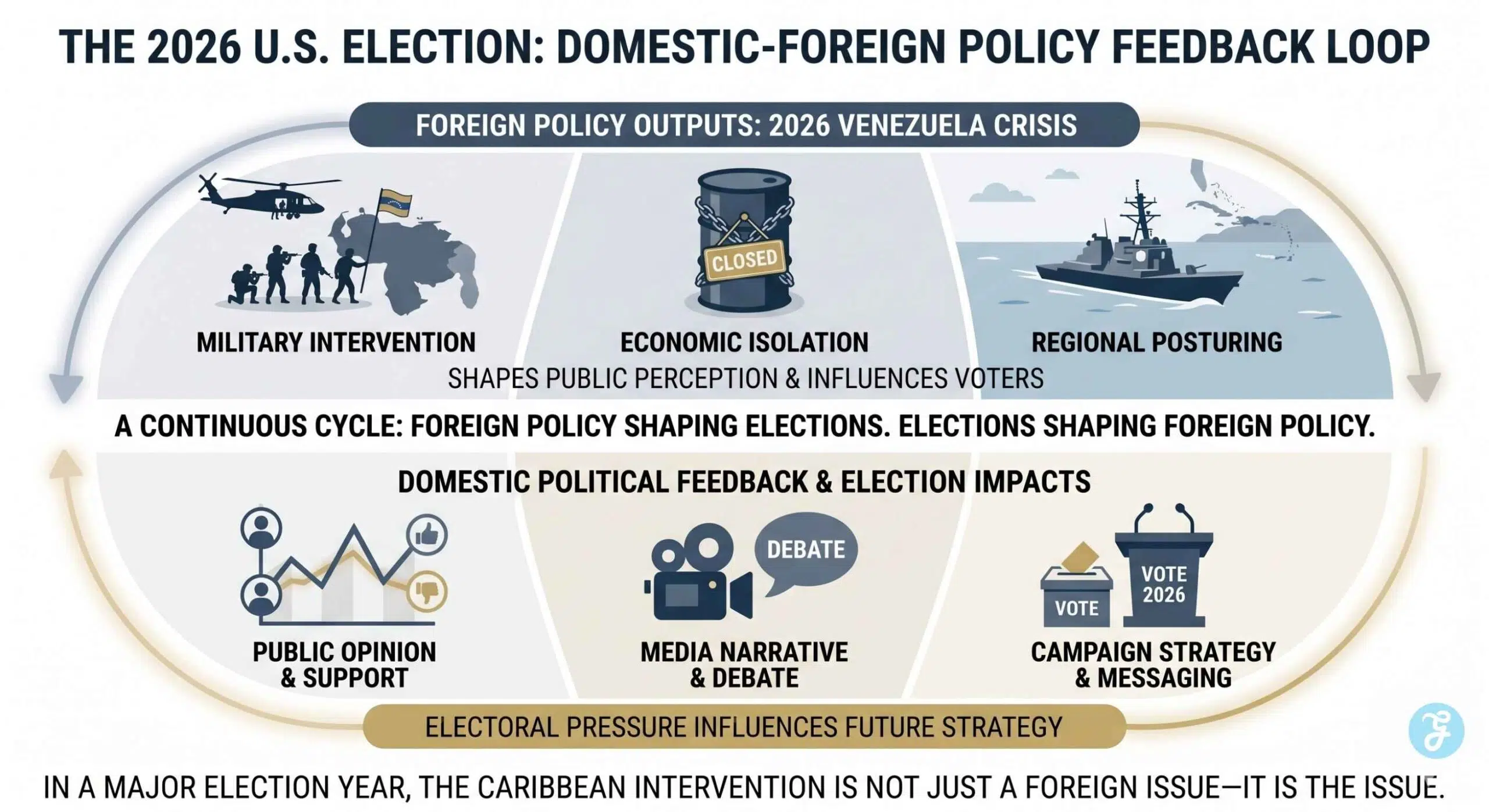
We cannot fully analyze the fallout of the Venezuelan intervention without turning the lens back inward to the United States. Foreign policy, particularly in a major election year, is intrinsically tied to domestic political survival.
Recent conversations among stateside political strategists, such as the sharp debate between insiders Jason Roe, Nolan Finley, Stephen Henderson, and Jill Alper on the Flashpoint panel, reveal a cynical but undeniable truth: the aggressive posture in Latin America is as much about the upcoming ballot box as it is about hemispheric security.
The administration’s long-term strategy in Venezuela is being heavily scrutinized through the lens of electoral expectations. By taking decisive, kinetic action in our own backyard, the executive branch has successfully dominated the domestic news cycle.
The intervention projects an image of uncompromising strength designed to galvanize a political base hungry for decisive action. It is a highly calculated display of “America First” rhetoric translated directly into visceral military reality, engineered to command the narrative heading into the fall.
The High-Wire Act: Occupation Risks and November Vulnerabilities
Yet, as those same political insiders warn, treating foreign intervention as a domestic campaign strategy is a profoundly dangerous high-wire act. While the initial “rally ’round the flag” effect was palpable in the immediate aftermath of the January strike, the long-term realities on the ground present massive, looming liabilities.
The administration is now saddled with the reality of managing a deeply fractured nation, attempting to secure decrepit, failing oil infrastructure, and navigating the subsequent economic blowback of global energy volatility.
The U.S. electorate is notoriously impatient with prolonged foreign engagements that lack a clear exit strategy. If the Venezuelan intervention devolves from a swift decapitation strike into a prolonged, messy occupation, the domestic mood will inevitably turn.
Should the administration fail to deliver the promised economic windfalls from Venezuelan crude, the very operation designed to project absolute, unassailable strength could easily become its most glaring and fatal vulnerability come November.
Final Thoughts: The Death of the Old Order and the Birth of Brutal Pragmatism
The simultaneous, cascading shocks of 2026 prove beyond a shadow of a doubt that global institutions, the UN, the WTO, and even traditional military alliances, are no longer capable of constraining ambitious or aggrieved powers. The post-Cold War era of cooperative globalization has not just paused; it has definitively ended.
From the smoking communications towers of Caracas to the stalled, burning oil tankers in the Strait of Hormuz, and from the anxious shores of Taiwan to the heavily re-arming factories of Germany, the message is clear. We are navigating the age of transactional geopolitics.
In this new reality, moral posturing is a luxury no nation can afford. The international environment has become highly personalized and deeply ruthless. To survive the coming decade, nations must prioritize hard military power, intensely localized and secure supply chains, and a brutal pragmatism that values immediate security over historical alliances. The new western frontier has been drawn, and the rest of the world is desperately racing to build walls along it.