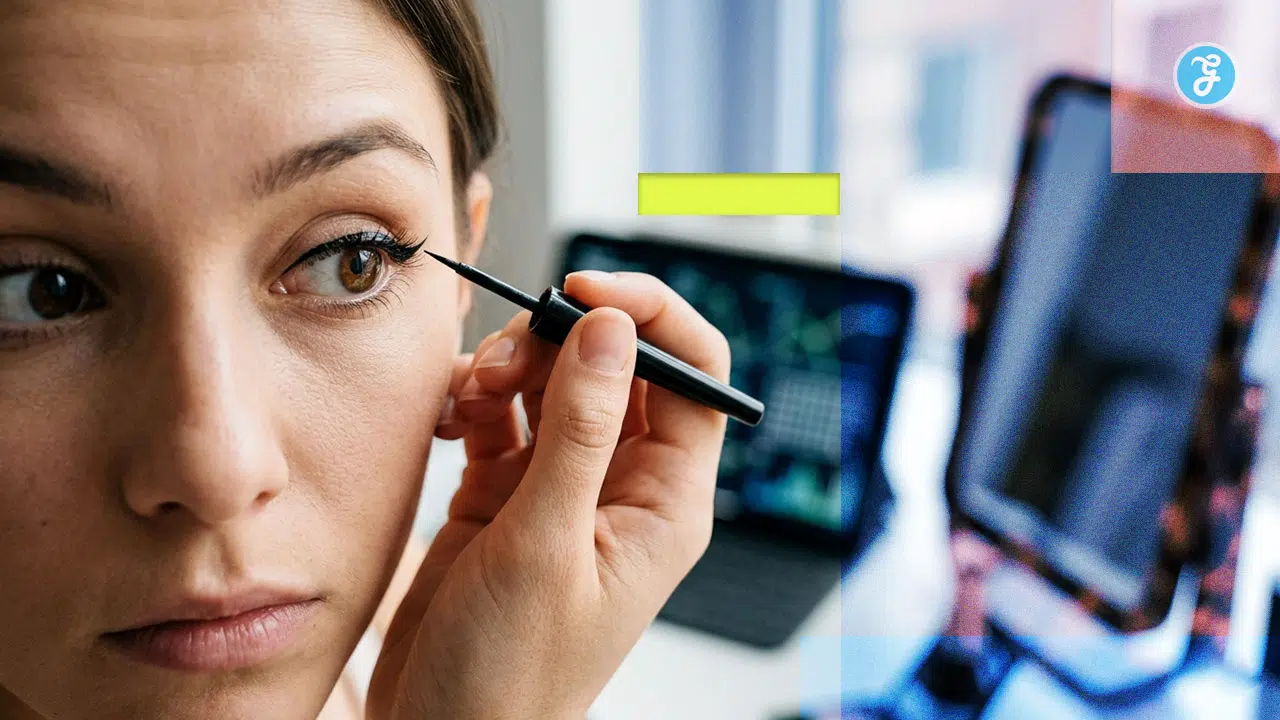
It started in a brightly lit Sephora aisle. I was reaching for my reliable liquid felt tip when I heard a teenager nearby whisper to her friend. She didn’t say my makeup was bad. She said it was a giveaway. She used the word “classic” with the same polite pity one might use for a rotary phone. My sharp, black winged liner was no longer a style choice. It was a timestamp.
This is the reality of millennial makeup trends in 2026. What we once called a signature look has been rebranded as a relic. We are living through the obituary of the wing. For over a decade, that flick of ink was our armor. It represented a specific kind of mastery. It was the “girlboss” era in a bottle. Now, it has become a visual tag that helps an algorithm sort us into the “past” folder.
The shift in eyeliner isn’t actually about fashion. It is about how digital systems classify our age and decide our relevance. In the current landscape, looking “dated” is not just a social slip. It is a digital death sentence for your visibility. If your face doesn’t match the current “mathematically optimized” aesthetic, the platforms simply stop showing you.
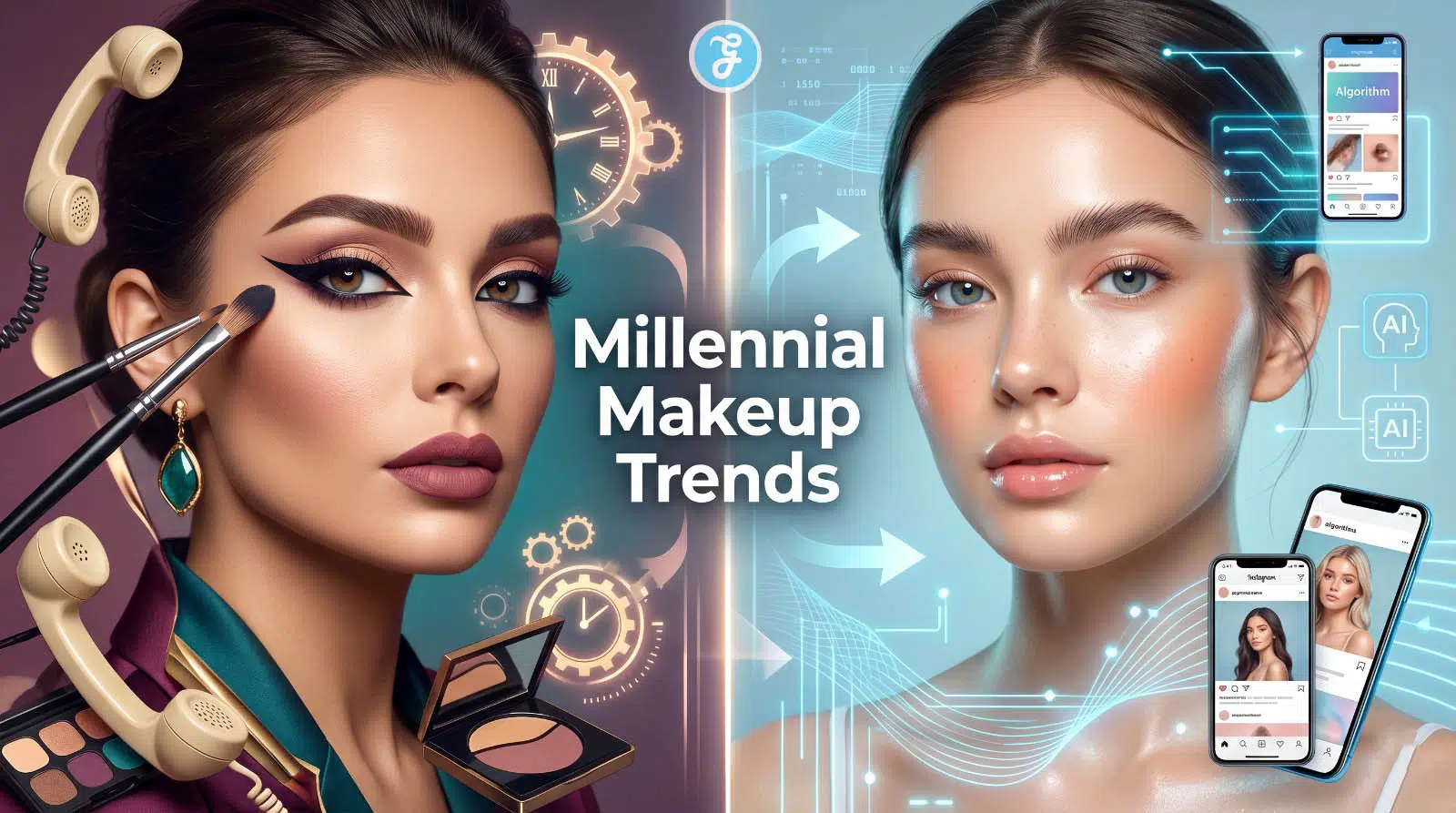
I call this the Eyeliner Line. It is the invisible boundary between those who own their identity and those who are owned by the trend cycle. On one side, you have the comfort of a look you spent years perfecting. On the other, you have the frantic need to update your face to satisfy a piece of code.
Beauty used to be about finding yourself. Now, it is about staying legible to a machine that rewards speed over soul. We are trading our personal history for platform compliance. The wing is fading. In its place, we find a hollow, algorithmic sameness that moves too fast for anyone to truly call their own. We have to ask ourselves a hard question. Are we choosing our look, or is the software choosing it for us?
The Millennial Signature vs. The Algorithmic Pulse
Beauty used to be a steady discipline. For the millennial woman, the winged eyeliner was the ultimate test of that devotion. It was a skill honed over a decade of shaky hands and cotton swabs. We were building a permanent identity. Mastery was the point.
The Era of Mastery
The goal of the early two thousands was to find “your look” and stay there. A signature was fixed. It was reliable as a thumbprint. If you could flick a brush and create two symmetrical peaks of ink, you had achieved adult competence. This was the peak of millennial makeup trends. It rewarded the person who spent years perfecting a single technique. We wore our eyeliner like a badge of loyalty to our own faces.
The Move to Fluidity
The 2026 beauty market has no interest in permanence. The signature look is dead. It has been replaced by the algorithmic pulse. Today, trends like Glitchy Glam and Vamp Romantic dominate our feeds.
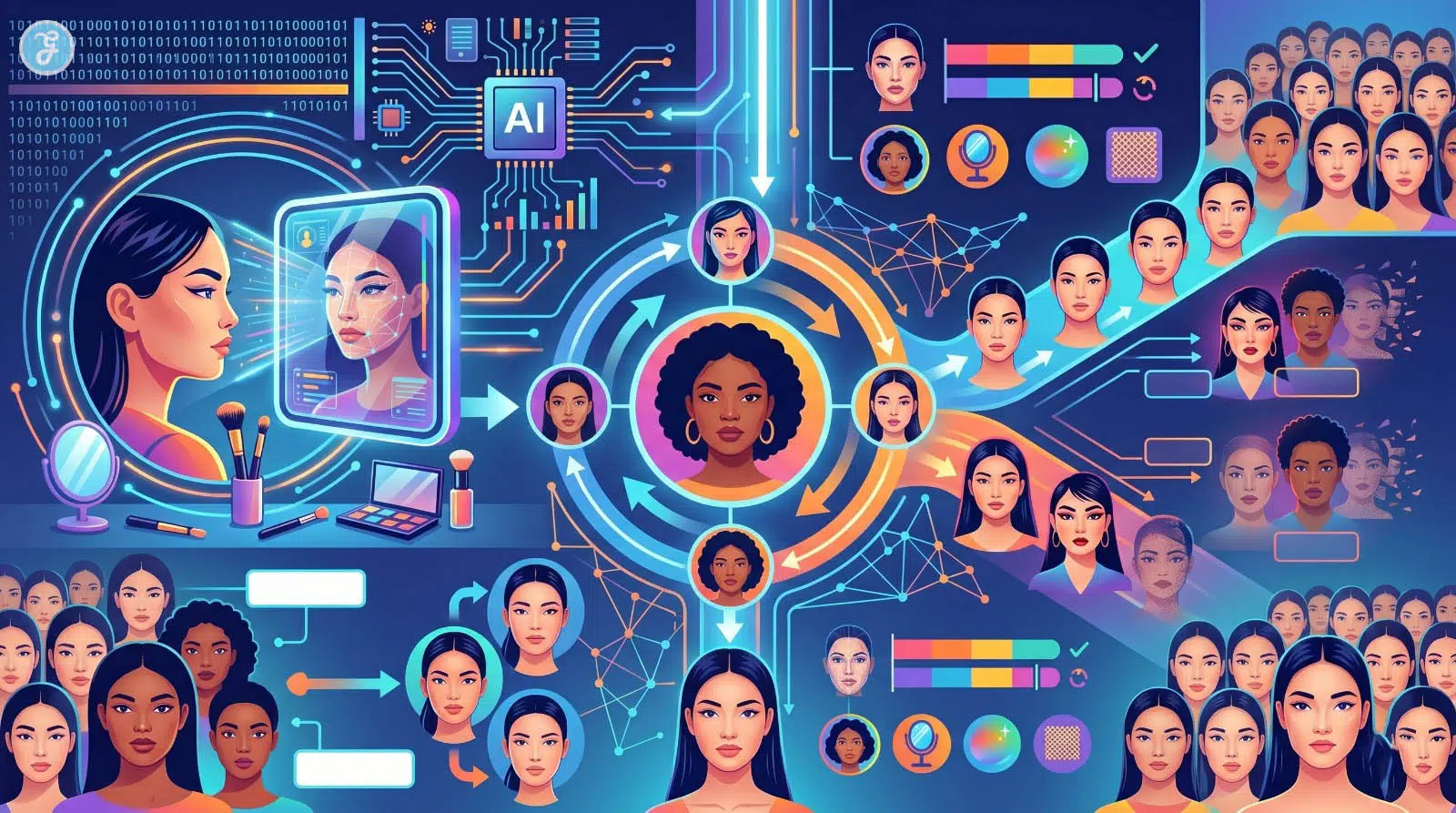
These looks are not meant to be mastered. They are meant to be captured. Glitchy Glam favors asymmetry and broken lines. It is erratic by design. It thrives on high contrast and digital distortion.
Platform Compliance
This shift is a mechanical necessity. These high-impact looks are easier for AI sensors to categorize. Algorithms reward what is fresh and penalize what is static. A signature wing is static. It tells the machine you have not changed since 2016. A glitch eye tells the software you are active. You are participating in the cycle. You are legible.
The Psychological Shift
This has triggered a quiet crisis. We are moving from internal self-expression to external platform compliance. We no longer ask what makes us look like ourselves. We ask what makes the algorithm show us to other people. The mirror used to reflect a soul. Now it reflects a data set. We are trading personal history for digital safety. If you do not move at the speed of the code, you simply vanish.
Eyeliner Era vs. Millennial Makeup Trends
The transition from a fixed identity to a fluid data point is best seen through the lens of our daily rituals. The shift between these two periods represents a fundamental change in how we view the self.
- Permanence vs. The Shift: The Eyeliner Era was defined by the search for a forever look. Millennial Makeup Trends in 2026 are defined by the ability to jump between aesthetics to stay visible to the algorithm.
- Skill vs. Software: The winged liner required years of manual dexterity and physical practice. Modern trends rely on software-compatible textures and colors that can be easily identified by AI sensors.
- Identity vs. Utility: A signature look was an expression of internal character. Current beauty choices are a form of digital utility designed to maximize reach and engagement on the For You Page.
- The Human Gaze vs. The Machine Gaze: We used to paint our faces for the people standing in front of us. Now, we paint our faces for the invisible processors that decide our cultural value.
- Armor vs. Asset: Eyeliner served as a personal armor and a point of control. Today, beauty has been rebranded as a liquid asset that must be constantly traded in for a newer version to avoid looking dated.
The Machine in the Mirror: How Algorithms Dictate Beauty
The mirror has changed. It no longer just reflects your face. It evaluates your data. In 2026, beauty is a computational frontier where a piece of code decides if your look is worth showing to the world. We are living in an era of automated judgment.
Mathematical Optimization
Recent research has introduced the concept of the Facial Aesthetic Index. These are AI tools designed to score attractiveness based on symmetry and smooth textures. If your face features a winged liner that the system deems static or “dated,” the algorithm suppresses your content. It prioritizes what researchers call “mathematically optimized preferred faces.” These are faces that match a narrow, Western-centric model of femininity. If you do not fit this digital mold, you are quietly pushed to the periphery of the internet.
The Feedback Loop
Millennial makeup trends are being archived by AI at an unprecedented speed. In the past, a style could last a decade. Now, generative AI and machine learning analyze millions of images to identify emergent looks in real time. This creates a high-speed feedback loop.
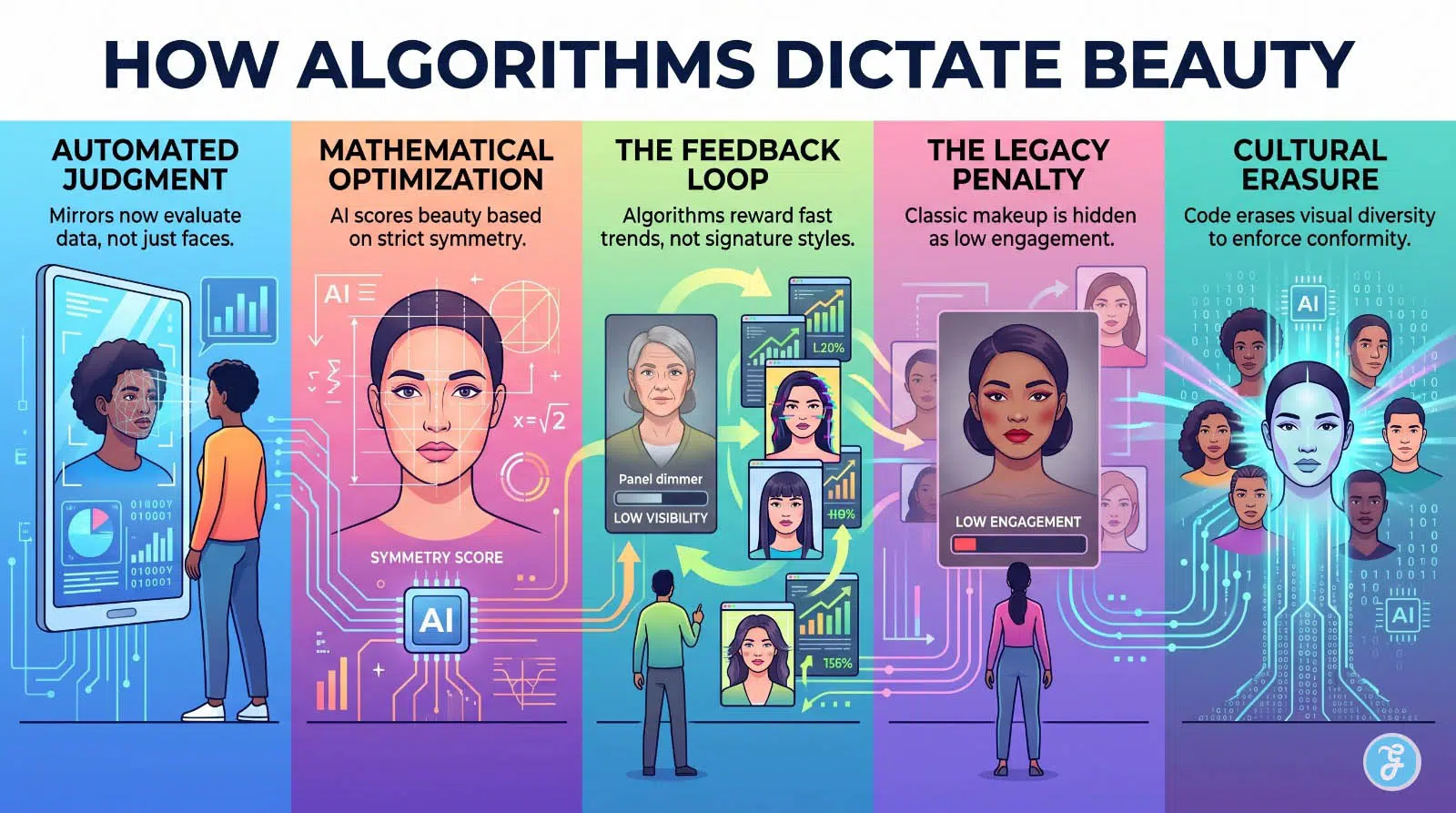
The system rewards “fresh” patterns like Glitchy Glam because they are easier for sensors to categorize as new. Because the wing is a “legacy” tag, the machine labels it as low engagement and hides it.
Cultural Erasure
This creates a brutal tension between our desire for a signature and the system’s demand for sameness. We are witnessing a “Great Beauty Blur.” In this space, the boundary between a natural face and an edited one disappears. The algorithm does not just organize content. It organizes value. It penalizes diversity and rewards a hollow uniformity. We are losing the ability to express our individuality because the technical systems we live through have decided that conformity is the only way to be seen.
The Data Behind the Mirror
The shift in our aesthetic habits is not just a cultural mood. It is a response to how the internet is being rebuilt. By 2026, the digital mirror has become a diagnostic tool. When you open a camera app or a beauty filter, the software performs a high-speed scan of your geometry. It looks for specific visual anchors. The arch of the brow, the smoothness of the temple, and the sharpness of the eyeliner.
The Machine Gaze
We are now living under a form of atmospheric surveillance. In the past, a person might judge your look across a dinner table. Today, an artificial intelligence judge processes it in milliseconds. Research into modern image recognition shows that these systems are trained on a massive diet of trending content.
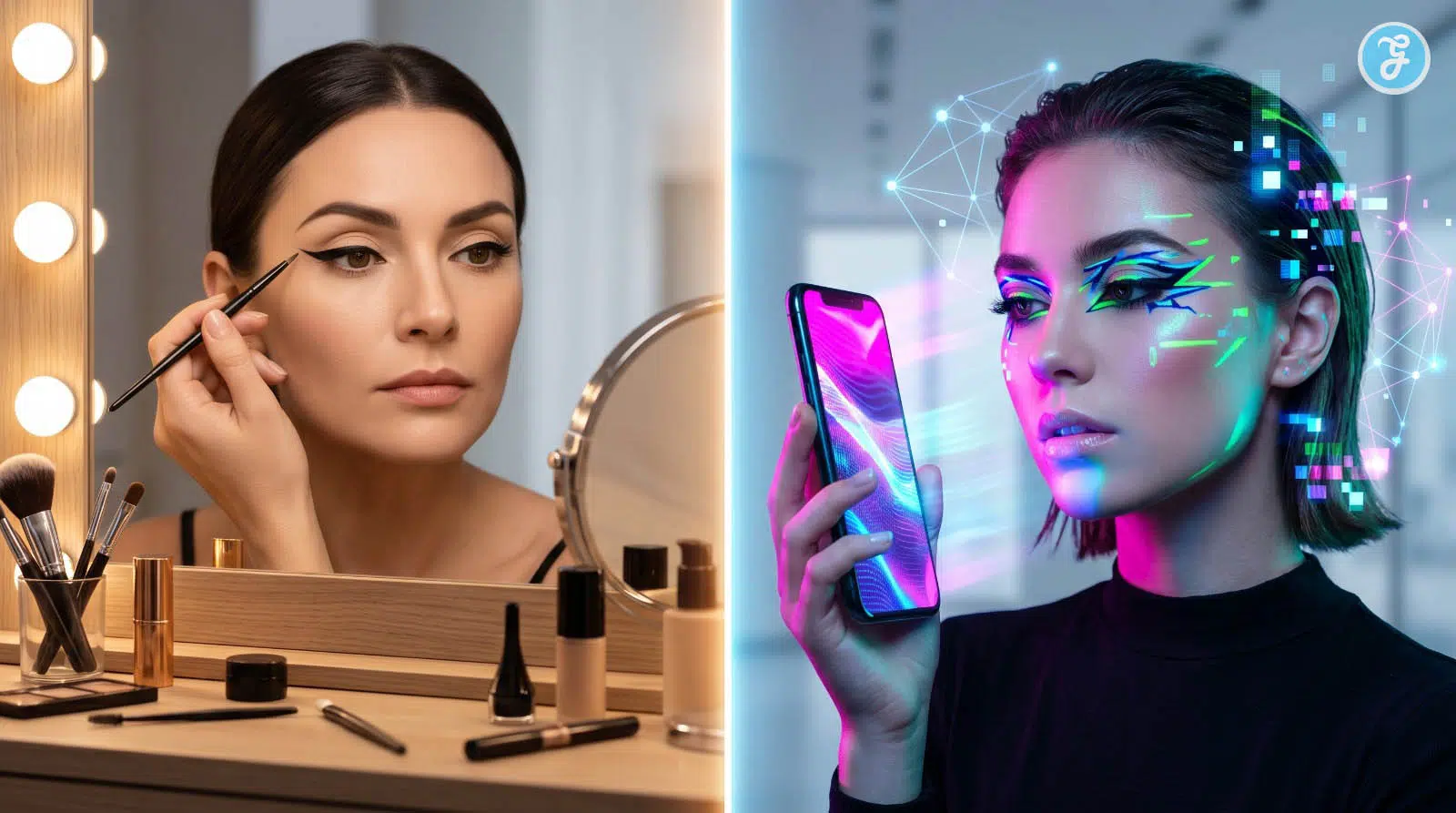
This creates a feedback loop where the software learns that “beauty” is whatever is currently viral. If the machine cannot find a match for your winged liner in its database of current high engagement images, it flags your face as a legacy file. You are not just out of style. You are invisible to the network.
The Death of the Signature
This explains the frantic velocity of modern millennial makeup trends. We are witnessing the death of the long-term signature look. In the twentieth century, a woman could adopt a red lip or a specific liner style and wear it for forty years. That consistency was seen as a mark of character. Now, consistency is a technical error. The system demands constant visual updates to prove that the user is still active and profitable.
We must recognize that our faces have become the latest territory for data extraction. Every time we swap a beloved signature for a trending “core,” we are feeding the machine what it wants. Sameness, speed, and predictability. Breaking the Eyeliner Line is about more than just makeup. It is about refusing to let an invisible processor decide when your personal history has expired. Turning away from the feed is the only way to see yourself clearly again.
The Economics of Being Overlooked
The irony of the 2026 beauty market is that the most profitable customers are the ones the industry is ignoring. Millennials are the economic engine of the vanity economy. Yet, they are being treated as a footnote in a story about someone else.
The Spending Paradox
The data tells a story of massive financial disconnect. In 2026, millennials remain the biggest spenders in the beauty sector, averaging an annual expenditure of $2,670. This far outpaces the $2,048 average of Gen Z. Despite this, marketing budgets have shifted toward chasing the elusive virality of younger cohorts. Brands are obsessed with “aesthetic relevance” over raw purchasing power. We are the demographic with the most to spend but the least to see of ourselves in the campaigns we fund.
Identity as a Data Point
Digital systems have rebranded the thirty-to-fifty-year-old consumer as a “legacy” user. In the eyes of an algorithm, your consistency is a liability. If you have worn the same winged liner for a decade, you are labeled as “low engagement.” Your aesthetic choices are seen as static data points. This creates a visibility tax. To stay relevant in a feed, you are pressured to adopt “high-speed” trends like Glitchy Glam that you may not even like.
The Visibility Tax
Refusing to update your face to suit the 2026 trend cycle carries a hidden cost. It is a slow fade from the public eye. When you stick to a “dated” look, the software assumes you are no longer an active participant in the culture. It deprioritizes your content and your presence. We are forced to choose between the authenticity of our signature and the digital survival of our visibility. The price of keeping your wing is becoming a ghost in the machine.
The Fear of Looking Dated
In 2026, we are haunted by a new kind of ghost. It is the version of ourselves that existed six months ago. We no longer age by the calendar year. We age by the “Core.”
Time Sickness
We are living through collective time sickness. On digital platforms, identity has been fractured into micro-trends like Cottagecore, Barbiecore, or the current Glitchy Glam. These are not just fashion choices. They are algorithmic timestamps. To stick with a look for too long is to “age out” in real-time. If you are still wearing the aesthetic of last season, the software treats you as culturally expired. We are stuck in a cycle of permanent transformation where the goal is not to grow up, but to stay current.
Control in the Digital Age
The winged liner was never just makeup. As author Zahra Hankir explores in her work, eyeliner has served as a form of armor and agency for millennia. For the millennial woman, that sharp flick of ink was a rare point of control in a chaotic world. It was a signature we owned. Losing that signature to an algorithm feels like a fundamental loss of agency. We are being told that our “armor” is now a liability. The machine has stripped away the power of the personal brand and replaced it with a demand for platform compliance.
The Resistance
But a quiet backlash is forming. A growing movement of users is beginning to value “dated” faces as an act of rebellion. There is a newfound prestige in looking like a person rather than a profile. By keeping the wing or embracing a “natural” face that ignores the trend cycle, people are pushing back against artificial uniformity. They are choosing the comfort of their own history over the safety of the feed. This resistance is a reminder that beauty should be a mirror of the self, not a response to a line of code.
Drawing the Line: Beyond the Wing
The future of beauty does not belong to the algorithm. It belongs to the person standing in front of the glass. We have spent too long trying to be legible to a machine that cannot even see us. It is time to step away from digital evaluation and return to ourselves.
Reclaiming the Gaze
True self-expression requires a beauty philosophy that ignores the metrics of the For You Page. We have to stop viewing our faces as content.
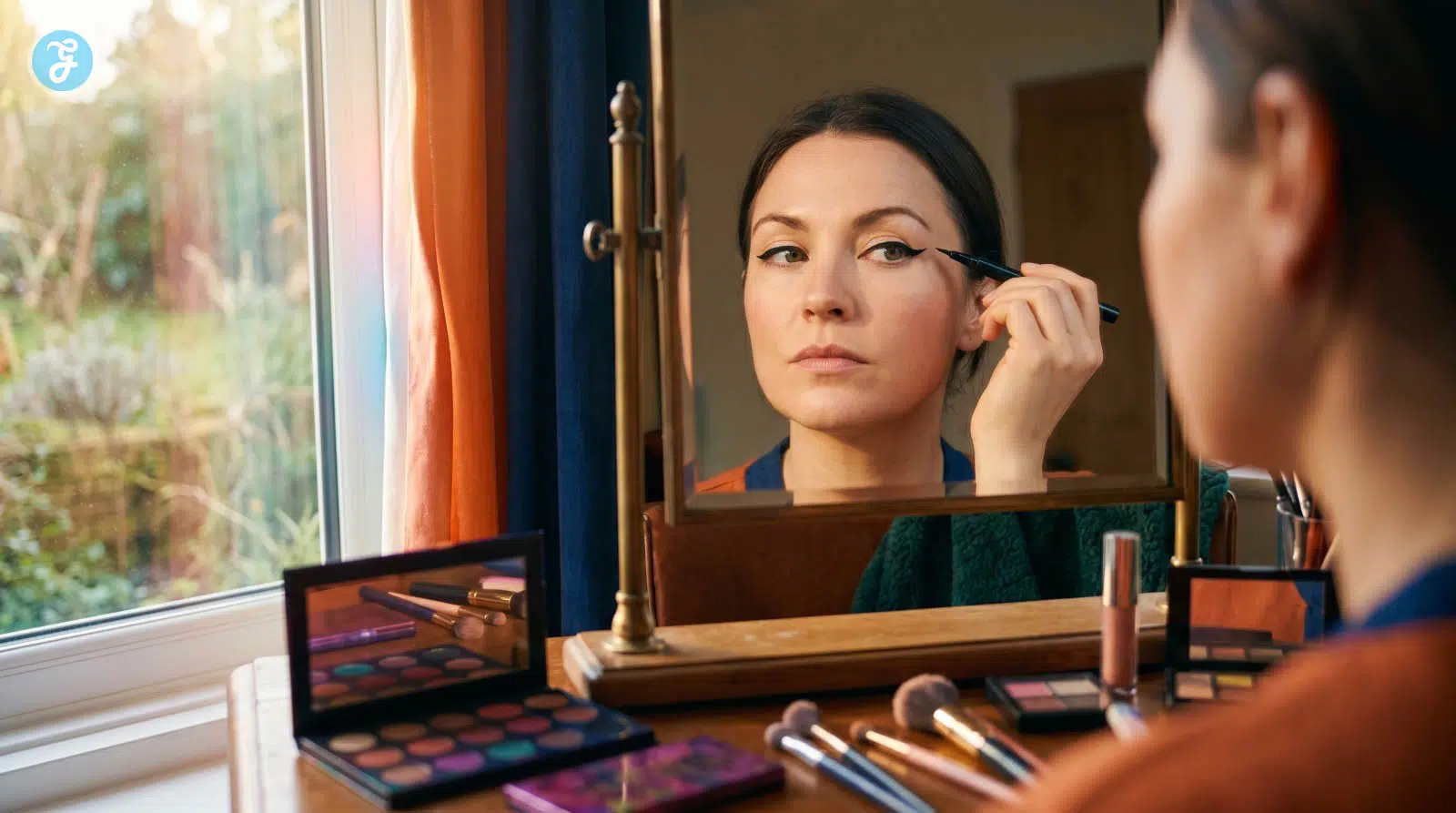
When we chase millennial makeup trends or hunt for the next viral glitch, we are performing for an audience of sensors. Reclaiming the gaze means looking at your reflection and seeing a human being rather than a data point. It means choosing a look because it feels right on your skin, not because it satisfies an engagement quota.
The Ultimate Boundary
This boundary is the ultimate test of our digital agency. It is where we decide if we are users of technology or merely the data that feeds it. We cannot let a line of code dictate the speed of our aging or the value of our identity. If we allow software to define what is “dated,” we surrender our history. Beauty should be a sanctuary of personal choice, not a marketplace of platform compliance. We must refuse to let an indifferent system delete our visual legacy.
The Refusal to be Classified
Tomorrow morning, go back to the mirror. Pick up that felt tip pen. Pull the skin of your eyelid taut and draw that sharp, black flick one more time. Do not do it because it is fashionable. Do not do it to trend. Apply that wing as a quiet act of rebellion. It is a refusal to be classified by a system that rewards sameness. In a world of moving targets and shifting codes, your signature is the only thing that remains real. Wear it like armor. Wear it like a thumbprint. Wear it because you are the only one who gets to decide when your era is over. The machine does not own you.