March 26 is a date deeply etched into the annals of global history, marked by the rise of new nations, the eradication of devastating diseases, and the shifting of immense geopolitical tides. From the humid, conflict-ridden nights of South Asia to the sterile, triumph-filled laboratories of American medical researchers, this specific 24-hour window has repeatedly served as a stage for human resilience, innovation, and sometimes, profound tragedy. Analyzing the historical events of this day provides a fascinating cross-section of humanity’s continuous evolution.
We see the crumbling of colonial empires, the forging of modern democratic frameworks, and the birth of cultural icons whose artistic footprints remain visible centuries later. To truly understand the world we inhabit today, we must look backward, unpacking the treaties signed, the battles fought, and the visionaries born on this late-March day.
Pivotal Historical Events on March 26
History is rarely forged in a vacuum; it is the culmination of decades of tension, progress, and societal pressure finally reaching a breaking point. The events that unfolded on March 26 across different eras exemplify this dynamic perfectly.
The Declaration of Bangladesh Independence (1971)
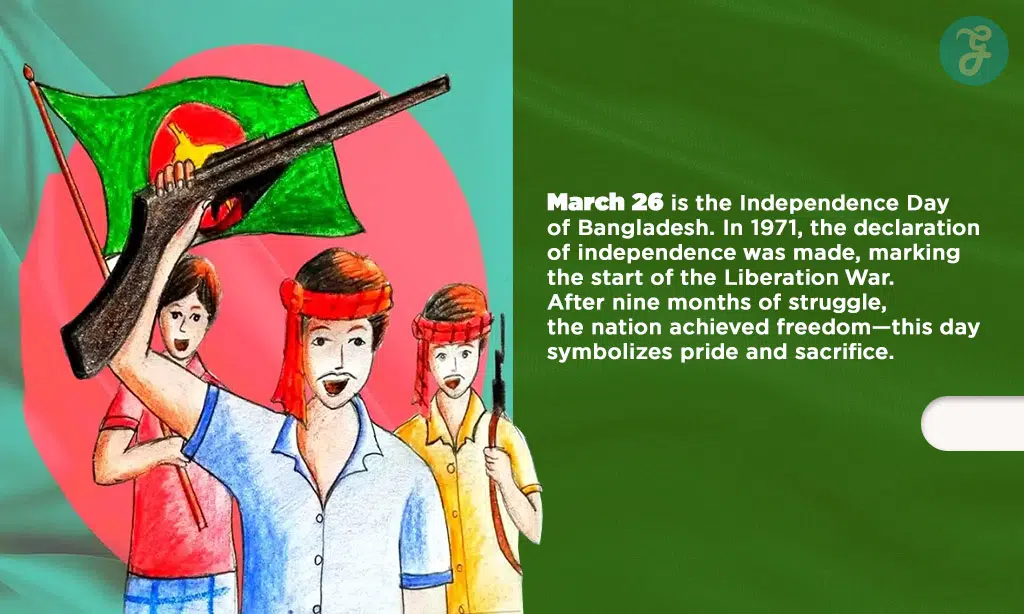
The Declaration of Bangladesh Independence in 1971 marked a turning point in the history of South Asia, leading to the emergence of a new sovereign nation. At that time, Bangladesh was known as East Pakistan and was geographically separated from West Pakistan by about 1,600 kilometers of Indian territory. Despite having a larger population, East Pakistan faced political marginalization, economic neglect, and cultural suppression, which created deep resentment among its people. Over time, these grievances intensified, setting the stage for a struggle for autonomy and self-determination.
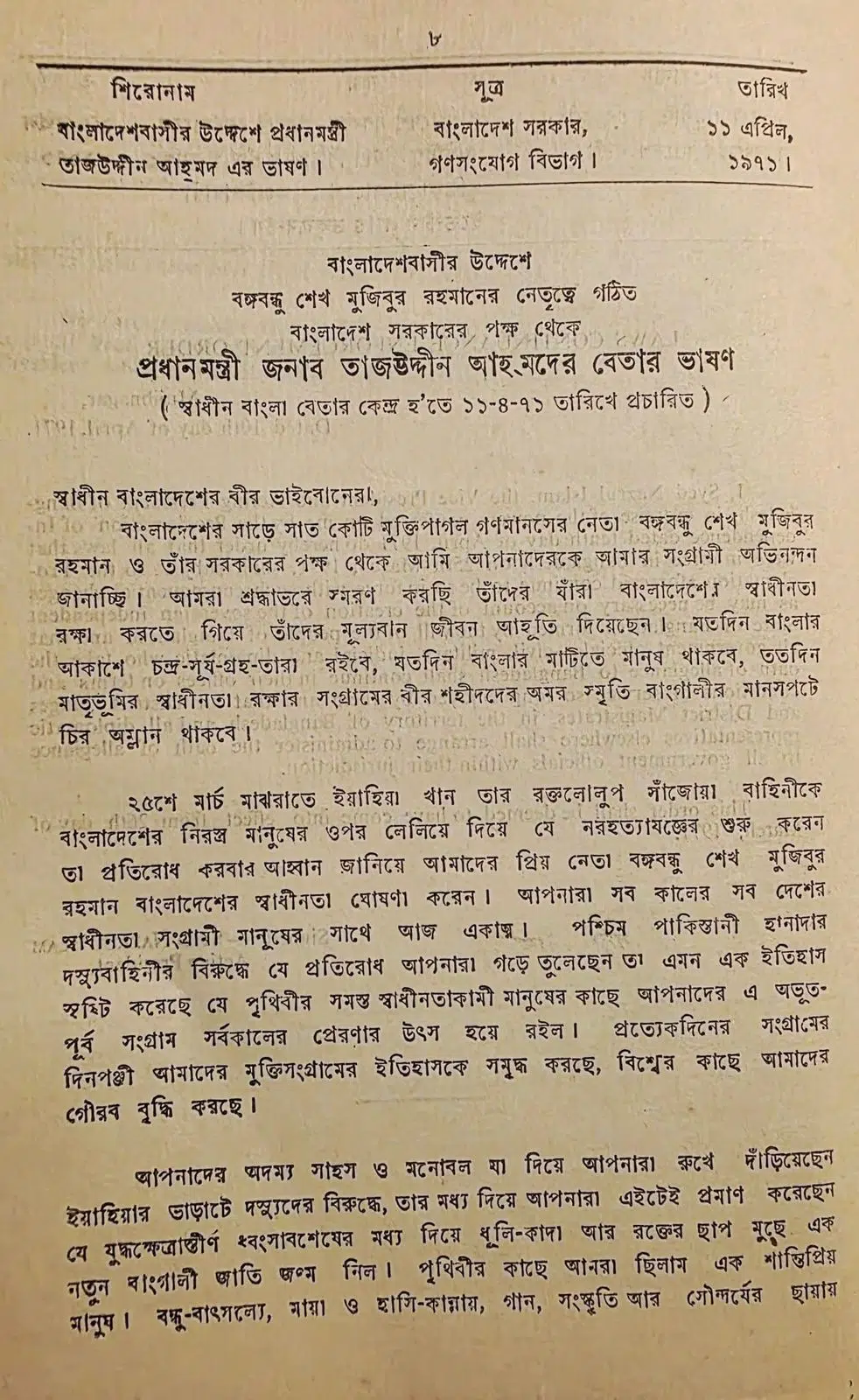
The situation reached a critical point after the 1970 general elections, in which the Awami League, led by Sheikh Mujibur Rahman, won a decisive majority. However, the ruling authorities in West Pakistan refused to transfer power, ignoring the democratic mandate of the people. This political deadlock led to widespread protests and civil unrest across East Pakistan, as people demanded recognition of their electoral victory and greater political rights. The refusal to honor the election results significantly escalated tensions between the two wings of the country.
On the night of March 25, 1971, the Pakistani military launched Operation Searchlight, a brutal and systematic campaign aimed at suppressing Bengali nationalism. The operation involved widespread violence, including mass killings, arrests, and attacks on civilians, students, and intellectuals. This violent crackdown shocked the population and served as the immediate catalyst for the declaration of independence. It transformed political dissatisfaction into an armed struggle for freedom.
In the early hours of March 26, 1971, Sheikh Mujibur Rahman made the historic declaration of independence, calling upon the people of East Pakistan to resist the Pakistani military and fight for their rights. This announcement spread rapidly through radio and other communication channels, inspiring millions to join the cause. Shortly after the declaration, he was arrested, but the movement had already gained unstoppable momentum. The declaration became the foundation for the subsequent liberation struggle.
Following the declaration, the Bangladesh Liberation War began, lasting for nine months and involving widespread resistance by the Mukti Bahini and civilian supporters. The war was marked by immense sacrifice, as millions of people were displaced and countless lives were lost. Eventually, with support from India and growing international attention, the conflict came to an end on December 16, 1971, when Pakistani forces surrendered. This victory led to the creation of Bangladesh as an independent nation, forever commemorating March 26 as a symbol of courage, resilience, and the enduring pursuit of freedom.
Jonas Salk Announces the Polio Vaccine (1953)
In the realm of public health, few announcements have brought as much immediate relief and joy to the global population as the conquering of poliomyelitis.
On a national radio broadcast, American medical researcher Dr. Jonas Salk officially announced that he had successfully tested a vaccine against polio, a virus that had ravaged communities globally for decades. Salk and his team at the University of Pittsburgh had developed an inactivated (killed) polio vaccine. The announcement was met with international euphoria. Following massive, successful field trials involving nearly two million schoolchildren—often referred to as “Polio Pioneers”—the vaccine was declared safe and effective in 1955. Salk’s breakthrough became a foundational pillar of global vaccination efforts, paving the way for the near-eradication of the disease worldwide today.
The Signing of the Camp David Accords (1979)
In a highly publicized ceremony on the lawn of the White House, Egyptian President Anwar Sadat and Israeli Prime Minister Menachem Begin signed the Egypt-Israel Peace Treaty, with U.S. President Jimmy Carter acting as a witness. This treaty was the direct result of the arduous, secretive negotiations held at Camp David the previous year. The agreement stipulated the mutual recognition of each country, the cessation of the state of war that had existed since the 1948 Arab-Israeli War, and the complete withdrawal of Israeli armed forces and civilians from the Sinai Peninsula, which Israel had captured during the Six-Day War in 1967.
The Schengen Agreement Takes Effect (1995)
Although originally signed in 1985 in the small Luxembourgish town of Schengen, the agreement officially went into effect on March 26, 1995, for its first seven member states: Belgium, France, Germany, Luxembourg, the Netherlands, Portugal, and Spain. The implementation abolished internal border checks, allowing passport-free movement for travelers across these nations. This massive logistical and political achievement accelerated the integration of the European Union, facilitating not just tourism, but highly efficient cross-border commerce and daily commuting for workers.
Vladimir Putin’s First Presidential Election (2000)
Following the unexpected resignation of Boris Yeltsin on New Year’s Eve 1999, Vladimir Putin, a former KGB officer who was serving as Prime Minister, became Acting President. On March 26, 2000, Putin secured his mandate by winning the presidential election in the first round with 53% of the vote. Promising to restore law, order, and national pride after the chaotic and economically turbulent post-Soviet 1990s, Putin’s election initiated a prolonged period of consolidated state power in Russia, profoundly impacting global diplomacy, energy markets, and international security protocols.
The Chipko Movement Begins (1974)
In the Reni village of the Chamoli district, Uttarakhand (then part of Uttar Pradesh), a group of peasant women led by Gaura Devi physically surrounded and hugged trees to prevent loggers from cutting them down. The term “Chipko” translates to “to embrace” or “to hug” in Hindi. This powerful act of decentralized, non-violent resistance against state-backed commercial logging spread rapidly across the Himalayan region. The Chipko movement drew global attention to environmental conservation and successfully forced the government to enact a 15-year ban on commercial felling in the region.
The Battle of Iwo Jima Officially Ends (1945)
After 36 days of horrific, close-quarters combat against deeply entrenched Japanese defenders, the United States officially declared the island of Iwo Jima secure. The battle was exceptionally costly; it was the only major battle in the Pacific War where total American casualties (dead and wounded) exceeded those of the Japanese. The Japanese garrison, heavily utilizing a vast network of underground bunkers and tunnels, fought almost to the last man. The capture of the island was deemed a crucial stepping stone in the Allied island-hopping campaign.
Significant March 26 Birthdays Across the Globe
The figures born on this day have gone on to shape the arts, sciences, and political landscapes of their respective eras. Below is a curated look at some of the most influential individuals who share a March 26 birthday.
| Name | Year of Birth | Profession / Claim to Fame | Historical Legacy |
| Robert Frost | 1874 | American Poet | A four-time Pulitzer Prize winner, known for his masterful depictions of rural New England life and complex philosophical poetry. |
| Tennessee Williams | 1911 | American Playwright | Penned quintessential American dramas like A Streetcar Named Desire and The Glass Menagerie, fundamentally altering American theater. |
| Leonard Nimoy | 1931 | American Actor & Director | Achieved global cultural immortality for his logical, iconic portrayal of Mr. Spock in the Star Trek franchise. |
| Richard Dawkins | 1941 | British Evolutionary Biologist | Authored The Selfish Gene, popularizing the gene-centered view of evolution and coining the sociological term “meme.” |
| Diana Ross | 1944 | American Singer & Actress | A foundational figure in Motown music, leading The Supremes before launching a massively successful, decades-long solo career. |
| Larry Page | 1973 | American Computer Scientist | Co-founded Google alongside Sergey Brin, revolutionizing how humanity accesses, organizes, and interacts with information online. |
| Keira Knightley | 1985 | British Actress | A versatile, award-winning actress renowned for her starring roles in major period dramas and blockbuster franchises. |
Notable March 26 Deaths and Legacies
Bidding farewell to the architects of our culture and history is a profound aspect of looking back at any specific date. The individuals who passed away on March 26 left voids that have often never been truly filled.
To fully grasp the magnitude of these losses, we must review the enduring legacies they left behind.
| Name | Year of Death | Nationality | Cause / Enduring Legacy |
| Ludwig van Beethoven | 1827 | German | Passed away at age 56 from liver disease. He remains a colossal figure in the transition between the Classical and Romantic eras in Western music. |
| Walt Whitman | 1892 | American | Died of complications from pleurisy and pneumonia. As the “father of free verse,” his collection Leaves of Grass redefined American literature. |
| Cecil Rhodes | 1902 | British | Died of heart failure. A highly controversial imperialist and mining magnate whose policies and companies (De Beers) deeply scarred and shaped Southern Africa. |
| Sarah Bernhardt | 1923 | French | Passed away from uremia. She was widely considered the most famous actress of the late 19th century, starring in some of the most prominent stage productions worldwide. |
| Raymond Chandler | 1959 | American | Died of pneumonia. A brilliant novelist whose gritty, cynical protagonist, Philip Marlowe, defined the modern hardboiled detective genre. |
| Geraldine Ferraro | 2011 | American | Passed away from multiple myeloma. She made history in 1984 as the first female vice-presidential candidate representing a major American political party. |
Global Holidays and Cultural Observances
Beyond individual events and lifespans, March 26 serves as a day of communal gathering and awareness for various global causes and national celebrations.
Examining these observances reveals what different cultures prioritize, from medical awareness to national sovereignty.
| Observance / Holiday | Region / Scope | Significance and Purpose |
| Independence Day | Bangladesh | A solemn and celebratory national holiday commemorating the country’s declaration of independence from Pakistan in 1971. |
| Purple Day | International | A grassroots global effort dedicated to increasing awareness about epilepsy, encouraging people to wear purple to spark conversations and dispel myths. |
| Martyrs’ Day (Day of Democracy) | Mali | Commemorates the bloodless military coup of 1991 that successfully overthrew a dictatorship and paved the way for multiparty democracy. |
| Prince Kuhio Day | Hawaii, United States | An official state holiday honoring Prince Jonah Kuhio Kalanianaole, who worked tirelessly to preserve Hawaiian culture and secure land rights for native Hawaiians. |
The Enduring Echoes of March 26
When we pull back the lens and view March 26 in its entirety, it becomes clear that this date serves as a powerful testament to human ambition, survival, and the endless pursuit of freedom and knowledge. The independence of Bangladesh reminds us of the heavy price of sovereignty, while Jonas Salk’s vaccine announcement stands as a beacon of what selfless scientific inquiry can achieve for the betterment of humankind.
Whether it is the artistic brilliance of Robert Frost or the environmental foresight of the women in the Chipko movement, the legacies born, ended, and enacted on this day continue to shape our modern reality. By studying these historical milestones, we do more than just memorize dates; we learn the context of our present world, allowing us to navigate the future with a deeper, more informed perspective.