History is rarely just a collection of dates and names; it is a sprawling, interconnected web of human triumph, tragedy, and innovation. March 14 stands out as a day of profound scientific milestones, pivotal political shifts, and deep cultural resonance. For mathematics enthusiasts, it is universally celebrated as Pi Day. For historians, it is the day the world welcomed one of its greatest minds, Albert Einstein, and bid farewell to another, Stephen Hawking.
As we pull back the curtain on March 14, we will journey across the globe—from the bustling, historically rich landscape of the Indian subcontinent to the halls of American innovation and the deeply divided borders of mid-century Europe. Whether you are a cultural anthropologist seeking to understand regional shifts or a trivia buff looking for your next great fact, this in-depth guide offers a comprehensive look at the world-shaping events of March 14.
At a Glance: March 14 in History
| Category | Highlight of the Day | Impact |
| Science & Math | Pi Day / Einstein’s Birth | A global celebration of mathematics and theoretical physics. |
| Indian Subcontinent | Release of Alam Ara (1931) | The birth of sound in Indian cinema, changing the cultural landscape forever. |
| US History | Cotton Gin Patent (1794) | Revolutionized the agricultural economy but entrenched the tragedy of American slavery. |
| Global Politics | Slovakia’s Independence (1939) | A major geopolitical shift that precipitated the start of World War II. |
The Bangalee Sphere
The history of the Indian subcontinent is a tapestry of colonial resistance, vibrant cultural expression, and modern political upheaval. March 14 holds significant weight in this region, marking both moments of artistic triumph and political tragedy.
Political Movements and Tragedies
The Nandigram Violence (2007)
On March 14, 2007, a defining tragedy struck the state of West Bengal, India. In the rural area of Nandigram, thousands of villagers protested the state government’s plan to expropriate over 10,000 acres of land for a Special Economic Zone (SEZ) intended for a chemical hub. The resulting clash with the state police left 14 villagers dead and over a hundred injured.
-
Why it matters today: The Nandigram violence was a watershed moment in Bengal politics. It sparked nationwide outrage and galvanized opposition against the ruling Left Front. The political fallout was massive, ultimately contributing to the end of the Communist Party of India (Marxist)’s 34-year uninterrupted rule in West Bengal in 2011.
The Vernacular Press Act (1878)
Proposed by Viceroy Lord Lytton, this draconian act was enacted to suppress the freedom of the Indian-language press. It was specifically aimed at quelling the rising tide of anti-colonial sentiment brewing in Bengali publications like the Amrita Bazar Patrika.
-
Why it matters today: Rather than silencing the press, the act unified Indian journalists and intellectuals. The outrage it generated laid the foundational groundwork for organized political resistance, culminating in the birth of the Indian National Congress just a few years later.
Cultural Milestones
The Release of Alam Ara (1931)
Before March 14, 1931, Indian cinema was entirely silent. That changed when Ardeshir Irani released Alam Ara (The Ornament of the World) at the Majestic Cinema in Mumbai. The film was an instant sensation, drawing massive crowds that required police intervention for crowd control.
-
Why it matters today: Alam Ara introduced music, singing, and spoken dialogue to the silver screen in India. This permanently altered the trajectory of Bollywood, making song-and-dance sequences an inseparable and iconic element of Indian filmmaking.
Global History: Milestones Across the Continents
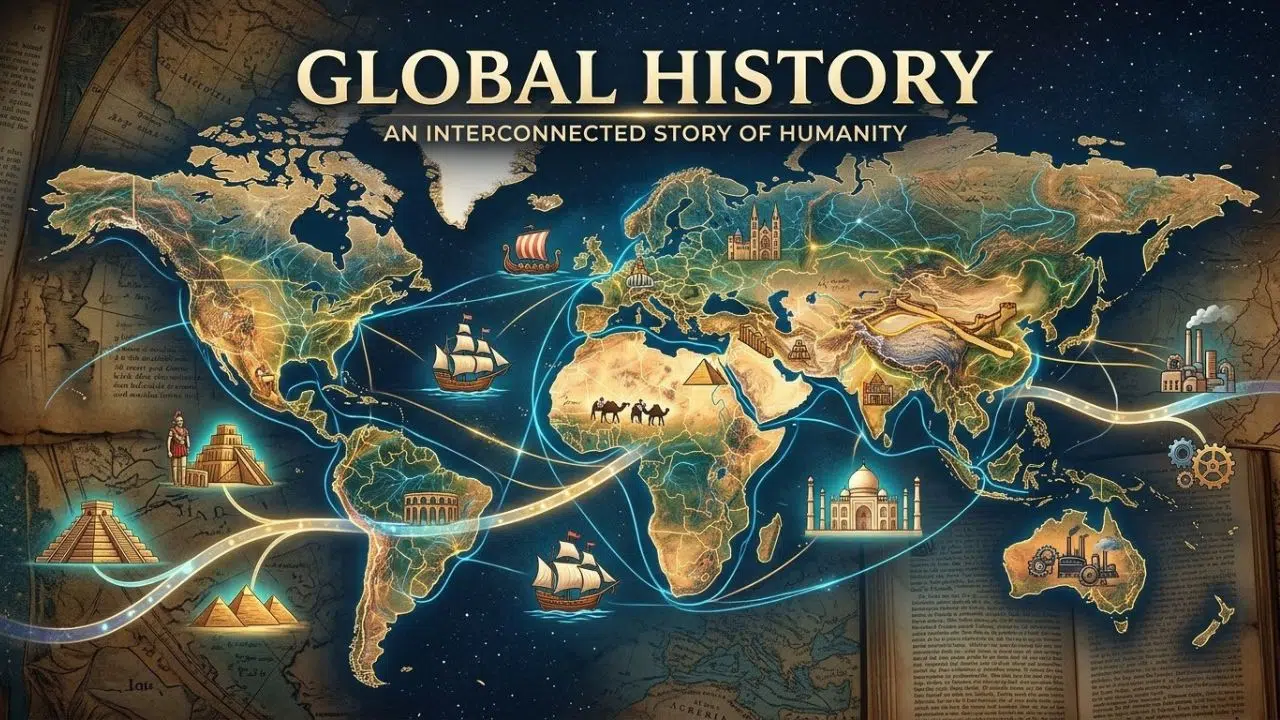
Stepping outside the subcontinent, March 14 has witnessed a stunning array of geopolitical, technological, and social milestones that have rippled through generations.
The United States: Innovation and Justice
-
1794 – The Cotton Gin Patent: Eli Whitney received a patent for his cotton gin, a machine that rapidly separated cotton fibers from their seeds. While hailed as an industrial marvel, its historical legacy is dark. By making cotton processing highly profitable, it caused a massive surge in the demand for enslaved labor in the American South, setting the economic stage for the American Civil War.
-
1900 – The Gold Standard Act: Congress ratified the Gold Standard Act, firmly tying the value of the US dollar to specific quantities of gold. This stabilized the volatile US economy at the turn of the century and established American financial dominance until the system was effectively abandoned in 1971.
-
1964 – Jack Ruby Convicted: Jack Ruby was found guilty of the murder of Lee Harvey Oswald, the assassin of President John F. Kennedy. The live-televised killing of Oswald by Ruby shocked a nation already in mourning and spawned decades of conspiracy theories regarding the Kennedy assassination.
Europe: The Brink of War and Quest for Justice
-
1939 – The Dismantling of Czechoslovakia: Under immense intimidation from Adolf Hitler, the Slovak provincial parliament declared independence to form the Slovak Republic. This puppet state was entirely dependent on Nazi Germany. Just a day later, German troops occupied the rest of the Czech lands, effectively erasing Czechoslovakia from the map and accelerating Europe’s descent into World War II.
-
1991 – The Birmingham Six Freed: In one of the most infamous miscarriages of justice in British history, the Court of Appeal quashed the convictions of the “Birmingham Six.” These six Irishmen had been wrongfully imprisoned for 16 years for the 1974 IRA pub bombings. Their release forced the UK to fundamentally overhaul its criminal justice and police interrogation systems.
The Rest of the World
-
1942 (Australia): Anticipating a Japanese invasion during World War II, large contingents of American troops began arriving in Australia. This fortified the Pacific Theater and cemented a lasting military and cultural alliance between the US and Australia.
-
2008 (China/Tibet): Peaceful protests led by Buddhist monks in Lhasa, Tibet, escalated into violent riots. The crackdown by Chinese authorities drew intense international scrutiny regarding human rights abuses, occurring just months before Beijing hosted the 2008 Summer Olympics.
-
2019 (Africa): Cyclone Idai made landfall in Mozambique. It became one of the deadliest tropical cyclones recorded in the Southern Hemisphere, causing catastrophic flooding and claiming over 1,000 lives across Mozambique, Zimbabwe, and Malawi, highlighting the severe vulnerabilities of the region to extreme climate events.
Timeline of Global Events on March 14
| Year | Region | Event Description | Historical Significance |
| 1794 | USA | Eli Whitney patents the Cotton Gin. | Cemented the plantation economy in the American South. |
| 1915 | South America | British Royal Navy sinks the SMS Dresden. | Ended a massive German naval threat off the coast of Chile in WWI. |
| 1931 | India | Alam Ara premieres in Mumbai. | Birthed the modern, music-driven Indian film industry. |
| 1939 | Europe | Slovakia declares independence. | A direct precursor to the outbreak of WWII in Europe. |
| 1960 | Israel/Germany | Adenauer and Ben-Gurion meet. | The first step toward post-Holocaust reconciliation and reparations. |
| 2004 | Russia | Vladimir Putin is re-elected. | Secured his second term, solidifying his grip on Russian politics. |
International Observances & Holidays
March 14 is not just for looking backward; it is a day of active, global celebration and awareness.
Pi Day (International Day of Mathematics)
Founded in 1988 by physicist Larry Shaw at the San Francisco Exploratorium, Pi Day is celebrated on March 14 (3/14) because the date matches the first three digits of $\pi$ (3.14). In 2019, UNESCO officially designated it as the International Day of Mathematics. Today, it is celebrated with pie-eating contests, math quizzes, and a global appreciation for STEM education.
International Day of Action for Rivers
This day is dedicated to solidarity among communities fighting to protect their rivers from destructive dams, pollution, and corporate exploitation. It emphasizes the need for equitable and sustainable management of the world’s freshwater resources.
White Day (East Asia)
Celebrated in Japan, South Korea, Taiwan, and China, White Day is a reciprocal holiday to Valentine’s Day. While women traditionally give gifts to men on February 14, men are expected to return the favor on March 14, often with white chocolates, jewelry, or marshmallows.
Notable Births & Deaths (Global)
The historical weight of March 14 is heavily anchored by the people who entered and exited the world on this date.
Famous Births: Innovators, Artists, and Athletes
-
Albert Einstein (1879 – 1955, German-born): The quintessential genius. Einstein’s theories of special and general relativity revolutionized physics. His famous equation, $E=mc^2$, reshaped our understanding of energy and mass. He remains one of the most influential scientists in human history.
-
Quincy Jones (1933 – 2024, American): A titan of the music industry. As a composer, arranger, and producer, Jones won 28 Grammy Awards. He produced Michael Jackson’s Off the Wall, Thriller, and Bad, and organized the historic “We Are the World” charity single.
-
Michael Caine (1933, British): A cinematic legend known for his distinct Cockney accent and profound versatility. With two Academy Awards, his career spans over six decades, featuring classics like The Italian Job and The Dark Knight trilogy.
-
Billy Crystal (1948, American): Beloved actor, comedian, and nine-time Academy Awards host, best known for romantic comedies like When Harry Met Sally.
-
Aamir Khan (1965, Indian): Often dubbed the “Mr. Perfectionist” of Bollywood. Khan is a visionary actor and director whose films, including Lagaan, 3 Idiots, and Dangal, have achieved unprecedented global success and often tackle deep social issues.
-
Simone Biles (1997, American): Widely considered the greatest gymnast of all time. With numerous Olympic and World Championship gold medals, Biles has pushed the physical boundaries of her sport while becoming a vital advocate for athletes’ mental health.
Famous Deaths: Legacies That Live On
-
Karl Marx (1883, German): Philosopher, economist, and revolutionary. Marx died in exile in London. His seminal works, The Communist Manifesto and Das Kapital, laid the theoretical groundwork for modern sociology and ignited socialist and communist movements that would dominate global geopolitics in the 20th century.
-
George Eastman (1932, American): The founder of the Eastman Kodak Company. Eastman brought photography to the masses with the invention of roll film. Tragically, suffering from severe spinal pain, he took his own life on March 14, leaving a note that read: “To my friends: My work is done. Why wait?”
-
Stephen Hawking (2018, British): A brilliant theoretical physicist and cosmologist. Diagnosed with ALS at age 21 and given just years to live, Hawking survived for decades, making groundbreaking discoveries regarding black hole radiation. His ability to explain the universe’s complexities to the public made him a cultural icon.
Quick Directory: March 14 Births & Deaths
| Name | Year | Nationality | Claim to Fame / Legacy |
| Albert Einstein | Born 1879 | German/Swiss/US | Nobel-winning physicist; father of relativity. |
| Karl Marx | Died 1883 | German | Author of The Communist Manifesto. |
| George Eastman | Died 1932 | American | Founder of Kodak; pioneer of popular photography. |
| Stephen Curry | Born 1988 | American | NBA superstar who revolutionized the three-point shot. |
| Stephen Hawking | Died 2018 | British | Cosmologist who unlocked the secrets of black holes. |
“Did You Know?” Trivia
Need a conversation starter for your next dinner party? Here are three fascinating, lesser-known facts about March 14:
-
A Cosmic Coincidence: March 14 represents an extraordinary trifecta in the world of physics. It is mathematically celebrated as Pi Day (3.14), it is the exact day Albert Einstein was born (1879), and incredibly, it is the exact day Stephen Hawking died (2018).
-
Shattering Medical Ceilings: On this day in 1833, Lucy Hobbs Taylor was born. Refused entry to traditional schools because of her gender, she studied privately and persevered to become the very first female to graduate from a dental college in the United States.
-
The First NHL Radio Broadcast: Sports broadcasting changed forever on March 14, 1923. For the first time, a complete ice hockey game was broadcast over the radio in Canada. Foster Hewitt called the game between the Toronto Parkdale Canoe Club and the Kitchener Greenshirts, pioneering the play-by-play commentary style still used today.
Quote of the Day
“Imagination is more important than knowledge. For knowledge is limited, whereas imagination embraces the entire world, stimulating progress, giving birth to evolution.”
— Albert Einstein (Born March 14, 1879)
Final Thoughts
March 14 is far more than just a passing date on the calendar; it is a profound crossroads of human ingenuity, cultural evolution, and political reckoning. From the mathematical symmetry celebrated globally on Pi Day to the birth of cinematic sound in the Indian subcontinent and the geopolitical tectonic shifts of mid-century Europe, this day encapsulates the relentless, complex march of history.
As we reflect on the brilliant minds who entered the world on this day—and the monumental legacies of those who departed—we are reminded that history is not a static archive, but a continuous narrative. Understanding these milestones, both the triumphs of innovation and the sobering tragedies of conflict, not only honors our shared human past but provides critical context for the global society we navigate today.