You know that feeling when you’re staring at a blank page, wondering how on earth you’re going to turn your kitchen table into a classroom? I’ve been there. The questions pile up fast. What if the wrong math book is chosen? How can boredom be prevented? These are questions many families are asking.
In the 2024–2025 school year alone, more than 3.4 million students in the United States were educated at home. That number remains steady in 2026 as more families seek alternatives to the traditional assembly-line model of education.
Whether just getting started or looking to refresh an existing routine, this guide highlights the practical tools and curricula that are working for families right now.
So grab a cup of coffee and settle in—everything needed to make confident, informed decisions is outlined below.
Homeschooling Trends in 2026
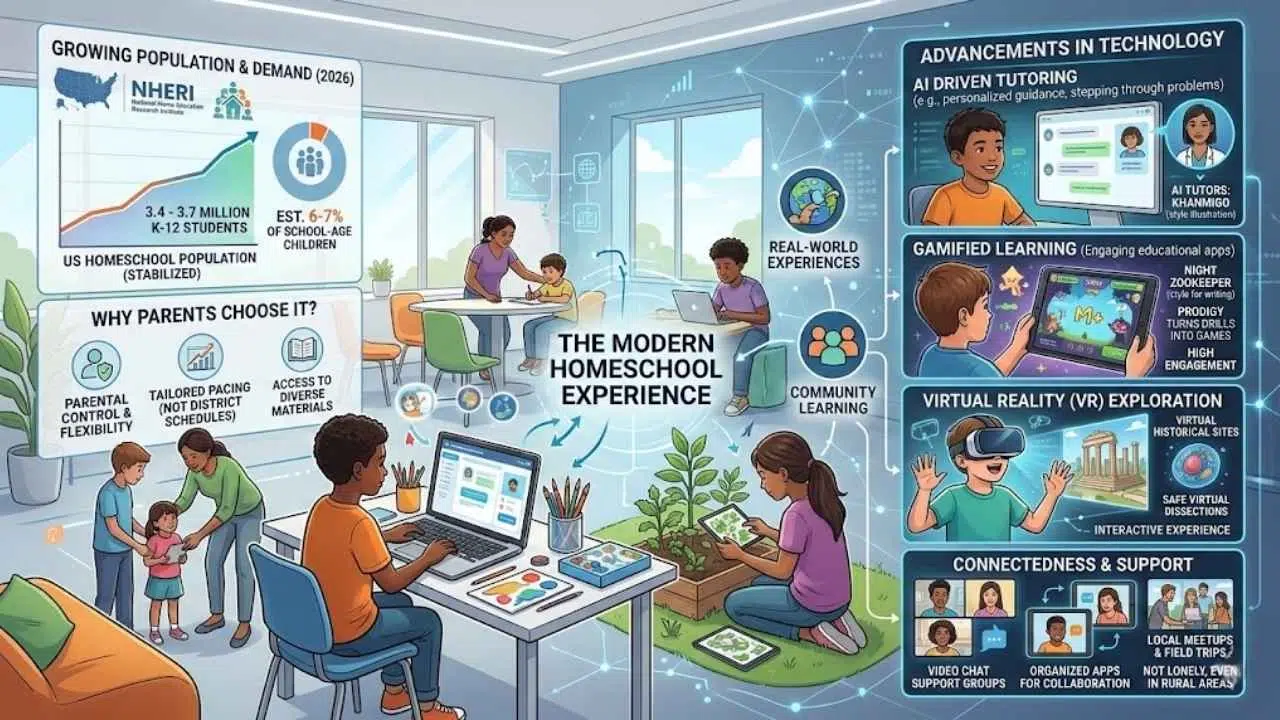
Homeschooling isn’t just about sitting at a desk at home anymore. It has evolved into a mix of real-world experiences, digital tools, and community learning. The days of isolation are long gone.
Growing popularity and demand
According to the National Home Education Research Institute (NHERI), the homeschool population has stabilized at around 3.4 to 3.7 million K-12 students in the U.S. for the 2025-2026 school year. That is roughly 6-7% of all school-age children.
Why the shift?
Parents are choosing this path for control and flexibility. They want to tailor the pacing to their child’s needs rather than following a rigid district schedule. Access to diverse materials grows each year, making it easier for parents to jump in without a teaching degree.
Advancements in technology for homeschooling
Technology has changed the game completely. It acts as a force multiplier for parents who might feel weak in a specific subject like Algebra or Chemistry.
- AI Tutors: Tools like Khan Academy’s “Khanmigo” now offer AI-driven tutoring that guides students through problems step-by-step instead of just giving answers.
- Gamified Learning: Apps like Night Zookeeper for writing or Prodigy for math turn drills into video games. This keeps engagement high without you needing to nag.
- Virtual Reality: Interactive whiteboards and VR headsets are finding their way into living rooms, allowing kids to “visit” historical sites or dissect virtual frogs without the mess.
These gadgets help families switch between worksheets and digital experiments instantly. Support groups now meet over video chat or organized apps, so families feel connected even if they live in rural areas.
Key Features of Modern Homeschool Curriculums
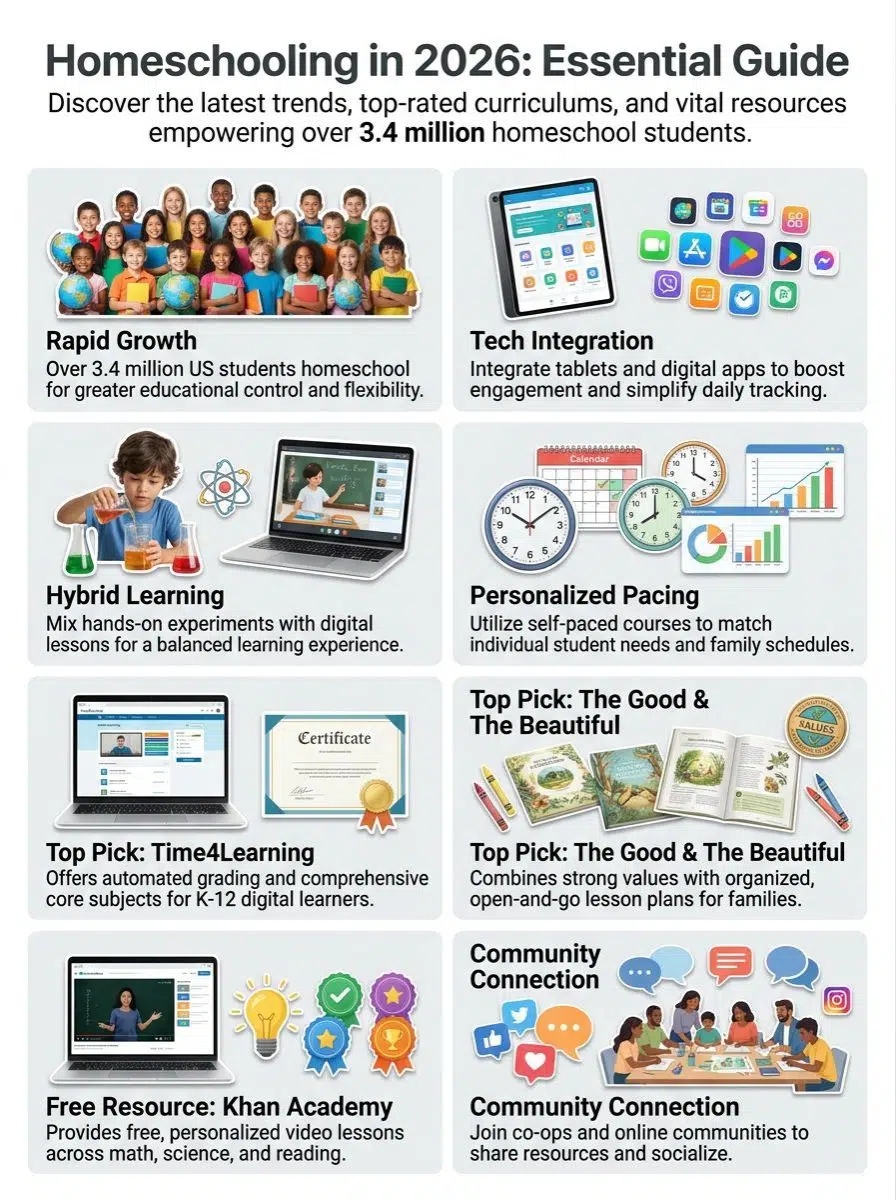
Modern programs offer more choices than ever before. The best ones spark interest and keep kids excited to learn day after day.
Flexibility and adaptability
Families now mix old and new teaching methods to fit their needs. This is often called “eclectic homeschooling.” You might use a hands-on science kit from KiwiCo one day and then switch to an online lesson the next.
Excel High School is a prime example of this flexibility. It gives both parents and students the freedom to work at their own pace. This makes it a top choice for independent learning in 2026, especially for athletes or performers who need a non-traditional schedule.
Parents can pause lessons for a family trip or spend two weeks on a single math concept if a child is struggling. This setup fits busy lives and matches how each child learns best.
Integration of hands-on and digital learning
Many parents in 2026 use a hybrid approach. Children might build a volcano from baking soda in the morning and then watch an online documentary about Pompeii in the afternoon.
Excel High School offers self-paced online lessons, while parents guide art projects or nature walks offline. This blend helps kids understand big ideas using their senses and technology together.
“The most successful homeschool days often combine screen time with dirt-under-the-fingernails activities. Balance is key.”
Online platforms like Time4Learning and Khan Academy work well alongside printed worksheets. Technology supports core subjects while creative play sparks critical thinking every day.
Focus on personalized education
Each child learns in their own way. A child who loves reading can use BookShark’s literature-based curriculum to soak up stories while picking up history facts. Another kid might prefer the visual, gamified style of an app.
Homeschool curriculums now blend digital lessons with real-world projects. They meet kids where they are strongest and help them grow where they need it most. Excel High School supports both parent-led learners and independent students with its accredited courses.
Essential Resources for Homeschooling
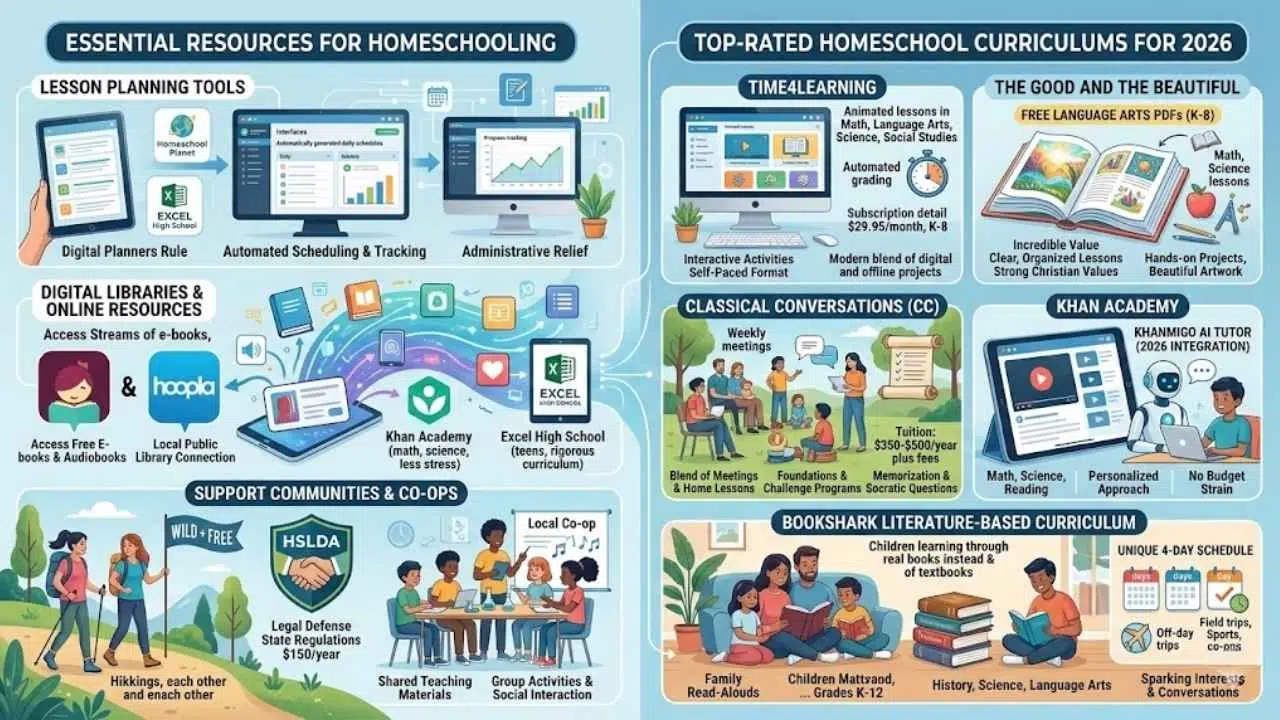
Strong tools can make each lesson smoother. Parents find that the right help lifts weight off their shoulders and lets them focus on connecting with their kids.
Lesson planning tools
Gone are the days of messy paper scraps. In 2026, digital planners rule the roost. Tools like Homeschool Planet allow you to plug in your specific curriculum and automatically generate a daily schedule.
If you miss a day due to a sick kid or a surprise field trip, these planners can automatically shift your entire schedule forward with one click. Excel High School also supports parent-led teaching by offering structured plans for each subject.
These smart tools save time and track progress. They act as your administrative assistant so you can be the teacher.
Digital libraries and online resources
Parents in 2026 find digital libraries everywhere. Apps like Libby and Hoopla connect to your local public library card, giving you instant access to thousands of e-books and audiobooks for free.
Sites like Khan Academy make learning math or science less stressful. Excel High School gives teens a rigorous curriculum that fits both independent study and parent-led teaching.
With demand for high-quality materials rising, many families use free guides for lesson planning while others choose paid platforms. Online education tools now match traditional resources in both engagement and results.
Support communities and co-ops
You do not have to do this alone. Families join communities to share resources and plan group lessons. In 2026, groups like Wild + Free have chapters all over the U.S. where mothers meet for nature hikes and encouragement.
HSLDA (Home School Legal Defense Association) is another critical resource. For about $150 a year, they provide legal protection and answer questions about state-specific regulations. Finding a local co-op helps with subjects that work better in groups, like biology labs or choir.
Joining a co-op might even cut down on costs by sharing teaching materials. Many parents now blend traditional methods with modern tools from these groups.
Top-Rated Homeschool Curriculums for 2026
This year’s best programs pack a real punch. Here is a look at the ones shining brightest for families right now.
Time4Learning offers an online program that works well for many different kinds of families. It is a subscription service that costs approximately $29.95 per month for K-8 students.
Many students use it because the lessons cover core subjects including math, language arts, science, and social studies. The interactive activities keep learners engaged. Parents love it because it includes automated grading, which saves hours of paperwork every week.
In 2026, Time4Learning fits right into modern needs by blending digital learning with offline projects. Its self-paced format helps both parent-led instruction and independent study work smoothly together. With monthly payment options and no contracts, families can try it out without breaking the bank.
The Good and The Beautiful stands out for its clear, organized lessons. It is widely praised for offering its Language Arts course PDFs (Levels K-8) for free. This makes it an incredible value for budget-conscious families.
Parents find it easy to guide their kids through reading, math, art, and science using this curriculum. It weaves in strong Christian values without feeling disjointed. It supports students with different learning styles by mixing hands-on projects and beautiful artwork.
Many parents like the flexibility of choosing where to start or stop based on their child’s needs. This program works well for beginners since it blends structure with choice.
Classical Conversations (CC) brings families together to learn with a blend of face-to-face small group meetings and parent-led lessons at home. In 2026, thousands of families across the United States use this curriculum.
Students meet once a week in local communities for the “Foundations” or “Challenge” programs. Tuition typically runs around $350-$500 per year plus fees, depending on the program level. Parents act as both teachers and guides, following well-planned lesson guides.
Using a classical approach based on memorization and Socratic questions helps students think deeply. The program offers support through local communities and online resources. It is ideal for extroverted parents and kids who want a consistent social group.
Khan Academy offers free online education for millions of homeschool families. Students get access to lessons in math, science, reading, and more. Kids can watch short videos at their own pace and then practice skills through interactive exercises.
The site gives instant feedback. A major update for 2026 is the integration of Khanmigo, an AI-powered tutor that helps students work through tough problems.
Parents use Khan Academy as a key resource for building flexible curriculums. It fits any grade level from K-12 and works well with other learning materials. Many families enjoy the personalized approach that supports each child’s needs without straining the budget.
BookShark Literature-Based Curriculum BookShark mixes classic novels, fun stories, and family read-alouds with clear lesson plans. Kids learn history, science, and language arts by reading real books instead of thick textbooks.
A unique feature of BookShark is its 4-day schedule. This built-in “off day” every week gives families time for field trips, co-ops, or sports without falling behind. Many parents use BookShark for grades K-12 because it keeps kids interested and sparks great conversations.
This curriculum supports different learning styles in 2026 and adapts to busy schedules. Parents get a handy guide so they can plan each week easily. About 3.4 million homeschool students enjoy flexible programs like this.
How to Choose the Right Curriculum for Your Family
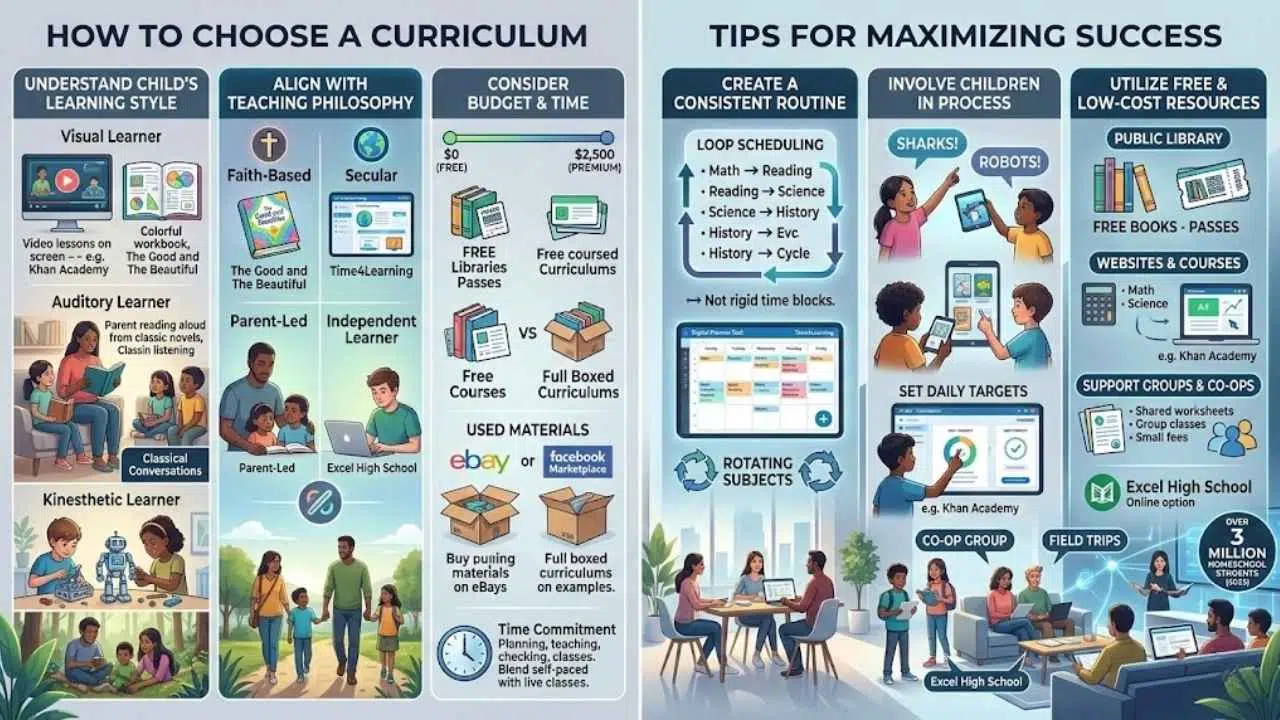
Picking a program feels like finding the right pair of shoes. It takes some trying on, but you will know when it clicks.
Understanding your child’s learning style
Kids have different ways of absorbing information. Some children are visual learners who need to see a diagram; others are kinesthetic learners who need to build a model with their hands.
| Learning Style | Recommended Approach |
|---|---|
| Visual | Video lessons (Khan Academy), colorful workbooks (The Good and The Beautiful) |
| Auditory | Read-alouds (BookShark), discussion groups (Classical Conversations) |
| Kinesthetic | Hands-on experiments, building kits, nature walks |
One child might love math games online with Khan Academy, while another prefers digging into stories through BookShark. Technology helps parents see which methods work best for each student.
Aligning with your teaching philosophy
Your teaching style shapes the home classroom. Some parents use faith-based curriculums like The Good and The Beautiful, while others prefer secular programs such as Time4Learning.
Excel High School supports both parent-led lessons and independent learning. In 2026, families choose from a huge range of resources that support their philosophy. Many parents opt for blended approaches, mixing tradition with innovation.
Considering budget and time commitments
Costs matter a lot. Curriculum prices differ, so families can find choices for every pocket. You can spend $0 using free programs like Khan Academy and the library, or up to $2,500 a year for premium all-in-one boxes.
Time is another big puzzle piece. Homeschooling takes planning, teaching, and checking work. Most families blend self-paced curriculums with live classes or digital modules to fit busy schedules.
Consider buying used curriculums on eBay or Facebook Marketplace to save money. This allows you to get high-quality materials without the full retail price tag.
Tips for Maximizing Homeschooling Success
Building good habits early sets the stage for steady progress. Kids often shine brightest when given a little freedom and creative choice.
Creating a consistent routine
Kids do best with structure, but it does not have to look like public school. Try “loop scheduling” instead of rigid time blocks. Make a list of subjects and just cycle through them in order, regardless of what time it is.
Many parents use digital lesson planning tools to map out their week and plug in activities from curriculums like Time4Learning. A reliable routine builds good habits fast and prevents daily chaos.
Parents can mix things up by rotating subjects or sneaking in hands-on projects between online lessons. Even small routines make big days feel smoother.
Involving children in the learning process
Let children help pick topics for study. Ask them, “What do you want to learn about this month?” You might be surprised when they say “sharks” or “robots.”
Let them choose some books from the digital library or select projects that spark their curiosity. In 2026, homeschool families see better results when students take part in planning lessons.
Many curriculums like Khan Academy encourage students to set daily targets. Joining co-ops lets children share what they learn with others their age, making school feel less lonely.
Utilizing free or low-cost resources
You do not need to spend a fortune to give your child a great education. Public libraries give families access to thousands of books and museum passes for free.
Websites like Khan Academy offer full courses in math and science at no cost. Homeschool support groups often share lesson planning tools and worksheets. Excel High School provides a self-paced online education option which fits various student schedules.
Many co-ops hold group classes or field trips for small fees. In 2025, over 3 million homeschool students used these types of resources to stretch their budgets.
Final Thoughts
Homeschooling in 2026 stands at the front of change, driven by smart tools and fresh ideas. Families now mix hands-on tasks with digital learning, building lessons that fit each child’s needs and spark real growth.
Picking from trusted curriculums like Time4Learning or Khan Academy is much easier now thanks to online reviews and clear guides. New planning tools make it quick to set routines, track progress, and keep things running smooth as a whistle.
If you want more help, groups like Wild + Free or HSLDA are just a click away. Every family can shape an education where kids love to learn. As my own kitchen-table student once told me with a grin between math flashcards, “Home school means every day feels new.”