Many people dream of living in Thailand, but figuring out if the LTR Visa Thailand fits your plan is not always easy. You might worry about high costs or strict rules, or you just want a smooth path to long-term residency. Did you know Thailand recently updated the LTR Visa rules for 2025 and 2026 to make it easier for expats and families? It sounds great, but hidden fees and tricky policies can still trip you up fast. Many people get excited about the low tax rates, only to get stuck on the specific insurance requirements or document legalization costs.
This post breaks down the pros, cons, and real costs behind the LTR Visa Thailand. I will explain each part step by step to help you make a smart choice. Curious what’s hiding in the fine print? Let’s walk through it together.
What is Thailand’s LTR Visa?
After learning about why living long-term in Thailand is gaining so much interest, the next step is understanding what makes the LTR Visa stand out. Thailand’s Long-Term Resident (LTR) Visa officially launched in September 2022.
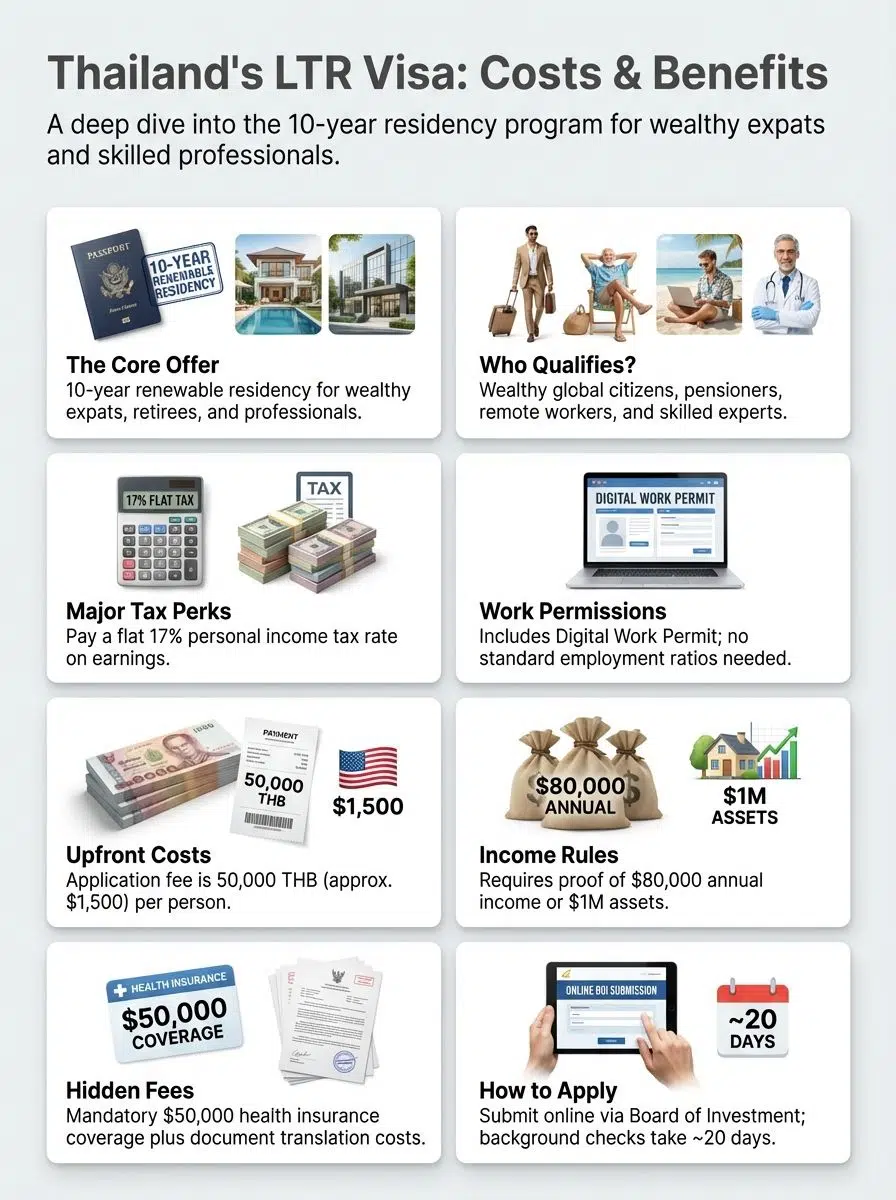
Managed by the Thailand Board of Investment (BOI), it aims to attract one million wealthy expats, retirees, skilled workers, and investors over five years. This visa helps people enjoy easier travel and better legal status while living in Thailand.
The LTR Visa program targets those with financial stability or special work skills. Applicants must meet strict income rules and health insurance requirements. For example, some categories previously needed proof of $80,000 annual income, though recent updates have relaxed this for specific groups.
The application comes with a government fee of 50,000 Thai Baht per person. That is approximately $1,500 USD. Eligible family members can join as dependents, too. As one official at the Thailand Board of Investment put it,
“Thailand has opened its doors wider, especially for global citizens who want more than just a tourist stay.”
Many see this as a gateway to enjoying tax benefits and improved work opportunities without giving up their home country citizenship. Unlike the standard tourist visas, this permit grants you permission to stay for up to 10 years (granted as a 5-year visa, renewable for another 5 years).
Types of LTR Visa Categories
Thailand offers several LTR visa types, each for different kinds of people. Each category comes with its own set of rules and perks, so it pays to know which fits your story.
Wealthy Global Citizens
People in this group must show proof of at least $1 million USD in assets. A major recent change is that you may no longer need to prove a personal income of $80,000 if you meet higher investment thresholds.
Specifically, if you have the $1 million in assets, you must invest at least $500,000 USD in Thai government bonds, foreign direct investment, or Thai property. This money must stay invested to keep your visa valid.
Large financial resources open many doors here. These citizens enjoy travel privileges and long-term living perks within Thailand’s immigration policy framework. Still, strict visa requirements and wealth criteria may keep some expats away from this residency permit path.
For those who meet all rules, it gives a legal stay and access to various benefits under the LTR Visa program without much fuss about regular renewals every year.
Wealthy Pensioners (Retirees)
After wealthy global citizens, retirees with strong savings may eye Thailand’s LTR visa too. Pensioners aged 50 or older can apply if they show at least $80,000 USD income per year from pensions or investments.
The rules also allow for applicants with only a $40,000 yearly income as long as they invest $250,000 in Thailand or have a medical insurance policy covering at least $50,000 USD. Note that this insurance requirement is lower than the $100,000 required for the O-A retirement visa.
Many enjoy low taxes on overseas money and relaxed visa requirements compared to other expat visas. “Thailand’s sunsets might outlast your socks,” one retiree joked while praising the easy pace of life and ready access to healthcare, often cheaper than back home.
Access to public hospitals comes with residency, but expect private care to cost extra; keep that in mind before booking your flight south.
Work-from-Thailand Professionals
Digital nomads and remote workers can use Thailand’s LTR Visa to work legally in the country for up to 10 years. You need proof of annual income over $80,000 for the past two years or $40,000 with a master’s degree, patents, or Series A funding.

There is a catch that trips up many applicants. Your employer must be a public company listed on a stock exchange or a private company with high revenue. The good news? The revenue requirement for private companies was recently lowered from $150 million to $50 million USD over three years.
The visa lets you bring your family and gives quick airport services plus a digital work permit. Local companies may hire you, too, but strict job lists apply.
Healthcare access improves, and long-term living becomes simple with this permit. Next comes information about highly-skilled professionals who also benefit from special conditions under this residency program.
Highly-Skilled Professionals
Engineers, scientists, and tech experts can apply for Thailand’s LTR Visa under this category. Applicants need at least five years of work experience in a targeted industry like automotive, digital, or affluent tourism.
You must earn at least $80,000 per year over the past two years. If your income is less than that but more than $40,000 per year, you will need a master’s degree or higher in a relevant field.
You may also show proof of special skills needed by Thai employers. A valid employment contract with a company in Thailand is required. The visa grants you permission to live and work long-term while giving access to tax incentives and healthcare benefits. Spouses and children can join your stay if all papers check out.
Spouses and Dependents of LTR Visa Holders
Spouses and children can be included with the main applicant’s LTR Visa. Each LTR Visa holder may bring a spouse and up to four dependents, usually kids under 20 years old.
Recent updates have expanded eligibility. Parents of the LTR holder may now qualify as dependents in certain situations. Dependents need to apply at the same time as the primary applicant, or soon after approval.
Everyone needs passports, birth certificates, proof of relationship, and sometimes school records for minors. The application fees stack up quickly since each dependent pays their own fee—about 50,000 Thai Baht per person.
Only married couples count. Thailand does not recognize common-law partners for this visa route yet. Dependents cannot work unless they qualify for their own visa status with separate requirements and fees.
Benefits of Thailand’s LTR Visa
This visa opens doors for people who want to stay longer and feel at home in Thailand. It offers perks that can make life easier, smoother, and sometimes even a little sweeter under the Thai sun.

Long-term residency
LTR Visa holders get up to 10 years of residency in Thailand, which beats the old one-year or five-year options. You can live, work, and travel in and out of the country with fewer headaches.
Kids and spouses also enjoy longer stays under your visa plan. No more yearly border runs or endless paperwork at immigration offices every few months.
Think about putting down roots, setting up a real home, maybe even buying property. Many expats gain peace of mind knowing they meet legal residency requirements for a long-term stay in Thailand.
Tax incentives
LTR Visa holders in Thailand enjoy a flat 17% personal income tax rate for earnings from work done in the country within targeted industries. Most expats pay much more with standard progressive rates reaching up to 35%.
There is an even bigger benefit for Wealthy Global Citizens, Pensioners, and Work-from-Thailand Professionals. You are exempt from Thai tax on foreign income remitted to Thailand. This is a critical advantage following the 2024 Revenue Department order that now taxes most other tax residents on foreign income.
Wealthy pensioners and global citizens sometimes save thousands per year through these rules. People working under this visa also avoid extra taxes on their foreign assets unless they bring money into Thailand during the same year it was made.
With these financial perks, skilled workers see better value compared to other long-term stay options. Work authorization benefits come next for qualified professionals who want more than just residency.
Professionals can apply for work authorization with Thailand’s LTR Visa. This means no separate work permit is needed, saving time and stress. The visa covers both highly-skilled workers and remote employees.
Tech experts, engineers, and digital nomads fit right in this group. Visa holders receive a Digital Work Permit (DWP) from the Thai government.
You can hold several jobs or consult across companies with one status. No more juggling paperwork each year or fearing surprise visits from immigration officers.
Job changes within Thailand are easy to handle, too; just update your details online with the authorities. Foreign professionals also enjoy fast access to immigration services through special lanes at airports and local offices.
Access to healthcare and education
Having a job permit opens more doors for foreign residents in Thailand. One big plus is easier access to healthcare and education. Public hospitals accept expats, but many people choose private care for faster service.
Private insurance is often needed, and prices go up with age or pre-existing issues. Children of LTR visa holders can join top-tier international schools like ISB (International School Bangkok) or NIST.
These schools are not cheap. Annual tuition starts at 200,000 Thai baht and climbs much higher in cities like Bangkok or Chiang Mai. Many families plan for these costs before a long-term stay begins. Quality services exist, but good planning makes all the difference for smooth living abroad.
Drawbacks of Thailand’s LTR Visa
Some parts of this visa might make you scratch your head or sigh out loud. People often find the rules, fees, and hoops a bit much, so it’s smart to keep reading before packing your bags.
High application fees
Sticker shock hits fast with Thailand’s LTR Visa. The application fee runs at least 50,000 Thai Baht per person, which is about $1,500. That price does not cover extra paperwork or service charges along the way.
Each family member needs to pay this steep amount, too. People hoping for long-term living and work opportunities in Thailand should budget for these costs up front.
High fees can feel like a roadblock to residency, especially for families or retirees on fixed incomes. For many expats, the price tag alone gives pause before filling out visa applications or planning that jump to Southeast Asia.
Stringent eligibility requirements
Moving from high application fees to what comes next, things get even trickier. The LTR Visa asks for strict income and asset numbers. For example, wealthy global citizens must show at least 1 million dollars in assets.
Retirees need retirement income of $80,000 or more per year, or at least $40,000 with health insurance worth $50,000 USD. Proof does not stop there.
Some categories ask for investments of $500,000 in Thailand real estate or bonds. Professionals need skills on special lists plus a work contract with proven monthly pay above set limits.
Paperwork stacks up fast; every detail is double-checked by immigration officials who miss nothing. Even spouses and dependents have rules to meet, your family cannot just tag along without proof of ties and funds.
These visa requirements feel like climbing a mountain barefoot if you do not already fit the “wealthy expat” mold. Applicants often find themselves hunting down rare documents or paying experts just to avoid mistakes that would send them back to square one.
Limited flexibility for dependents
Dependents must follow strict rules under Thailand’s LTR Visa. Only a spouse and up to four children under 20 can get the visa along with you. Adult children or other family members do not qualify, even if they rely on you for support. Kids over 20 lose their dependent status and their right to stay under this permit. Work opportunities for dependents are also limited.
Spouses can apply for work authorization, but children cannot work at all. Sometimes families face hurdles with school registration or healthcare access, too, especially if dependents’ visas have different terms than the main holder’s visa.
These limits make long-term living in Thailand tricky for some expat families who want more flexibility or plan to stay many years together.
Hidden Costs of the LTR Visa
Some costs hide in plain sight and can catch you off guard. Little expenses add up fast, making your wallet feel much lighter than expected.
Additional documentation fees
Extra paperwork can empty your pockets fast. You may pay for things like certified translations, notary stamps, or courier services. Each family member often needs a set of papers, and fees mount up quickly.
Expect to pay for police checks from your home country, bank statements, or proof of income letters. For US citizens, documents often need authentication by the US Department of State and then legalization by the Thai Embassy.
This double-step process can cost $150 to $200 per document if you use a service to handle the logistics. In Thailand, official document certification can cost $10 to $30 per page.
Added up over several forms, these hidden costs might make you squirm a bit more than you planned during the visa application process.
Healthcare and insurance costs
Hospital visits in Thailand can be affordable for basic care, but prices climb fast for major treatments. Private hospitals often charge more than $100 just for a quick doctor’s check-in.
Major surgery or long stays may run up bills into the thousands, even tens of thousands. LTR Visa holders must show proof of health insurance with at least $50,000 USD coverage each year.
This is not pocket change; some plans start around $800 per person and go much higher based on age or medical history. For applicants over 70, premiums can easily exceed $3,000 to $4,000 per year.
Insurance companies have strict rules about preexisting conditions. They might refuse certain claims if you had a problem before applying. Sometimes policies exclude common needs like dental work or mental health support, too.
Out-of-pocket costs add up quickly if your plan does not cover enough services or has high deductibles. The next hidden cost waits patiently: taxes and financial surprises tied to income and assets while enjoying your Thai residency benefits.
Tax implications for income and assets
Healthcare and insurance costs are only the tip of the iceberg. Taxes on income and assets can surprise many newcomers with a long-term residency permit.
Thailand offers some tax benefits, but rules can get tricky fast. A new rule effective January 1, 2024, mandates that Thai tax residents must pay tax on foreign income brought into Thailand.
However, LTR Visa holders (specifically Wealthy Global Citizens, Pensioners, and WFH Professionals) are explicitly exempt from this rule. This is a massive hidden benefit compared to the Thailand Elite (Privilege) Visa.
Always check if your global earnings or property sales create a duty to file taxes locally in addition to back home. This puzzle adds another layer for expats aiming for a smooth living under new immigration policies.
How to Apply for Thailand’s LTR Visa
Gather your paperwork, follow the simple steps online, and reach out to TIESC if you get stuck; they’re just a call or email away for every twist and turn!
Required documents
Getting a Thailand LTR Visa needs paperwork. Each document helps show that you meet the visa requirements.
- Passport with at least 6 months of validity, plus blank pages for stamps.
- Recent passport-sized photos, color, size 4×6 cm, clear and without a hat or sunglasses.
- Proof of income, like pay slips, employment letters, pension documents, or bank statements showing yearly income, meets the financial requirements for your visa category.
- Police clearance certificate from your home country showing no criminal record; this is vital to prove legal compliance before a long-term stay.
- A medical certificate issued within three months before the application; this should confirm no serious diseases as listed by the Thai immigration policy.
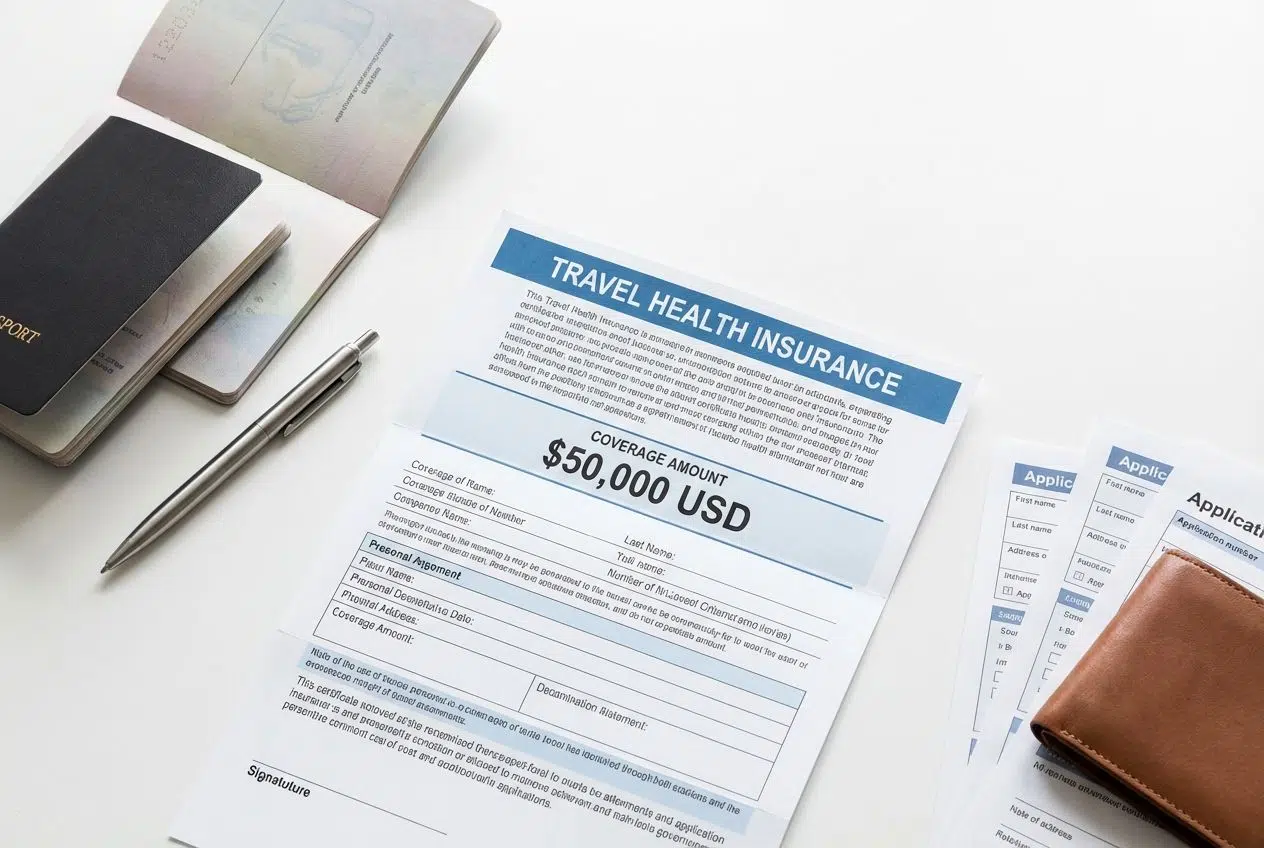
- Health insurance covering $50,000 USD minimum for medical emergencies and hospital care in Thailand; some expats use international plans for this purpose.
- Evidence of investments or assets if applying under the Wealthy Global Citizen route; this may include deeds, share certificates, or title ownership papers exceeding the required amounts.
- Marriage certificates or birth certificates for spouses and dependents seeking benefits; these help process family applications smoothly with proper links to the main LTR Visa holder.
- Work permit copy (if currently working in Thailand), useful proof for professionals switching to an LTR residency permit while staying compliant with labor laws.
- Proof of address in Thailand, such as a rental contract or utility bill; officials want assurance that you have suitable accommodation during your long-term living arrangement.
Application process overview
Start by checking if you meet all visa requirements. Fill out the online application form on Thailand’s Board of Investment website. Upload your documents, like financial statements and proof of health insurance.
After submission, a background screening takes place, which can last up to 20 days. Once approved, pay the fee, about 50,000 Thai Baht per applicant.
You will then book an appointment at a Thai embassy or consulate for final checks and to get your residency permit stamped in your passport. Bring originals plus copies of all documents on appointment day.
Some expats share that missing paperwork leads to delays or rejections; double-check everything before arrival. If you apply as a family, submit applications together to make things easier for everyone involved.
Communicate with the Thailand Investment and Expat Services Center (TIESC) using email or phone for updates or questions about long-term living in Thailand.
Contacting the Thailand Investment and Expat Services Center (TIESC)
Stepping from the application process, you may need help understanding the next steps. The Thailand Investment and Expat Services Center (TIESC) stands ready to assist with your LTR Visa questions.
Reach them by phone at +66 2093 1199 or drop an email to info@thailandehc.com. Walk-in service is available at their Bangkok office if you prefer a face-to-face chat.
TIESC answers questions about residency permits, financial requirements, and visa rules. Staff can guide you through any paperwork or offer advice on long-term living in Thailand as an expat.
They explain documents for spouses and dependents, too. For official details or updates about immigration policy or work opportunities, TIESC should be your go-to contact point.
The Bottom Line
Thailand’s LTR Visa opens doors to long-term living, work opportunities, and big tax benefits for many expats. For those who fit the wealth criteria or need residency permits quickly, this visa can turn dreams of staying in Thailand into reality.
The fees are steep, though, starting at 50,000 baht per person. Extra costs like healthcare access and documentation stack up fast. Visa requirements stay strict; meeting financial requirements or proving your job skills is no walk in the park. Travel privileges sweeten the deal, but legal compliance always sits front and center for a smooth stay.
Weigh every part carefully before you make any major move. Hidden costs might tip the scales more than you think.