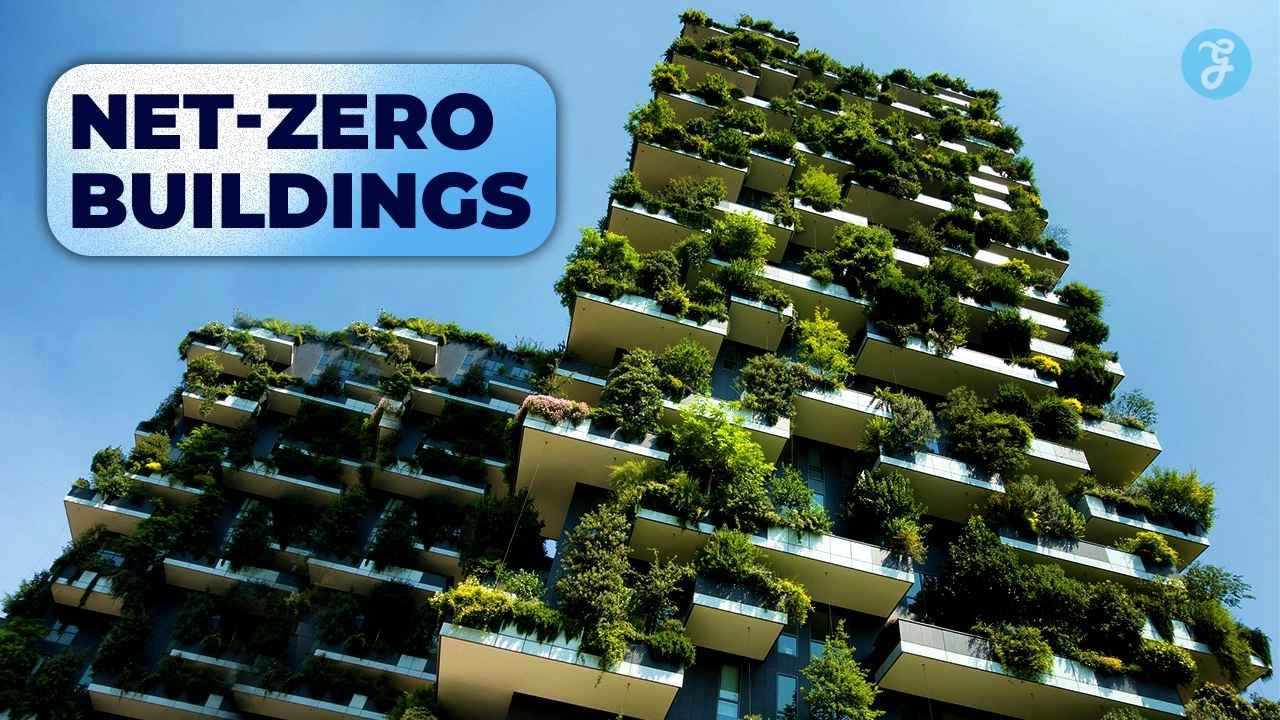
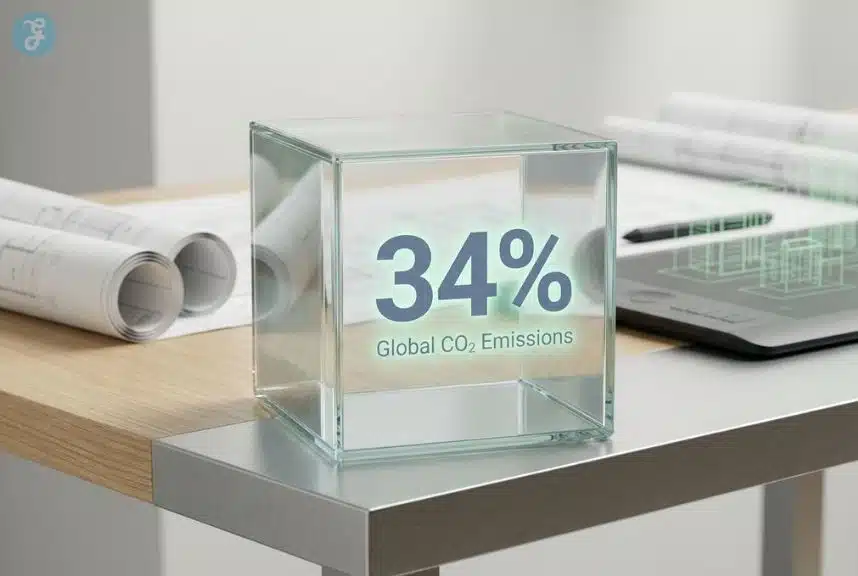
Net-Zero Buildings, often called zero-emission buildings, generate as much clean energy as they consume over the course of a year. They rely on solar panels, wind turbines, and high-performance insulation to maintain comfortable temperatures without the massive carbon footprint of traditional structures. This shift is critical. According to the 2024 Global Status Report for Buildings and Construction, the building sector is responsible for 34% of global energy-related CO2 emissions. That figure makes one thing clear: changing how we build is no longer optional.
You might have noticed that “green building” isn’t just a buzzword anymore; it is becoming the regulatory standard. For instance, New York City’s Local Law 97 now imposes fines on buildings that exceed emission limits, and California’s Title 24 requires solar and battery readiness for new construction.
So, I am going to break down exactly what defines a net-zero building, from the specific materials that make it possible to the financial incentives that make it affordable. We will look at real-world examples, like the Bullitt Center, and explore how new 2025 tax credits are changing the math for developers and homeowners alike.
Discover how these buildings work step-by-step next!
Key Characteristics of Net-Zero Buildings
Net-zero buildings do more than just lower energy bills. They fundamentally change the relationship between a structure and the power grid. To achieve this balance, every project must focus on three core pillars: reducing demand, generating supply, and eliminating fossil fuels.
Energy efficiency and design
The most effective kilowatt-hour is the one you never use. Smart design starts with Passive House principles, which focus on airtight construction and solar orientation. By facing a building south (in the Northern Hemisphere), builders can capture free heat in the winter while using overhangs to block the intense summer sun.
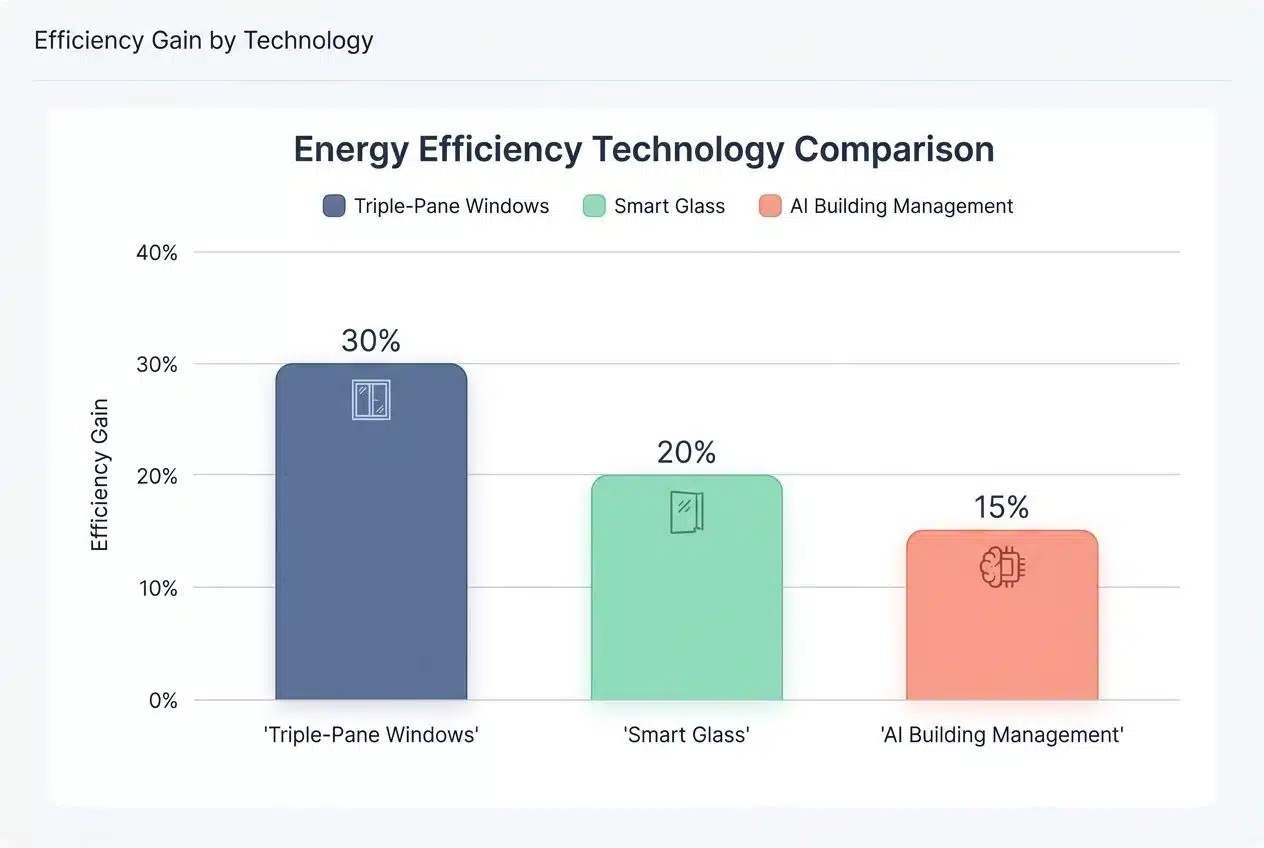
Windows are a major weak point in older buildings. In a net-zero project, you will typically see triple-pane windows filled with argon or krypton gas. While a standard double-pane window might have an R-value (insulation rating) of around R-3, modern triple-pane models can reach R-7 or R-8. This difference significantly reduces the load on heating and cooling systems.
Lighting is another easy win. LED technology has matured to the point where smart systems, like Philips Hue or commercial systems from Lutron, can adjust brightness based on the amount of natural daylight available. This practice, known as “daylight harvesting,” can cut lighting energy use by up to 60%.
Use of renewable energy sources
Once energy demand is minimized, the remaining needs must be met with on-site renewables. Solar photovoltaics (PV) are the standard solution. In 2025, commercial solar panel efficiency has improved, with high-end monocrystalline panels from brands like SunPower or REC reaching 22-24% efficiency. This allows buildings with limited roof space to generate more power than before.
For larger commercial sites, other options exist:
- Small-scale wind turbines: Useful in open, windy regions, though less common in dense urban areas due to zoning and turbulence.
- Geothermal heat pumps: These systems use the stable temperature of the earth to heat and cool buildings. They are incredibly efficient, often delivering 4 units of heat for every 1 unit of electricity used.
Elimination of on-site emissions
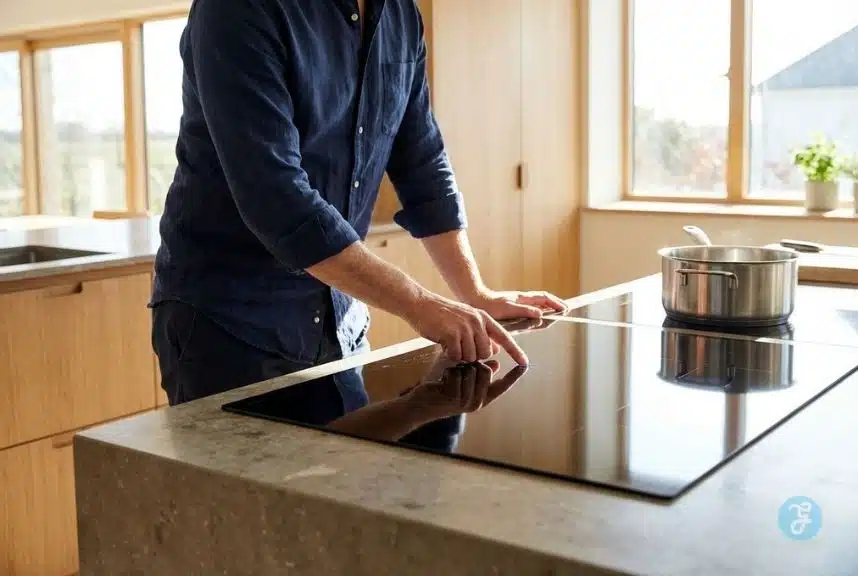
True net-zero buildings must be all-electric. This means removing gas lines entirely. You cannot achieve zero emissions if you are burning natural gas for heat or cooking.
“Electrification is key to making buildings truly net-zero,” says NREL’s Dr. Shanti Pless. “You have to stop burning things inside the building to clean up the air outside.”
Replacing gas requires high-performance alternatives:
- Induction Cooktops: These offer faster heating and better control than gas stoves and are now standard in high-end green kitchens.
- Heat Pump Water Heaters: These use electricity to move heat rather than generate it, making them 2-3 times more efficient than standard electric resistance water heaters.
Grid Connection and Net Zero
A net-zero building is rarely an island. It acts as an active node in the larger energy grid. On sunny summer afternoons, these buildings export excess power to the utility. At night, they draw power back. The “net” in net-zero refers to this annual balance.
Smart meters and Energy Management Systems (EMS) are the brains behind this exchange. Tools like the Tesla Powerwall gateway or Enphase Enlighten software track energy flow in real-time. This connectivity allows building owners to participate in “Demand Response” programs, where utility companies pay users to reduce usage during peak hours.
The Role of Virtual Power Plants (VPPs):
In 2025, we are seeing a rise in Virtual Power Plants. This is where thousands of homes with batteries connect to form a massive, shared energy reserve. In states like California and Texas, homeowners earn hundreds of dollars a year by allowing the grid to tap into their stored battery power during emergencies.
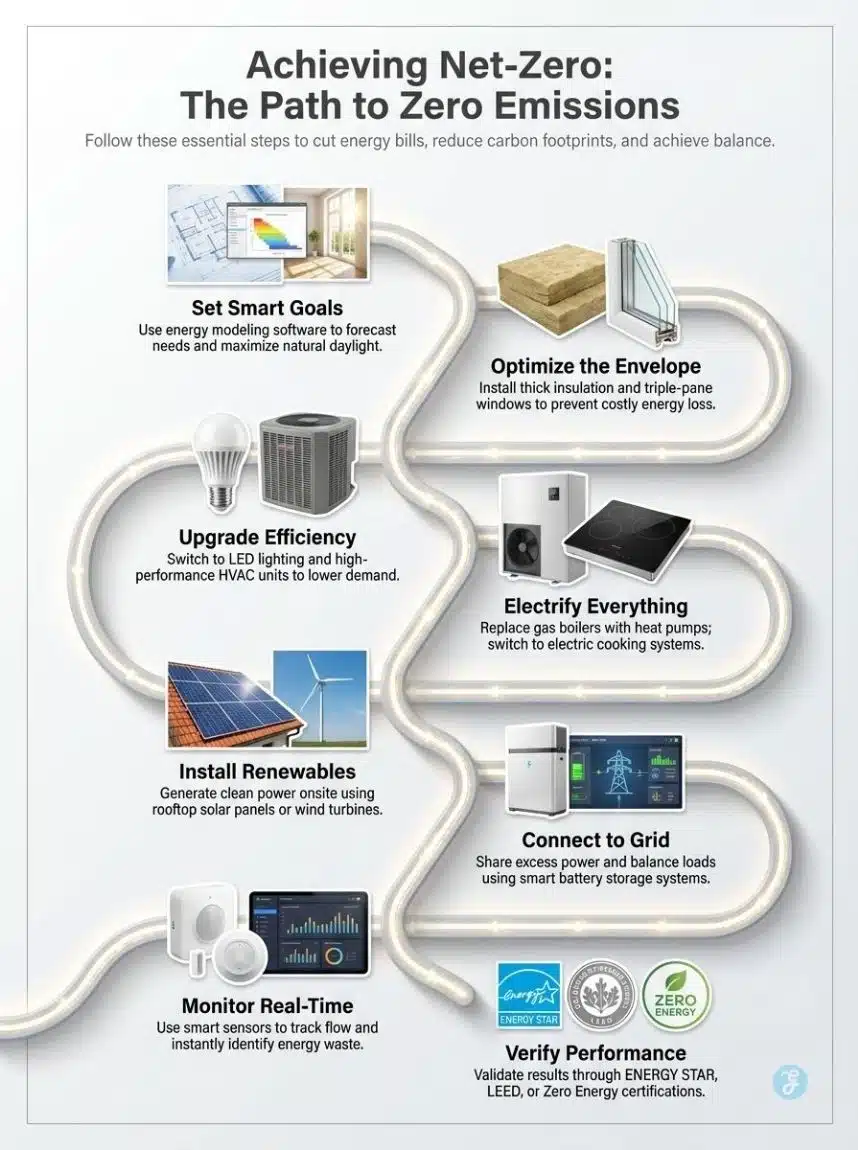
How net-zero buildings achieve energy balance: A step-by-step guide
Achieving net-zero status requires a rigorous, data-driven process. You cannot just guess at the insulation levels and hope for the best.
- Establish an Energy Utilization Intensity (EUI) Target: Before drawing a single line, set a specific goal for energy use per square foot per year.
- Run Energy Models Early: Use software like EnergyPlus or IESVE to simulate how the building will perform under different weather conditions.
- Optimize the Envelope: Select materials like Cross-Laminated Timber (CLT) or insulated concrete forms (ICF) to create a thermal battery that holds temperature.
- Select High-Efficiency Mechanicals: Install Variable Refrigerant Flow (VRF) HVAC systems from manufacturers like Daikin or Mitsubishi for precise zone control.
- Size the Renewable System: Calculate the solar array size needed to cover 105% of the modeled energy load (the extra 5% accounts for degradation and unexpected usage).
- Commissioning: Have a third-party engineer test every system to ensure it works as designed. A 2024 study found that uncommissioned buildings use 13% more energy on average.
- Monitor and Adjust: Use a dashboard to track real-time performance. If energy spikes, investigate immediately.
Strategies to Achieve Zero Emissions
Every step in this journey matters. Smart choices and small changes can lead to impressive results. Let’s look at the specific strategies that professionals use to get the job done.
Incorporating energy-efficient materials
The materials you choose define the building’s carbon footprint before it even opens. Builders are increasingly turning to carbon-storing materials. For example, Hempcrete, a bio-composite material made of the inner woody core of the hemp plant mixed with a lime-based binder, provides excellent insulation and actually sequesters carbon dioxide as it cures.
Another major trend is Smart Glass. Companies like View and SageGlass manufacture windows that tint automatically in response to sunlight. This dynamic control reduces the cooling load by blocking heat gain during the hottest parts of the day, eliminating the need for blinds and lowering HVAC costs by up to 20%.
Installing renewable energy systems
Solar is the workhorse of net-zero. But the technology has evolved. Bifacial solar panels, which capture light on both the front and back sides, are becoming standard for commercial flat roofs. They can increase energy yield by 10-20% by capturing sunlight reflected off the white roof membrane.
Battery storage is the necessary partner to solar. In 2025, the price of lithium-ion battery packs dropped to historic lows of around $108 per kWh. This affordability makes it feasible for more buildings to store solar power for nighttime use, maximizing their independence from the grid.
Optimizing building operations
Even the best building will fail if managed poorly. Modern facilities use AI-driven platforms like Honeywell Forge or Siemens Desigo to optimize operations autonomously. These systems learn the building’s thermal patterns, how fast it heats up or cools down, and adjust the HVAC schedule to save energy without sacrificing comfort.
| Material/Technology | Primary Benefit | Estimated Efficiency Gain |
|---|---|---|
| Triple-Pane Windows | Reduces heat loss/gain | 20-30% improvement over double-pane |
| Smart Glass (Electrochromic) | Dynamic heat blocking | Up to 20% reduction in cooling load |
| AI Building Management | Automated optimization | 10-15% reduction in total energy use |
Net zero building case studies and global commitments: Industry examples
The Edge in Amsterdam stands as a classic example of sustainable architecture. This green building uses solar panels and smart lighting to lower energy use. Its design helps it use 70 percent less electricity than similar office buildings.
In the United States, the Hotel Marcel in New Haven, Connecticut, set a new standard in 2022. It became the first net-zero hotel in the country. The building uses a Power-over-Ethernet (PoE) lighting system and relies entirely on on-site solar generation and battery storage, functioning 100% off electricity without any natural gas connection.
Big tech is also driving this shift. Google’s Bay View campus in California features a distinct “dragonscale” solar skin. The roof is made of 90,000 silver solar panels that generate 40% of the campus’s energy needs, with the rest coming from nearby wind farms. It demonstrates that solar can be a beautiful architectural element, not just an add-on.
Industry groups like the World Green Building Council have set ambitious targets: all new buildings must be net-zero carbon by 2030, and all existing buildings by 2050. These are not just suggestions; they are becoming requirements for obtaining financing from major global banks.
Federal Net Zero Energy Building Goals
The U.S. government is the country’s largest property owner, and it is using that power to move the market. Under Executive Order 14057, the federal government has committed to achieving a net-zero emissions building portfolio by 2045, with a 50% reduction by 2032.
Agencies are now required to prioritize electrification. For example, the General Services Administration (GSA) is allocating billions from the Inflation Reduction Act to upgrade federal courthouses and office buildings with emerging low-carbon technologies. This massive buying power drives down the cost of green tech for the private sector.
Examples of Net-Zero Buildings
Many buildings now reach net-zero goals, showing real results in energy use and emissions reduction. These projects set strong standards for both design and performance.
Residential projects
In the residential sector, “Passive House” certification is the gold standard. A great example is the growth of Zero Energy Ready Homes (ZERH), a DOE program. Major builders like KB Home and Beazer Homes have committed to building ZERH-certified communities in California and Arizona. These homes come standard with high-efficiency heat pumps, advanced insulation, and solar-ready roofs.
Across Europe, thousands of families now live in “PlusEnergy” homes. These buildings produce more power than they use each year thanks to solar roofs and storage batteries, effectively eliminating electricity bills for the occupants.
Commercial buildings
Commercial buildings use a lot of energy. Offices, hotels, and shopping centers often run lights, elevators, heating, and cooling all day. Retail giants are stepping up. IKEA, for instance, has installed nearly 1 million solar panels on its stores worldwide and owns huge wind farms to offset its remaining footprint.
Many stores now buy clean electricity from wind or local solar farms to help reach net-zero emissions targets by 2030 or sooner. Smart sensors turn off devices when not needed, so no extra power is wasted. Efficient HVAC systems cut down greenhouse gas emissions linked with building operations.
Overcoming challenges in net zero building: Solutions for cost, technology, and performance
The biggest barrier to net-zero remains the upfront cost. Historically, green buildings cost 5-10% more to build than standard ones. However, the Inflation Reduction Act (IRA) has fundamentally changed this ROI calculation. The Section 48 Investment Tax Credit (ITC) offers a base credit of 30% for solar and battery storage systems, which can rise to 40% or even 50% if the project uses domestic materials or is located in a low-income community.
Technology costs are also plummeting. As mentioned earlier, lithium-ion battery prices have dropped significantly in 2025. This makes “peak shaving”, using battery power when grid electricity is most expensive, a financially viable strategy for almost any commercial building.
To reach strong performance goals, teams check systems often using energy modeling tools for each stage of the project. This prevents “performance drift,” where a building is designed to be efficient but is operated inefficiently.
Net-zero building standards, regulations, and certification frameworks
Certifications provide the roadmap for achieving these goals. The landscape is evolving quickly.
- LEED v5: Released in 2025, the newest version of the Leadership in Energy and Environmental Design standard explicitly prioritizes decarbonization. It dedicates nearly 50% of its points to climate action, rewarding operational carbon reduction and low-embodied carbon materials.
- Living Building Challenge 4.0: This is the most rigorous standard available. It requires buildings to be regenerative, meaning they must produce 105% of their energy and treat all water on-site.
- Local Regulations: In New York City, Local Law 97 has set strict carbon caps for buildings over 25,000 square feet. Building owners face fines of $268 for every ton of carbon over the limit, creating a powerful financial incentive to retrofit immediately.
Future trends and innovation in net-zero building design
The future of net-zero is intelligent and integrated. We are moving beyond simple motion sensors to predictive AI control. Companies like BrainBox AI are deploying systems that read weather forecasts and adjust HVAC settings hours in advance, reducing energy waste by up to 25% without human intervention.
Solar technology is also becoming invisible. Perovskite solar cells are a new class of materials that can be printed onto flexible surfaces or even transparent glass. While still scaling up, they promise efficiency rates exceeding 30%, far higher than traditional silicon. This could eventually turn every window in a skyscraper into a power generator.
Cities are testing “net-zero neighborhoods” using shared heat pumps and microgrids. This “district energy” approach allows a data center, which produces excess heat, to pipe that warmth to a nearby apartment complex, closing the loop on energy waste.
Final Words
Net-zero buildings are changing how we live and work for the better. These spaces help cut down on pollution, save money, and protect our environment now and in the future.
Dr. Lisa Meyers is a leader in green building science. She studied Environmental Engineering at Stanford University and holds a Ph.D. in Sustainable Architecture from MIT. With over 22 years of experience, Dr. Meyers has guided many large projects to net-zero success worldwide.
“Net-zero isn’t just about the technology we install; it’s about a fundamental shift in mindset,” says Dr. Meyers. “From what I’ve seen, the most successful projects are the ones where the owner, architect, and builder align on the energy goals on day one.”
According to Dr. Meyers, the data is clear: the operational savings of net-zero buildings often pay back the initial premium in 7 to 10 years. With the new tax incentives available in 2025 and 2026, the payback period can drop to under 5 years for some commercial projects.
She suggests that if you are a homeowner, start small. Get a home energy audit to find the leaks. If you are a business owner, look at your lighting and HVAC controls first. The path to zero emissions is a step-by-step process, but the financial and environmental rewards are well worth the effort.