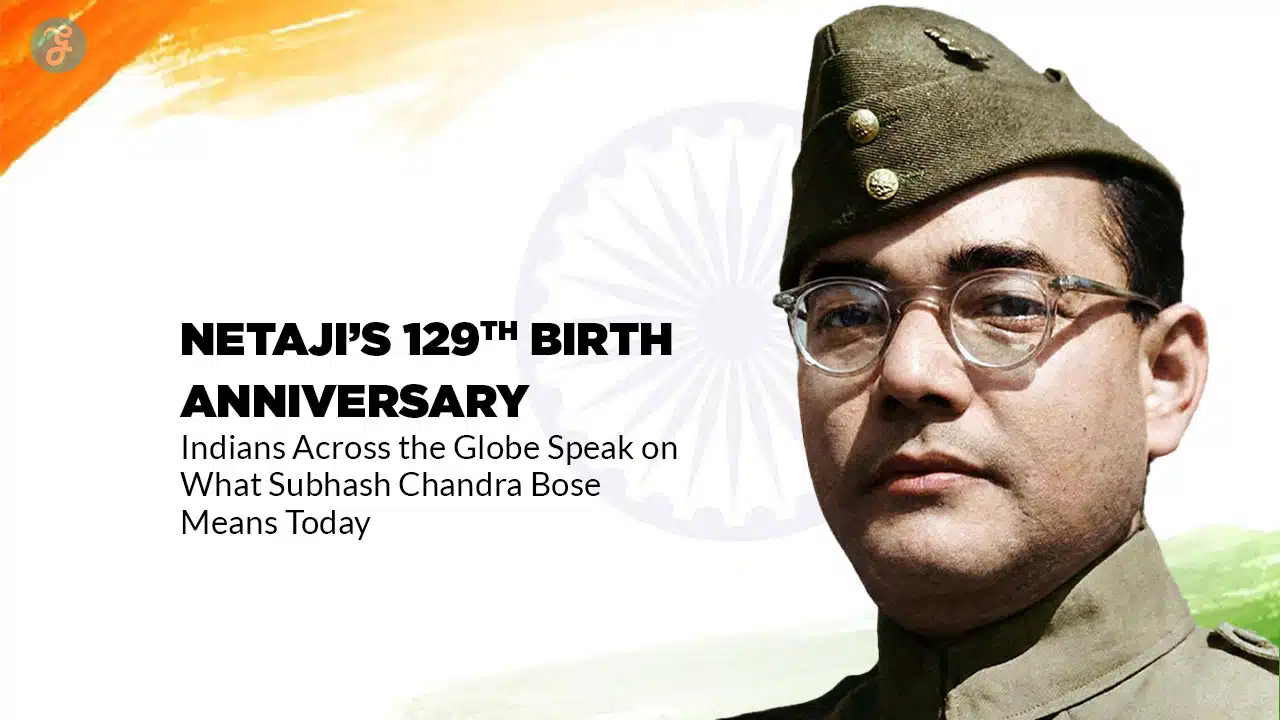
Every nation has its icons. But only a few leaders continue to provoke questions long after history has canonised them. Subhash Chandra Bose, Netaji to millions of Indians belongs firmly to that rare category. January 23, observed as Parakram Diwas, marks the birth anniversary of one of India’s most decisive and unconventional freedom fighters. Netaji’s life was defined by action over rhetoric, urgency over gradualism, and an unshakeable belief that political freedom could not be begged for, it had to be seized. Netaji Subhash Chandra Bose’s 129th birth anniversary is therefore not merely a date of remembrance, but a moment that invites reflection on the relevance of his ideas in contemporary India. Yet, decades after Independence, his legacy remains complex, layered, and sometimes contested.
Public memory of Netaji often arrives through ceremonial tributes, official speeches, and textbook summaries. But how does he live on in the everyday imagination of Indians today, across generations, professions, geographies, and lived realities?
To find out, Editorialge turned to a classic journalistic form: the vox pop… short for vox populi, meaning “voice of the people.” Instead of expert commentary or ideological framing, this format listens directly to ordinary citizens, all responding to a single, shared question:
“On Netaji Subhash Chandra Bose’s birth anniversary, what does he represent to you today?”
What emerges is not a single narrative, but a chorus… emotional, reflective, imperfect, and deeply human.
Netaji Subhash Chandra Bose’s 129th birth anniversary: A Freedom Fighter Who Refused to Be Predictable
Born on January 23, 1897, in Cuttack, Subhash Chandra Bose rose rapidly within the Indian National Congress before breaking decisively from its dominant leadership over ideological differences. While he respected Mahatma Gandhi, Netaji fundamentally disagreed with the belief that freedom could be achieved through non-violence alone.
His escape from British surveillance, journey across continents during World War II, and eventual leadership of the Indian National Army (INA) made him a symbol of daring resistance. His call: “Give me blood, and I will give you freedom”, remains one of the most stirring slogans in India’s political history.
Yet Netaji was not merely a militant nationalist. He was also a modern thinker, deeply influenced by global politics, discipline, scientific temper, and the idea of a strong, socially just Indian state.
In 2026, as India navigates questions of leadership, national purpose, and global standing, Netaji’s legacy feels less archival and more urgently contemporary.
The Voices of India Speak
The Cultural Torchbearer & Educator in United States
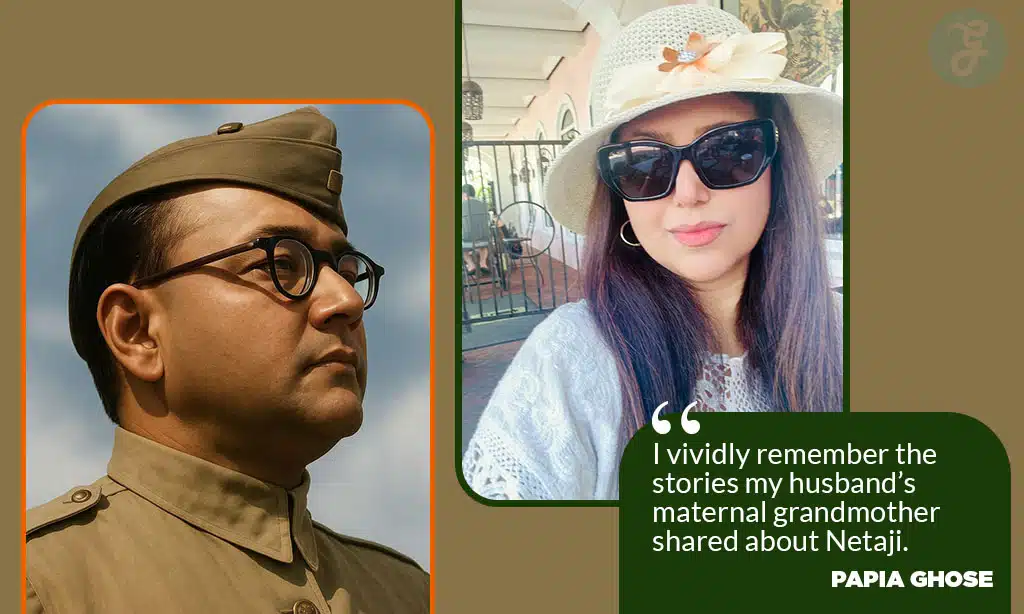
Papia Ghose, Director of Nritangyan Dance Academy and a High School Mathematics teacher in the Dallas, Fort Worth area, USA, reflects on Netaji through memory, inheritance, and lived history:
“Subhas Chandra Bose was not only a brave freedom fighter for India; his thinking was radically different from that of many other national leaders of his time. He continues to be a profound source of inspiration, especially for young people who believe that conviction must be matched with courage.”
She recalls how Netaji’s fire was not abstract, but personal, passed down through generations:
“I vividly remember the stories my husband’s maternal grandmother Anita Dutta shared. She herself was part of the Indian National Army and had the rare opportunity to meet Netaji in person. She described him as intensely focused, deeply disciplined, and driven by an unwavering commitment to India’s freedom.”
What stayed with her most was not just the history, but the humanity:
“She often spoke of the sparkle in his eyes, a reflection of passion and purpose. Netaji’s contribution to India’s freedom movement will always be written in golden letters, remembered not only for courage and leadership, but for an indomitable spirit that refused to surrender.”
The Teacher Who Wants to Know More
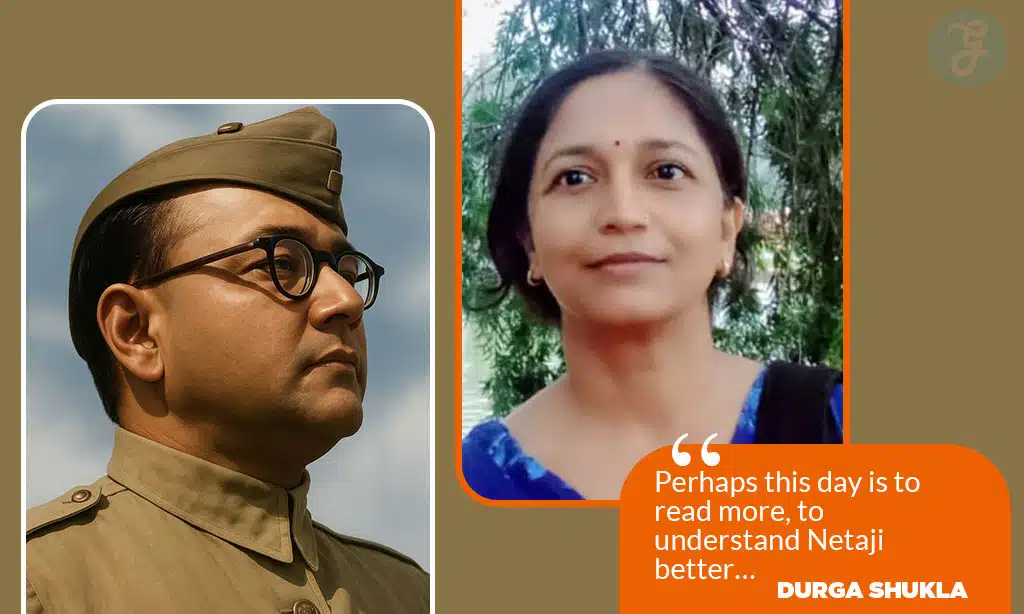
Durga Shukla, a government school teacher based in Delhi-NCR, offers an honest, unembellished reflection:
“Netaji Bose was an ardent lover of this country, India. I know that much with certainty. But I must admit, I don’t know enough about him yet.”
Her statement is striking precisely because of its humility:
“Perhaps this day is also a reminder for educators like us, to read more, to understand him better, and then pass that understanding to our students.”
In her words lies a quiet truth: remembrance without learning is incomplete.
The Young Student Voice
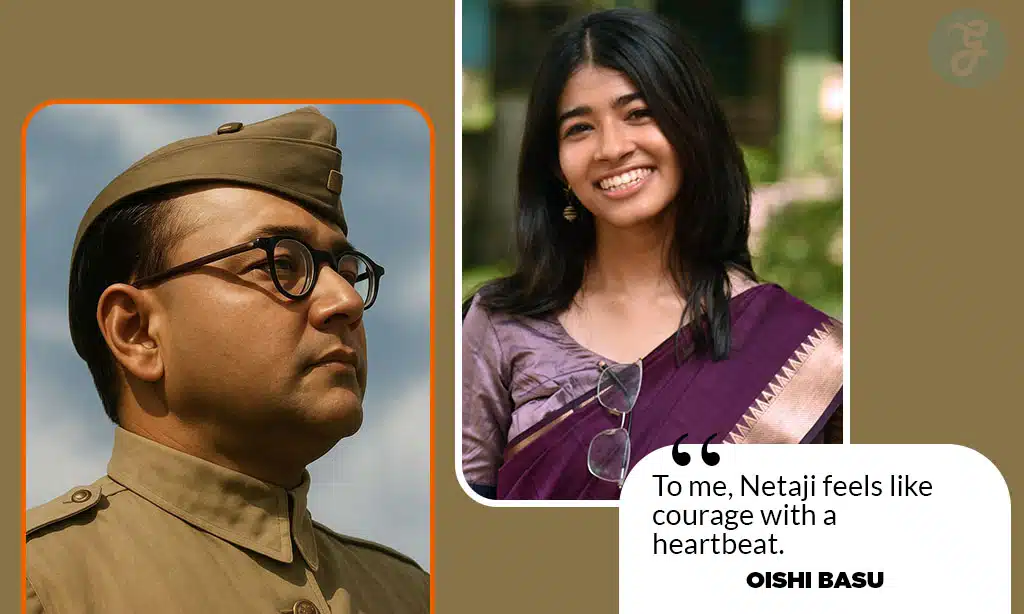
Oishi Basu, a student of Gokhale Memorial College, Kolkata, represents a generation that did not grow up on stories of the freedom struggle, but is rediscovering them with fresh curiosity:
“To me, Netaji feels like courage with a heartbeat. He wasn’t afraid to think differently or act boldly, even when the odds were impossible. In a world where it’s easy to scroll past injustice, his life reminds me that standing up, fully and fearlessly, still matters.”
Her words carry the quiet confidence of a generation searching for role models beyond slogans:
“Netaji makes me believe that leadership is not about approval, but about responsibility. That’s powerful, even today.”
The Homemaker’s Emotional Bond
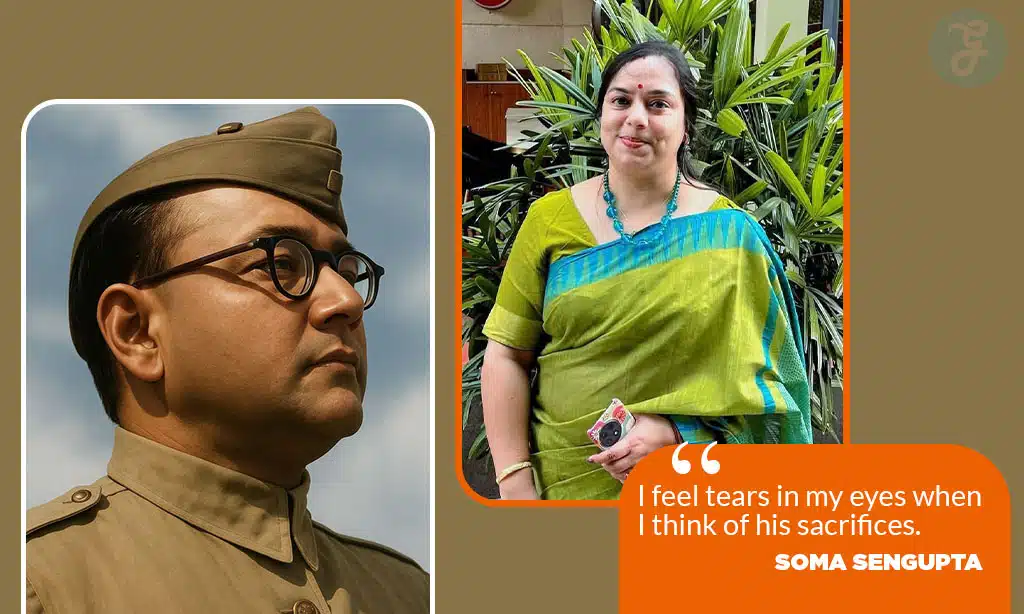
For Soma Sengupta, a homemaker based in Gurugram, Netaji is not a historical figure, he is an emotional presence:
“Netaji is my ideal. I feel tears in my eyes when I think of his sacrifices. Every January 23, I feel deeply emotional, it is instinctive.”
Her connection is visceral, almost devotional:
“When I remember him, ‘Jai Hind’ comes to my lips naturally. It is not forced. It comes from the heart.”
In households like hers, national memory is preserved not through institutions, but through feeling.
The Corporate Leader Abroad
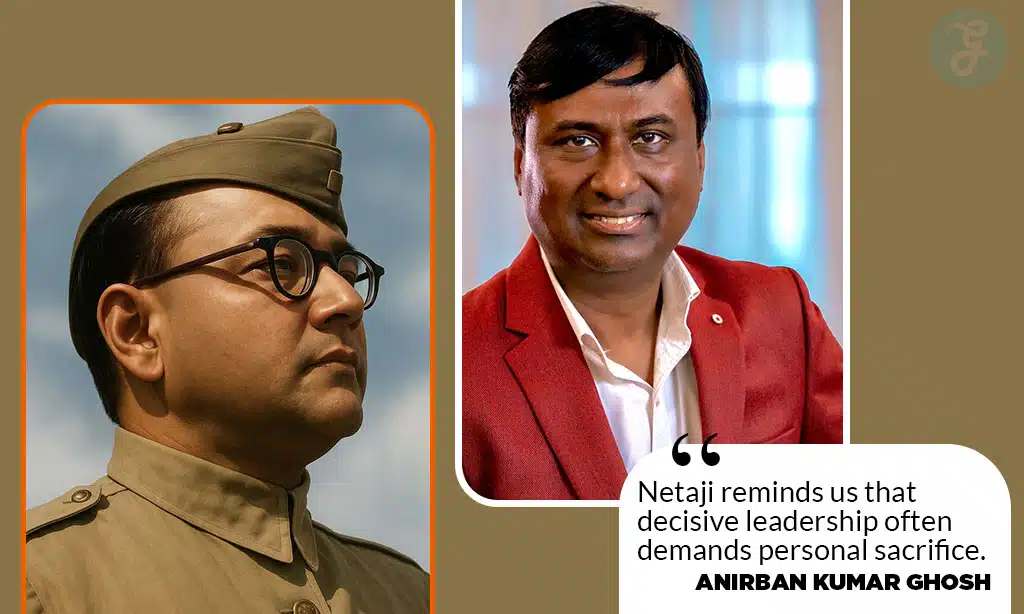
Anirban Kumar Ghosh, Global Director of Controllership Technology Strategy, based in Singapore, reflects on Netaji from the vantage point of leadership and distance:
“Netaji Subhash Chandra Bose represents moral courage at scale. He was a leader who understood that intent without execution is meaningless.”
He sees Netaji as profoundly relevant to modern India:
“In today’s world of risk aversion and consensus-seeking, Netaji reminds us that decisive leadership often demands personal sacrifice. His life challenges us to ask whether we are willing to stand by our convictions when it truly costs us something.”
His tone is measured, but deeply respectful:
“That question, I believe, is Netaji’s enduring legacy.”
The Small Business Perspective
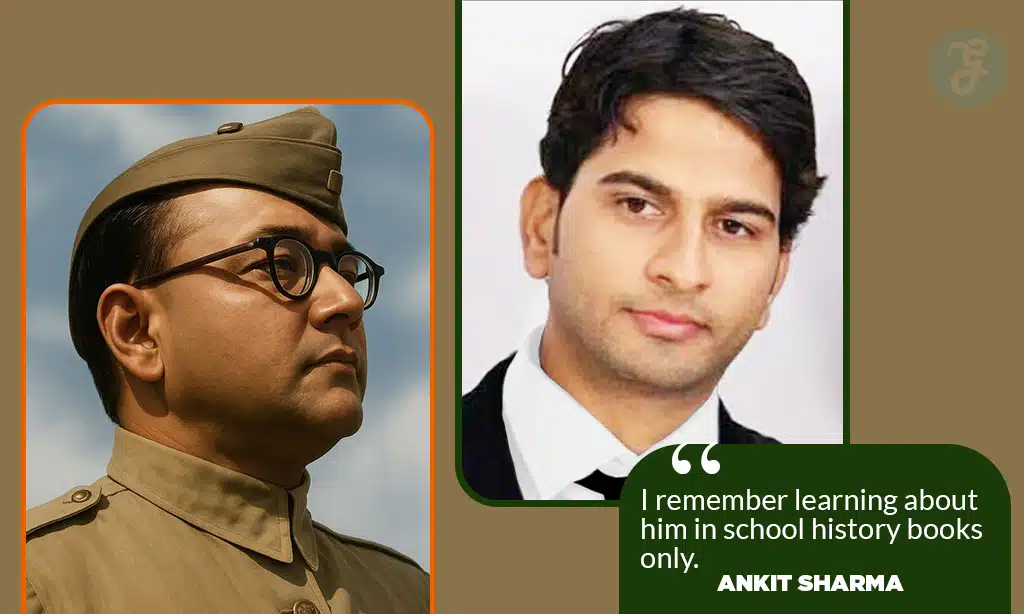
Ankit Sharma, a chemist based in Delhi-NCR offers a straightforward response:
“I don’t know much about Netaji Subhash Chandra Bose in detail. I only remember learning about him in school history books.”
Yet even this limited recall carries significance:
“What stayed with me was that he was different… bold. Maybe that itself is something we should revisit more seriously today.”
Sometimes, absence of memory speaks as loudly as reverence.
The Young Working Professional
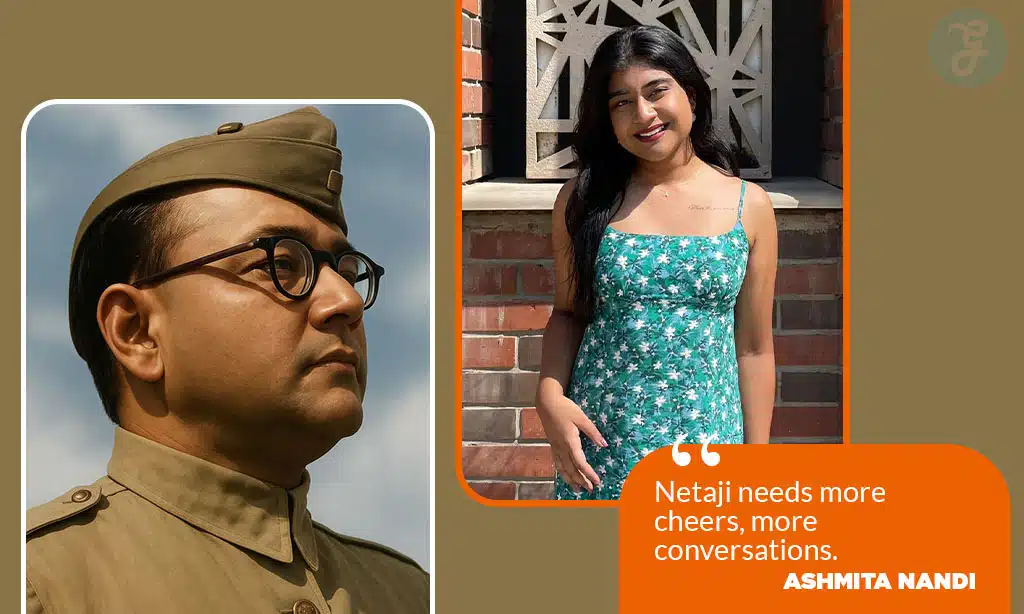
Ashmita Nandi, a young professional navigating early career challenges, strikes a reflective note:
“I hold a very high respect for Netaji Subhash Chandra Bose. He is my ideal in many ways.”
But she also points to a gap in public recognition:
“I feel he did not receive the kind of sustained celebration he deserved. Netaji needs more cheers, more conversations, and more presence in our daily discourse, not just on anniversaries.”
Her words echo a generational desire for deeper engagement, not ritual remembrance.
Early-Career Professional
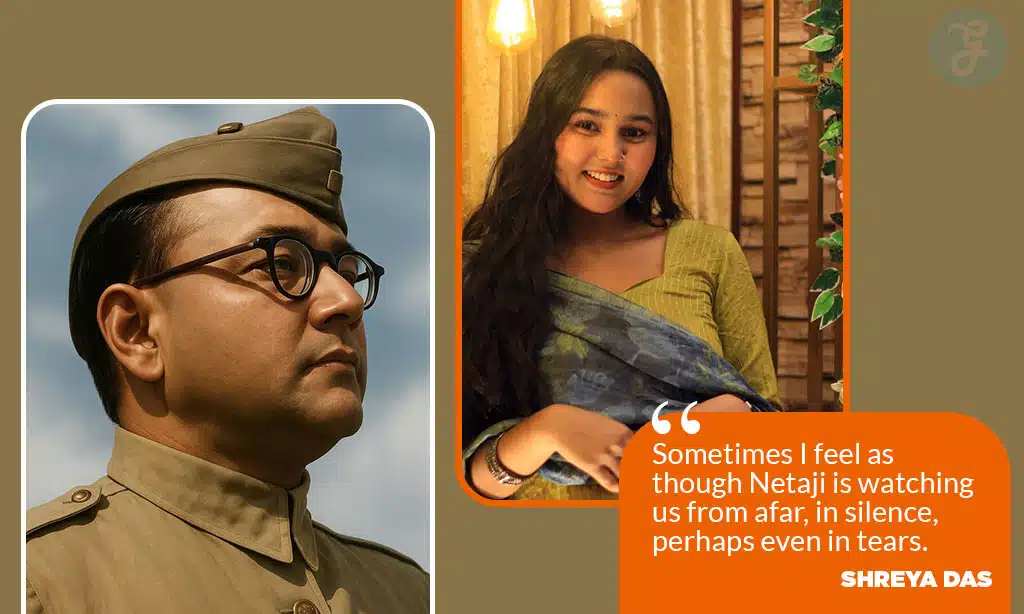
Shreya Das, a young professional based in Chennai, says:
“Netaji Subhash Chandra Bose should be our ideal, not just in history books, but in the way we live. When I look around today, I often feel we are losing values that once held this country together… courage, integrity, and the willingness to stand up for what is right.”
“Sometimes I feel as though Netaji is watching us from afar, in silence, perhaps even in tears. Not because his dream failed, but because we stopped trying hard enough to live by it. Remembering him should make us uncomfortable, because he set the bar very high.”
What These Voices Tell Us
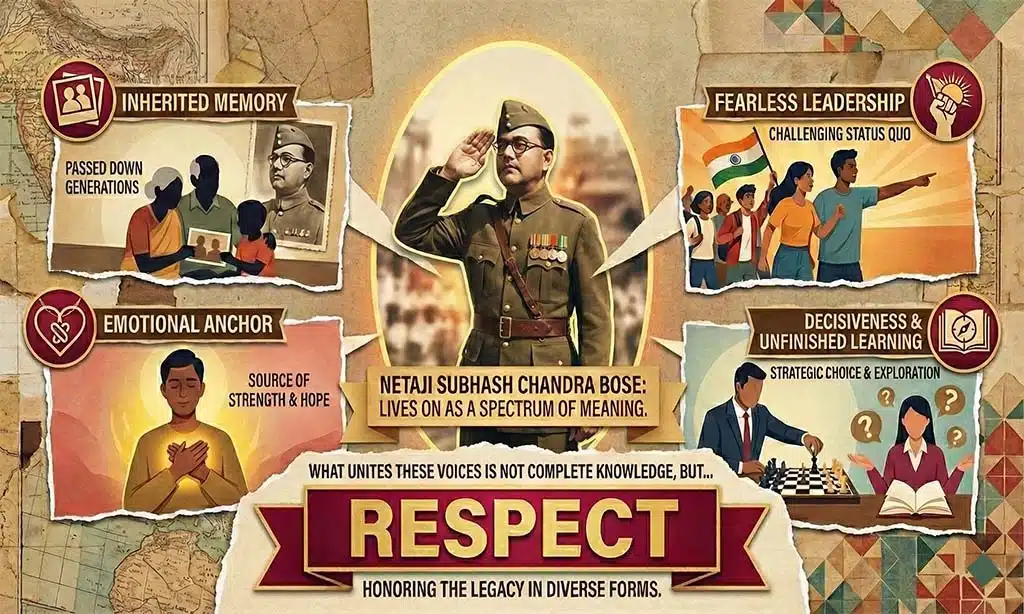
Taken together, these responses reveal something profound: Netaji Subhash Chandra Bose lives on not as a single image, but as a spectrum of meaning.
To some, he is inherited memory; to others, an emotional anchor. For young Indians, he is a symbol of fearless leadership; for professionals, a case study in decisiveness; for educators, a reminder of unfinished learning.
What unites these voices is not complete knowledge, but respect.
Reading Between the Voices: What India’s Remembrance of Netaji Reveals
When read together, these voices do more than commemorate Netaji Subhash Chandra Bose; they expose how uneven, fragmented, and emotionally coded India’s relationship with its revolutionary past has become.
Papia Ghose brings a rare sense of historical depth to the narrative. As an educator and cultural practitioner based in the United States, her connection to Netaji is not distant or abstract. It is rooted in memory passed down through family. Her account of her husband’s maternal grandmother, an Indian National Army member who met Netaji in person, restores a closeness that modern commemorations often lack. It reminds us that Netaji’s legacy once lived through real encounters and lived loyalty, not symbolism alone.
Durga Shukla, a government school teacher in Delhi NCR, articulates the educational gap with disarming honesty. Her admission that she does not yet know enough about Netaji exposes a systemic erosion of historical engagement. When educators themselves feel distanced from the deeper contours of Bose’s ideology, remembrance risks becoming ritual without substance.
Oishi Basu, at nineteen, reflects a generation for whom Netaji survives largely as a moral archetype. Her language, “courage with a heartbeat” and leadership defined by responsibility, reveals sincere admiration, yet one that floats free of historical and political complexity. This abstraction points less to youthful ignorance than to how Netaji has been aestheticised through selective teaching.
Soma Sengupta represents devotional nationalism rooted in emotion and domestic memory. Her tears, instinctive “Jai Hind,” and emotional attachment to January 23 show how Netaji is preserved as a figure of sacrifice rather than strategy. While such affective remembrance keeps history alive, it can also freeze figures beyond critical inquiry.
Anirban Kumar Ghosh, a Singapore-based corporate leader, reframes Netaji through the lens of leadership ethics and execution. By positioning Bose as a model of decisiveness and moral courage, he globalises Netaji’s relevance for contemporary leadership discourse. Yet this reading also abstracts Netaji from his radical political context, turning a revolutionary into a managerial archetype—insightful, but incomplete.
Ankit Sharma’s faint recollection may be the most representative voice of all. His knowledge, limited to school textbooks, reflects not indifference but informational thinning. Netaji has not disappeared from public memory; he has been reduced to a bold but indistinct outline.
Ashmita Nandi draws attention to selective remembrance. Her sense that Netaji received “less cheers” raises a troubling question about historical amplification, why some leaders are endlessly invoked, while others appear only on anniversaries.
Shreya Das, a Chennai-based professional, adds a sharper moral critique. By suggesting that society has drifted away from the values Netaji embodied, she reframes remembrance as accountability. Her imagining of Netaji watching contemporary India with quiet sorrow underscores why his legacy remains unsettling: it demands standards many feel we no longer meet.
Together, these perspectives reveal that Netaji Subhash Chandra Bose today is less a shared national narrative and more a mosaic, part emotion, part abstraction, part amnesia. The challenge before India is no longer commemoration, but comprehension.
Closing Reflection: Why Netaji Still Matters
In an age of instant opinions and short attention spans, Netaji’s life demands something rarer: depth, discipline, and discomfort. He forces us to confront difficult questions about freedom, leadership, and sacrifice. Parakram Diwas is not merely about celebrating a historical figure. It is an invitation to think harder, act braver, and remember that India’s freedom was shaped not only by patience, but also by audacity. Perhaps that is why Netaji unsettles us even now. He does not fit easily into comfort zones. He did not wait for consensus. He chose urgency over approval. And in doing so, he left behind a standard that feels difficult to live up to.
Remembering Netaji is not soothing. It is demanding. His life asks whether courage still has a place in public life. Whether conviction can survive convenience. Whether sacrifice means anything in an age of constant negotiation. Across generations and geographies, the voices gathered here point to the same truth. Netaji is remembered, but not fully engaged with. He is respected, but not always understood. His image is invoked, yet his questions remain unanswered.
Parakram Diwas, then, is not only about looking back. It is about looking inward. It asks what we have done with the freedom he fought for. And what we are willing to risk to protect its meaning. Netaji Subhash Chandra Bose did not promise comfort. He promised responsibility. That is why his absence still feels present. Why does his silence still speak? And as India moves forward in 2026, the voices of its people remind us that Netaji Subhash Chandra Bose is not just a chapter in history. He is a continuing challenge.