

Kei cars look small, but they solve big problems. They make driving easier in tight streets. They reduce parking stress. They also lower everyday ownership costs for millions of people.
In Japan, kei cars are not a niche or a novelty. They are a normal choice for families, students, retirees, and small business owners. You will see them in cities and rural towns. You will also see them in every shape, from boxy vans to sporty roadsters.
This article explains what kei cars are and why they exist. It breaks down the rules in simple terms. It also highlights 10 tiny Japanese models many drivers wish were sold everywhere.
What you will learn in this guide
| Section | What you’ll get | Why it helps |
| Definition | What kei cars are | Clears up confusion fast |
| Rules | Size and engine limits | Explains why they look the way they do |
| Benefits | Cost, parking, efficiency | Shows why people choose them |
| Global barriers | Safety and regulations | Explains why you can’t buy them everywhere |
| 10 picks | Iconic models and use cases | Helps you compare and choose |
Quick Answer: What Is a Kei Car?
Kei cars are a Japanese vehicle class built under strict limits. The rules cap engine size and exterior dimensions. That creates ultra-compact cars designed for daily use. It also pushes manufacturers to be clever with space.
These cars are built to fit narrow roads and tiny parking spaces. They are designed for short trips and city speed limits. Many are tall and boxy to maximize cabin room. Many also focus on low fuel use and low maintenance.
Kei cars include more than just small hatchbacks. The category also covers tiny vans and mini trucks. That versatility is a big reason the class remains popular. It is a full ecosystem, not a single body style.
Kei car definition in plain numbers
| Rule | Typical modern limit | What it means for drivers |
| Engine size | Up to 660cc | Encourages efficiency and light weight |
| Length | Very short | Easier parking and tight turns |
| Width | Narrow | Fits slim roads and lanes |
| Height | Can be tall | Allows roomy cabins |
Why Kei Cars Exist
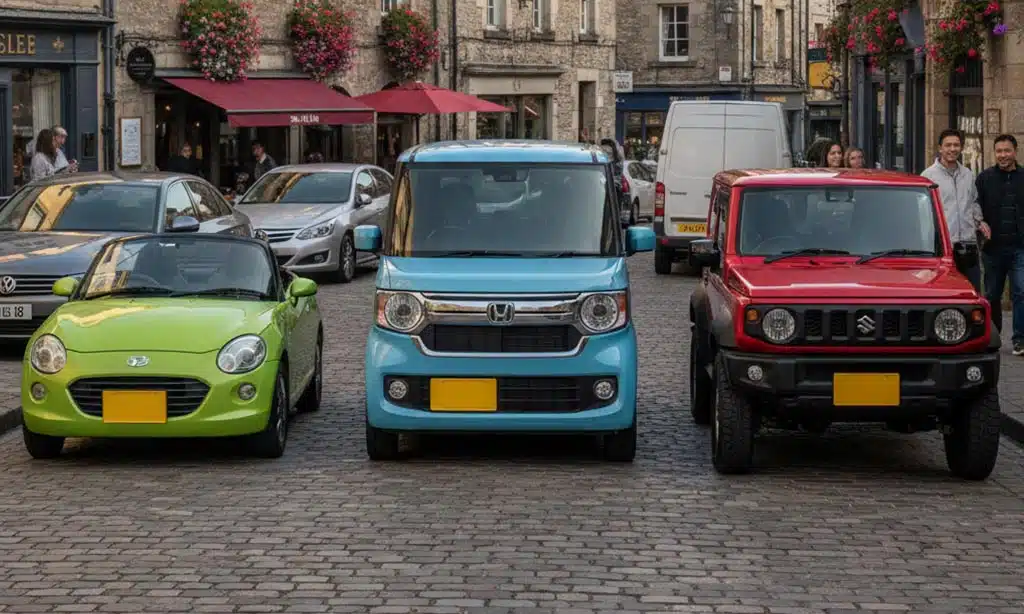
Kei cars were created to make car ownership possible for more people. They were shaped by real-world constraints, not trends. Japan has dense cities, older streets, and limited parking. That reality rewards compact vehicles that do more with less.
Costs also matter. Many households want a second car that is cheap to run. Small businesses want a vehicle that works every day without draining budgets. Kei cars meet those needs in a way bigger cars often cannot.
There is also a lifestyle factor. In many Japanese neighborhoods, you turn frequently and park in tight spots. A large vehicle can feel like extra work. A kei car feels like an easy tool.
Finally, kei cars evolved into a design culture. Automakers compete to make them safer, roomier, and more comfortable. The result is a category that keeps improving. It is practical transportation with its own identity.
Why kei cars exist (cause → effect)
| Local reality | Kei car response | Outcome |
| Narrow streets | Compact width and short length | Less stress driving daily |
| Tight parking | Small footprint | Easier ownership in cities |
| Budget limits | Efficient engines and lower costs | Affordable mobility |
| Business needs | Vans and trucks in kei size | Useful work vehicles |
The Real Problem Japan Had to Solve
Japan needed mobility that fit its built environment. Many streets were not designed for large modern cars. Parking is often limited and expensive. That creates daily friction for drivers.
People also needed affordable options. Not everyone wanted a full-size sedan or a large family car. Many households needed a simple commuter. Many rural drivers needed a small work vehicle.
The government and industry responded by shaping a small-car class. Over time, the rules became clearer. Manufacturers then optimized designs around those rules. That is how kei cars became a mature category.
The problem set that created kei cars
| Problem | Why it mattered | Kei solution |
| Small roads | Hard to pass and turn | Narrow bodies and good visibility |
| Expensive parking | Ownership barrier | Easy-to-park sizes |
| Cost sensitivity | Fuel and upkeep | Small engines and simple parts |
| Mixed needs | Family + work | Many body styles in one class |
The Perks That Made Kei Cars Take Off
Kei cars reduce everyday driving stress. They are easy to place on the road. They fit into tight parking spaces. They also tend to have great outward visibility.
They are also economical. Smaller engines usually use less fuel in city traffic. Tires, brakes, and other wear parts can be cheaper. Many models are designed for quick repairs and high reliability.
Space efficiency is a huge perk. Tall rooflines allow upright seating. Flat floors and sliding rear seats boost practicality. Some kei vans feel like tiny rooms.
They also have personality. Designs range from cute to aggressive to rugged. People pick them for function, but many keep them for love. That emotional connection helps the segment stay strong.
The perks that drive kei car popularity
| Benefit | What it looks like | Who it helps most |
| Easy parking | Short length and tight turning | City drivers |
| Lower running cost | Less fuel and smaller wear parts | Budget buyers |
| Smart interior | Tall cabins and flexible seats | Families and commuters |
| Variety | Cars, vans, trucks, sports | Everyone with different needs |
Kei Car Rules Explained (Without the Boring Part)
Kei car rules matter because they shape everything you see. They shape the body size. They shape the engine choices. They even shape the interior layout.
The limits force tradeoffs. You can’t simply add power to solve problems. You can’t widen the cabin to add comfort. You have to design smarter.
That is why kei cars often look tall. A taller cabin creates more headroom and better visibility. It also makes entry and exit easy. It can make the car feel bigger inside than it looks outside.
The rules also encourage lightweight design. Lightweight cars need less power to feel lively. They also stop and turn better in city traffic. That is one reason many drivers find kei cars enjoyable.
Rules and real-world effects
| Rule pressure | What builders optimize | Driver result |
| Small max width | Thin doors, smart seats | Surprisingly usable cabins |
| Small max length | Vertical space | Tall interiors, flexible layouts |
| Small engine cap | Weight and gearing | City-friendly performance |
| Price focus | Durable parts | Low-cost ownership |
Kei Car Regulations in Simple Numbers
Modern kei rules cap engine displacement at 660cc. They also cap the car’s exterior size. These numbers are why kei cars are both small and consistent in shape.
The key thing is this: kei cars are not “small cars.” They are “small-by-rule” cars. That difference matters because it creates a predictable design box. Automakers then innovate inside that box.
You will also hear about power figures in the kei world. Many models cluster around similar outputs because of the class goals. That keeps the category balanced and accessible.
These rules also affect safety engineering. Designers have less mass and less space to work with. So they focus on structure, materials, and smart packaging. Safety is a core design challenge in the segment.
Kei rule summary
| Category | Limit idea | Why it exists |
| Engine | Small displacement | Keeps costs and fuel use down |
| Length | Short car | Better parking and turning |
| Width | Narrow car | Fits tight roads |
| Height | Allows tall designs | Supports roomy cabins |
Kei Cars vs Small Cars vs Microcars
Kei cars are defined by one country’s legal class. A “small car” in many places is simply a compact vehicle with no strict category cap. A “microcar” can mean many things depending on the region.
This matters because buyers often compare the wrong categories. Kei cars are optimized for city life under strict limits. Many global subcompacts are optimized for mixed highway use. That changes priorities.
Kei cars often feel taller than global subcompacts. They also feel narrower. In return, they can be easier to park and easier to manage in narrow spaces.
Microcars in other regions can be smaller than kei cars. Some also have different performance and safety expectations. So “microcar” is not always a clean match.
Category comparison
| Category | Defined by | Typical focus |
| Kei cars | Japan legal class | City usability and cost |
| Subcompacts | Market segment | Balanced daily driving |
| Microcars | Region-specific rules | Ultra-short urban trips |
Kei Body Styles You’ll See a Lot
Kei cars come in many shapes because the need is broad. Some people want a basic commuter. Some want family space. Some want a work vehicle.
Tall-box wagons are common. They maximize cabin space without increasing footprint. Sliding doors are also popular because they help in tight parking spots.
Kei vans are a major part of delivery and service work. Their cargo areas are efficient. Their size makes them ideal for tight streets. They also often have low floors for loading.
Kei trucks serve farms and small businesses. They can carry surprising amounts for their size. They can also fit where larger pickups struggle. That makes them practical tools.
Kei body styles at a glance
| Body style | What it’s for | Why it works |
| Hatchback | Commuting | Low cost, easy driving |
| Tall wagon | Families | Big cabin in small space |
| Van | Delivery | Boxy cargo room |
| Truck | Work | Utility with small footprint |
| Sports | Fun | Light weight and agility |
Why the Rest of the World Doesn’t Have Kei Cars Everywhere
Kei cars make sense in many places, yet they remain rare outside Japan. The main reason is regulation. Safety and emissions rules differ widely by country. Certifying a car for a new market is expensive.
Another reason is speed expectations. Many regions drive longer distances at higher speeds. Consumers may demand more power and more comfort. That pushes manufacturers toward bigger vehicles.
There is also market psychology. Many buyers associate size with safety. Many buyers also want vehicles that feel versatile for every scenario. Kei cars are specialized for urban life.
Finally, there is business math. Kei cars can be low-margin products. If certification costs are high, the numbers can fail. That is why most kei cars stay domestic.
Why kei cars are not global defaults
| Barrier | What it means | Result |
| Certification cost | Expensive testing and approvals | Hard to sell cheaply |
| Highway expectations | Buyers want higher-speed comfort | Larger cars dominate |
| Consumer preference | Size feels safer to many | Demand stays limited |
| Import complexity | Rules differ by region | Ownership becomes harder |
Safety and Highway Reality
Kei cars are built mainly for city life. That usually means lower speeds and frequent stops. On highways, they can feel different than larger vehicles. Wind, road noise, and passing power can be more noticeable.
This does not mean they are unsafe by default. It means the design constraints are tighter. Engineers have less space for crumple zones. They also have less mass to manage in impacts.
Highway comfort is also a design challenge. Short wheelbases can feel bouncy on rough roads. Narrow bodies can feel more sensitive to crosswinds. Manufacturers tune suspension and steering, but physics still matters.
If you live in a city-first environment, these tradeoffs may not matter much. If you drive long highway trips often, they may matter a lot. That is why market fit differs.
Highway reality checklist
| Factor | Kei car tendency | What you may notice |
| Passing power | Limited | More planning needed |
| Crosswind stability | Sensitive | Steering corrections |
| Noise levels | Higher | More cabin sound |
| Ride comfort | Short wheelbase | More bumps felt |
The Legal Hurdles (Especially in the U.S.)
In many countries, you can’t just import and drive any car. There are rules on safety, emissions, and paperwork. These rules protect consumers, but they also limit niche vehicles.
In the U.S., older vehicles can sometimes be imported more easily than new ones. That is why many kei imports are older models. New kei cars are rarely sold mainstream because certification is complex.
Even after import, local rules can differ. Registration and road use may vary by state. Some places may restrict certain mini trucks on fast roads. Others may allow them with conditions.
If someone wants a kei vehicle outside Japan, the key is research. You must check local rules and insurance options. You also need a plan for parts and service. Ownership can be rewarding, but it takes effort.
Ownership hurdles outside Japan
| Step | What to check | Why it matters |
| Import rules | Age and compliance | Determines feasibility |
| Registration | Local classification | Determines legal road use |
| Insurance | Provider requirements | Avoids coverage gaps |
| Service plan | Parts and expertise | Prevents downtime |
Could Kei-Style Cars Work Globally Anyway?
Kei-style cars can work well in the right places. Dense cities are the best match. Short commutes make small engines feel sufficient. Tight parking makes compact cars feel like a luxury.
They also fit fleet use. Delivery, maintenance, and campus operations can benefit from small vehicles. Operating costs can drop. Parking logistics can improve.
The EV trend also supports small vehicles. A smaller battery can meet daily urban needs. It can also reduce vehicle cost and weight. That improves efficiency and charging convenience.
Still, global adoption needs policy support and consumer demand. Without that, companies won’t invest in certification. But the concept is strong. The need for city-friendly vehicles is growing.
Where kei-style cars make sense
| Scenario | Why it works | Best vehicle type |
| Dense cities | Parking and traffic | Kei hatch or tall wagon |
| Campuses | Low-speed operations | Kei EV or kei van |
| Small business | Light hauling | Kei truck or van |
| Short commutes | Efficiency wins | Any kei commuter |
10 Tiny Japanese Kei Cars We Wish We Had Everywhere
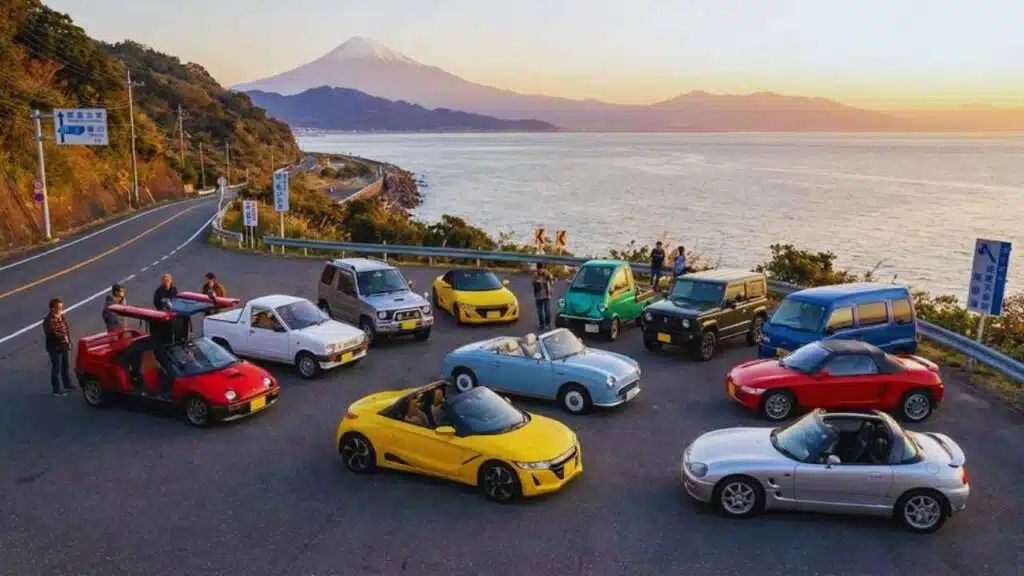
This list mixes fun and practical picks. Some models are famous for driving joy. Others are famous for everyday usefulness. Together, they show how wide the kei world really is.
You will notice a pattern. Many of these cars look “simple” on paper. Yet they feel smart in real life. They use shape and layout to create real utility.
Another pattern is personality. Kei cars often have strong identities. They don’t try to be everything. They try to be great at a specific job.
We also chose models that represent different lifestyles. Sports cars, family boxes, and work trucks all belong here. That balance is the real kei story.
How to use this top-10 list
| If you want… | Look at… | Why |
| Driving fun | S660, Beat, Cappuccino | Light and playful handling |
| Daily space | N-BOX | Big cabin in small footprint |
| Utility | Carry/Hijet | Work-ready simplicity |
| Urban efficiency | Sakura, Mitsubishi i | City-first design |
How We Chose These 10 Kei Cars
We focused on cars that people talk about for a reason. Some are icons with cult followings. Some are practical champions that dominate daily life. Some are rare and bold.
We also considered how they would fit outside Japan. A car that only works in one context is less interesting for this topic. The “wish we had it everywhere” factor matters.
We looked at packaging and usability. Kei cars live and die by interior cleverness. A great kei car feels roomy, easy, and friendly.
We also considered joy. Transportation should not be miserable. A small car that makes you smile has value. Many kei cars offer that in a unique way.
Selection criteria
| Criteria | What it means | Why it matters |
| Icon status | Widely loved | Strong demand potential |
| Practicality | Real daily use | Makes sense beyond hobby |
| Packaging | Space efficiency | Key kei advantage |
| Fun factor | Driving feel | Adds emotional value |
1. Honda S660 (Modern Kei Roadster)
The Honda S660 feels like a love letter to small sports cars. It is compact, low, and driver-focused. It is designed for enjoyable handling, not raw speed. That makes it fun on normal roads.
Its size is a superpower in cities. You can park it easily. You can slip through tight streets. You can also feel connected to the road at everyday speeds.
The S660 also shows modern kei engineering. It feels more refined than older kei sports cars. It blends playful driving with a more current design mindset. That balance is why it stands out.
Honda S660 snapshot
| Strength | Why it matters | Best for |
| Agile handling | Fun at legal speeds | City driving and weekends |
| Compact footprint | Easy parking | Tight neighborhoods |
| Driver-focused vibe | Engaging feel | Enthusiasts |
Why it’s Special
The S660 is built around lightness. Light cars feel responsive. They also feel more alive at low speeds. That matches real-world driving.
It also feels purpose-built. The seating position feels sporty. Controls tend to feel direct. The car encourages you to enjoy simple turns and corners.
It’s also a modern symbol of kei sports. It proves the category is not only practical. It can also be emotional. That is why many people want it outside Japan.
What makes the S660 special
| Feature | What it creates | Real-world effect |
| Lightweight design | Responsiveness | More fun per mile |
| Compact dimensions | Control in traffic | Less stress driving |
| Sports layout | Driver connection | Strong emotional appeal |
Why We’d Want It Everywhere
Many markets have lost small roadsters. New sports cars are often bigger and heavier. They can also be expensive. The S660 feels like a missing option.
It would also fit modern city living. It takes little space. It is easy to park. It is simple to enjoy without needing a race track.
For buyers who want fun without excess, it is a dream. It offers a sports-car vibe with daily manageability. That is why it belongs on this list.
Global wish factor
| Reason | Why it matters | Who benefits |
| Small sports gap | Few modern tiny roadsters | Enthusiasts |
| City-friendly fun | Enjoyable in traffic | Urban drivers |
| Low footprint | Easy ownership | Apartment dwellers |
Best For
The S660 is best for people who enjoy driving feel. It is also best for short trips. It works well as a second car in many households. It fits lifestyle driving more than long touring.
It also suits cities with tight parking. You can use it without fighting your environment. That is the point of a kei sports car.
Best-use scenarios
| Scenario | Fit level | Why |
| City commuting | High | Easy parking |
| Weekend fun | High | Light and playful |
| Long highway trips | Medium | Comfort limits |
2. Suzuki Cappuccino (Classic Kei Convertible Icon)
The Suzuki Cappuccino is a legend for a reason. It is small, light, and charming. It turns normal roads into fun roads. It also looks like a classic roadster in miniature.
Its appeal is not about speed. It is about feel. The steering, the size, and the open-top experience create joy. That is why it remains popular among enthusiasts.
It also represents a golden era of kei sports cars. Many people see it as a pure example of what the category can be. It is simple, honest, and playful.
Suzuki Cappuccino snapshot
| Strength | Why it matters | Best for |
| Classic roadster feel | High fun | Back roads |
| Light weight | Responsive handling | Enthusiast driving |
| Icon status | Strong demand | Collectors |
Why it’s Special
The Cappuccino feels like a “slow car fast” machine. You can enjoy it without breaking speed limits. That makes it more usable than powerful sports cars. It also makes it less intimidating.
It has a classic shape and stance. That design connects to older sports-car culture. It feels like a tiny throwback that still works today.
It also has a strong community. Owners share tips and stories. That community makes ownership easier and more fun. It becomes more than a car.
Cappuccino special points
| Point | What it adds | Why people love it |
| Low-speed fun | More usable joy | Real-world thrill |
| Convertible vibe | Open-air driving | Emotional appeal |
| Community | Support and culture | Easier ownership |
Why We’d Want It Everywhere
Many people want an affordable convertible. Many markets offer very few. The Cappuccino fills that gap with character. It also fits cities better than larger convertibles.
It also brings design variety. In a world of similar crossovers, it stands out. It reminds people that cars can be light and playful.
For collectors, it is also a piece of history. For casual fans, it is simply adorable. Either way, it has global charm.
Global wish factor
| Reason | Why it matters | Who benefits |
| Convertible access | Few small convertibles exist | Fun-seekers |
| Unique design | Stands out | Style buyers |
| Compact ownership | City-friendly | Urban drivers |
Best For
This car is best for people who enjoy weekend drives. It is also best for light commuting in mild climates. It suits drivers who value feel and charm.
It is not ideal for heavy cargo or long highway travel. But it was never designed for that. It is designed to make small driving joyful.
Best-use scenarios
| Scenario | Fit level | Why |
| Weekend drives | High | Open-air fun |
| City errands | Medium-High | Compact size |
| Heavy commuting | Medium | Comfort limits |
3. Honda Beat (Tiny, High-Energy Roadster)
The Honda Beat is a kei sports icon with playful energy. It is small and simple. It is also loved for its lively character. It represents the spirit of fun-first design.
Like other kei roadsters, it is not built for speed records. It is built for connection. It rewards smooth driving and good rhythm. That makes it satisfying for many drivers.
The Beat also feels like a cultural object. It captures a specific time in Japanese car history. That is why collectors and fans chase it.
Honda Beat snapshot
| Strength | Why it matters | Best for |
| Fun character | Emotional driving | Enthusiasts |
| Compact size | Easy ownership | City drivers |
| Icon value | Strong interest | Collectors |
Why it’s Special
The Beat is light, and lightness changes everything. It makes the car feel responsive. It also makes it easy to place in corners. That creates confidence.
Its design is also charming. It looks like a tiny sports car, not a scaled-down commuter. That visual identity matters. People buy emotions as well as transportation.
It also carries Honda DNA. Many fans connect it with Honda’s playful engineering culture. That connection strengthens its appeal.
Beat special points
| Feature | Result | Why it’s memorable |
| Low weight | Agile feel | Fun at low speeds |
| Sports styling | Strong identity | Looks special |
| Simple layout | Pure driving | Less complexity |
Why We’d Want It Everywhere
The Beat would be a perfect “fun second car” for many markets. It takes little space. It costs less to store and park. It makes casual driving enjoyable.
It also fits modern urban life. Not everyone needs a big car every day. Many people want a small car that feels like a treat.
For cities trying to reduce congestion, cars like this could help. Smaller vehicles take less space. They also reduce parking pressure. That is a real benefit.
Global wish factor
| Reason | Why it matters | Who benefits |
| Second-car friendly | Easy to own | Multi-car households |
| Urban fit | Less space use | Cities and drivers |
| Joy factor | Better daily mood | Everyone |
Best For
The Beat is best for drivers who want a light sports feel. It works well for short trips and weekend fun. It also suits collectors who enjoy classic Japanese cars.
It is less suited to long, high-speed travel. But for the right lifestyle, it is ideal. That is the essence of kei sports cars.
Best-use scenarios
| Scenario | Fit level | Why |
| City cruising | High | Compact joy |
| Weekend fun | High | Responsive feel |
| Long trips | Medium | Comfort limits |
4. Mazda Autozam AZ-1 (Micro Supercar Energy)
The Autozam AZ-1 is one of the most dramatic kei cars ever made. It looks like a concept car. It feels like a tiny “supercar” for the street. It is bold, rare, and unforgettable.
This car proves kei design can be fearless. It did not aim to be subtle. It aimed to be special. That makes it a favorite for car meets and collectors.
It also shows how far creativity can go inside constraints. When you can’t add power, you add personality. The AZ-1 is personality in metal form.
Autozam AZ-1 snapshot
| Strength | Why it matters | Best for |
| Wild design | Instant attention | Car meets |
| Rare appeal | Collector value | Enthusiasts |
| Light weight | Fun feel | Weekend drives |
Why it’s Special
The AZ-1 is unique in shape and presence. It feels like a miniature exotic. That alone makes it special.
It also offers a different kind of joy. It is not just about driving. It is about owning something unusual. It is about the story.
It is also an example of risk-taking design. Many cars play safe. This one did not. That is why it remains memorable.
What makes AZ-1 special
| Element | What it creates | Ownership effect |
| Unusual design | Strong identity | High attention |
| Rarity | Collector demand | Higher value |
| Lightweight build | Playful handling | Fun drives |
Why We’d Want It Everywhere
People crave variety. Many markets feel visually repetitive. A car like the AZ-1 adds color to the street.
It would also inspire new fans. Younger buyers often like unique design. The AZ-1 is unique by default.
Even if it stayed niche, it would still matter. Niche cars shape culture. They make car enthusiasm alive.
Global wish factor
| Reason | Why it matters | Who benefits |
| Design diversity | Less sameness | Car culture |
| Collector magnet | Strong demand | Enthusiasts |
| Conversation starter | Social value | Everyone |
Best For
This is best for collectors and hobbyists. It is also best for weekend drives and events. It is not the most practical daily driver.
But practical is not the point here. The point is joy and uniqueness. That is why it belongs on this list.
Best-use scenarios
| Scenario | Fit level | Why |
| Car meets | High | Visual impact |
| Weekend drives | High | Fun and rare |
| Daily utility | Medium-Low | Practical limits |
5. Suzuki Jimny (Kei-Sized Off-Road Legend)
The Jimny is famous because it does one job well. It is compact and capable. It is designed for rough roads and narrow trails. It offers adventure without the bulk of big SUVs.
Its size is an advantage off-road. Narrow vehicles fit tighter paths. Short wheelbases help in certain terrain. Light weight can reduce sinking in soft ground.
The Jimny also shows the “tool” side of kei thinking. It is not trying to be luxurious. It is trying to be useful. That clarity makes it lovable.
Suzuki Jimny snapshot
| Strength | Why it matters | Best for |
| Compact off-road ability | Fits tight trails | Adventure driving |
| Practical size | Easy to park | Daily life |
| Strong identity | Icon status | Fans and owners |
Why it’s Special
The Jimny feels honest. It looks like it can work. It also tends to deliver that promise.
It gives people access to off-road life without a giant vehicle. That is important in crowded places. It is also important for people who want simplicity.
It also has a fun personality. It looks friendly and rugged at once. That mix is rare.
Jimny special points
| Point | What it adds | Why it matters |
| Trail capability | Real utility | Not just styling |
| Compact dimensions | Easier ownership | City + nature |
| Simple vibe | Lower stress | Clear purpose |
Why We’d Want It Everywhere
Many people want a small 4×4. Many markets offer very few. The Jimny fills that gap with charm and ability.
It also fits modern concerns. Smaller vehicles can use less fuel. They also take less space. A compact 4×4 can be a sensible alternative to massive SUVs.
It would also fit outdoor lifestyles in many regions. Mountain towns, rural roads, and adventure routes exist everywhere. The Jimny is made for that.
Global wish factor
| Reason | Why it matters | Who benefits |
| Small 4×4 option | Rare in many markets | Outdoor drivers |
| City-friendly size | Easier daily use | Urban owners |
| Real capability | Not just looks | Practical buyers |
Best For
This is best for people who want compact adventure. It also suits rural driving and bad roads. It works as a daily driver if you accept its tradeoffs.
It is less ideal for long highway comfort. But for mixed city and trail use, it shines. That is why it stays popular.
Best-use scenarios
| Scenario | Fit level | Why |
| Trails | High | Compact capability |
| City life | Medium-High | Easy parking |
| Long highways | Medium | Comfort tradeoffs |
6. Daihatsu Copen (Pocket-Sized Convertible Fun)
The Daihatsu Copen offers approachable fun. It is small and friendly. It gives you open-air driving without the size of a big convertible. It also feels like a “cute sports car” in the best way.
It is built for daily life, not only weekends. That matters. Many fun cars are uncomfortable and annoying. The Copen is meant to be usable.
It also has strong style. It looks playful. It feels like a car that wants you to smile. That emotional value is real.
Daihatsu Copen snapshot
| Strength | Why it matters | Best for |
| Convertible feel | Joy without bulk | City fun |
| Easy size | Parking and traffic | Daily use |
| Friendly character | Likeable design | Casual enthusiasts |
Why it’s Special
The Copen feels like fun you can actually live with. It is not trying to be extreme. It is trying to be enjoyable.
Its compact size keeps ownership easy. Small cars are easier to store. They are easier to park. They are often easier to maintain.
It also brings variety to the road. Many cars look serious. The Copen looks happy. That alone is refreshing.
Copen special points
| Feature | Result | Why it helps |
| Small convertible | Open-air driving | Mood boost |
| Usable design | Daily friendliness | Less compromise |
| Distinct look | Style identity | Stands out |
Why We’d Want It Everywhere
Many markets have few affordable convertibles. Those that exist are often larger. They can also be expensive. The Copen would offer a new kind of option.
It would also fit city living. Convertibles are often seen as “weekend luxury.” This could be everyday fun. That is a strong proposition.
It also appeals to new buyers. Not everyone wants a serious performance car. Some want a fun, stylish runabout. The Copen fits that perfectly.
Global wish factor
| Reason | Why it matters | Who benefits |
| Affordable convertible vibe | Rare offering | Fun-first buyers |
| City fit | Easy ownership | Apartment dwellers |
| Friendly design | Wider appeal | Casual drivers |
Best For
This is best for city drivers who want a bit of joy. It is also best for mild climates and shorter trips. It can work as a second car easily.
It is not a cargo vehicle. It is not a long-distance cruiser. It is a mood-lifter with wheels. That is enough for many people.
Best-use scenarios
| Scenario | Fit level | Why |
| City errands | High | Small and easy |
| Weekend drives | High | Open-air fun |
| Long touring | Medium | Comfort limits |
7. Mitsubishi i (City Packaging Genius)
The Mitsubishi i is a great example of space-smart design. It looks unusual. But it uses that shape to create practical interior room. It is built for city movement and daily errands.
In urban driving, visibility and tight turning matter. The Mitsubishi i focuses on that. It feels easy to place on the road. That reduces stress for many drivers.
It also represents a practical side of kei cars. Not every kei vehicle is cute or sporty. Some are just clever. The Mitsubishi i is clever.
Mitsubishi i snapshot
| Strength | Why it matters | Best for |
| Smart packaging | More cabin use | Daily errands |
| City visibility | Easier driving | New drivers |
| Compact size | Easy parking | Urban life |
Why it’s Special
The i is built around interior logic. The shape is not random. It is designed to maximize usable space.
That approach matters in city life. You want a car that feels roomy enough. You want a car that handles tight streets. The i aims to deliver that.
It also feels like a design experiment that worked. Many odd designs fail. This one has a purpose. That makes it interesting.
Mitsubishi i special points
| Element | What it creates | Driver benefit |
| Upright shape | Cabin space | Comfort in small size |
| City geometry | Easy turning | Less stress |
| Practical layout | Daily usability | Better errands |
Why We’d Want It Everywhere
Many cities worldwide face the same problems Japan faces. Parking is tight. Streets are crowded. Fuel costs are real. A city-first car makes sense.
The i also suits fleet use. Car-sharing services often need compact, durable vehicles. A small car that feels roomy is ideal.
It would also help households that need a second car. Not everyone needs a big vehicle every day. Sometimes you need a simple city tool.
Global wish factor
| Reason | Why it matters | Who benefits |
| City-first design | Matches urban problems | City drivers |
| Fleet potential | Efficient for operations | Services and companies |
| Roomy feel | Better comfort | Families |
Best For
This is best for short commutes and errands. It also works well for drivers who want easy visibility. It suits people who value function.
It is less about fun driving. It is more about smooth daily life. That is a valid goal. Many kei cars succeed because of this focus.
Best-use scenarios
| Scenario | Fit level | Why |
| Short commutes | High | Built for city life |
| Errands | High | Practical layout |
| Highway travel | Medium | Comfort tradeoffs |
8. Nissan Sakura (Kei EV Moment)
The Nissan Sakura represents a modern shift. It shows how kei cars and EVs can match well. A small EV can be perfect for urban driving. It can be quiet, smooth, and simple.
A kei-sized EV also changes the cost conversation. Smaller cars can use smaller battery packs. Smaller packs can lower cost and weight. That can improve efficiency.
The Sakura also fits daily routines. Many people drive short distances most days. They want easy charging at home. A small EV can serve that pattern well.
Nissan Sakura snapshot
| Strength | Why it matters | Best for |
| Urban EV logic | Smooth city driving | Daily commuting |
| Smaller battery concept | Efficiency and cost | First EV buyers |
| Easy ownership | Quiet and simple | Families |
Why it’s Special
A kei EV is a practical idea. It aligns vehicle size with real needs. It avoids oversized batteries for short trips. That can make EV ownership more realistic.
It also makes city driving nicer. EVs are smooth in stop-and-go traffic. They are quiet at low speeds. That improves daily comfort.
It can also reduce local emissions in crowded areas. Cleaner city air matters. Quiet streets also matter. A kei EV supports both goals.
Sakura special points
| Point | What it adds | Why it matters |
| Urban range focus | Right-size battery | Lower cost potential |
| Quiet driving | Less noise | Better city life |
| Smooth acceleration | Easy in traffic | Less stress |
Why We’d Want It Everywhere
Many global cities are pushing for cleaner transport. Small EVs can help. They take less space and use fewer materials. They also reduce congestion pressure.
A kei EV could also be a strong second car. Families often want a simple daily runabout. A small EV can cover that role well.
It can also help new EV drivers. Large EVs can feel intimidating. A small EV can feel familiar and manageable. That can help adoption.
Global wish factor
| Reason | Why it matters | Who benefits |
| City EV fit | Matches real trips | Urban drivers |
| Lower complexity | Easier to own | New EV owners |
| Lower space use | Reduces congestion | Cities |
Best For
This is best for city commuting and short trips. It is also best for households with home charging. It suits people who want quiet and easy driving.
It is less ideal for long highway travel. That is true for many small EVs. But for daily urban mobility, it is exactly the point.
Best-use scenarios
| Scenario | Fit level | Why |
| City commuting | High | EV strength in traffic |
| Short errands | High | Quiet and smooth |
| Long-distance travel | Medium | Range limits |
9. Honda N-BOX (The Kei Car That Feels Like a Tiny Living Room)
The Honda N-BOX shows why kei cars dominate daily life in Japan. It is built around interior space. It is tall, boxy, and incredibly practical. It turns a small footprint into a roomy cabin.
This type of kei car is not about style first. It is about usability first. Families care about entry height, seat comfort, and storage. The N-BOX design answers those needs.
It also highlights a key kei truth: height is a tool. A tall roof creates space without increasing width. That is how these cars feel bigger inside.
Honda N-BOX snapshot
| Strength | Why it matters | Best for |
| Huge cabin feel | Practical daily life | Families |
| Easy access | Comfort for all ages | Rideshare |
| City footprint | Easy parking | Urban living |
Why it’s Special
The N-BOX uses space like a smart apartment. Everything is arranged to be usable. Seating is upright and efficient. Storage is placed where it helps most.
It also supports real routines. Kids, groceries, and short trips are daily realities. A practical cabin makes those routines easier. That is why people love it.
It also feels friendly to drive. The upright position improves visibility. The size reduces parking stress. It is designed to reduce friction.
N-BOX special points
| Element | What it creates | Daily benefit |
| Tall cabin | Roomy interior | Comfort and storage |
| Easy entry | Better usability | Great for families |
| Visibility | Confident driving | Easier parking |
Why We’d Want It Everywhere
Many global families want smaller cars with more interior space. Large SUVs are expensive and bulky. A tall-box kei car provides space without size.
It also fits crowded cities. Families in apartments often struggle with parking. A compact family vehicle is a real solution. It reduces daily stress.
It can also serve as a flexible multi-purpose vehicle. School runs, shopping, and errands all fit. That makes it a strong “one-car” choice in the right places.
Global wish factor
| Reason | Why it matters | Who benefits |
| Space without bulk | Better urban family life | Families |
| Easy parking | Less daily stress | Apartment dwellers |
| Flexible cabin | Works for many tasks | Everyday drivers |
Best For
The N-BOX is best for families and daily use. It also works well for rideshare and errands. It suits people who prioritize practicality.
It is not a sports car, and it doesn’t need to be. It is a comfort and usability champion. That is what makes it special in the kei world.
Best-use scenarios
| Scenario | Fit level | Why |
| Family errands | High | Space and access |
| City parking | High | Compact footprint |
| Sporty driving | Medium-Low | Not the goal |
10. Suzuki Carry / Daihatsu Hijet (Kei Trucks That Just Make Sense)
Kei trucks look simple, but they are powerful tools. They are built for hauling and utility. They are compact, efficient, and easy to maneuver. They fit work environments where large pickups can be inconvenient.
These trucks also represent a different idea of “enough.” Many jobs do not require massive towing. Many tasks are local. A small truck can be ideal for that reality.
They are also surprisingly versatile. People use them for farms, deliveries, maintenance, and mobile businesses. Some even convert them into campers. That creativity is part of the appeal.
Kei truck snapshot
| Strength | Why it matters | Best for |
| Compact utility | Works in tight spaces | Small business |
| Simple design | Easy upkeep | Practical owners |
| Efficient hauling | “Enough truck” | Local work |
Why it’s Special
A kei truck is a pure utility vehicle. It is designed around a bed, not luxury. That makes it honest and effective.
Its compact size improves productivity. You can park close to work areas. You can turn around in tight yards. You can move through narrow lanes.
It also encourages creative use. People adapt these trucks for niche tasks. That adaptability makes them beloved.
Kei truck special points
| Point | What it adds | Why it matters |
| Short footprint | Maneuverability | Better work access |
| Simple mechanics | Reliability | Lower downtime |
| Utility focus | Real usefulness | Strong value |
Why We’d Want It Everywhere
Many regions have oversized pickups as the default. That creates high costs and more road space use. Kei trucks offer a different path.
For many local businesses, they are a better match. They can carry tools and supplies efficiently. They also reduce fuel use and parking stress.
They could also help in cities. Delivery zones are tight. Streets are crowded. A small truck fits the last-mile reality well.
Global wish factor
| Reason | Why it matters | Who benefits |
| Right-size work vehicle | Reduces cost | Small businesses |
| Better urban logistics | Easier delivery | Cities |
| Less space use | Helps congestion | Everyone |
Best For
Kei trucks are best for local hauling and work tasks. They are ideal for farms, campuses, and service businesses. They can also fit hobby use for projects.
They are not built for heavy towing or high-speed hauling. But that is not their purpose. Their purpose is daily utility in tight spaces.
Best-use scenarios
| Scenario | Fit level | Why |
| Local hauling | High | Practical bed utility |
| Tight job sites | High | Compact access |
| High-speed work | Medium | Not designed for it |
What These 10 Cars Prove About Kei Cars
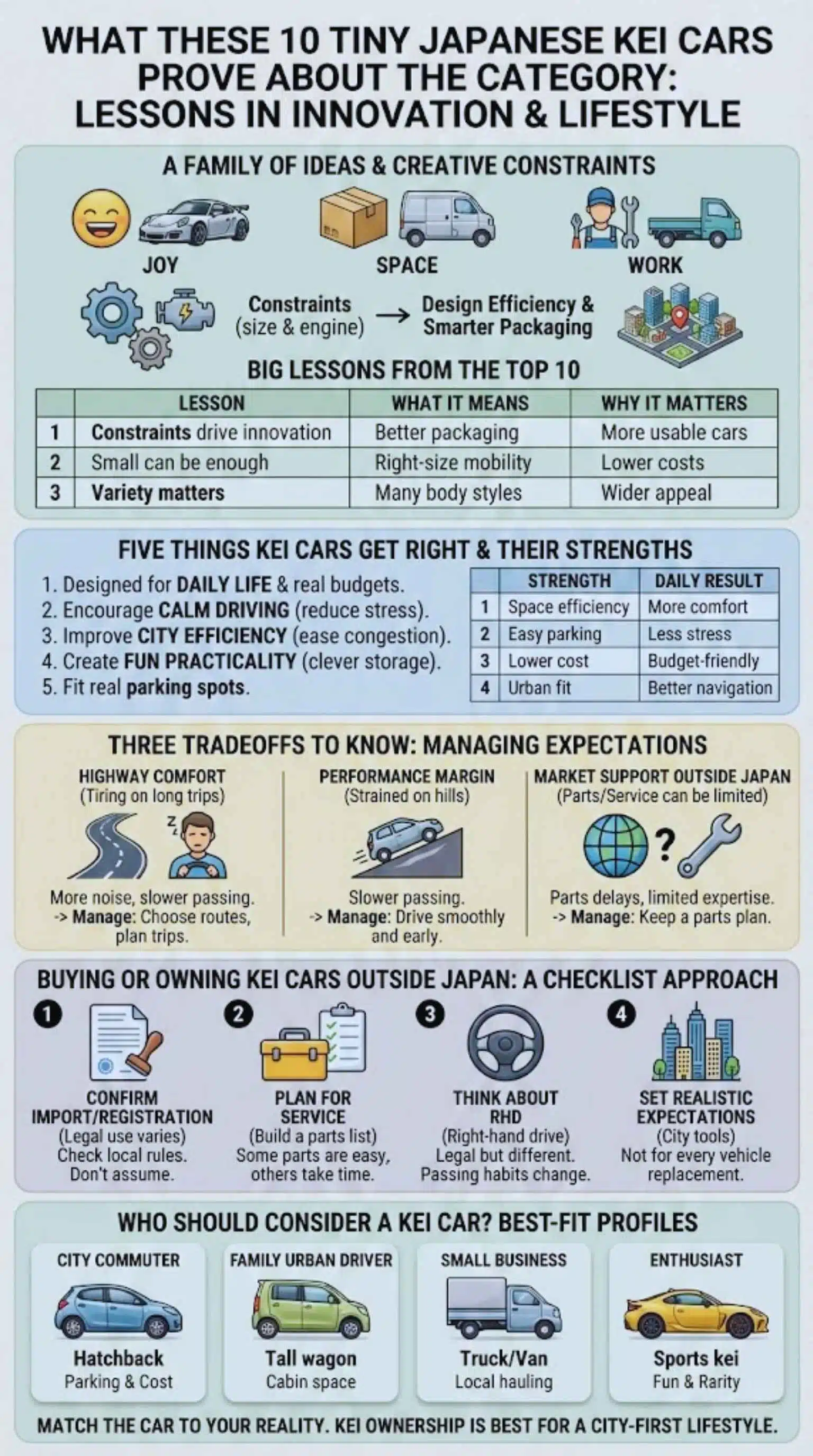
These 10 vehicles show that kei cars are not one idea. They are a family of ideas. Some focus on joy. Some focus on space. Some focus on work.
They also show what constraints can produce. When you limit size and engine, you improve design efficiency. You also encourage creative packaging. That can lead to smarter cars.
They prove that “small” can still be valuable. Small cars can reduce stress. They can reduce space waste. They can also reduce ownership costs.
Most importantly, they show that the kei category creates real variety. You can have a practical family box and a sporty roadster in the same class. That is rare in many markets.
Big lessons from the top 10
| Lesson | What it means | Why it matters |
| Constraints drive innovation | Better packaging | More usable cars |
| Small can be enough | Right-size mobility | Lower costs |
| Variety matters | Many body styles | Wider appeal |
| City life wins | Easy ownership | Better daily experience |
Five Things Kei Cars Get Right
Kei cars are designed for daily life, not marketing dreams. They fit real streets. They fit real parking spots. They fit real budgets.
They also encourage calm driving. You often drive at reasonable speeds. You focus on smooth flow. That can reduce stress.
They can also improve city efficiency. Smaller cars take less road space. They can ease congestion in dense areas. They can make parking more manageable.
They also create a fun kind of practicality. Many models feel friendly. They often have clever storage and seating. That makes them easy to love.
What kei cars do well
| Strength | What it looks like | Daily result |
| Space efficiency | Tall cabins | More comfort |
| Easy parking | Short length | Less stress |
| Lower cost | Smaller parts | Budget-friendly |
| Urban fit | Narrow bodies | Better navigation |
Three Tradeoffs Buyers Should Know
Kei cars have limits, and those limits show up in certain situations. The first is highway comfort. Many kei vehicles are tuned for city use. Long highway trips can feel tiring.
The second is performance margin. A small engine can be great in a city. On steep hills or fast highways, it may feel strained. That is normal for the class.
The third is market support outside Japan. Parts availability can vary. Service expertise can be limited. Ownership may require planning.
None of these tradeoffs are deal-breakers for the right buyer. They simply define the fit. Kei cars are best when matched to a city-first lifestyle.
Common tradeoffs
| Tradeoff | What you may notice | How to manage it |
| Highway comfort | More noise | Choose routes, plan trips |
| Power margin | Slower passing | Drive smoothly and early |
| Support outside Japan | Parts delays | Keep a parts plan |
Buying or Owning Kei Cars Outside Japan
Owning kei cars outside Japan can be simple or complicated. It depends on your local rules. It also depends on your access to parts and service. Planning makes the difference.
Many owners treat kei vehicles as lifestyle cars. They enjoy the community. They learn basic maintenance. They share information with other owners.
The practical side matters too. You need to confirm registration options. You need to understand insurance requirements. You also need to evaluate whether the vehicle fits your roads.
If your driving is mostly city and short trips, kei ownership can be very satisfying. If your driving is mostly high-speed highways, it can be less ideal. The key is matching the car to your reality.
Ownership planning basics
| Topic | What to check | Why it matters |
| Legal use | Registration rules | Avoids problems later |
| Insurance | Coverage availability | Protects you financially |
| Parts | Supply and shipping | Keeps downtime low |
| Driving fit | Road speeds | Improves satisfaction |
Common Questions Before You Import
First, confirm your import and registration pathway. Rules vary by country and region. Do not assume a vehicle is legal because you saw one online.
Second, plan for service. Some parts are easy. Others can take time. It helps to build a list of common wear items.
Third, think about right-hand drive. In many places, it is legal but different. Passing and drive-thru habits change. It is manageable, but it is real.
Fourth, set realistic expectations. Kei cars are amazing city tools. They are not designed to replace every kind of vehicle. Choose them for what they are.
Import prep checklist
| Question | Why it matters | Quick note |
| Is it registrable? | Determines legal use | Check local rules |
| Can you insure it? | Required for road use | Specialty insurers may help |
| Can you service it? | Keeps it reliable | Plan parts early |
| Does it fit your roads? | Prevents regret | City use is best |
Who Should Consider a Kei Car?
Kei cars are perfect for city-first drivers. If you park in tight spaces, you will appreciate them fast. If you drive short distances daily, you may not need anything larger.
They are also great for households that want a second car. One car can handle long trips. A kei car can handle daily errands. That combination can reduce costs.
Small businesses can benefit too. Kei vans and kei trucks can handle local work. They are easier to maneuver around job sites. They also reduce parking headaches.
They also suit enthusiasts who value uniqueness. Kei ownership comes with community. It also comes with personality. For many people, that is the whole point.
Best-fit buyer profiles
| Buyer type | Why it fits | Best body style |
| City commuter | Parking and cost | Hatchback |
| Family urban driver | Cabin space | Tall wagon |
| Small business | Local hauling | Truck or van |
| Enthusiast | Fun and rarity | Sports kei |
Wrap-Up: Would Kei Cars Make Driving Better Everywhere?
Kei cars are a reminder that transportation can be simpler. They reduce daily friction in cities. They also push designers to be smart instead of just “bigger.” That mindset feels increasingly relevant.
They will not fit every market perfectly. Some regions demand long-distance comfort and high-speed performance. Some regulatory environments make certification costly. Those realities limit global availability.
Still, the case for small, efficient vehicles is strong. Cities are growing. Parking is not getting easier. Fuel and ownership costs matter to most people.
That is why kei cars inspire so much interest. They feel like a practical answer to modern urban life. If more markets made room for vehicles like this, many drivers would likely choose them.
In the end, kei cars succeed because they focus on what people actually do every day. They make daily driving easier. And that is exactly why kei cars deserve more global attention.
























