
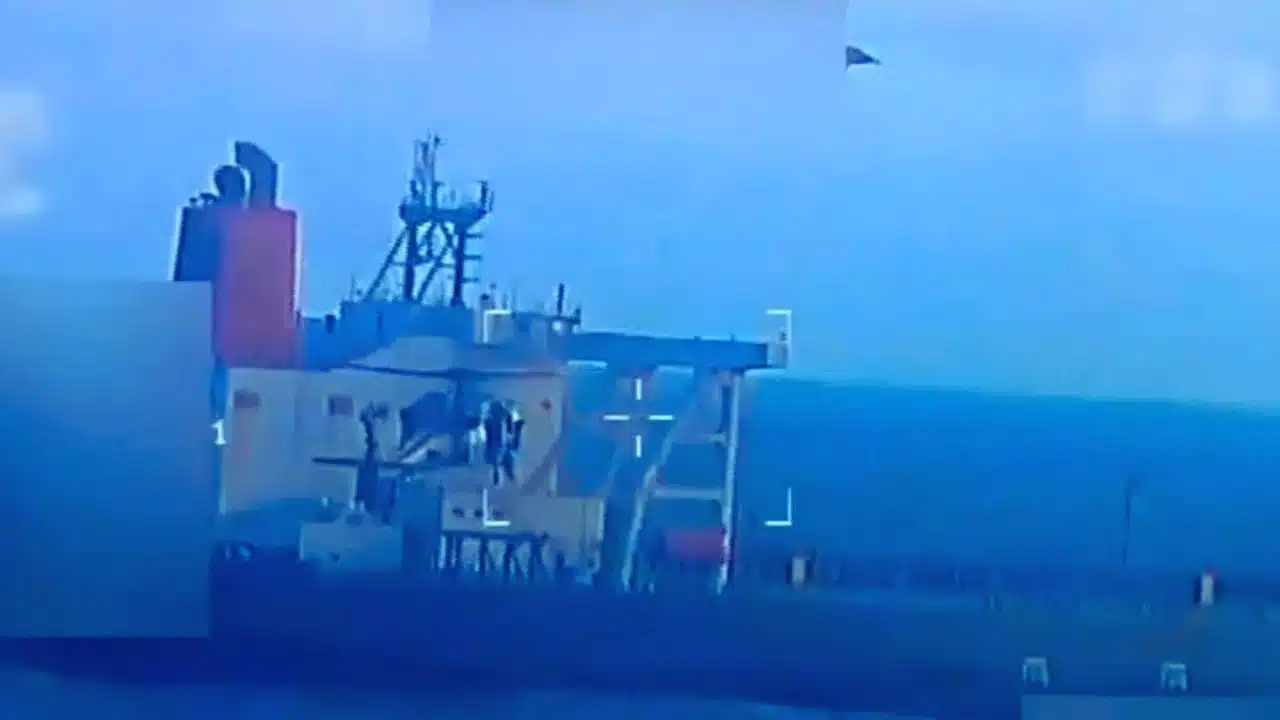
US authorities have imposed new sanctions on six additional oil tankers and several shipping firms after seizing the sanctioned supertanker Skipper off the coast of Venezuela, escalating efforts to choke off revenues to President Nicolás Maduro’s government and allied networks. The measures also target three nephews of Maduro, underscoring Washington’s shift from symbolic pressure to direct actions against Venezuela’s oil supply chain.
Key facts of the new US sanctions
The US Treasury’s Office of Foreign Assets Control (OFAC) announced sanctions on six large crude oil tankers and six associated shipping companies that it says have been moving Venezuelan crude in recent months. The decision came within roughly 24 hours of the seizure of the tanker Skipper in international waters off Venezuela’s Caribbean coast, and forms part of a broader campaign under President Donald Trump to enforce long‑standing US sanctions on Venezuela’s oil sector and related illicit shipping networks.
US officials say the six newly designated vessels — White Crane, Kiara M, H Constance, Lattafa, Tamia and Monique — have been used to transport Venezuelan crude in violation of US sanctions and, in some cases, have links to previously sanctioned networks that helped move oil for Iran and Hezbollah. The sanctions freeze any property the ships’ owners or operators hold in US jurisdiction and generally bar US persons and institutions from dealing with them, effectively cutting them off from much of the dollar‑based maritime and insurance system.
OFAC also named three nephews of Nicolás Maduro, including Efraín Antonio Campo Flores, accusing them of helping to protect and profit from Venezuela’s sanctions‑evading oil trade, though detailed designations are still emerging. The moves follow years of US energy sanctions first tightened in 2019, but mark the first time Washington has both seized a Venezuelan oil cargo at sea and then rapidly expanded sanctions on tankers operating around the country.
How the Skipper seizure triggered the crackdown
The immediate trigger for the latest measures was the dramatic boarding and seizure of the very large crude carrier (VLCC) Skipper on 10 December 2025 in the Caribbean Sea off Venezuela. US officials say a Coast Guard and Marine detachment, supported by helicopters and operating from a US Navy vessel, intercepted the Skipper, which was loaded with about 1.8 million barrels of Venezuelan Merey‑16 crude.
According to Treasury and vessel‑tracking analyses, Skipper had a long history of sanctions‑busting behavior: it had previously sailed under other names, including Adisa, and was sanctioned by the US in 2022 for moving blended Iranian crude in support of Iran’s Islamic Revolutionary Guard Corps and Hezbollah. Data from firms such as TankerTrackers and Kpler indicate the ship frequently manipulated its AIS (automatic identification system) data, hid its location, and even flew the Guyana flag without authorization while operating off Venezuela.
The White House has said the United States intends to keep the seized oil cargo, framing the move as a lawful enforcement of sanctions and counter‑terrorism measures, while Venezuelan officials have denounced the operation as piracy and theft. Legal experts quoted by international media are divided, with some arguing that US actions are grounded in domestic sanctions law and cooperation with regional states, and others warning that boarding a foreign‑flagged tanker in international waters pushes the boundaries of international maritime norms.
Timeline of seizure and sanctions
| Date (2025) | Event | Key details |
| 10 December | Seizure of Skipper | US forces board and seize the sanctioned VLCC Skipper off Venezuela, carrying about 1.8 million barrels of Merey‑16 crude. |
| 10–11 December | Venezuelan and Iranian protests | Caracas calls the move an act of international piracy, while Iran’s embassy in Venezuela condemns the operation as a serious breach of international law. |
| 11 December | US signals more seizures | US officials brief that more sanctioned tankers moving Venezuelan oil are being tracked and could be intercepted in coming weeks. |
| 11–12 December | OFAC sanctions six additional vessels | Treasury designates six tankers and six shipping companies, alongside three of Maduro’s nephews, for moving Venezuelan crude and helping to evade sanctions. |
Details of the six additional vessels
Industry data and the Argus report indicate that the newly sanctioned tankers — White Crane, Kiara M, H Constance, Lattafa, Tamia and Monique — are large crude carriers, including several very large crude carriers (VLCCs), some of them flagged in Panama, the Cook Islands and Hong Kong. US authorities say the vessels recently loaded or transported Venezuelan crude, often using patterns associated with shadow fleet activity such as irregular AIS signals and complex ship‑to‑ship transfers.
Treasury’s statement, as summarized by US and international outlets, links the tankers to six shipping companies accused of arranging these voyages, sometimes on behalf of state oil company PDVSA or intermediaries acting for buyers in China and other Asian markets. By targeting both the physical ships and their corporate operators, the US aims to make it harder for Venezuela and its partners to reflag vessels, shift ownership on paper or hide ultimate beneficiaries — tactics commonly used by sanctions‑hit oil exporters.
Shipping and market watchers note that the six ships are only a fraction of the sanctioned tonnage clustered around Venezuela. TankerTrackers estimates that more than 30 OFAC‑designated tankers are currently in or near Venezuelan waters, while over 80 ships in total are either loaded with or waiting to load oil, suggesting that many other vessels could be vulnerable if Washington decides to escalate seizures.
Political fallout, legal debate and what comes next
In Caracas, Maduro’s government has framed the seizure of Skipper and the follow‑on sanctions as part of an attempt by Washington to topple his administration and seize control of Venezuela’s vast oil reserves, pledging to raise the issue at international bodies. Venezuelan officials also argue that the presence of a sizeable US naval force off their coast, nominally deployed for anti‑drug operations, now appears aimed at enforcing energy sanctions and intimidating commercial shipping.
The Trump administration and its allies counter that the measures are necessary to cut off funding to what they describe as a corrupt and authoritarian regime, as well as to disrupt illicit oil flows benefiting Iran‑aligned groups. The White House has publicly warned that more tankers on existing US sanctions lists may be seized if they continue to carry Venezuelan crude or sanctioned Iranian oil, signaling a shift from paper restrictions to high‑profile maritime interdictions.
Energy analysts say the immediate impact on global oil supply is limited but note that Venezuelan production and exports were already constrained, and further disruption could deepen the country’s fiscal crisis and complicate flows of shadow fleet crude to Asia. The International Energy Agency and other observers have highlighted that a growing share of world oil trade now moves on tankers linked to sanctions, and they warn that more aggressive enforcement by the US and its partners could lengthen routes, lift freight costs, and inject new geopolitical risk into already strained markets.