Google has previewed its upcoming Project Aura XR glasses, developed with XREAL on Android XR, alongside new beta software features for Samsung’s Galaxy XR headset, signaling a deeper push into extended reality (XR) hardware and software.
The announcements, made in early December 2025 during a special XR edition of The Android Show, underline Google’s plan to make Android XR span both lightweight glasses and high‑end headsets.
Project Aura XR glasses
Project Aura is a new pair of extended reality smart glasses built by XREAL that run on Google’s Android XR operating system, making them the second official Android XR device and the first in a glasses-style form factor. XREAL and Google first introduced Aura at Google I/O 2025 as lightweight, “optical see‑through” glasses powered by Qualcomm’s Snapdragon XR chips, backed by Google’s AI assistant Gemini and a dedicated XR software stack.
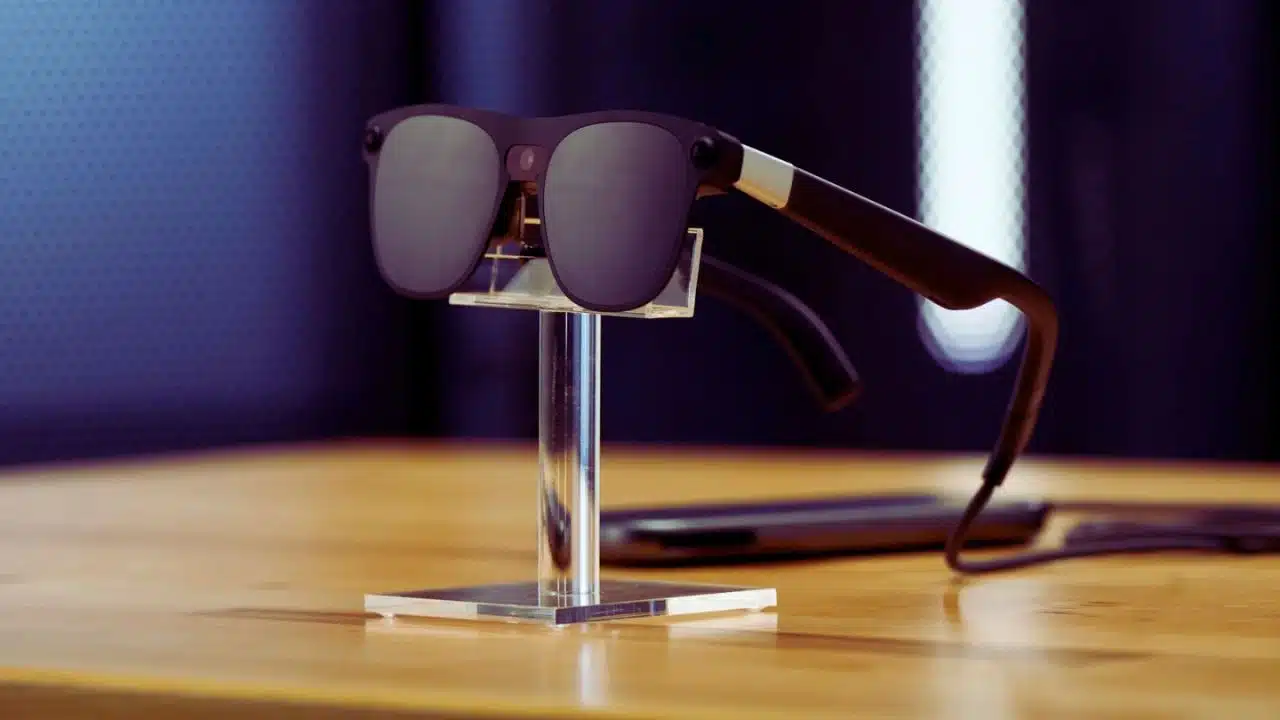
The latest preview during The Android Show: XR Edition offered the clearest look yet at Aura’s design and capabilities. The device resembles chunky sunglasses with transparent prism-based lenses, delivers roughly a 70‑degree field of view, and connects via a tethered compute puck that runs Android XR apps rather than relying solely on a smartphone or PC.
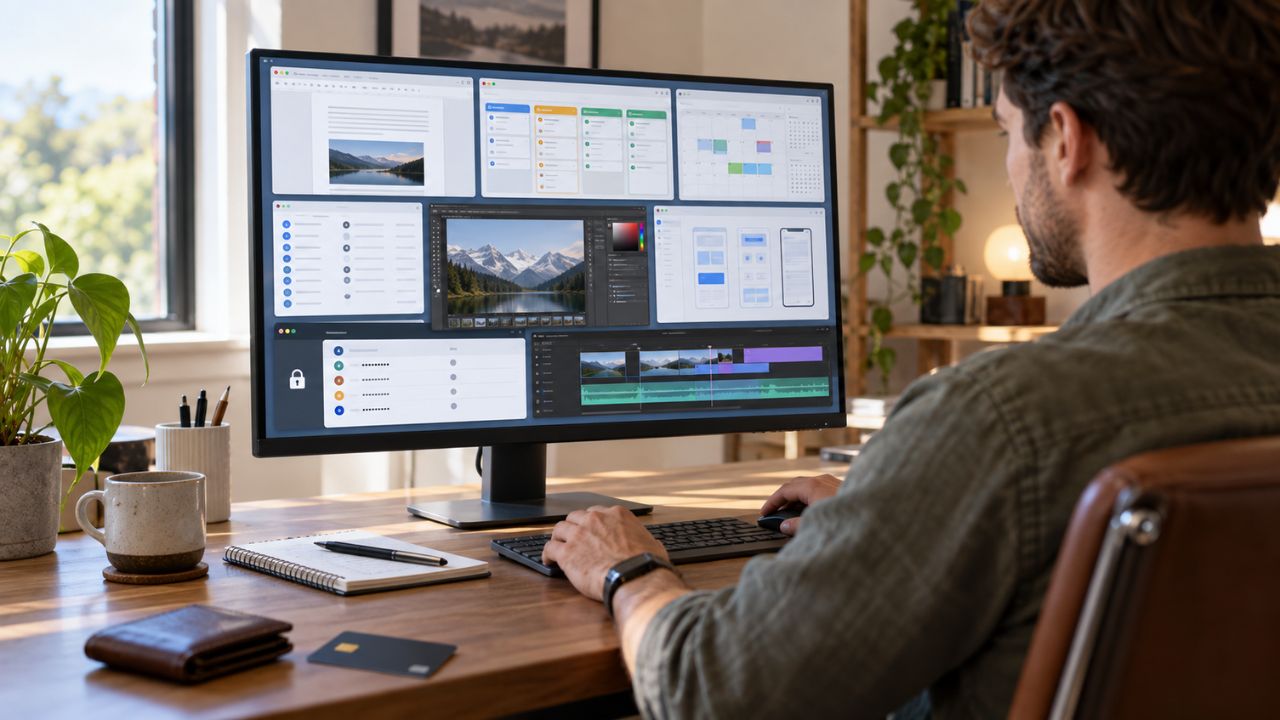
Functionally, Project Aura is positioned as more than just a virtual monitor for existing devices, although it can serve as a large floating display for video streaming, productivity and spatial computing. Google and XREAL have demonstrated scenarios such as using Aura as an extra laptop screen for creative work in a café or as a portable cinema experience, while still letting users see the real world around them through transparent optics.
While Google has not confirmed final branding or pricing, both the company and XREAL describe Aura as a real consumer product, not only a developer kit, with availability targeted for 2026. Additional technical details and launch information are expected as Google and XREAL move closer to commercial release and showcase the device at XR industry events.
Galaxy XR software updates
Alongside the Aura preview, Google detailed a substantial round of software updates for Samsung’s Galaxy XR headset, the first Android XR device that previously launched under the codename Project Moohan. The news came during the same Android Show: XR Edition broadcast, with Google framing Galaxy XR as the high‑end headset counterpart to lighter glasses such as Aura in its broader XR lineup.
Galaxy XR already offers high-end hardware, including dual 4K micro‑OLED displays, detachable light shields for immersion, spatial audio speakers, and tight integration with Google’s Gemini AI. According to Samsung’s product documentation, the headset can use Gemini to understand both what users are viewing on the virtual screen and their physical surroundings, enabling conversational queries about videos, environments or objects.
The new updates focus on everyday usability and communication. Google is rolling out a “travel mode” designed to stabilize the virtual display during movement, for example on a plane, effectively turning cramped spaces into a personal cinema or workspace that remains steady while the user moves.
Another headline feature is “Likeness,” a realistic avatar system that mirrors a user’s facial expressions and hand gestures during video calls, allowing others to see a more natural representation of the wearer while the headset obscures their real face. These capabilities are part of a broader beta update package now available to Galaxy XR owners, with Google directing users to online help resources to enroll and test the new features.
Android XR ecosystem impact
Project Aura and the Galaxy XR updates illustrate how Google is using Android XR to span multiple device categories, from powerful headsets to more discreet glasses. Google has previously described Android XR as a platform that brings AI, spatial interfaces and immersive media to a range of hardware partners, with Gemini at the center of the experience.
On the developer side, Google has introduced an Android XR SDK and a new XR glasses emulator in Android Studio to help developers build and test applications tailored for devices like Project Aura. The tools are meant to simplify tasks such as designing interfaces for transparent lenses, optimizing performance for Snapdragon XR chipsets, and ensuring apps work seamlessly across both headsets and glasses.
Strategically, Google’s partnership with XREAL, Qualcomm and Samsung positions Android XR as a competitor to ecosystems from Meta and Apple, which are also racing to define the future of spatial computing. By adding more devices to its platform and improving software features on existing hardware, Google is trying to create a critical mass of users and developers before mass‑market AI glasses arrive later in the decade.
Key dates and specs
| Date / Period | Event or Detail | Device | Notes |
| May 20, 2025 | Project Aura announced at Google I/O as Android XR smart glasses. | Project Aura | Second Android XR device after Samsung’s headset; first glasses form factor. |
| December 7, 2025 | Android Show: XR Edition previews Aura and Galaxy XR updates. | Aura & Galaxy XR | First extended live demo of Aura and announcement of new Galaxy XR features. |
| Late 2025 (shipping) | Galaxy XR marketed as AI‑powered XR headset with dual 4K micro‑OLED displays and Gemini integration. | Galaxy XR | Includes spatial audio, detachable light shields and context‑aware Gemini assistant. |
| Planned 2026 launch | XREAL and reports indicate Aura is slated as a consumer product, not just a dev kit, with launch expected in 2026. | Project Aura | Tethered glasses with ~70° field of view and Snapdragon XR chipset. |