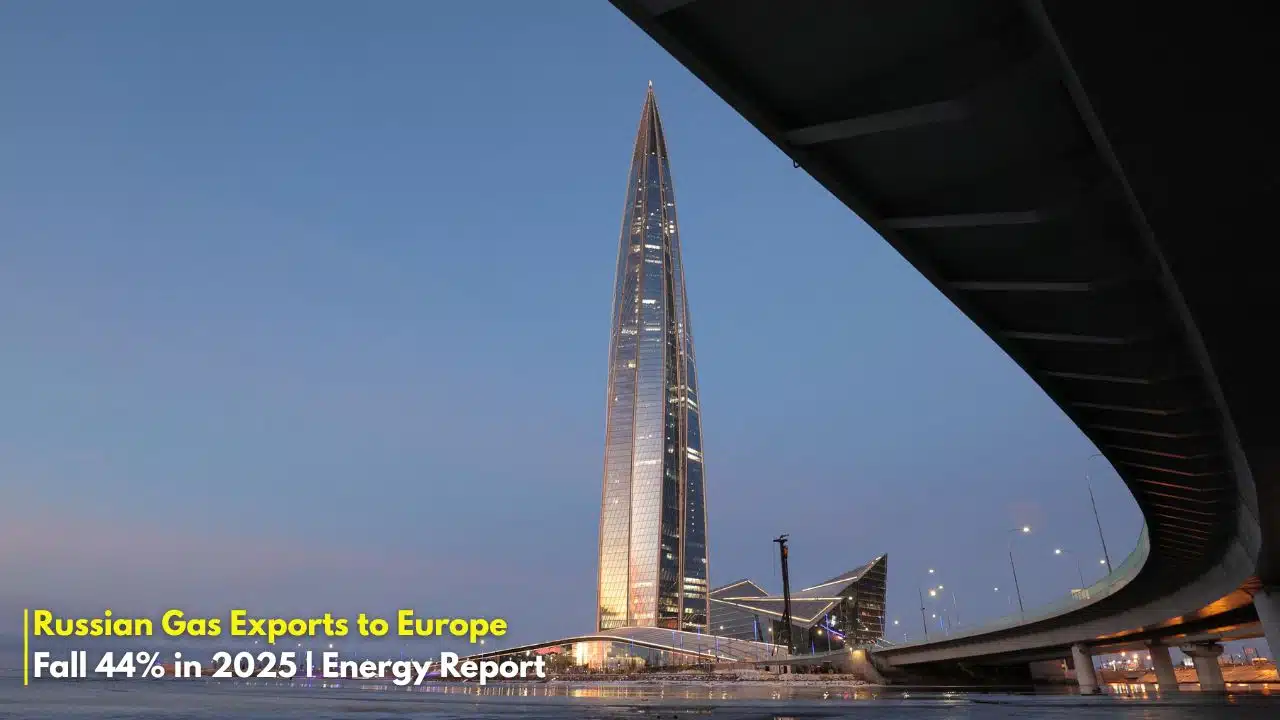
Russian gas exports to Europe have declined by 44% in 2025, marking a pivotal shift in the continent’s energy landscape. The drop is largely attributed to the cessation of gas transit via Ukraine and broader European efforts to diversify energy sources and reduce dependency on Russian supplies. This transformation has had far-reaching implications for both European energy security and Russia’s energy export economy.
Major Decline in Pipeline Exports
The most significant factor behind the 44% drop in Russian gas exports to Europe is the end of transit agreements with Ukraine. Until January 1, 2025, Ukraine served as a crucial transit corridor for Russian gas, but its refusal to renew the contract led to the abrupt halt of flows through this route. As a result, pipeline exports to Europe via Ukraine—previously responsible for a substantial portion of supply—have ceased entirely.
TurkStream, the sole remaining pipeline route for Russian gas to Europe, has seen only modest increases, insufficient to offset the loss from Ukraine. In the first eleven months of 2025, Russian gas supplied to Europe through TurkStream reached 16.3 billion cubic meters (bcm), up slightly from 15.2 bcm in 2024. If this trend continues, the total for the year will be about 18 bcm, a 44% reduction from the previous year’s volume. This represents a historic low for Russian gas exports to Europe, underscoring the structural transformation underway.
LNG Exports Also in Decline
The downturn extends to liquefied natural gas (LNG) shipments as well. Russian LNG exports to Europe fell by 13% year-on-year in the first half of 2025, while total Russian LNG exports globally dropped by 4.4% to 15.2 million metric tons. The European Union’s ban on Russian LNG transshipments, implemented in March 2025, further limited Russia’s ability to supply the continent. This regulatory move closed a loophole that previously allowed Russian LNG to reach Europe by transferring cargo between vessels in European waters, thereby tightening the continent’s energy embargo.
As a result, Russian LNG producers have been forced to seek alternative markets, particularly in Asia, where demand is growing but prices are generally lower than those in Europe. The loss of European premium pricing is a significant blow to Russia’s energy revenues and has prompted the country to accelerate efforts to develop new export infrastructure and secure long-term contracts with Asian buyers.
European Response and Diversification
Europe’s response to the reduction in Russian gas has been swift and multifaceted. The continent has actively pursued alternative supply sources, including increased pipeline imports from Norway, Algeria, and Azerbaijan. Additionally, European countries have expanded LNG receiving capacity, built new terminals, and developed floating storage units to handle greater volumes of imported LNG.
The EU’s REPowerEU Plan, launched in May 2022, has played a critical role in accelerating this transition. By 2025, the EU’s share of Russian gas imports has dropped from 45% in 2021 to 19%, reflecting a major shift in the continent’s energy strategy. New interconnectors have also been developed to improve gas distribution within Europe, ensuring that supplies can be rerouted efficiently in response to changing market conditions.
Despite these efforts, the transition away from Russian gas has not been without challenges. Some European countries, particularly those in Central and Eastern Europe, continue to rely on Russian gas due to limited alternative supply infrastructure and existing long-term contracts with significant financial penalties for early termination. Industrial processes designed for Russian gas specifications and economic considerations, such as potential price impacts, have also complicated the complete elimination of Russian gas from European energy systems.
Implications for Energy Security and Markets
The reduction in Russian gas exports has had significant implications for European energy security and market dynamics. While European gas storage facilities have reached healthy levels, the transition has led to increased price volatility, particularly during peak demand periods. The average cost of gas has risen as more expensive LNG replaces pipeline gas, and infrastructure bottlenecks have limited the distribution of gas from entry points to demand centers.
The impact varies across different regions of Europe. Countries with robust alternative supply infrastructure and diversified import portfolios have been better positioned to weather the transition, while those with limited options have faced greater challenges. Energy security experts note that while Europe has successfully navigated the initial phases of Russian gas reduction, longer-term challenges remain regarding price stability and supply resilience, especially during high-demand winter months.
Economic Impact on Russia
The decline in gas exports to Europe has had a profound economic impact on Russia. The reduction in revenue from what was historically its most profitable gas market has forced the country to reassess its energy export strategy. Redirecting all European volumes to alternative buyers has proven difficult, and the development of new export infrastructure has come with increased costs. Analysts suggest that Russia’s gas sector faces significant revenue challenges, as European premium prices are difficult to replicate elsewhere.
The full economic impact remains difficult to quantify, but industry experts agree that Russia’s share of the global gas market is likely to diminish in the long term. The country’s ability to maintain its position as a major gas exporter will depend on its success in developing new markets and adapting to changing global energy dynamics.
Broader Market Evolution
The current transition away from Russian gas may have lasting effects on how global gas markets function. The shift away from long-term contracts toward more flexible arrangements is likely to accelerate, as major importers seek greater supply diversification. The growing interconnection between previously separate regional gas markets could also reshape global trade patterns, while the energy transition may be hastened as gas supply concerns boost investments in renewable energy and critical minerals.
Market experts suggest that the Russia-Europe gas disruption may ultimately accelerate broader changes in global energy systems, potentially hastening rather than hindering the transition toward lower-carbon energy sources. The importance of critical minerals for energy security is also likely to grow, as countries seek to ensure reliable access to the resources needed for clean energy technologies.
Conclusion
The 44% decline in Russian gas exports to Europe in 2025 marks a historic turning point in the continent’s energy landscape. Driven by the end of transit agreements with Ukraine and broader European efforts to diversify energy sources, this transformation has far-reaching implications for both European energy security and Russia’s energy export economy. While challenges remain, the continent’s rapid adaptation and diversification efforts demonstrate the resilience of European energy systems and the capacity to navigate changing supply conditions.