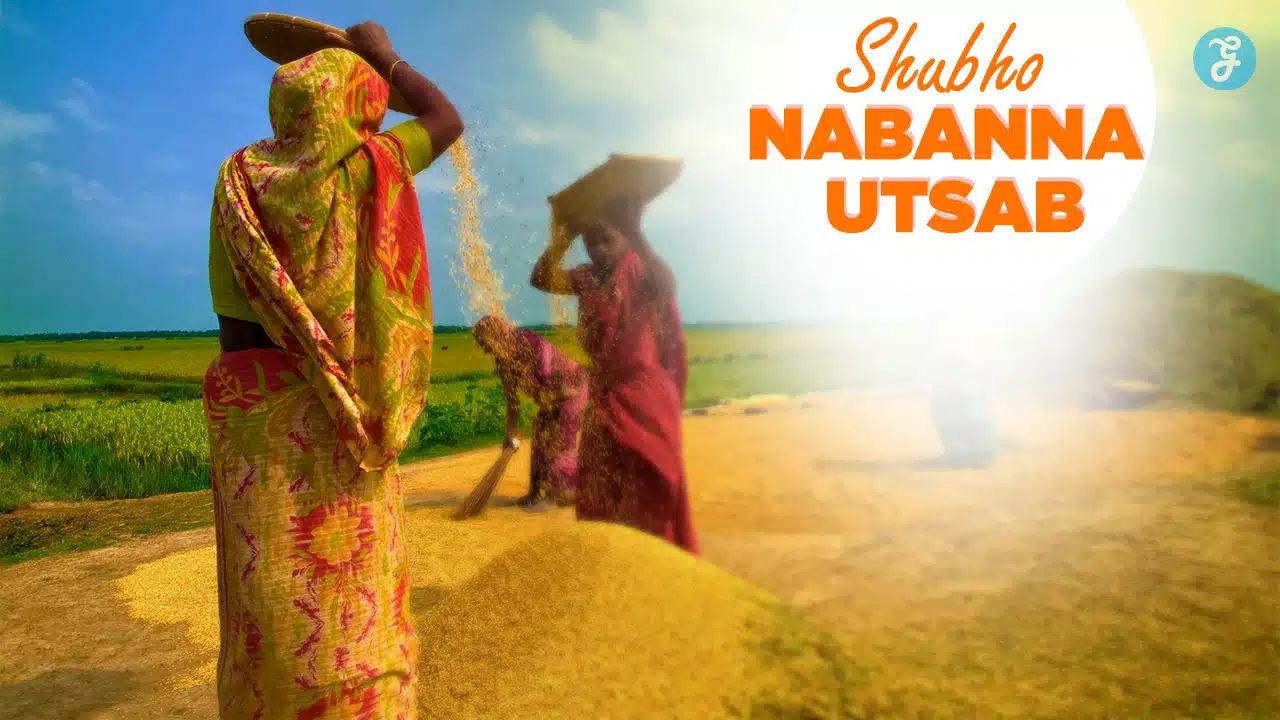
Bangladesh is a land of rivers, fertile soil, and a deep agricultural soul. While modern cities like Dhaka and Chattogram move fast with digital transformation, rural Bangladesh continues to preserve centuries-old traditions tied to the rhythm of nature. Nabanna Utsab, also known as the Festival of New Rice, holds a special place among these traditions. Nabanna Utsab, a celebration of harvest, gratitude, food, joy, and community, takes place in the Bengali month of Agrahayan.
Despite being deeply rooted in agricultural life, Nabanna Utsab has transcended village boundaries and is now embraced nationwide. Today, it stands as one of Bangladesh’s most cherished cultural festivals—an event that connects every Bengali to their agrarian heritage.
This comprehensive article explores why Nabanna Utsab is considered one of Bangladesh’s most important rural festivals, covering its origins, customs, food traditions, cultural significance, evolution, and modern relevance.
The Roots of Nabanna Utsab: Meaning of “Nabanna” and Its Cultural Significance
The word Nabanna is derived from two Bengali words—Nobo (new) and Anna (rice or food). Together, it means “new rice.” This festival marks the arrival of the freshly harvested Aman rice, one of the most important crops in Bangladesh. After months of nurturing, protecting, and harvesting, rural families celebrate the moment when new rice finally arrives at home. For farming communities, this isn’t just food—it’s abundance, relief, and renewal after months of uncertainty.
Nabanna is therefore both a symbol of gratitude and a celebration of survival, as it follows the rainy season when rice paddies often struggle under storms and floods. When the crop finally succeeds, the festival becomes a natural outpouring of joy.
Historical Background
Nabanna Utsab is ancient—its roots go back hundreds of years to pre-colonial Bengal. Before modern industries and commerce, Bengal was primarily agrarian, and rice cultivation formed the backbone of the economy and culture.
References to early harvest celebrations appear in:
-
Bengali folklore
-
Baul’s and Bhatiali’s songs
-
Puranic stories
-
Rural oral traditions
Historically, Nabanna was also a social safety net. Villagers would ensure that no one slept hungry during the festival, especially the poor. Even today, this spirit of sharing remains central to the celebration.
Seasonal Importance: Agrahayan and Hemonto
Nabanna is celebrated in the month of Agrahayan, which falls in mid-November, during the Hemonto (late autumn) season. This season is famous for:
-
Golden rice fields
-
Dry, cool breezes
-
Clear skies
-
The transformation of agricultural landscapes
Agrahayan is often called “Nabanna-r Maash” (the month of Nabanna), emphasizing just how central the harvest is to rural life.
The Agricultural Backbone of Nabanna Utsab
Bangladesh has three major rice crops:
-
Aman (harvested in late autumn)
-
Boro (harvested in spring)
-
Aus (harvested in summer)
Among these, Aman has the strongest cultural significance. It is rain-fed, deeply tied to natural cycles, and historically the major crop of rural Bengal.
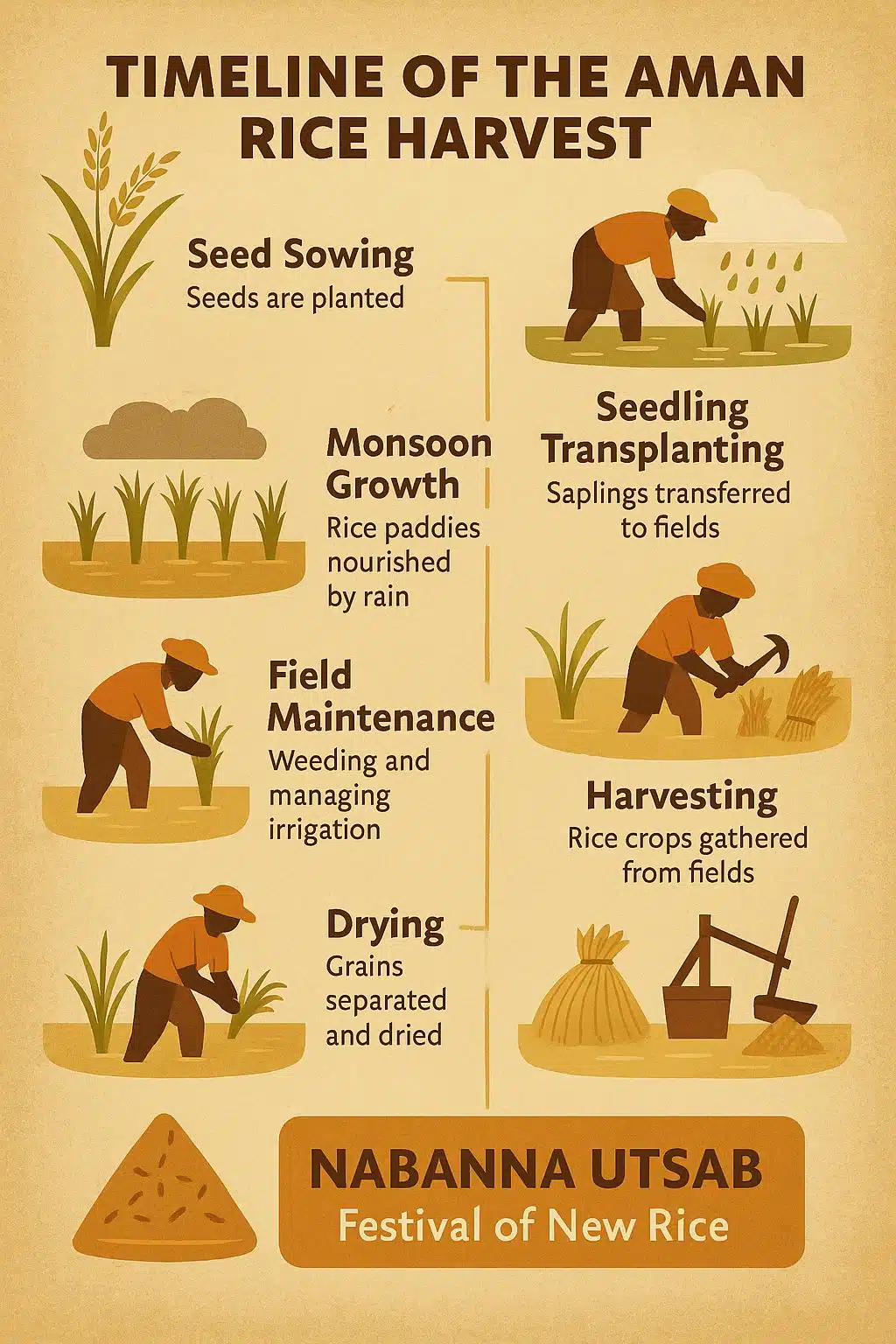
Farmers invest enormous labor into:
-
Planting seedlings
-
Protecting fields from floods
-
Battling pests
-
Managing irrigation
-
Cutting and threshing the rice
When the harvest succeeds, it naturally calls for celebration. This is the very essence of Nabanna.
Gratitude Toward Farmers
Nabanna is a tribute to the backbone of Bangladesh’s economy—the farmers. The festival acknowledges their:
-
Hard work
-
Patience
-
Resilience
-
Relationship with the land
Historically, wealthy landowners (zamindars) also participated by arranging feasts for workers and community members.
Traditional Farming Practices and Sustainability
Before modern machinery, farmers used:
-
Oxen-driven plows
-
The “dheki” (wooden rice beater)
-
Seed-sharing practices
-
Eco-friendly irrigation
Nabanna honors these sustainable, eco-conscious farming methods, encouraging the preservation of Bangladesh’s agricultural identity.
The Traditional Customs and Rituals of Nabanna Utsab
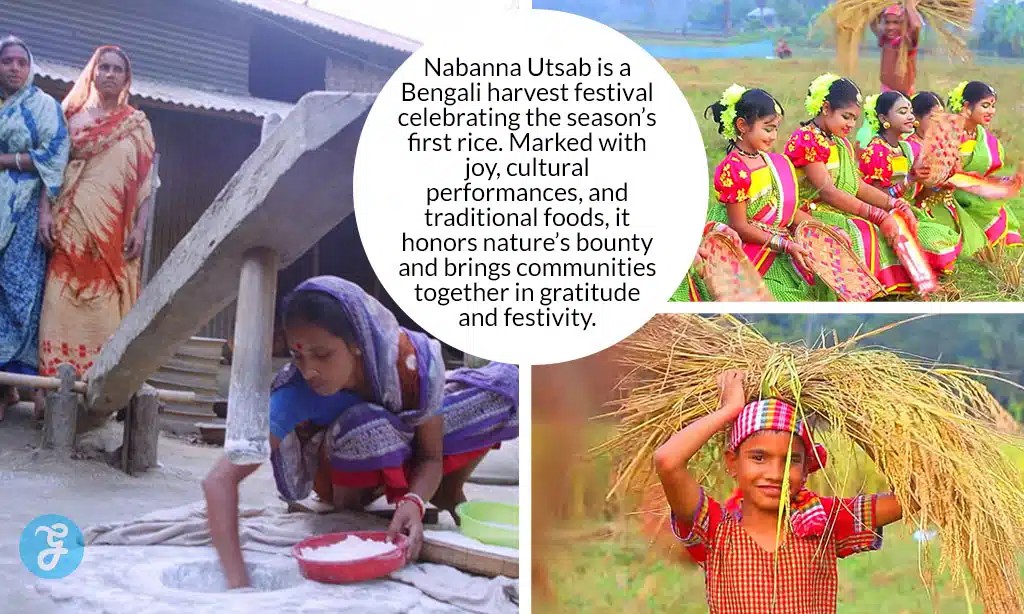
Every year, as freshly harvested Aman rice fills Bengali homes, villages across Bangladesh come alive with the timeless rituals of Nabanna Utsab. These customs—rich in symbolism and emotion—transform the harvest season into a celebration of heritage. The festival becomes a vibrant tapestry of food, music, prayer, and community gatherings that reflect the soul of rural Bengal.
The First Offering of New Rice
The most important ritual is cooking the first batch of new rice. This rice is often used to make pitha, payesh, or simple boiled rice for prayer and sharing. The first serving is typically offered to:
-
Elders
-
Ancestors
-
Neighbors
-
Guests
-
The poor
This act represents generosity and gratitude.
Community Feasts (Bhoj)
A defining feature of Nabanna is the village feast, where families gather and cook together. People prepare large pots of:
-
Boiled rice
-
Lentils
-
Vegetables
-
Pitha and sweets
Everyone eats together, strengthening community bonds.
Folk Songs, Dance, and Cultural Performances
The festival is rich with cultural expressions such as:
-
Baul songs
-
Bhatiyali (boat songs)
-
Pala gaan (folk drama)
-
Dhamail dance
Traditional instruments like the dotara, ektara, flute, and dhak fill the air with music.
Village Fairs (Nabanna Mela)
During the Utsab, the Nabanna Mela becomes a vibrant gathering of:
-
Artisans
-
Folk performers
-
Toy makers
-
Pitha sellers
-
Weavers
-
Handicraft vendors
These fairs are not only culturally rich but also economically significant.
Food Traditions: The Heart of Nabanna Utsab
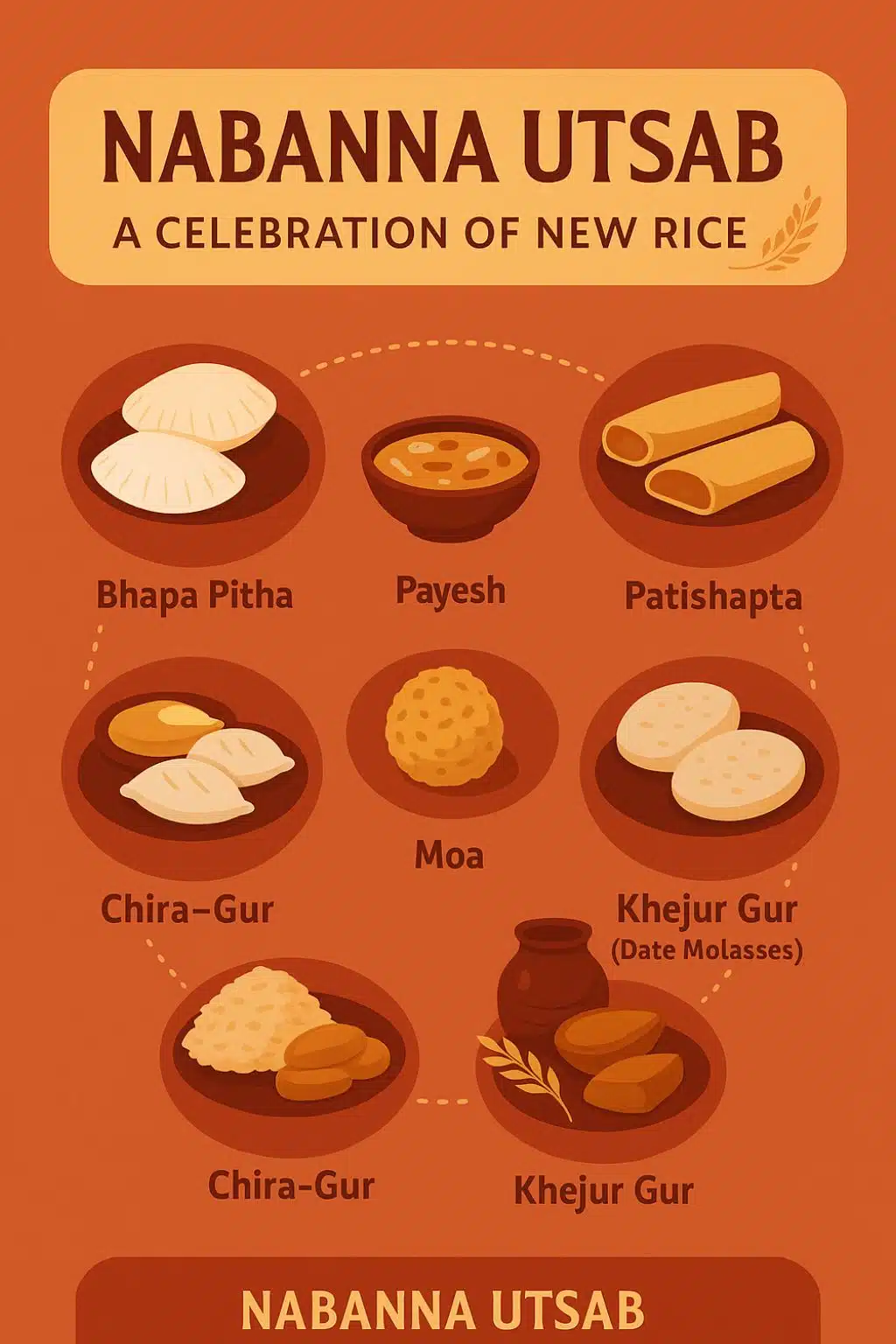
Food is at the center of Nabanna, especially pitha, the traditional rice cakes of Bengal. These pithas are prepared using freshly harvested rice, ground into flour at home.
Most Popular Nabanna Dishes
Some favorites include:
Pitha Varieties
-
Puli Pitha: Dumpling-like rice cakes filled with jaggery and coconut
-
Bhapa Pitha: Steamed rice cakes
-
Patishapta: Crepes filled with sweet coconut
-
Chitoy Pitha: Traditional winter delicacy
Sweet Dishes
-
Payesh (rice pudding with milk)
-
Moa (puffed rice cakes)
-
Chira-gur (flattened rice with date molasses)
Seasonal Special: Date Palm Molasses (Khejur Gur)
Khejur gur is a luxury item in Bengal and becomes a star ingredient during Nabanna.
Community Bonding Through Cooking
The preparation of pithas is not just cooking—it’s an event. Women gather to:
-
Grind rice
-
Prepare dough
-
Cook together over clay stoves
-
Chat, sing, and laugh
The entire process reflects unity and shared joy.
Cultural Significance of Nabanna Utsab in Rural Life
Nabanna Utsab holds deep cultural importance in rural Bangladesh, where it continues to shape traditions, community gatherings, and everyday life. The festival acts as a bridge between generations, preserving folk culture while strengthening social bonds. Exploring its cultural significance helps explain why Nabanna remains one of the most cherished rural celebrations in the country.
Reinforcing Social Harmony
Nabanna emphasizes:
-
Inclusiveness
-
Sharing
-
Feeding the poor
-
Collective happiness
This festival is built on the idea of social equality, at least for a day.
Preservation of Folk Culture
Nabanna keeps alive:
-
Folk music
-
Handicrafts
-
Rural storytelling
-
Traditional games
It is a living celebration of Bangladesh’s cultural heritage.
Symbol of Resilience
Bangladesh’s farmers face floods, storms, droughts, and economic uncertainty. A successful Aman harvest is a moment of relief. Nabanna symbolizes:
-
Survival
-
Hope
-
Renewal
-
Gratitude
Economic Impact on Rural Communities
The festival revitalizes rural economies:
-
Local artisans sell crafts
-
Farmers trade new rice
-
Women sell homemade pithas
-
Small rural markets flourish
Modern Evolution of Nabanna Utsab
The celebration of Nabanna Utsab has evolved as Bangladesh continues to modernize. What once existed solely as a rural harvest tradition has now taken on new forms in cities, universities, and cultural institutions. Yet even with these changes, the spirit of Nabanna remains beautifully intact.
Urban Celebrations
Today, Nabanna is celebrated widely in cities through:
-
Cultural events
-
University festivals
-
Pitha festivals
-
Music concerts
Institutions like Chhayanaut, Dhaka University, and Jahangirnagar University have made Nabanna celebrations highly popular.
Media and Pop Culture Influence
Television channels, YouTube creators, and social media influencers now actively feature:
-
Pitha-making videos
-
Rural fair vlogs
-
Cultural performances
-
Interviews with farmers
This exposure keeps the tradition alive.
Challenges
However, the festival faces challenges:
-
Declining rural participation due to urban migration
-
Climate change affecting Aman rice production
-
Commercialization replacing organic practices
Cultural Revival Efforts
Schools, NGOs, and cultural groups are working to:
-
Preserve traditional pitha recipes
-
Document rural songs and stories
-
Promote rural fairs
-
Encourage youth involvement
Why Nabanna Utsab Holds Deep Emotional Value
Nabanna celebrates the bond between humans and the earth. It reminds people that food is not merely a commodity but a gift of nature.
Celebration of Simplicity
Unlike many festivals that have become commercial, Nabanna remains:
-
Simple
-
Rural
-
Community-focused
Its beauty lies in its authenticity.
Symbol of Bengali Identity
From literature to music, Nabanna represents the essence of Bengali rural life. For many, it embodies what it means to be Bengali—humble, resourceful, and culturally rich.
Comparing Nabanna Utsab With Other Festivals
| Festival | Theme | Time of Celebration | Key Traditions | Food Highlights |
|---|---|---|---|---|
| Nabanna Utsab | Celebration of new Aman rice harvest | Agrahayan (mid-November) | Pitha-making, community feasts, folk songs, village fairs | Rice-based pithas, payesh, chira-gur, khejur gur sweets |
| Pohela Boishakh | Bengali New Year & cultural renewal | 14–15 April | Processions, cultural shows, fairs, wearing new clothes | Traditional Bengali dishes, panta-ilish |
| Pongal | Thanksgiving for harvest; honoring the Sun | Mid-January | Cooking Pongal, cattle worship, kolam art | Sweet Pongal rice, sugarcane, milk sweets |
| Baisakhi | Harvest celebration & Sikh New Year | 13–14 April | Gurdwara visits, bhangra/gidda dance, fairs | Saag, roti, kheer, Punjabi festive foods |
| Onam | Harvest festival & return of King Mahabali | August–September | Boat races, pookalam (flower art), cultural performances | Onam Sadya (multi-course vegetarian feast) |
Nabanna vs Pohela Boishakh
-
Pohela Boishakh marks a new year; Nabanna marks the new harvest
-
Pohela Boishakh is more urban and commercial
-
Nabanna is rural, agrarian, and spiritually grounded
Nabanna and Other South Asian Harvest Festivals
Similarities exist with:
-
Pongal (Tamil Nadu)
-
Baisakhi (Punjab)
-
Onam (Kerala)
-
Kaati Bihu (Assam)
But Nabanna is unique because of:
-
It’s pitha culture
-
Bengali folk music influence
-
Communal sharing tradition
How Nabanna Utsab Strengthens National Identity
Nabanna Utsab is more than a rural harvest celebration—it is a powerful symbol of what it means to be Bangladeshi. Through its food, music, rituals, and shared joy, the festival brings people together across regions and generations. In many ways, Nabanna strengthens national identity by reminding the nation of its roots, resilience, and cultural unity.
Bridging Rural and Urban Communities
Urban Bangladeshis participate through:
-
Pitha festivals
-
Cultural shows
-
University celebrations
This creates a cultural bridge between cities and villages.
Honoring Farmers
Nabanna is one of the few festivals that openly celebrates the farmer’s contribution to society.
Promoting Sustainable Traditions
The festival encourages:
-
Local ingredients
-
Traditional farming
-
Environment-friendly practices
-
Rural crafts
Takeaways
Nabanna Utsab is more than a harvest celebration—it is a tribute to resilience, gratitude, community, and Bengali identity. It honors the hands that feed the nation, the songs that echo through rural landscapes, and the traditions passed down through generations. In a rapidly modernizing world, Nabanna serves as a reminder to stay connected to our roots, our soil, and our cultural heritage.
As Bangladesh evolves, preserving the spirit of Nabanna becomes essential—not just for rural communities, but for the nation as a whole. It is a festival that binds people together, celebrates nature’s gifts, and reflects the soul of a resilient, vibrant, and beautiful culture.
Nabanna Utsab will continue to thrive as long as Bengalis cherish the values of humility, gratitude, and unity that the festival represents.