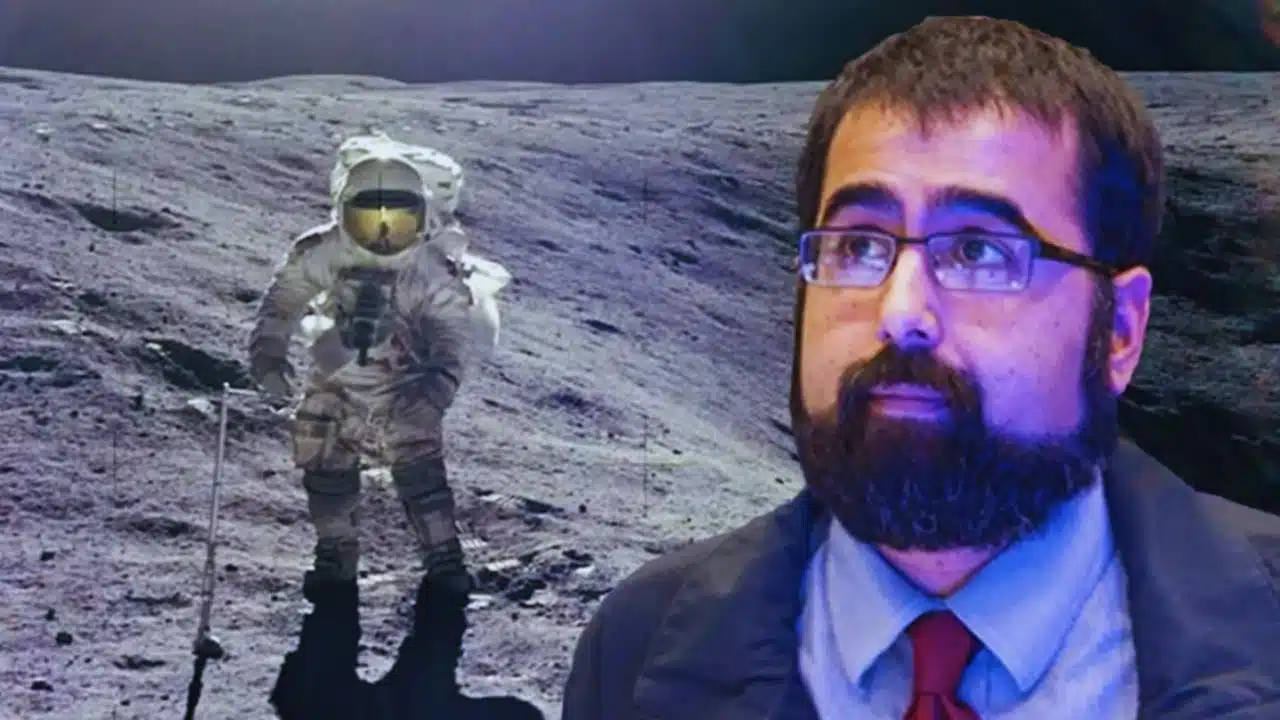
NASA has announced the appointment of Amit Kshatriya, an Indian-American and 20-year veteran of the agency, as its new Associate Administrator. This is one of the highest-ranking civil service roles at NASA, effectively making him the chief operating officer (COO) who oversees the agency’s daily operations and long-term planning.
His appointment, announced by Acting NASA Administrator Sean P. Duffy on September 3, 2025, comes at a crucial time when NASA is preparing for its ambitious Artemis missions to the Moon and beyond.
A Veteran of NASA’s Exploration Programs
Career Journey at NASA
Kshatriya began his NASA career in 2003, initially working as a software and robotics engineer on the International Space Station (ISS). His early work involved robotic systems and engineering solutions that supported ISS assembly and crew operations. Over the years, his career steadily advanced:
- 2003–2014: Contributed as a robotics officer and software engineer, particularly on complex missions involving ISS assembly and operational safety.
- 2014–2017: Became a Flight Director, one of the most demanding roles at NASA, where he was responsible for overseeing mission operations on the ISS.
- Later, he served as the manager of the ISS Vehicle Office, guiding critical upgrades and mission readiness.
- In 2021, he joined NASA Headquarters as a deputy associate administrator in the Exploration Systems Development Mission Directorate (ESDMD), where he directly shaped the agency’s Moon-to-Mars strategy.
Before his latest appointment, Kshatriya was serving as the Deputy Head of the Moon-to-Mars Program Office, supervising Artemis mission planning and future crewed Mars expeditions.
Early Life and Academic Background
Kshatriya’s story reflects a blend of Indian roots and American upbringing.
- Birthplace & Family: Born in Brookfield, Wisconsin, to Indian immigrant parents, he grew up with a strong cultural and educational foundation. He later considered Katy, Texas as his hometown.
- Education: He holds a Bachelor’s degree in Mathematics from the California Institute of Technology (Caltech) and a Master’s degree in Mathematics from the University of Texas at Austin.
- His training in mathematics and problem-solving laid the foundation for his later success in robotics, engineering leadership, and large-scale mission planning.
Recognitions and Awards
Kshatriya’s career is decorated with multiple honors recognizing both his leadership and technical expertise:
- NASA Outstanding Leadership Medal – for his role as lead flight director during the ISS’s 50th expedition, a mission noted for its operational complexity.
- Silver Snoopy Award – presented by astronauts themselves for his outstanding contributions to crew safety during the Dragon demonstration mission.
- Additional commendations for engineering excellence and mission assurance across ISS and Artemis-related projects.
These awards highlight the trust NASA astronauts and engineers have placed in his ability to deliver safe and innovative solutions.
Role as Associate Administrator
Strategic Responsibilities
In his new role, Kshatriya becomes the top career civil servant at NASA. He now:
- Leads the agency’s 10 center directors across the United States.
- Oversees multiple mission directorates, ensuring alignment with NASA’s long-term exploration goals.
- Acts as the chief operating officer, responsible for coordinating operations, budgets, and partnerships.
This makes him a key figure not only in managing NASA’s scientific and exploration programs but also in strengthening collaborations with international and commercial partners.
Artemis at the Core of NASA’s Future
The Artemis program is central to NASA’s strategy, aiming to land the first woman and the next man on the Moon and establish a sustainable presence there before advancing to Mars.
Kshatriya’s promotion signals that NASA wants experienced engineering leadership at the top to ensure these missions succeed. His experience with Artemis planning and Mars expedition design means he is uniquely positioned to bridge technical realities with strategic goals.
NASA officials emphasized that his leadership will “put America’s return to the Moon through Artemis at the very core of our agency.”
Expanding Public–Private Partnerships
Another critical part of his role will be partnering with private industry. NASA has increasingly relied on commercial partners like SpaceX, Blue Origin, Boeing, and Lockheed Martin for spacecraft development, lunar landers, and logistics support.
Kshatriya’s leadership will involve:
- Deepening collaborations with U.S. companies to expand the space economy.
- Driving innovation in areas like lunar infrastructure, crew safety technologies, and robotics for Mars missions.
- Ensuring that public and private investments align with America’s long-term space leadership strategy.
Broader Significance of His Appointment
Amit Kshatriya’s elevation holds symbolic and strategic importance:
- For NASA – It underscores the agency’s commitment to placing seasoned engineers at the helm of leadership roles, especially during critical phases of Artemis and Mars planning.
- For Indian-Origin Communities – His achievement resonates strongly with the Indian diaspora worldwide, highlighting how contributions of Indian-Americans continue to shape global scientific and technological leadership.
- For Global Space Leadership – At a time of growing international competition—China’s lunar program, Europe’s collaborative missions, and India’s Chandrayaan success—NASA’s appointment of a proven leader demonstrates its intent to maintain exploration leadership.
Amit Kshatriya’s appointment as NASA’s Associate Administrator marks a pivotal moment for the agency. His two decades of technical expertise, leadership in Artemis planning, and proven record of safety and innovation make him ideally suited to guide NASA into its next great era of exploration—from returning humans to the Moon to preparing for Mars.
For the Indian-origin global community, his achievement stands as a proud reminder of the contributions of diaspora talent to cutting-edge science and humanity’s future beyond Earth.
The Information is Collected from Nasa and Space.