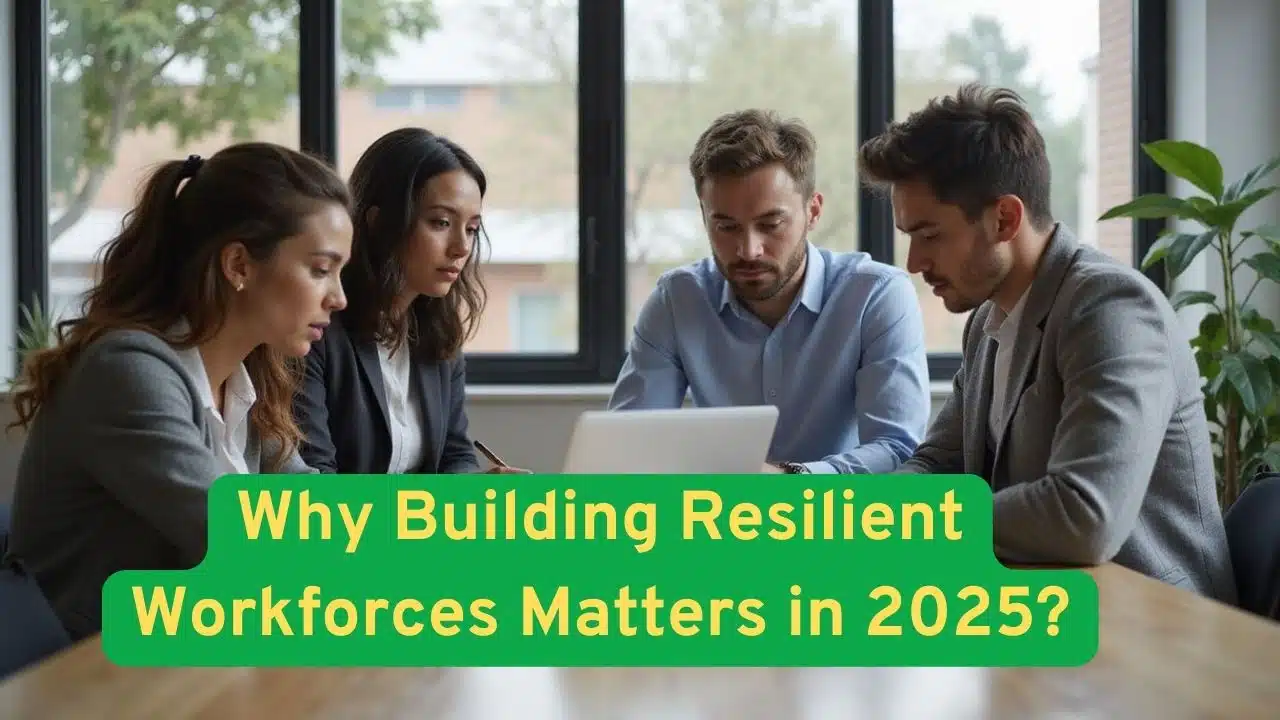
Work feels tougher than ever in 2025. Deadlines pile up, changes happen fast, and stress creeps in. Many workers struggle to stay positive and productive. Burnout and mental health challenges are real problems.
Resilience helps teams adapt and thrive under pressure. Studies show resilient employees handle stress better and stay engaged. This article shares simple ways to build a stronger, happier workforce.
You’ll learn how flexibility, peer support, and clear communication make a difference. Ready to see how resilience can transform your workplace? Keep reading.
Key Takeaways
- Resilient workers handle stress better and stay 23% more engaged, like a healthcare provider saw during the pandemic. Companies that train managers in empathy and use mental health tools cut burnout risks fast.
- Flexibility boosts retention. CompuTech avoided layoffs by cross-training staff, while hybrid schedules improved work-life balance for 1 in 3 employees at surveyed firms. Tools like HubEngage track stress in real time to prevent crises.
- Recognition matters. Peer shout-outs and gamified rewards keep teams motivated during change, raising productivity by 18% in McKinsey’s studies. Celebrating small wins builds grit without burnout.
- Open talks build trust. Daily check-ins at CompuTech stabilized morale after a market crash, proving transparency reduces fear during rapid shifts like tech upgrades or restructuring.
The Growing Importance of Workforce Resilience in 2025

Workplaces in 2025 face more change, stress, and uncertainty than ever before. Companies must tackle burnout, hybrid work challenges, and mental health to keep teams strong and focused.
Employees need emotional agility and coping strategies to handle rapid shifts in technology and business demands. Leaders play a key role in fostering psychological safety and stress reduction through smart policies and training.
How can workforces adapt to rapid workplace changes?
Workforces face constant shifts in 2025, from tech advancements to hybrid setups. Adapting quickly keeps teams ahead of the curve.
- Adjust schedules and roles. Flexible hours and cross-training help employees switch tasks fast. CompuTech survived layoffs by reassigning roles temporarily.
- Hold regular transparency meetings. Open talks build trust and reduce stress during change. Daily check-ins helped CompuTech stay stable after a market crash.
- Focus on solutions, not problems. Teams that brainstorm fixes together adapt better. A positive mindset boosts collaboration under pressure.
- Train for new skills often. Continuous learning keeps workers ready for industry shifts. Upskilling fights obsolescence and builds confidence.
- Share recovery stories. Discussing past challenges teaches how to handle future ones. These talks strengthen organizational learning and perseverance.
- Encourage emotional resilience. Mental toughness helps staff stay calm during chaos. Support programs reduce burnout and improve well-being.
- Strengthen psychological safety. Let employees voice concerns without fear. Safe spaces foster creativity and quick problem-solving.
- Use systems like COREWORKFLOW. Align operations with culture to smooth transitions. Structured processes help teams adapt without confusion.
Strategies to Build Resilient Workforces
Companies can boost resilience by offering mental health resources, flexible schedules, and skills training. Encouraging teamwork and open communication helps employees adapt to change with confidence.
Leaders who listen, provide clear goals, and invest in wellness programs create stronger, more adaptable teams. Simple tools like mindfulness apps or peer support groups make a big difference too.
How can companies foster flexibility and adaptability?
Flexible work structures and strong leadership can help teams stay agile. Here are proven ways to build adaptability in any workforce:
- Offer flexible schedules and remote work options. Rotating schedules helped a healthcare provider boost staff retention by 23% during the pandemic.
- Cross-train employees for multiple roles. CompuTech used temporary role reassignment during layoffs, keeping operations smooth.
- Protect focus time and encourage short breaks. Teams recover faster under pressure when they step back after intense projects.
- Teach leaders flexible management styles. Training in emotional agility helps managers support diverse team needs.
- Let employees say no to tasks that don’t fit goals. This clears space for high-priority work and reduces burnout risks.
- Celebrate small wins and bounce-backs. Recognizing progress, even after setbacks, builds grit and psychological safety.
- Use analytics to spot roadblocks early. Regular check-ins and performance evaluations keep improvement continuous.
- Promote skill-sharing across teams. Knowledge sharing sparks curiosity and collaborative problem-solving.
Building a resilient workforce isn’t just about surviving change; it’s about thriving in it.
What resilience-building tools and training are effective?
Building a resilient workforce takes the right tools and training. Companies need practical ways to boost emotional strength and adaptability.
- Real-time feedback platforms like HubEngage help monitor stress levels and mental health. They let employees share concerns quickly, addressing burnout before it escalates.
- Automated recognition systems create a positive workplace culture. They highlight small wins, keeping teams motivated even during tough changes.
- Manager training in empathetic leadership teaches supervisors to support their teams better. Strong leaders build psychological safety, making employees feel valued and heard.
- Storytelling sessions let workers share their own resilience experiences. Hearing real struggles and solutions inspires others to push forward.
- Gamified engagement tools turn skill-building into a fun challenge. They encourage continuous learning while reducing stress through friendly competition.
- The unBurnt program offers workshops on burnout prevention. It gives employees clear strategies to stay productive without sacrificing well-being.
- Peer-to-peer recognition systems let colleagues celebrate each other’s strengths. This boosts morale and strengthens team bonds during high-pressure periods.
- Regular check-ins provide a structured space for reflection. Short, frequent talks help spot early signs of fatigue or disengagement.
- Resilience training programs teach emotional agility and problem-solving skills. Workers learn to handle setbacks without losing focus or motivation.
Benefits of a Resilient Workforce
A resilient workforce keeps productivity high, even when challenges arise. Happy, engaged employees stick around longer, cutting turnover costs and boosting morale.
Strong teams handle stress better, turning obstacles into opportunities for growth. When people feel supported, they bring their best selves to work every day.
How does workforce resilience enhance productivity and motivation?
Resilient workers tackle problems head-on instead of getting stuck. Focusing on solutions keeps productivity high, even when targets are missed or conflicts arise. Stress slows thinking and hurts decision-making, but resilient teams push through without losing steam.
Recognition plays a big role too. A simple “thank you” or peer shout-out boosts motivation fast, making employees feel valued. McKinsey reports that burned-out teams move slower and care less.
Resilience training fights this by building emotional strength, so setbacks don’t tank morale. Celebrating wins, big or small, reminds everyone progress is possible even on tough days.
How does resilience improve employee retention and engagement?
Resilient teams stay longer and work better. A healthcare provider saw a 23% jump in staff retention by focusing on mental health and emotional well-being during tough times. Workers stick around when they feel supported, with clear communication channels and psychological safety making them more engaged.
Simple actions boost loyalty. Celebrating small wins, offering continuous learning, and having no-judgment zones for mistakes build trust. Transparent management and regular check-ins create belonging, cutting turnover while raising satisfaction.
Companies that align policies with employee well-being see higher productivity without the burnout struggle—happy teams don’t walk out the door.