


A federal judge in New York has denied bail to music mogul Sean “Diddy” Combs, ruling that he must remain in federal custody until his sentencing scheduled for October 3, 2025. The decision came after Combs’ legal team filed yet another motion requesting temporary release from jail, arguing that exceptional circumstances warranted it.
However, Judge Arun Subramanian, who is overseeing the case in the U.S. District Court for the Southern District of New York, rejected the request—pointing to the mandatory detention requirements, the seriousness of the conviction, and evidence of violent behavior as decisive factors.
Convicted on Federal Charges: Transporting Individuals for Prostitution
Combs was convicted in July 2025 on two counts of violating the federal Mann Act, which prohibits the transportation of individuals across state lines for the purpose of prostitution. While the jury acquitted him of more severe allegations involving sex trafficking and racketeering conspiracy, the convictions themselves mandate incarceration pending sentencing, unless the defendant can show extraordinary or exceptional reasons for temporary release.
Combs has been incarcerated for nearly 11 months at the Metropolitan Detention Center (MDC) in Brooklyn, New York, following his arrest in late 2024. The verdict followed an intense eight-week trial, during which prosecutors presented testimony, surveillance footage, and other digital evidence detailing a pattern of conduct they alleged involved coercion and abuse under the guise of consensual adult encounters.
Violent Footage and Risk of Future Harm
Central to the judge’s ruling was surveillance footage from 2016, which was introduced during the trial. The video, captured inside a hotel corridor, showed Combs physically assaulting singer Cassie Ventura, who was one of the women named in the prosecution’s case. The footage depicted Combs kicking and dragging Ventura during a confrontation, which prosecutors argued reflected a pattern of violence and control tied to his conduct in facilitating prostitution.
Judge Subramanian noted that this incident, captured on camera, clearly demonstrated that Combs poses a danger to the community if released. It also reinforced concerns about intimidation or retaliation, especially given Combs’ wealth, influence, and access to resources.
The court emphasized that this wasn’t an isolated incident but part of a broader context involving allegations of coercion, psychological manipulation, physical abuse, and deceptive recruitment of women under false pretenses for participation in sex-related events.
Defense Argument: ‘Swingers Lifestyle’ Not Enough to Justify Release
In their motion, Combs’ legal team argued that the underlying activity involved consensual adult relationships and that he merely paid for escorts in the context of a private “swingers” lifestyle. They claimed there was no commercial enterprise or exploitative intent, and that the legal definition of “prostitution” should be viewed differently given the circumstances.
While Judge Subramanian acknowledged that this line of reasoning might have relevance in less violent or coercive cases, he firmly ruled that the evidence of abuse, coercion, and subjugation in the current case invalidated any such arguments. The court specifically cited victim statements, witness testimonies, and corroborating electronic communications that pointed to non-consensual behavior and manipulative control exercised by Combs.
Concerns Over Jail Conditions Rejected
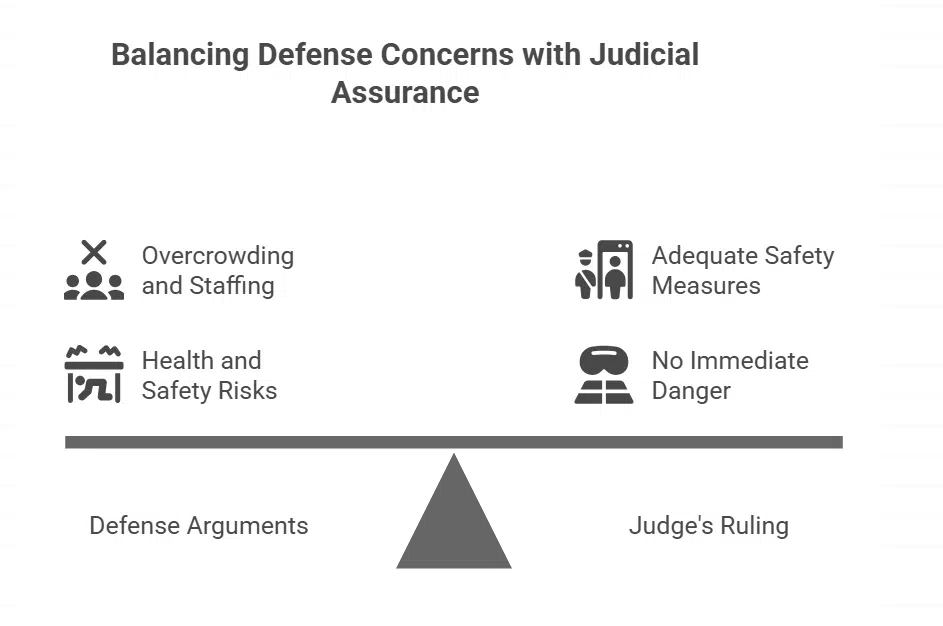
Another point raised by the defense was the poor conditions inside MDC Brooklyn, which is frequently criticized for overcrowding, staffing shortages, and safety lapses. Combs’ lawyers argued that pre-sentencing detention there posed health and safety risks, especially after an alleged threat of violence from another inmate.
However, the judge ruled that jail officials had adequately responded to ensure Combs’ safety and that no evidence was presented to show he faced a unique or immediate danger. The court also noted that Metropolitan Detention Center personnel had successfully de-escalated and managed the threat without any physical harm to Combs. As such, his conditions of confinement did not rise to a level that would justify deviation from the usual rules of detention following a felony conviction.
No Legal Basis for Bail Under Federal Law
Under U.S. federal bail statutes, a person convicted of an offense involving violence or exploitation must be detained unless compelling and exceptional reasons can be demonstrated. The court found that Combs failed to meet that threshold, particularly given the nature of his crimes and the danger posed by his release.
The law allows for temporary release before sentencing in rare instances—for example, serious medical issues or an urgent family crisis. In this case, no such conditions were cited by the defense.
This is not the first time bail has been denied. Following his conviction, the judge previously denied an earlier request for temporary release citing the same evidence—particularly the 2016 hotel assault video, which was described in court as “stark” and “undeniably violent.”
Sentencing Set for October 3, 2025
With the latest motion denied, Combs will remain in federal custody at MDC until his sentencing hearing in October. According to federal guidelines, the charges he was convicted of carry a maximum sentence of 10 years per count, though actual sentencing ranges depend on multiple factors, including prior history, behavior during trial, and the judge’s discretion.
Prosecutors have indicated they will likely request a sentence of 51 to 63 months (approximately 4 to 5 years), while the defense has suggested that a shorter term of 21 to 27 months would be more appropriate based on mitigating factors.
The sentencing hearing is expected to include statements from victims, including Cassie Ventura and another unnamed woman referred to as “Jane,” as well as final arguments from both prosecution and defense teams.
























