
In 2025, the fight against climate change is no longer theoretical—it’s unfolding in real time. From deadly wildfires to shrinking ice caps, the planet’s warning signs have become impossible to ignore. But amid these challenges, a wave of innovation is emerging with powerful tools to slow, stop, or even reverse environmental damage.
Welcome to Eco-Tech 2025—a bold new era where artificial intelligence, clean energy, and green infrastructure converge to offer real-time solutions for a healthier Earth.
In this article, we explore the most impactful eco-technologies of 2025 that are not only tackling today’s environmental issues but reshaping our path toward a sustainable future.
Key Highlights
-
AI and Climate: From wildfire prediction to carbon tracking, AI is powering real-time environmental protection efforts across the globe.
-
Next-Gen Renewable Energy: 2025 sees breakthroughs like perovskite solar cells and sodium-ion batteries making clean energy more affordable and accessible.
-
Carbon Capture at Scale: Technologies like direct air capture and modular CCUS units are removing CO₂ from the atmosphere—and turning it into usable products.
-
Green Cities Are Rising: Smart buildings, electric public transport, and vertical gardens are transforming urban spaces into climate-positive zones.
-
Eco-Friendly Gadgets: Consumer tech is going green with modular, repairable phones and apps that help individuals track and reduce their carbon footprint.
The Rise of AI and Machine Learning in Climate Solutions
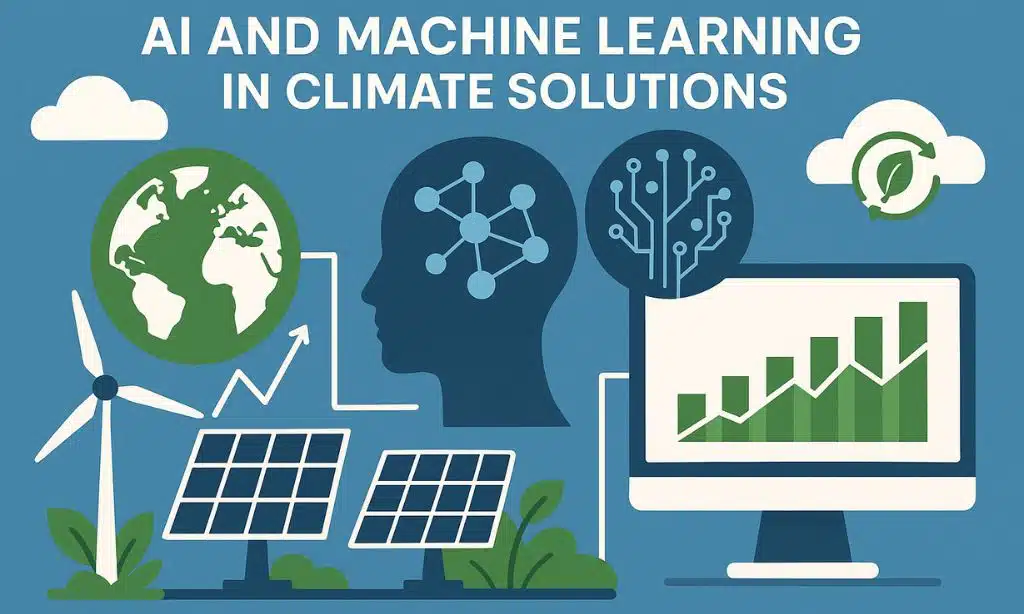
Artificial Intelligence (AI) and Machine Learning (ML) have stepped into the spotlight as powerful allies in the climate crisis. No longer limited to theoretical research, these tools are now widely deployed to manage and predict environmental outcomes in real time.
For instance, AI models are helping cities and corporations monitor their carbon footprint with unmatched precision. By analyzing energy use, supply chains, and travel patterns, these systems recommend actionable steps to reduce emissions.
In the agricultural sector, precision farming powered by AI uses sensors and drone data to optimize crop yields while minimizing water use, pesticides, and soil degradation. This approach supports food security while preserving vital ecosystems.
Even more critically, AI-powered models like those developed by IBM’s Green Horizons and Google’s wildfire prediction tools are saving lives. These technologies forecast extreme weather events, floods, or forest fires days in advance—giving communities more time to respond and reduce potential loss.
Breakthroughs in Renewable Energy and Storage
Renewable energy has evolved beyond solar panels and wind turbines. In Eco-Tech 2025, we’re seeing a shift toward next-gen renewable tech that’s cleaner, smarter, and more efficient.
One of the most promising developments is the rise of perovskite solar cells, which offer higher energy conversion rates at lower manufacturing costs. These materials can be printed on flexible surfaces, opening the door to solar-powered clothing, cars, and even windows.
But generating energy is only half the equation—storage is the key to a truly green grid. Advanced battery technologies, including sodium-ion and lithium-iron phosphate batteries, are now being adopted at grid scale. Companies like Tesla, with its Megapack 2, are rolling out large-scale storage solutions that stabilize energy supply even during outages or cloudy days.
Smart grids have also gone mainstream. Using AI, these decentralized systems predict demand, prevent overloads, and prioritize renewable sources in real time—drastically improving energy efficiency.
Carbon Capture, Utilization, and Storage (CCUS)
For decades, carbon capture felt like science fiction. Eco-Tech 2025 is real, scalable, and increasingly profitable.
Direct Air Capture (DAC) facilities are now pulling thousands of tons of CO₂ from the atmosphere every day. Companies like Climeworks are leading the way with facilities in Iceland that store carbon underground or repurpose it into building materials and fuel.
Meanwhile, startups are pioneering carbon-to-value technologies—converting CO₂ into usable products such as synthetic fuels, plastic alternatives, and even diamonds. This not only reduces atmospheric carbon but also helps fund further innovation.
New modular CCUS units are making it easier for factories and power plants to install carbon filters without completely overhauling infrastructure. These compact systems offer an affordable entry point for companies seeking to reduce their emissions.
Sustainable Urban Technologies
Cities are responsible for over 70% of global carbon emissions, making them critical battlegrounds for climate innovation. Fortunately, urban Eco-Tech 2025 is evolving rapidly.
Buildings are becoming climate smart, with self-cooling architecture, solar windows, and algae panels that generate oxygen while filtering air pollutants. In cities like Singapore and Tokyo, skyscrapers are now doubling as vertical gardens and air purifiers.
Urban transportation has also seen a dramatic transformation. Smart mobility solutions such as electric buses, automated traffic systems, and green bike lanes are making city travel cleaner and faster. Entire roads are being electrified in places like Sweden, charging vehicles as they drive.
In the realm of logistics, micro-fulfillment centers and electric delivery drones are cutting last-mile emissions—especially vital in densely populated megacities.
Climate-Conscious Consumer Tech
Sustainability is now a priority in the consumer tech space, with major brands rolling out eco-rated electronics and climate-conscious gadgets.
Companies are developing devices using recycled metals, bioplastics, and modular designs that encourage repair over replacement. The Fairphone—a modular, ethically sourced smartphone—is becoming a model for responsible tech design.
Consumers can now track their personal impact with carbon footprint apps that gamify sustainability. These apps integrate with wearables or credit cards to show real-time emissions data and suggest greener habits.
Tech giants like Samsung and Apple are also investing in circular economy models, encouraging users to trade in, recycle, or upcycle older devices.
Challenges and Ethical Considerations

While Eco-Tech 2025 is full of promise, it’s not without complications.
One key challenge is tech inequality. Many eco-technologies remain out of reach for developing nations or marginalized communities. Bridging this gap must be a priority to ensure global equity.
There’s also a growing issue of greenwashing—where companies overstate or misrepresent the environmental impact of their tech. Clear regulation and independent verification are essential.
Finally, we must scrutinize the resource demands of green technologies themselves. Battery production, for example, requires rare minerals that come with their own environmental and ethical concerns.
Takeaways: The Real-Time Impact of Eco-Tech
Eco-Tech 2025 is not a futuristic vision—it’s a present-day force driving real change. From AI-based disaster response systems to urban vertical forests, these innovations are helping humanity face the climate crisis head-on.
The road ahead still demands bold action, responsible development, and global cooperation. But the tools are here. The momentum is real. And for the first time in a long time, the future looks not just possible—but promising.
Because in the age of Earth 2.5, saving the planet isn’t something we wait for. It’s something we deploy—right now.