
Securing cargo on a truck isn’t just about tossing a few straps over a load and hoping for the best. It’s a delicate balance of physics, regulations, and good old-fashioned common sense. Get it wrong, and you’re looking at a hefty fine—or worse, a road mishap that could land you in legal hot water, potentially requiring the expertise of Indiana Truck Accident Lawyers if someone is injured. Whether you’re a seasoned hauler or just getting your CDL feet wet, this guide will walk you through the right way to secure your cargo.
Start With the Right Equipment
First things first: not all tie-downs are created equal. You need to ensure you’re using equipment rated for the weight and type of cargo you’re carrying. This means ratchet straps, chains, binders, winches, and tarps should all be inspected for wear and tear before each use. Look for frayed straps, rusted hooks, or bent components—if anything looks off, replace it. Don’t gamble with your gear; if it fails on the road, so could your entire load.
Know Your Load [And Its Limits]
The Federal Motor Carrier Safety Administration [FMCSA] has specific regulations on how many tie-downs you need based on the length and weight of your cargo. As a general rule, you need at least:
- One tie-down for loads under 5 feet and under 1,100 lbs
- Two tie-downs for loads between 5 and 10 feet
- One tie-down every 10 feet thereafter
And it’s not just about the number. Placement is crucial. Tie-downs should be spread evenly across the load and anchored to prevent forward, rearward, and lateral movement. Remember: if your load shifts even slightly, it can cause major issues with vehicle stability.
Use the “Working Load Limit” [WLL] Like a Pro
The Working Load Limit is the maximum force a tie-down can withstand without failing. Here’s the trick: the combined WLL of all your tie-downs must be at least 50% of the weight of your cargo. If your load weighs 10,000 pounds, your straps must collectively handle at least 5,000 pounds. Easy math, right? But ignore it, and you’re playing with fire—and a possible FMCSA violation.
Don’t Forget Indirect Tiedowns
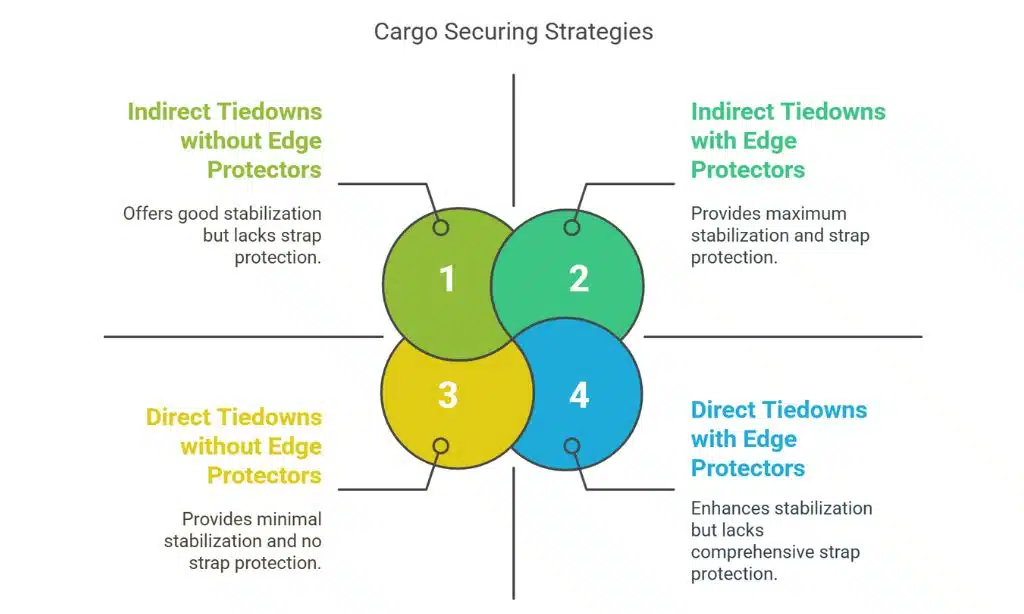
Sometimes, it’s not just about what’s on top of the flatbed but how it’s shaped and behaves in motion. Indirect tiedowns [those that wrap over or around cargo] add crucial stabilization. Use edge protectors to keep your straps from getting cut by sharp edges, because a sliced strap is no better than no strap at all.
Watch That Height
There’s a reason why the term “low center of gravity” is popular in racing—and it matters in trucking, too. The higher the load, the more prone your truck is to tipping. Balance the cargo, keep it low and evenly distributed. Not only is it safer, but it also reduces strain on your suspension and tires.
The Pre-Trip [and Mid-Trip] Check
FMCSA requires cargo to be inspected:
- Before the trip
- Within the first 50 miles
- Every 150 miles or every three hours [whichever comes first]
Make it a habit. A loose strap on mile 47 could turn into a roadside disaster by mile 51. These checks protect you in court or during an inspection—documented diligence always looks better than pleading ignorance.
When Things Go Sideways: The Legal Angle
Despite your best efforts, accidents happen. Maybe your load shifts during a sudden brake, or someone accuses you of not securing your cargo properly, even if it’s not your fault. This is when having a lawyer on speed dial matters.
Qualified Indiana Truck Accident Lawyers can help you:
- Navigate insurance claims
- Respond to DOT violations
- Protect your CDL license
- Defend you in civil lawsuits
Even a minor incident can become a major legal headache if unprepared. Legal advice isn’t just helpful—it could be the difference between a slap on the wrist and a shutdown notice.
Wrapping It All Up
Securing your cargo correctly isn’t just a box to tick—it’s a serious responsibility that protects your safety, your rig, and everyone else on the road. From proper equipment to strategic placement, understanding the regulations keeps you compliant and in control. But if the worst happens, don’t try to go it alone. A quick chat with a lawyer can clear up confusion, cover your assets, and keep your wheels turning. Because in the trucking world, the only thing heavier than a load of steel is the weight of a legal battle you didn’t see coming.