

NFTs, or non-fungible Tokens, have revolutionized the way digital assets are created, bought, and sold. These unique digital tokens, backed by blockchain technology, allow artists, musicians, game developers, and even entrepreneurs to monetize their creations in unprecedented ways.
With the growing popularity of NFTs, it’s essential to understand the best platforms for creating and selling NFTs to maximize opportunities in this evolving space.
Choosing the right platform is a critical decision that can impact the success of your NFT journey. Whether you’re an established creator looking for premium features or a beginner seeking simplicity and affordability, there are platforms tailored to your needs.
This guide explores the best platforms for creating and selling NFTs, ensuring you make an informed choice and capitalize on this booming digital market.
What Are NFTs and Why Are They Popular?
NFTs are unique digital assets stored on a blockchain. Unlike cryptocurrencies such as Bitcoin or Ethereum, each NFT is distinct and cannot be replaced or exchanged on a one-to-one basis.
Applications of NFTs
- Art: Digital artists use NFTs to sell unique pieces, often commanding high prices in exclusive marketplaces.
- Music: Musicians release exclusive tracks or albums as NFTs, providing fans with collectible and sometimes interactive music experiences.
- Gaming: In-game items, skins, and characters are tokenized, enabling players to buy, sell, or trade them securely.
- Collectibles: Sports memorabilia and virtual trading cards thrive in the NFT space, offering fans a way to own a piece of their favorite moments.
- Virtual Real Estate: Platforms like Decentraland and The Sandbox let users buy, develop, and sell virtual land as NFTs.
Market Growth
The NFT market has seen exponential growth. In 2022 alone, NFT sales surpassed $24 billion, highlighting the massive potential for creators and investors. Analysts predict continued growth as more industries integrate NFTs into their business models. For example, luxury fashion brands are leveraging NFTs for digital fashion items.
Factors to Consider When Choosing an NFT Platform
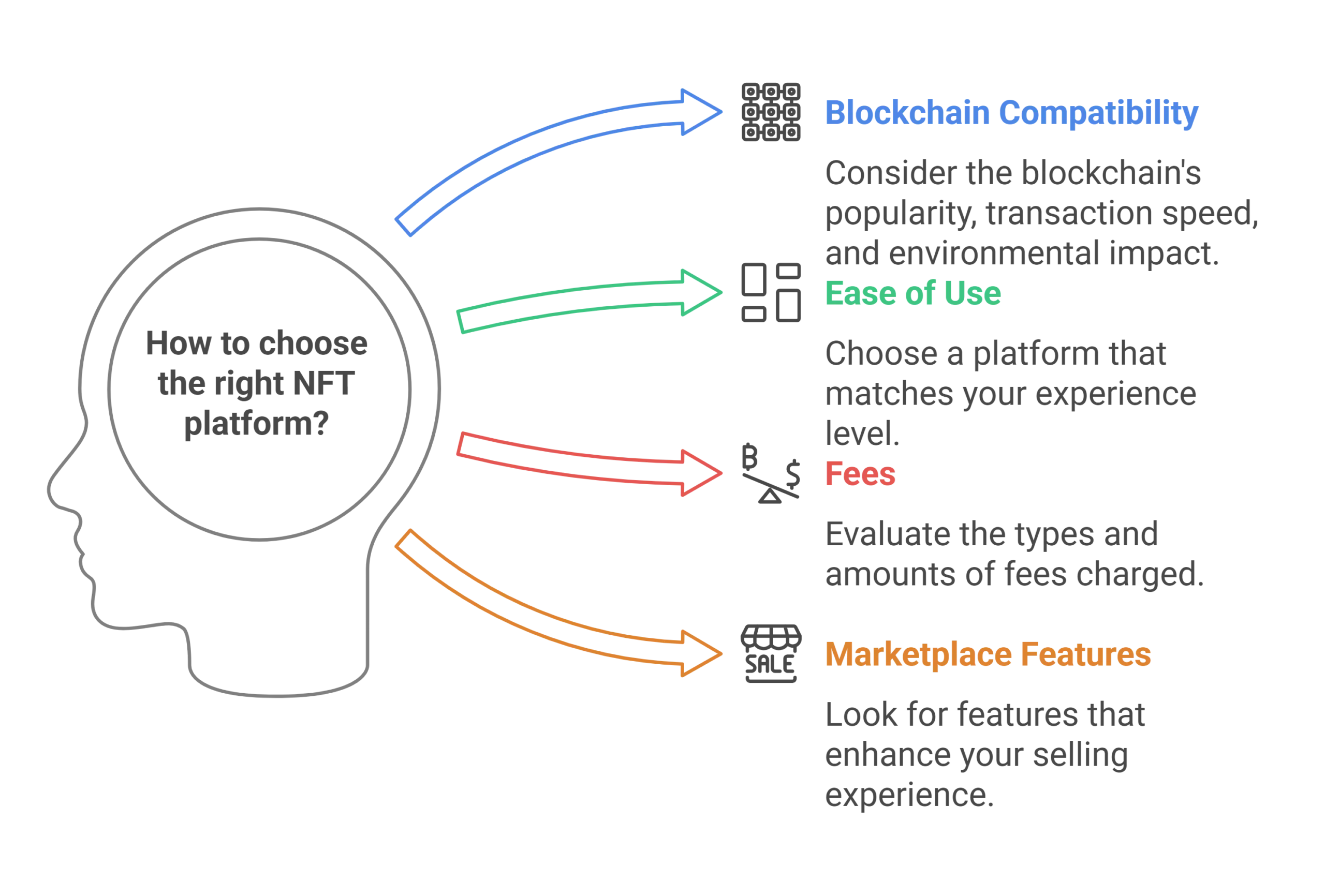
Blockchain Compatibility
Different platforms operate on various blockchains, such as:
- Ethereum: The most popular blockchain for NFTs, offering widespread adoption and compatibility.
- Solana: Known for low fees and high transaction speeds.
- Polygon: An Ethereum Layer-2 solution offering scalability and reduced costs.
- Tezos: Eco-friendly with lower energy consumption, ideal for sustainable NFT projects.
Ease of Use
Beginner-friendly platforms like Mintable and OpenSea simplify the process for new creators. Advanced platforms like Zora and Rarible provide customizable features for experienced users.
Fees
Platforms charge different types of fees, such as:
- Minting Fees: The cost of creating an NFT.
- Transaction Fees: Charged during sales or transfers.
- Commission Fees: A percentage of the final sale price.
High fees on platforms like Ethereum-based OpenSea can be mitigated by using alternatives like Solana-based SolSea.
Marketplace Features
Platforms with robust features enhance user experience. Look for:
- Secondary Sales: Allowing creators to earn royalties from resales.
- Auction Capabilities: Providing tools for timed sales.
- Customizable Storefronts: Helping creators showcase their work effectively.
Community and Visibility
Platforms with active user bases, such as OpenSea and Foundation, provide creators with better visibility and networking opportunities. Community-driven platforms like Rarible reward engagement through governance tokens.
The 10 Best Platforms for Creating and Selling NFTs
Here are the highlights of the top platforms:
1. OpenSea
Overview: OpenSea is the largest NFT marketplace, offering a wide variety of categories.
Key Features:
- Multi-chain support (Ethereum, Polygon, Solana).
- User-friendly interface.
- Customizable storefronts.
Pros:
- High visibility for creators.
- Easy to use for beginners.
Cons:
- High gas fees on Ethereum transactions.
Ideal For: General NFT creators and collectors.
| Feature | Details |
| Supported Blockchains | Ethereum, Polygon, Solana |
| Fees | 2.5% commission on sales |
| User Base | Largest in the market |
2. Rarible
Overview: A decentralized NFT marketplace that empowers the community through governance.
Key Features:
- Multi-chain options (Ethereum, Tezos, Flow).
- Community governance with RARI token rewards.
Pros:
- Offers royalties for creators.
- Community-driven features.
Cons:
- Limited advanced tools compared to other platforms.
Ideal For: Artists and small creators.
| Feature | Details |
| Supported Blockchains | Ethereum, Tezos, Flow |
| Fees | 2.5% on sales |
| Unique Feature | RARI token rewards |
3. Mintable
Overview: A beginner-friendly platform that makes NFT creation simple and accessible.
Key Features:
- Gas-free minting options.
- Easy-to-use interface.
Pros:
- Low entry barriers.
- Suitable for first-time creators.
Cons:
- Smaller audience compared to larger platforms.
Ideal For: Newcomers to the NFT space.
| Feature | Details |
| Supported Blockchains | Ethereum |
| Fees | Free minting available |
| User Base | Beginner-focused |
4. Foundation
Overview: An invite-only platform focusing on high-quality digital art.
Key Features:
- Exclusive drops through auctions.
- Focus on premium digital art.
Pros:
- Prestige and exclusivity.
- High-end collector base.
Cons:
- Limited access and higher fees.
Ideal For: Established digital artists.
| Feature | Details |
| Supported Blockchains | Ethereum |
| Fees | 15% commission |
| Access | Invite-only |
5. Nifty Gateway
Overview: A curated platform for premium NFTs, offering fiat payment options.
Key Features:
- Timed drops for exclusive collections.
- Integration with credit cards.
Pros:
- Mainstream accessibility.
- High-end collectors.
Cons:
- High fees and curation limits access.
Ideal For: High-profile artists and collectors.
6. SuperRare
Overview: A premium platform for 1/1 digital art NFTs.
Key Features:
- Focus on quality over quantity.
Pros:
- Exclusivity and high-end audience.
- Strong artist community.
Cons:
- Strict curation process.
Ideal For: Serious digital artists.
7. KnownOrigin
Overview: Focused on innovative and experimental digital art.
Key Features:
- Strong artist community support.
Pros:
- Dedicated to supporting niche creators.
- Innovative features.
Cons:
- Smaller audience compared to larger platforms.
Ideal For: Niche artists.
8. SolSea
Overview: A Solana-based NFT platform with low transaction fees.
Key Features:
- Integrated licensing options.
Pros:
- Low costs and eco-friendly blockchain.
- Fast transaction speeds.
Cons:
- Smaller marketplace compared to Ethereum-based platforms.
Ideal For: Cost-conscious creators.
9. Zora
Overview: An open protocol for creating and selling NFTs with decentralized governance.
Key Features:
- Fully customizable minting options.
Pros:
- Community-driven.
- Low barriers to entry.
Cons:
- Smaller user base.
Ideal For: Independent creators.
10. Binance NFT Marketplace
Overview: Backed by the Binance exchange, offering global access and low fees. The popular and among the best platforms for creating and selling NFTs.
Key Features:
- Integration with Binance wallets.
Pros:
- Affordable fees.
- Large user base.
Cons:
- Limited curation for premium content.
Ideal For: Crypto-savvy creators.
Comparison Table of NFT Platforms
| Platform | Blockchain | Best For | Fees | Unique Feature |
| OpenSea | Ethereum, Polygon, Solana | General creators | 2.5% on sales | Largest marketplace |
| Rarible | Ethereum, Tezos, Flow | Community creators | 2.5% on sales | RARI token rewards |
| Mintable | Ethereum | Beginners | Free minting | Gas-free minting options |
| Foundation | Ethereum | Exclusive artists | 15% commission | Invite-only platform |
| Binance NFT | Binance Smart Chain | Crypto-savvy creators | Low fees | Integrated with Binance wallets |
How to Choose the Right NFT Platform
Here’s some guidelines provided when you look for the best platforms for creating and selling NFTs.
- Define Your Goals: Are you creating, collecting, or both?
- Assess Fees and Costs: Choose platforms with fees that align with your budget.
- Check Blockchain Compatibility: Select platforms supporting your preferred blockchain.
- Explore Community and Visibility: Platforms with strong user bases can offer more exposure.
Takeaways
The NFT market is not just a passing trend—it’s a transformative shift in how we perceive ownership, creativity, and digital interaction. As this space evolves, the best platforms for creating and selling NFTs play a pivotal role in empowering creators and providing collectors with unparalleled opportunities to own unique digital assets.
Choosing the right platform can make all the difference. Platforms like OpenSea and Rarible provide extensive networks and visibility, while Mintable and Foundation cater to specific niches such as beginners and exclusive digital art. By understanding the unique features of these platforms, you can confidently navigate the NFT market and unlock its immense potential.
The time to explore, innovate, and thrive in the world of NFTs is now. Embrace the possibilities, choose from the best platforms for creating and selling NFTs, and take the first step toward making your mark in this exciting digital frontier.






















