The “order graphics – get a game” approach is no longer viable when looking at game creation in 2025. The industry is become overly demanding. Users anticipate a genuine world rather than square models, and studios want collaborators who do more than just complete duties. Because of this, game development services are now a whole ecosystem that includes analytics, design, coding, live operations, monetization, marketing, and product support.
Companies have emerged in this ecosystem that work as a “second team” for brands. Stepico is one example, when the client receives developers who take some chances, assist with creative vision, and provide crucial answers when the product stalls at the beginning rather than a bunch of actors. Such partners are a useful tool rather than a luxury in a setting where users expect to witness realistic animations, 3D characters, and action that keeps them interested into the fifth level.
Why Game Development is no longer about “writing a game”
In early markets, everything revolved around development. But if you look at the top releases, success depends on completely different things:
- how accurately the team has identified the target audience;
- whether the gameplay loop is understandable;
- whether monetization works without aggression;
- whether there is enough content after launch day.
The largest mistakes begin when a studio attempts to “sit out” until release without testing, which may seem corny. Clickbait graphics, ten-year-old mechanics, a sluggish user interface, and poorly considered balancing choices are all signs of insincerity that players notice right away. Those that provide a whole stack, from pre-production to live operations, are useful in this situation.
Pre-production has become the main stage
Professional businesses never begin with code. The design document, competitive data, monetization theories, preliminary drawings, and audience mood testing come first. A social role-playing game won’t describe its emotions in the game if it can’t do it on a slide.
This level allows you to distinguish between those who simply “draw pretty things” and those who think creatively. When judgments are chosen because they lower CPA and raise LTV rather than because “it’s so beautiful,” this is known as productive thinking.
Art and character development are no longer decorative
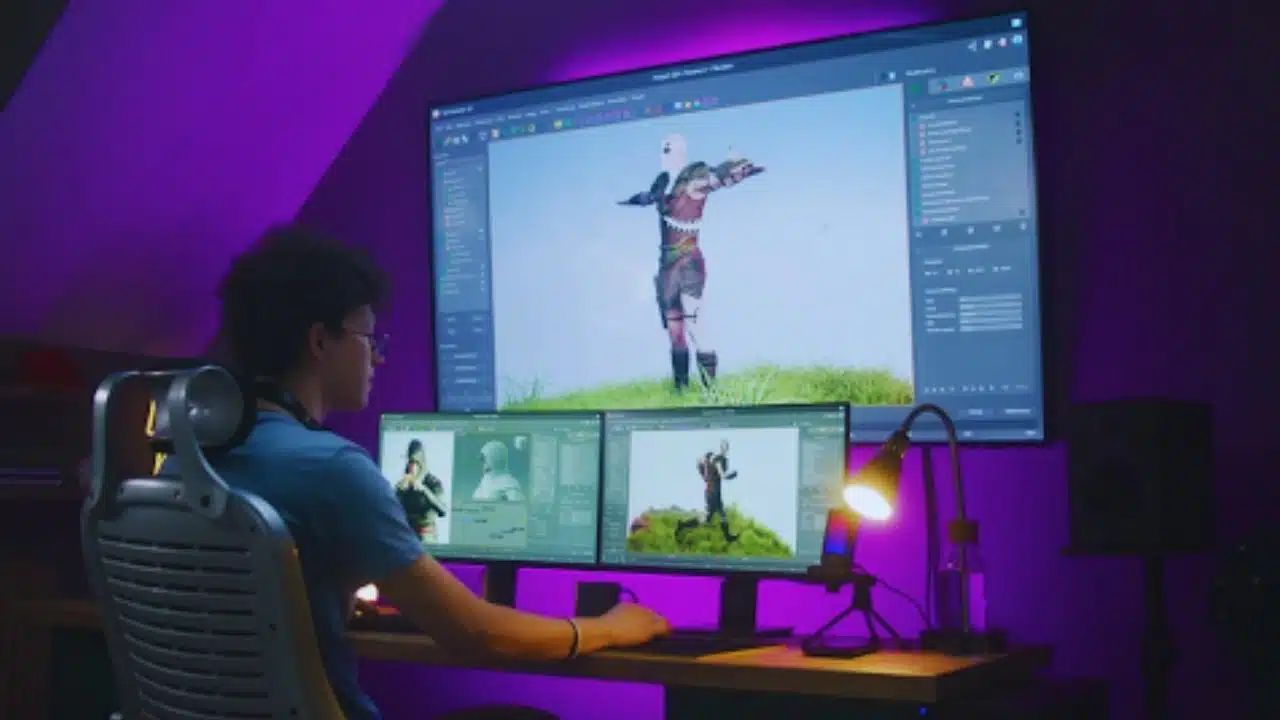
A character used to be only the game’s face. It is a retention mechanism in 2025. This is already microgaming if the hero’s disposition, personality, and manner of interacting with the surroundings are all monitored. Large pipelines, including 2D sketching, 3D models, sculpting, rigging, animation, and optimization, are invested in by businesses such as Stepico. Although they don’t study technical details, players believe that the character moves “correctly” and isn’t “sewn into a standard library.
Balance that won’t let the player leave
Game design is one of the most sensitive aspects of GameDev Services. This is the point of greatest conflict between the creative and logical aspects. Some desire casual, some want intricacy, and some want amazing skills. The team’s goal is to strike a balance between preventing the user from finishing the game in three hours and preventing them from uninstalling the app following their first loss. “Harder or easier” is not the goal of balance. It has to do with minor user behaviors, session duration, reward value, and difficulty flexibility.
GameDev is also a technological infrastructure
Development is no longer romantic: servers must manage the load, authorization must function, anti-cheat must react, and marketing platform integrations must not break under the strain of updates. CI/CD, QA procedures, analytics platforms, logging, and system monitoring are necessary even for casual games.
You may steer clear of scenarios where “our architect quit, and the product stalled” by using the service model. The crew is aware of the common errors and avoids doing them again if they have completed dozens of projects. An inflated internal workforce is less effective than this.
Monetization: Why does the player pay?
Monetization in 2025 is not about “hooking” the gamer. It’s about honoring the user’s feelings and time. When a player pays, it’s for the experience rather than a pain-relieving button. Customization, seasonality, a feeling of advancement, and social identity are all associated with successful models.
Poor monetization appears to be a punishment. It seems like a benefit to have good monetization. For this reason, game development services now include analytics, A/B testing, and flexible payment options.
Live ops: the moment when everything is just beginning
In the past, studios believed that the game ended when it was released. Release is the first step today. The product just vanishes if there are no consistent events, fresh material, or fluffy metrics (day-1 retention, day-7, conversion to pay). Without partners that evaluate the data and update the game every few weeks, live operations cannot function. It’s a marathon, and the winners are those who maintain their pace.
Can you do everything yourself?
Theoretically, yes. Practically, no. Each individual block requires narrow competencies. An artist will not write complex server code. A developer will not become a monetization specialist. An analyst will not replace a narrative designer. The service model is based on simple logic:
- assemble a team for the task;
- test hypotheses quickly;
- scale what brings in money.
This allows us to avoid waste.
What is the result?
With our game development services, you may avoid taking on the unknown on your own. The market is now more expensive, consumers are more picky, and competition is more fierce. Games are now goods that call for technological proficiency, artistic vision, and financial acumen.
Collaborating with a team that comprehends the product is a must for existence, not an option. Additionally, customers that select partners like Stepico are wagering not just on development but also on hybrid expertise, which includes strategy, technology, art, analytics, and ongoing support.
Those that view the user as a conversation partner rather than a statistic win in a world where every game is a competitive struggle for a minute of attention. And that now defines who remains at the top and who vanishes after a single season.