The drawn-out dispute over TikTok’s future in the United States may finally be nearing resolution. U.S. President Donald Trump and Chinese President Xi Jinping are expected to speak on Friday to finalize a framework deal that could reshape how the short-video platform operates in the American market.
For years, TikTok has been at the center of U.S.–China tensions, facing accusations of posing national security risks and raising concerns about data access, algorithm control, and foreign influence over American users. Now, after months of negotiation, top officials from both countries have reached an agreement in principle. If successfully completed, the deal would allow TikTok to continue serving its 170 million U.S. users under a new ownership structure, while China retains leverage over its prized technology.
The Proposed Deal Structure
Majority U.S. Ownership
According to reports from Reuters and The Wall Street Journal, the framework envisions TikTok’s U.S. operations being sold to a consortium of American firms. Oracle, a U.S. technology giant, is expected to play a central role, along with investment groups Andreessen Horowitz and Silver Lake. Under this structure, about 80% of TikTok’s U.S. business would be owned by American investors, while ByteDance, the Beijing-based parent company, would retain just under 20%. This ownership cap was chosen deliberately, since U.S. law limits foreign adversary control to below 20%.
Licensing of the Algorithm
At the heart of the negotiations is TikTok’s powerful recommendation algorithm, often described as the company’s “secret sauce.” This system determines what videos users see on their feeds, making the app highly addictive and difficult for rivals such as Instagram Reels or YouTube Shorts to replicate.
Initially, ByteDance refused to sell the algorithm outright, and Beijing supported that stance with strict export controls on advanced technologies. But in a notable policy shift, China’s top cybersecurity regulator has signaled willingness to allow ByteDance to license the algorithm and related intellectual property to a U.S.-controlled TikTok entity. This means the American version of the app could function with access to the core technology, but ByteDance would keep ultimate ownership and control.
Experts believe this arrangement protects China’s strategic advantage. The United States gains a functioning TikTok, but not the full technological crown jewels. At the same time, licensing ensures ByteDance continues to benefit financially from the app’s U.S. operations.
What This Means for U.S. Users
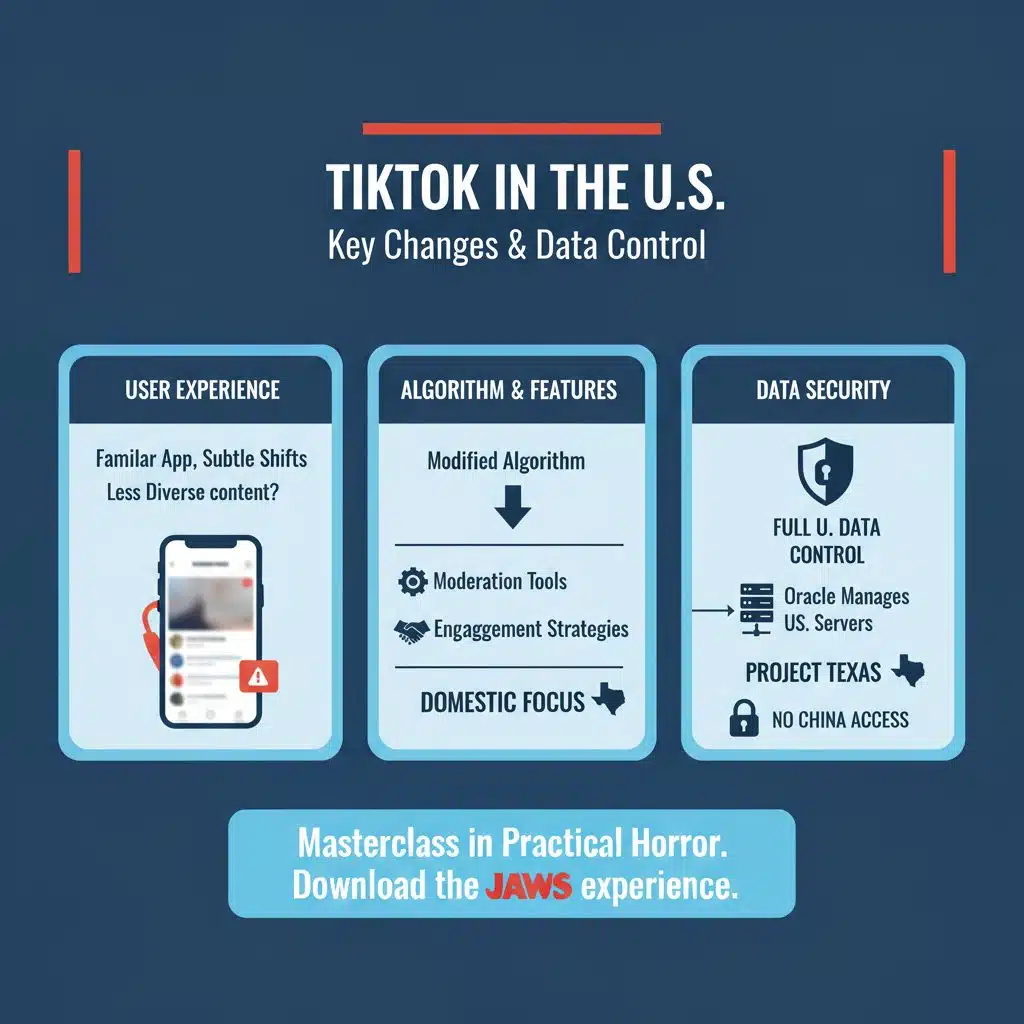
For American TikTok users, the day-to-day experience may not immediately change. The app is expected to keep its familiar logo, branding, and user interface. However, researchers caution that subtle shifts are likely.
If the U.S. version runs on a modified or “stripped-down” version of the algorithm, users may see less diverse content compared to the global version. Certain moderation tools, advertising systems, and engagement strategies could differ. Some analysts warn that the U.S. version might become a more domestically focused platform, while ByteDance reserves its most advanced technology for markets outside the U.S.
Nonetheless, U.S. officials are pushing for full control of American user data. Oracle is likely to manage U.S.-based servers and oversee security protections to ensure that sensitive information cannot be accessed by China. This element mirrors earlier proposals from the Trump administration, often referred to as “Project Texas.”
Legal and Political Hurdles
U.S. National Security Concerns
The push to restructure TikTok comes from a law signed in 2024 known as the Protecting Americans from Foreign Adversary Controlled Applications Act. The legislation requires TikTok to divest from ByteDance or face a nationwide ban.
Although the current deal framework aims to comply with this law, critics argue that licensing the algorithm does not amount to full separation from foreign control. Lawmakers from both major U.S. parties have already raised objections. Some insist that China’s continuing role in licensing could leave open channels for influence, violating the spirit of the law.
Need for Congressional Approval
Even if Trump and Xi agree on terms, the arrangement must still pass through Congress, where bipartisan skepticism remains strong. Lawmakers are expected to scrutinize whether the deal provides enough guarantees to block Chinese access to U.S. user data or potential manipulation of online content.
ByteDance’s Internal Challenges
As a privately held company, ByteDance must secure approval from its board for any transfer of assets or licensing of technology. This adds another layer of complexity. In addition, China’s export-control laws could still restrict exactly how much of the algorithm is licensed abroad, keeping the U.S. TikTok entity partially dependent on Beijing’s permission.
Why China Is Comfortable With the Deal
For Beijing, allowing TikTok to remain active in the U.S. market provides several strategic advantages:
-
Revenue Retention – The U.S. is TikTok’s most profitable market. American users generate up to ten times more revenue per person compared to other regions. Analysts estimate that TikTok contributes nearly $30 billion annually to ByteDance’s global revenue, making the U.S. crucial for the company’s business model.
-
Control Over Technology – By retaining ownership of the algorithm and offering only a licensing agreement, China ensures that its most valuable digital innovation remains within its borders.
-
Template for Future Deals – Experts suggest this arrangement could serve as a model for other Chinese companies facing U.S. scrutiny. For example, Chinese battery manufacturers like CATL or automakers like BYD could license their technologies to U.S. partners without ceding full ownership.
-
Leverage in Trade Negotiations – The deal allows Beijing to present itself as cooperative in one area while retaining bargaining power in broader trade disputes with Washington. With U.S. tariffs and Chinese export restrictions still in place, TikTok offers both sides an opportunity to showcase progress without resolving deeper economic conflicts.
Risks That Could Derail the Agreement
Even with momentum toward a deal, several risks remain:
-
Political Volatility – President Trump has shifted positions on TikTok before. Once a strong critic, he later praised the app for energizing young voters during his 2024 election campaign. His unpredictability could complicate final approval.
-
Congressional Resistance – Lawmakers may reject the framework if they feel ByteDance retains too much influence. This could trigger renewed efforts to ban the app.
-
Technical Dependence – If the U.S. TikTok entity relies heavily on a licensed algorithm, any disruption in licensing terms could jeopardize the app’s operations.
-
Global Consistency – It remains unclear how the U.S. TikTok app will interact with the international version still run by ByteDance. Differences in moderation, features, or content distribution could frustrate users or advertisers.
What Comes Next
If the Trump–Xi call confirms the deal, negotiations will shift toward the technical and legal details of implementation. Industry observers expect it could take 30 to 45 days to finalize contracts, regulatory filings, and board approvals. The U.S. government has already extended TikTok’s compliance deadline to December 16, 2025, allowing time for this process.
For now, both governments are portraying the agreement as a constructive step. Chinese state media has described the framework as mutually beneficial, while U.S. officials emphasize that the arrangement aims to protect American data and satisfy national security concerns.
Still, as one analyst noted, the outcome may remain fragile. A U.S. version of TikTok may look identical on the surface, but behind the scenes it will depend on licensed technology, restricted access to data, and political trust that could evaporate with the next crisis in U.S.–China relations.